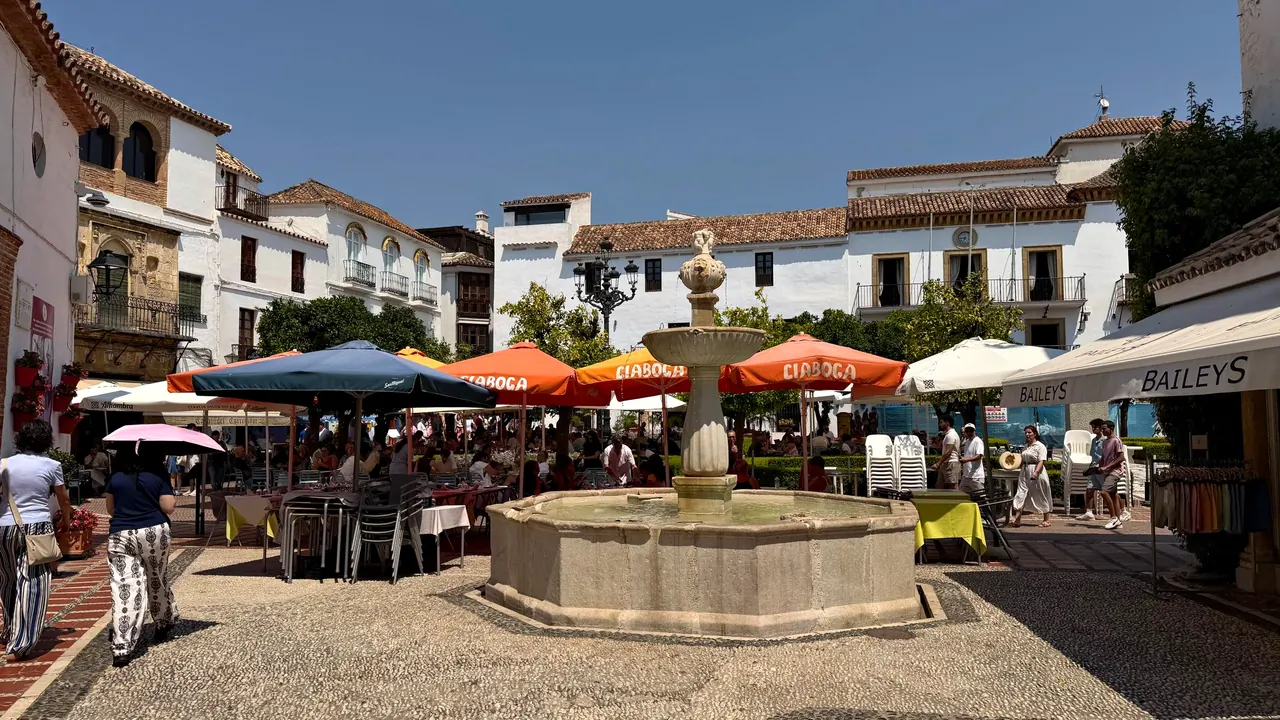
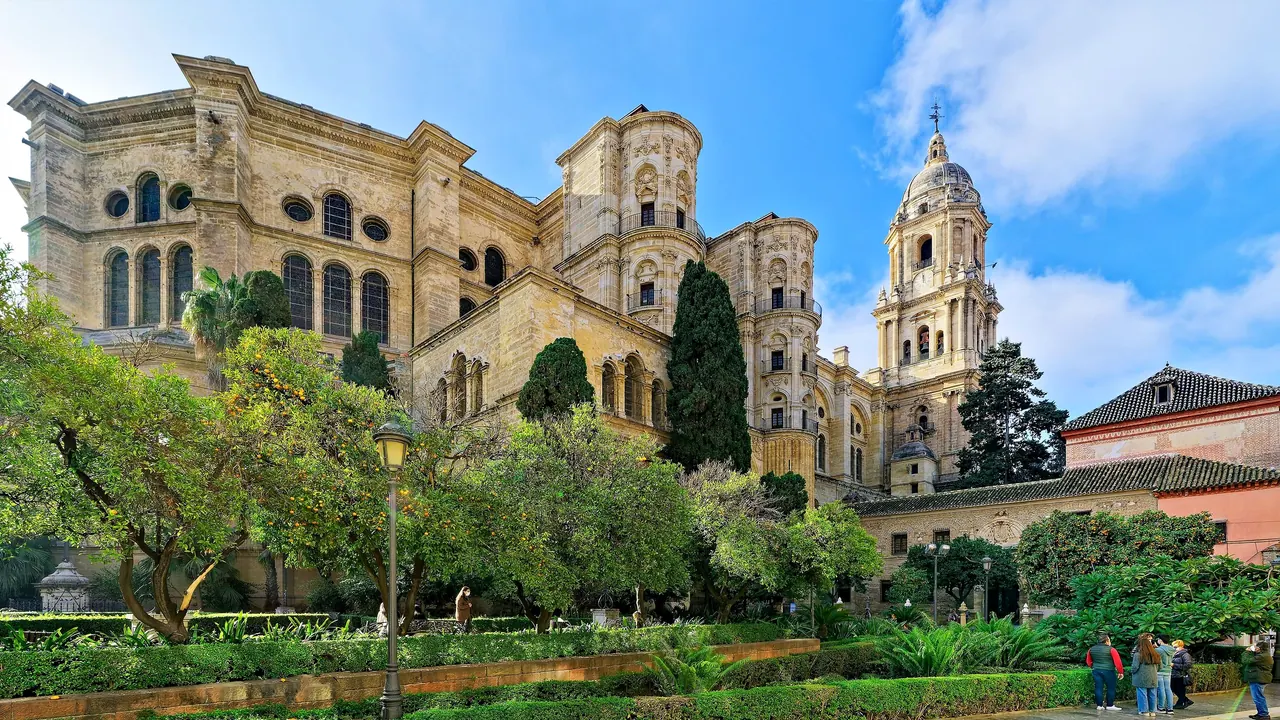
Photos: Marbella by Décio Franchini, Pexels License; Malaga by Holger Uwe Schmitt, CC BY-SA 4.0, cropped.
Marbella or Malaga?
Our verdict in twelve categories, each scored against the same fixed benchmark cities, and the climate month by month, so you can choose for your trip.
Choose Marbella for
- wellness
- shopping
- nightlife
Choose Marbella for a resort vacation built around the sea, the pool and the evening. The draw is its long run of beaches, the beach clubs of the Golden Mile and the late, polished nights of Puerto Banús, along with spa resorts that make the quieter months truly restful. Expect to pay more, to see its sights in an afternoon, and to need a car or taxis for anything beyond the old town.
Choose Malaga for
- culture and sights
- getting around
- prices
Malaga suits travellers who want a real city with the beach included. The Alcazaba, the Picasso Museum and an old town full of tapas bars are a short walk from the sand. The train runs to the airport and along the coast, and fast rail brings Cordoba, Granada and Seville within a day. It is also the easier place to keep costs down, and the better base without a car.
Scoreboard
Twelve categories on one fixed scale from 0 to 100. The shaded stretch is the gap between the two.
Your match
Pick a travel style or drag the sliders, and both match scores follow your weighting.
Wins on wellness and shopping with your weighting.
Wins on culture and sights and getting around with your weighting.
What matters to you?
Category by category
What the scores mean for a trip.
Beaches & swimming
The two have much the same greyish sand and the same cool Alboran water, so the difference is in the setting. In Malaga the beach is part of city life. La Malagueta is a few minutes from the cathedral, and the old fishing quarters of Pedregalejo and El Palo have sardines roasting in beached boats. The resort beaches of Torremolinos and Fuengirola are a train ride west, and the coves at Nerja are about an hour east.
Marbella is a beach town first. It has more than two dozen beaches along its own shore, from La Venus and El Fuerte in the centre to the quieter dunes at Cabopino. The shore there is set up with loungers, beach clubs and chiringuitos, and the water is usually calm and clear.
Food & drink
Malaga eats better day to day. You get espetos and plates of fried fish in Pedregalejo, tapas lanes around Plaza de la Merced, eating counters in the Atarazanas market and sweet moscatel poured from the barrel in old bodegas. Everyday meals are reliably good and fairly priced.
Marbella has the same sardines and ajoblanco in its old town, and it has more at the top end, with acclaimed tasting-menu kitchens on the Golden Mile and around Puerto Banús. The weakness is the middle range. Too many places near the port and seafront serve expensive, forgettable menus, so a good ordinary meal means walking a few streets inland.
Culture & sights
This is the widest gap between the two. Malaga packs a lot of history into a small core: a Roman theatre below the Moorish Alcazaba, Gibralfaro's walls above, and the unfinished cathedral known as La Manquita. Add the Picasso Museum, the Carmen Thyssen collection and the Museo de Malaga, and you have two full days of sightseeing.
Marbella's heritage is the whitewashed Casco Antiguo around the Plaza de los Naranjos, a museum of Spanish prints, Dalí bronzes along the Avenida del Mar and a Roman villa with mosaics at Río Verde. It is charming, but an afternoon covers it, and Malaga's museums are the usual next step.
Nightlife
Both go out late on Spanish time, but the nights feel different. Malaga's evenings move between terraces and small bars around Plaza de la Merced, Calle Granada and Plaza Uncibay, with a sociable crowd of all ages. The city has few clubs, so for serious clubbing and the coast's gay scene people take the train to Torremolinos.
Marbella is about glamour and money. Champagne bars and clubs face the yachts in Puerto Banús until dawn, and daytime beach clubs with DJs turn into evening parties along the Golden Mile. It is a summer scene, though. From November to March it shrinks to a quiet drink.
Nature & outdoors
Both have mountains right behind them, and both can reach El Torcal and the Caminito del Rey. From Malaga those two are closer. You can walk or mountain-bike in the Montes de Malaga pine forest on the city's edge, hike the Sierras above Nerja and kayak or snorkel off the Maro cliffs. The Sierra Nevada's ski slopes are about two hours away.
From Marbella you can set off on foot for La Concha, a demanding half-day climb with views to Morocco on clear days. The Sierra de las Nieves national park, with fir forests and ibex, is about 45 minutes away. On the water there is paddleboarding, sailing and dolphin-watching, though the coastal strip itself is heavily built up.
Day trips
Malaga is the stronger base, mainly because of the railway. Fast trains reach Cordoba's Mezquita in about an hour and Granada in about an hour and a half, and Seville is possible too. The dolmens of Antequera are half an hour away, and Ronda and Nerja are easy to reach.
Marbella is better placed for the southern edge of Andalusia. Ronda is about an hour over the mountains, Gibraltar about an hour west, and the hill villages of Casares and Benahavís are close by. With no train and slow buses, though, nearly every outing means driving, and Granada is a long day.
Good for families
Both welcome children at the table late into the evening, and both send families to the same zoo, aquarium and marine parks along the coast. The difference is how you get there. From Malaga a short train ride reaches Fuengirola and Benalmadena, and the flat centre and the Alcazaba ramparts add some sightseeing that older children enjoy.
Marbella is the easier pure beach vacation. Its town beaches are sheltered and lifeguarded, the long promenade suits scooters, and many apartment complexes are built around pools. The bigger attractions are awkward without a car.
Getting around
Malaga is far easier to get around. The cathedral, museums, market, port and beach are a short walk apart on a flat, largely pedestrianised centre. The suburban train reaches the airport in about ten minutes and continues along the coast.
Marbella stretches thinly along the motorway from San Pedro to Cabopino, with hotels, villas and beach clubs spread far apart. Only the old town and seafront are pleasant on foot. There is no train, and the coach to the airport takes about an hour, so most visitors hire a car or rely on taxis.
Shopping & style
Neither is a major shopping destination, and they differ in what they sell. Malaga is for the high street: Spanish chains along the marble Calle Larios, El Corte Ingles across the river, a few independent shops in Soho, and olive oil, almonds and sweet wine from the Atarazanas market.
Marbella is where the luxury labels are. Fashion and jewellery boutiques face the yachts at Puerto Banús, with malls nearby, and the old town lanes sell linen, leather and ceramics. Beyond the big names there is little to browse.
Affordability
Malaga is clearly the cheaper stay. Tapas, fried fish, coffee and the suburban trains are reasonably priced, and several major sights cost little to enter. Rooms near the old town and the beach are the main expense.
In Marbella almost everything costs more, from summer hotels and villas to beach clubs, prime sunbeds and dinner on the Golden Mile. Old town tapas bars charge ordinary Andalusian prices, and rates drop sharply outside summer. Many visitors save by staying elsewhere on the coast and coming in for the day.
Live music & performing arts
Malaga has a proper stage. The Teatro Cervantes hosts the Malaga Philharmonic, drama and dance, and the flamenco peñas, where locals perform for each other, feel more authentic than shows put on for visitors. Semana Santa fills the streets with brass bands and processions.
Marbella's live performance is mostly a summer thing: big pop and rock acts in an old quarry amphitheatre, and concerts at beach clubs and hotels. Its flamenco is staged for visitors, and for classical music people head to Malaga.
Wellness & relaxation
Marbella has built a reputation as a place to rest. Spa resorts, retreats and detox clinics are spread across the Golden Mile and the hills, with large spas, treatment menus and yoga, and from October to May the town is calm and mild. High summer is less restful, with crowds and parties.
Malaga has an Arab-style bathhouse in the old town and some hotel spas. Its relaxation comes mostly from the pace of the day: long lunches, a siesta and an evening walk along the Paseo Maritimo.
When should you go?
Pick your month. The climate figures are measured averages, not a forecast.
Marbella in July
Malaga in July
Daytime high, °C
Rainfall in the month, mm
Where the figures come from
Marbella's temperatures are measured 40 km from the centre, at Malaga / Aeropuerto.
Marbella has no rain gauge within 25 km of the centre, so its rainfall comes from a gridded climate dataset read at the destination rather than from a gauge further away.
Temperature and rainfall are climate normals, averaged over the years shown. Marbella: 1991-2020 normals, Malaga / Aeropuerto (39.7 km from centre). Malaga: 1991-2020 normals, Malaga / Aeropuerto (8.2 km from centre).
The two sit about an hour apart along the coast, and through the year they have the same daytime warmth and the same long hours of sunshine. The sea is warm enough for swimming from June into October in both. It peaks in August at about 23°C off Malaga and 22°C off Marbella, and the water stays a touch fresher at Marbella all summer. July and August reach around 32°C, which is too hot for walking the streets at midday. That matters more in Malaga, where you see the sights on foot, than in Marbella, where the day moves between the beach and the pool.
The best months for walking, hiking and sightseeing are April, May and late September, when it is warm and there is little rain. October is when the rain returns, although the sea is still mild enough for a swim. The wettest stretch runs from November through December, and December is noticeably heavier in Marbella, at 115mm, than in Malaga, at 88mm. Winters are mild and sunny in both, which suits walkers and slow, restful stays more than swimmers.
Which traveller are you?
On a culture and arts trip, Malaga is the clear choice. The Roman theatre, the Alcazaba and the Picasso Museum are a short walk apart, the Teatro Cervantes and the flamenco peñas fill the evenings, and Granada and Cordoba are easy by train.
For a trip on a tight budget, Malaga goes further. Tapas, fried fish, sweet wine and the suburban train all come at fair prices. In Marbella the beach clubs, prime sunbeds and dinners around Puerto Banús push costs up, and summer room rates climb steeply.
On a relaxing and wellness trip, Marbella has the edge, especially from October to May. Spa resorts and retreats along the Golden Mile and in the hills offer treatments, yoga and golf. In Malaga the choice comes down to an Arab-style bathhouse and hotel spas.
Before you go
| Measure | Marbella | Malaga |
|---|---|---|
| Official language | Spanish | Spanish |
| Currency | Euro (EUR) | Euro (EUR) |
| Sockets | CF230 V, 50 Hz | CF230 V, 50 Hz |
| Driving side | Right | Right |
| Time zone | UTC+1, UTC+2 in summer | UTC+1, UTC+2 in summer |
| Emergency number | 112 | 112 |
| Elevation | 22 m | 18 m |
| Main airport | Málaga-Costa del Sol Airport (AGP)39 km from centre165 non-stop destinations | Málaga-Costa del Sol Airport (AGP)8 km from centre165 non-stop destinations |
| Public holidays this year | 12 days | 12 days |
By the numbers
| Measure | Marbella | Malaga |
|---|---|---|
| Population | 159,786 | 599,063 |
| People per km² | 1,398 | 1,517 |
| Museums within 10 km | 6 | 32 |
| UNESCO World Heritage sites within 50 km | 0 | 1 |
| Swim season, months above 21 °C | 3 months | 3 months |
Where else could you go?
Every comparison below shares a destination with this one, so you can follow Marbella or Malaga somewhere new.
- Rondavs Marbella
- Rondavs Malaga
- Granadavs Malaga
- Jerez de la Fronteravs Marbella
- Cadizvs Marbella
- Cordobavs Malaga