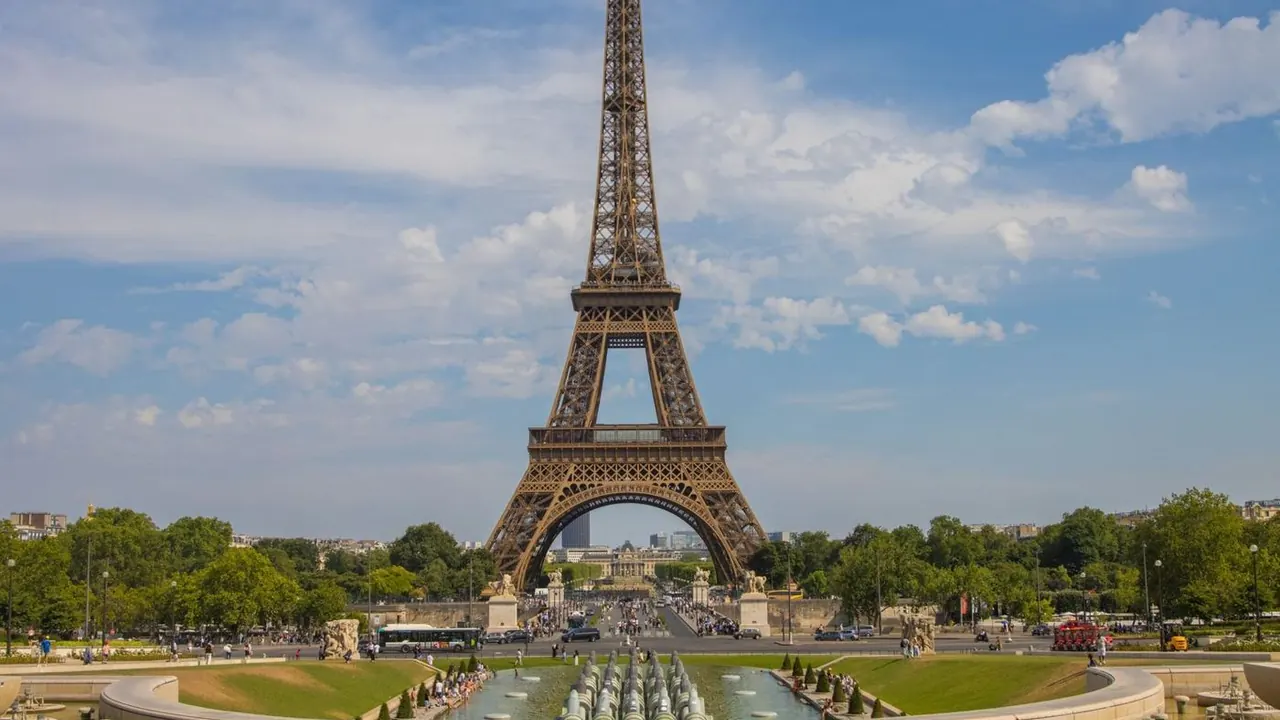
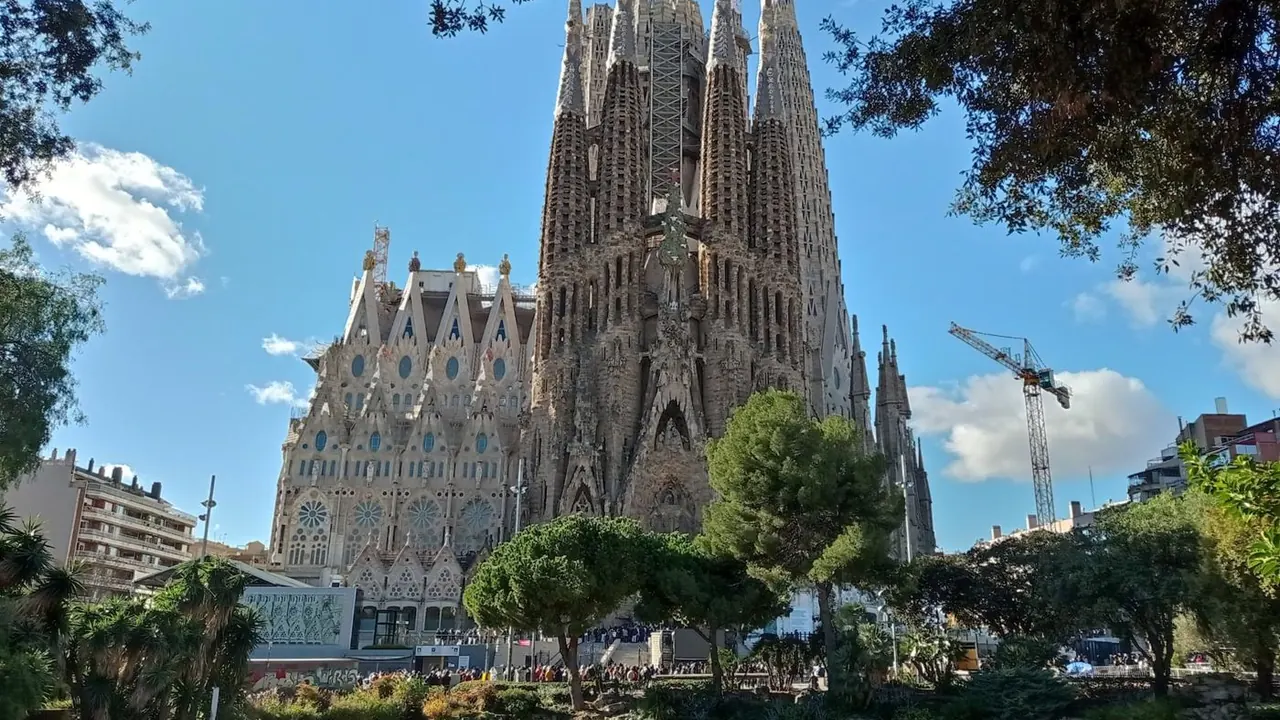
Photos: Paris by Efrem Efre, Pexels License; Barcelona by Canaan, CC BY-SA 4.0, cropped.
Paris or Barcelona?
Our verdict in twelve categories, each scored against the same fixed benchmark cities, and the climate month by month, so you can choose for your trip.
Choose Paris for
- shopping
- live music and the arts
- food and drink
Paris is the stronger choice when the city itself is the whole point. Its museums go deeper, from the Louvre to the Orangerie, good food is part of every street, and its shopping, from Avenue Montaigne to the Saint-Ouen flea market, has no real match in Barcelona. Add the opera houses and a run of day trips from Versailles to Reims, and it rewards a longer stay, as long as the budget allows and the sea is not on the list.
Choose Barcelona for
- beaches
- nature and the outdoors
- prices
Barcelona suits a trip that mixes city and sea. You can spend the morning on a Gaudí façade or in the Gothic Quarter and the afternoon swimming off Bogatell, with the Collserola hills and Montserrat close by for walking. It is also cheaper to stay in, and its late, warm nights in the neighbourhood squares make it the easier choice for a summer trip with friends.
Scoreboard
Twelve categories on one fixed scale from 0 to 100. The shaded stretch is the gap between the two.
Your match
Pick a travel style or drag the sliders, and both match scores follow your weighting.
Too close to call, 2 points apart
Wins on shopping and live music and the arts with your weighting.
Wins on beaches and nature and the outdoors with your weighting.
What matters to you?
Category by category
What the scores mean for a trip.
Beaches & swimming
This is the widest gap between the two. Barcelona has several kilometres of sand from Barceloneta to Mar Bella within easy reach of the centre, and the sea is warm enough to swim in all summer. The city beaches are man-made and packed in high summer, but local trains reach the better ones at Castelldefels and Sitges.
Paris has no sea. Its summer riverbank beaches and the open-air swimming at the Bassin de la Villette are only for cooling off, and the Normandy coast is two hours away, with colder water. Anyone who wants to swim in the sea should choose Barcelona.
Food & drink
Both are serious places to eat, but Paris goes deeper. Barcelona has a cuisine of its own, from suquet to calçots with romesco, and a late-morning vermouth habit. Its covered markets such as Santa Caterina and Sant Antoni have counters where locals eat, and there is a strong tasting-menu scene on top.
In Paris, good food is part of every street: the boulangerie, the cheese shop, the market on its set mornings, the zinc-counter bistro and the natural wine bar, with haute cuisine at the top. North African cooking in Belleville and Vietnamese in the 13th add range, and the pastry alone is a reason to go.
Culture & sights
Barcelona's great draw is something no other city has: Gaudí and the Modernistas, from the Sagrada Família to the Palau de la Música Catalana. Under them lies a Gothic Quarter with Roman walls. Its museums, among them the Picasso and the MNAC's Romanesque frescoes, are good without being vast.
Paris simply has more, and more of it is world-class. The Louvre, the Musée d'Orsay and the Pompidou can each fill a day, the Sainte-Chapelle and Notre-Dame stand on the Île de la Cité, and Haussmann's boulevards make the whole centre a sight. A week in Barcelona covers the essentials, but in Paris it barely makes a start.
Nightlife
The two are evenly matched after dark, but the nights take different shapes. Barcelona runs later, with dinner at eleven, bars after that and clubs from two until dawn. Gràcia's squares and Poble Sec's pintxos bars carry the crowd, and a deep electronic music scene moves to open-air parties in summer.
Paris starts earlier and is more polished. The evening opens on a terrace or in a wine bar, the east around Oberkampf and the Canal Saint-Martin is where most people go out, and the clubs and summer barges take over when the bars close around two. Doors can be selective, and drinks cost more.
Nature & outdoors
Barcelona has real landscape on its doorstep. The Collserola hills start at the edge of Gràcia, the sea offers sailing and paddleboarding, and the rock pinnacles of Montserrat and the cliffs of the Costa Brava are within two hours.
Paris is gentler. Its outdoors means formal gardens, the cliffs and lake of the Buttes-Chaumont, the woods of Boulogne and Vincennes, and the sandstone boulders of Fontainebleau. With no mountains or coast nearby, it suits a bike ride along the canals better than a proper hike.
Day trips
Barcelona's day trips stay inside Catalonia and mix old towns with mountain and sea. Fast trains reach medieval Girona in under forty minutes, as well as the Dalí museum at Figueres and Roman Tarragona. Montserrat, Sitges and the cava cellars of the Penedès are closer still.
Paris has the longer list, built around châteaux and great cathedrals. Versailles, Fontainebleau and Chartres are each about an hour or less away, and Giverny adds Monet's garden. Fast trains bring Reims and its Champagne houses, Rouen and the Loire châteaux beyond Tours within easy range. On a long stay, these trips can fill many more days than Barcelona's.
Good for families
Both work well with children, in different ways. Barcelona adds the beach to the aquarium, CosmoCaixa and the Tibidabo funfair, and children are welcome in restaurants late into the evening. Its weak points are the narrow, crowded old town and the summer heat.
Paris has the bigger theme parks close by, Disneyland and Parc Astérix, plus the Cité des Sciences and the carousels and toy sailboats of the Luxembourg gardens. Day-to-day life is harder, with stairs at many metro stations and small hotel rooms.
Getting around
Both cities are best on foot, and a car is a burden in either. Barcelona's centre is flat from the Gothic Quarter to Gràcia, the metro is simple, and the seafront promenade links the port to the beaches. Park Güell, Montjuïc and Tibidabo all mean a climb.
Paris is more compact and better connected. Walking along the Seine from the Louvre to the Eiffel Tower is a sight in itself, there is nearly always a metro station close by, and the RER reaches Versailles and the airports. The downsides are long corridors and stairs at many stations and packed trains at rush hour.
Shopping & style
Paris is in another league here. The luxury flagships on Avenue Montaigne, the department stores of Galeries Lafayette and Le Bon Marché, the covered passages, the Saint-Ouen flea market and the bouquinistes along the Seine are reasons to visit in themselves.
Barcelona's shopping is on a smaller scale: the Passeig de Gràcia, independent designers in the Born, vintage shops in the Raval, and espadrilles, ceramics and turrón to take home. It is enjoyable, but there is less at the luxury end.
Affordability
The gap shows most clearly in the hotel bill. Rooms in Barcelona cost less than in Paris, although they cost more than elsewhere in Spain and are dearest in summer near the old town and the seafront. The tourist tax and the Gaudí entry fees add up on a sightseeing trip, but neighbourhood tapas bars and market counters keep meals reasonable.
Paris costs more at almost every step, from small, expensive rooms to drinks on a terrace and full museum admission. Saving takes effort. The city's own museums have free permanent collections, a picnic by the river costs little, and rooms are cheaper in the outer arrondissements.
Live music & performing arts
Paris has more on stage. It has two opera houses, the Palais Garnier with its ballet and the larger Opéra Bastille, plus the Philharmonie and a full classical calendar. The Comédie-Française, the jazz cellars of Saint-Germain and the cabaret of Pigalle add more.
Barcelona has fewer venues, but some are memorable: the Liceu for opera, and the Palau de la Música Catalana, where any concert feels like an occasion. Its strength is festivals, with Sónar and Primavera Sound in early summer and the Grec on Montjuïc. In both cities most theatre is not in English.
Wellness & relaxation
Neither city is made for rest, and neither has a bathing tradition of its own. Barcelona has a few Arab-style bath houses in the old town, while Paris has the tiled hammam of the Grande Mosquée and smaller ones in the neighbourhoods.
The quiet moments differ more than the spas do. In Barcelona it is a long lunch, a terrace in Gràcia or an evening walk in the Collserola, and calmer seaside towns are close by. In Paris it is a chair in the Luxembourg gardens or a slow walk along the Seine.
When should you go?
Pick your month. The climate figures are measured averages, not a forecast.
Paris in July
Barcelona in July
Daytime high, °C
Rainfall in the month, mm
Temperature and rainfall are climate normals, averaged over the years shown. Paris: 1991-2020 normals, Paris-Montsouris (4.6 km from centre). Barcelona: 1991-2020 normals, Barcelona / Aeropuerto (14.4 km from centre).
Barcelona has the longer season. The sea is warm enough to swim from June to late September and reaches about 25°C in August, when days are hot, close to 29°C, and sunny. September and October are the wettest months, at around 83mm. Spring and late autumn are the comfortable times for walking the streets, and even winter stays mild enough to spend the day outdoors.
Paris is cooler all year. Winter highs sit around 8°C, so December to February are better spent in museums and cafés than on long walks. Late spring to early September is the best time, with summer highs in the mid-twenties that are pleasant for walking by the river. Rain falls fairly evenly through the year, and May is the wettest month.
Which traveller are you?
For a beach and sun trip, Barcelona wins outright. Sandy city beaches are a metro ride from the old town, the sea stays warm through summer, and local trains reach Sitges. Paris offers only riverbank beaches and a cool Channel two hours away.
On a shopping trip, Paris is the clear choice. Its luxury flagships on Avenue Montaigne, Galeries Lafayette, Le Bon Marché, the Marais designers and the Saint-Ouen flea market go far deeper than Barcelona's Passeig de Gràcia and the boutiques of the Born.
On a tight budget, Barcelona makes the money last longer. Hotels cost less than in Paris, and weekday set lunches, market counters and vermouth by the glass keep daily costs low, though the Gaudí entry fees add up on a busy sightseeing day.
Before you go
| Measure | Paris | Barcelona |
|---|---|---|
| Official language | French | Spanish |
| Currency | Euro (EUR) | Euro (EUR) |
| Sockets | CE230 V, 50 Hz | CF230 V, 50 Hz |
| Driving side | Right | Right |
| Time zone | UTC+1, UTC+2 in summer | UTC+1, UTC+2 in summer |
| Emergency number | 112 | 112 |
| Elevation | 27 m | 9 m |
| Main airport | Charles de Gaulle International Airport (CDG)22 km from centre277 non-stop destinations | Josep Tarradellas Barcelona-El Prat Airport (BCN)13 km from centre235 non-stop destinations |
| Public holidays this year | 11 days | 14 days |
By the numbers
| Measure | Paris | Barcelona |
|---|---|---|
| City population | 2,103,778 | 1,731,649 |
| People per km² | 19,960 | 17,094 |
| Museums within 10 km | 251 | 95 |
| UNESCO World Heritage sites within 50 km | 4 | 3 |
| Swim season, months above 21 °C | - | 3 months |
Where else could you go?
Every comparison below shares a destination with this one, so you can follow Paris or Barcelona somewhere new.