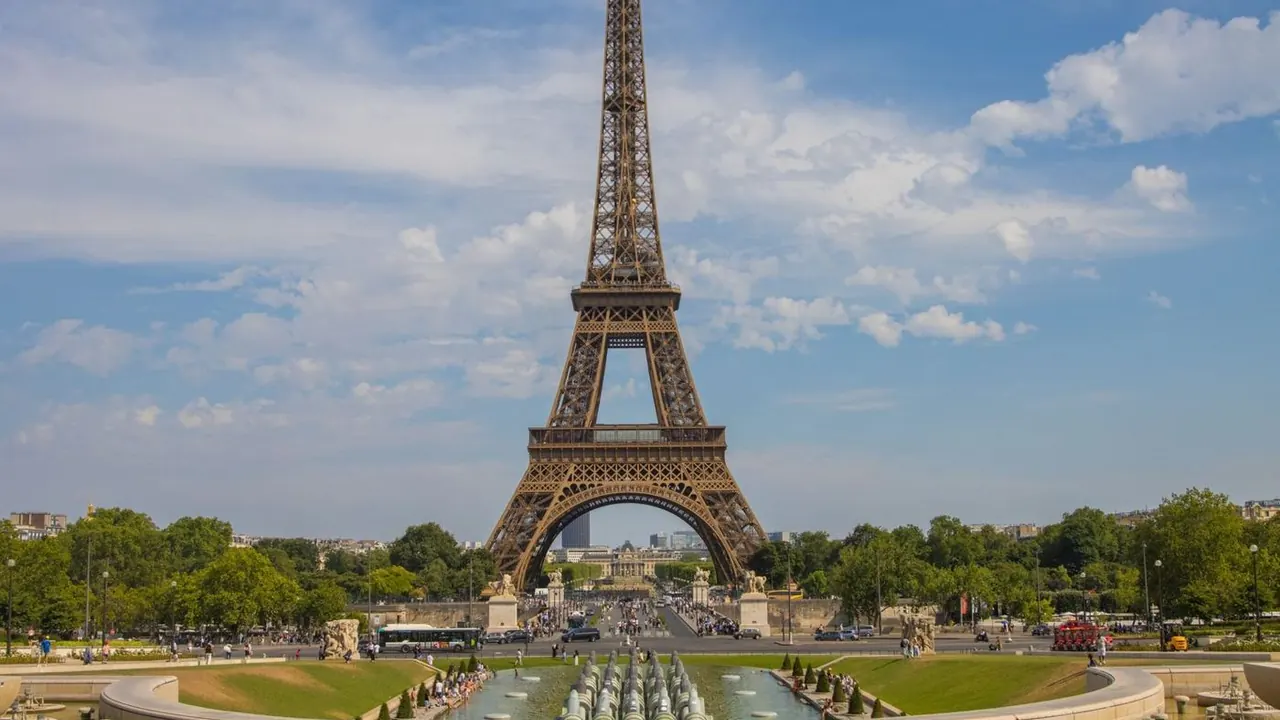
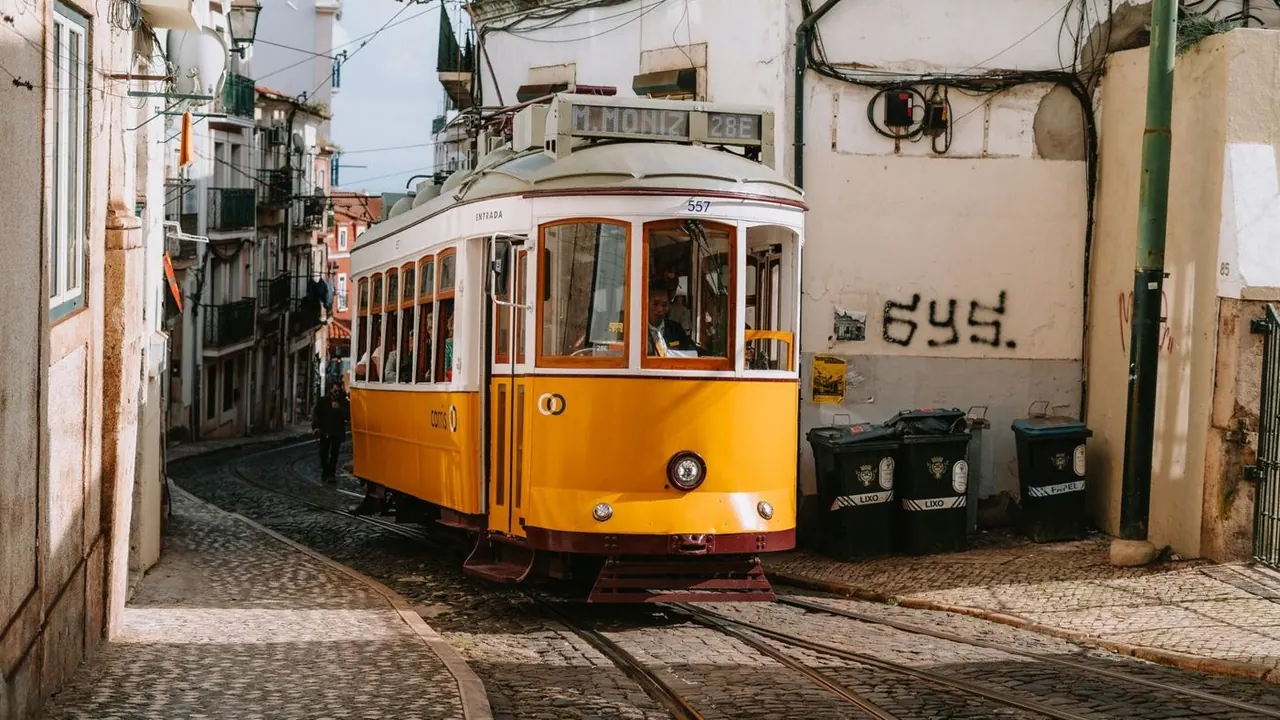
Photos: Paris by Efrem Efre, Pexels License; Lisbon by Riccardo Toso, Pexels License.
Paris or Lisbon?
Our verdict in twelve categories, each scored against the same fixed benchmark cities, and the climate month by month, so you can choose for your trip.
Choose Paris for
- shopping
- live music and the arts
- getting around
Choose Paris when the city itself is the whole point. Its museums, food, shopping and stages go deeper than almost anywhere, the flat centre and dense metro make it easy to get around, and Versailles, Chartres or Reims can add extra days. Expect to pay clearly more for all this, and to give up sea and wild coast in exchange for formal gardens and walks along the Seine.
Choose Lisbon for
- beaches
- prices
- nature and the outdoors
Lisbon suits travellers who want a city and the Atlantic in the same trip. Sandy beaches are a short train ride away, there is surf and cliff scenery at Guincho, and the Sintra hills and the Arrabida coves are close by. Prices also let a budget go further. It is a smaller, slower capital of hilltop viewpoints, fado and fish grilled in neighbourhood tascas, best for people who like to wander and don't mind climbing.
Scoreboard
Twelve categories on one fixed scale from 0 to 100. The shaded stretch is the gap between the two.
Your match
Pick a travel style or drag the sliders, and both match scores follow your weighting.
Wins on shopping and live music and the arts with your weighting.
Wins on beaches and prices with your weighting.
What matters to you?
Category by category
What the scores mean for a trip.
Beaches & swimming
Neither city has a beach in the centre, but Lisbon is far closer to the real thing. The coastal train reaches the surf at Carcavelos and the calmer bays of Estoril and Cascais. Costa da Caparica runs along the Atlantic across the river, and the sheltered Arrabida coves are about an hour's drive away. The water stays cool, and some beaches suit surfers better than swimmers.
Paris makes do with sand and deckchairs laid out on the riverbanks in summer, swimming spots in the Bassin de la Villette and the Seine, and some handsome public pools. The nearest sea is the Channel at Deauville, about two hours by train, so it is a separate trip rather than an afternoon out.
Food & drink
Both are good places to eat, but Paris is on another level. Its range runs from the neighbourhood boulangerie and morning markets like Aligre all the way to haute cuisine. Inventive neo-bistros in the east of the city, natural wine bars and the immigrant kitchens of Belleville and the 13th add a breadth few cities can match.
Lisbon's strength is simpler and narrower: grilled fish and bacalhau in family tascas, clams and prawns in seafood beer halls, the warm custard tart, and very good Portuguese wine poured cheaply. It is a treat for anyone who loves seafood, but there is less international cooking and fewer ambitious restaurants. In both cities, avoid the streets right around the main sights.
Culture & sights
Lisbon's heritage is compact and distinctive. There are the Manueline Jeronimos Monastery and the Belem Tower, the Baixa grid rebuilt after the earthquake of 1755, and the medieval lanes of Alfama below the castle. The Gulbenkian and the National Tile Museum round it off, and three or four days cover it well.
Paris works on a different scale. The collections of the Louvre, the Orsay, the Pompidou and the Rodin, the Gothic of Notre-Dame and the Sainte-Chapelle, and the unified Haussmann centre could fill a week or more. The cost is long queues at the big names, so booking ahead matters.
Nightlife
Both cities make for good nights out, and the difference is in style. Lisbon's nightlife is out on the street and late. People buy drinks through bar doors in Bairro Alto, move on to the pink street of Cais do Sodre, and end up in riverside warehouse clubs that fill after 2am. Sunset at the miradouros is the warm-up, and prices stay relaxed.
Paris starts on café terraces and in wine bars. Its centre is the east, around Oberkampf, the Canal Saint-Martin and Belleville, and the night moves on to house and techno clubs when the bars close. It is chicer and pickier at the door, and drinks cost noticeably more.
Nature & outdoors
Lisbon has the wilder surroundings. The Monsanto forest park is inside the city. Within easy reach are the Sintra hills, the cliffs of Cabo da Roca, kitesurfing at Guincho, the surf reserve at Ericeira and the Arrabida ridges, with kayaking there and dolphin trips from Setubal.
Paris is a city of parks and woods: the Luxembourg and the Buttes-Chaumont, the Bois de Boulogne and the Bois de Vincennes, and flat canal paths for cycling. The forest of Fontainebleau, with its climbing boulders, is about forty minutes away. It is good for gentle walking, but there is no coast or open landscape.
Day trips
Paris has the longer and grander list of days out, though Lisbon's is far from thin. From Lisbon, Sintra's palaces and the Quinta da Regaleira are the classic outing, about forty minutes by train, with Cascais and the palace-convent at Mafra for gentler half days. Further out are walled Evora, with its Roman temple, and the UNESCO monasteries of Alcobaca, Batalha and Tomar.
From Paris, Versailles is under an hour away, Fontainebleau, Chantilly and Chartres are just as easy, and Giverny has Monet's house and garden. Fast trains put Reims and its Champagne houses, Rouen, the Loire châteaux and even Brussels within a day, so a long stay can fill many days out without repeating itself.
Good for families
Paris gives children more to do. Disneyland Paris and Parc Astérix are a short train ride out, the Cité des Sciences is huge and hands-on, and the parks have carousels, puppet shows and toy sailboats on the Luxembourg pond. The downsides are metro stairs, small hotel rooms and museum queues.
Lisbon has fewer attractions, but strong ones: the Oceanario and the science centre at the Parque das Nacoes, the zoo, trams and funiculars that children enjoy, and easy beach days by train. Children are welcome in restaurants late into the evening, but the steep hills and slippery pavements make pushchairs hard work.
Getting around
Paris is far easier to get around. Its centre is flat enough to walk for hours along the Seine. With the dense metro, the RER and the bike-share, a station or a bike is always close, though many stations have only stairs.
Lisbon is compact too, but its hills, long stairways and polished stone turn short distances into climbs. The metro misses Belem and the old quarters, so you depend on slow, crowded trams, funiculars and the Santa Justa lift. Trains and ferries cover the outskirts well.
Shopping & style
Paris is one of the world's great shopping cities. It has the flagships on Avenue Montaigne, the historic department stores, the Marais boutiques, the nineteenth-century covered passages, the Saint-Ouen flea market, and specialist shops selling chocolate, cheese and mustard.
Lisbon is better for a handful of distinctive things than for range. Azulejo tiles, cork, Burel wool, tinned sardines and port are the things to take home, from Chiado, Principe Real, the Feira da Ladra or the LX Factory. International fashion is thin.
Affordability
Lisbon is the cheaper trip, especially day to day. Coffee at the counter, tasca lunches, house wine and transport all cost little. Central rooms are the exception, priced much like other southern European capitals.
Paris is expensive almost across the board, from small hotel rooms to terrace drinks and full-price museum entry. Bakeries, markets, picnics by the river and the free permanent collections in the city's own museums help, but the same trip still costs clearly more than in Lisbon.
Live music & performing arts
Paris has the much fuller calendar. There is ballet at the Palais Garnier, opera at the Bastille, concerts at the Philharmonie and chamber music in the Sainte-Chapelle, plus jazz cellars in Saint-Germain and cabaret in Pigalle.
Lisbon's highlight is narrower but entirely its own: fado, heard every night in the casas of Alfama, Mouraria and Bairro Alto. Beyond that, the Gulbenkian orchestra, the Sao Carlos opera house and the Centro Cultural de Belem make up a smaller formal scene. In both cities most theatre is in the local language.
Wellness & relaxation
Neither city is made for a wellness break, and in both, spa treatments mostly mean hotel spas. Paris does have a steam-bath habit, with the tiled hammam of the Grande Mosquée, smaller neighbourhood hammams and a few historic public pools.
Lisbon has no bathing tradition, but its slower pace, long lunches and river viewpoints are restful in themselves. For a properly quiet stay, sleep out on the Cascais coast or in the Sintra hills.
When should you go?
Pick your month. The climate figures are measured averages, not a forecast.
Paris in July
Lisbon in July
Daytime high, °C
Rainfall in the month, mm
Temperature and rainfall are climate normals, averaged over the years shown. Paris: 1991-2020 normals, Paris-Montsouris (4.6 km from centre). Lisbon: 1991-2020 normals, Lisboa / Geof (1.1 km from centre).
Lisbon is much the warmer of the two, with long, sunny summers. From June to September days reach around 28°C, the rain almost stops and the Cascais and Caparica beaches are at their best, though the Atlantic barely gets past 19°C. Spring and early autumn are the best times for walking the hills. October to December bring the heaviest rain, often more than 100mm a month, but it stays mild and rarely turns cold.
Paris has no beach season and is cooler all year. Summer highs are nearer 26°C, and winter days fall to around 8°C, which makes December to February raw for long walks. Its rain is spread fairly evenly through the year rather than coming in one wet season, so late spring, early summer and September are the most comfortable months for a city stay.
Which traveller are you?
On a beach and sun trip, Lisbon lets you split each day: a morning in the old quarters, an afternoon on the sand after a short train ride, dinner back in town. Expect cool Atlantic water and surf. From Paris the sea is a separate journey.
For a shopping trip, Paris can fill several days on its own, with luxury streets one morning, department stores the next afternoon and a weekend rummaging at the flea market. Lisbon suits someone who wants a few crafted things to take home, not a new wardrobe.
On a tight budget, Lisbon is easier to manage without giving much up. Eat and drink where residents do and the room is the only real cost to plan around. In Paris, saving means picnics, free collections and a smaller room further out.
Before you go
| Measure | Paris | Lisbon |
|---|---|---|
| Official language | French | Portuguese |
| Currency | Euro (EUR) | Euro (EUR) |
| Sockets | CE230 V, 50 Hz | CF230 V, 50 Hz |
| Driving side | Right | Right |
| Time zone | UTC+1, UTC+2 in summer | UTC, UTC+1 in summer |
| Emergency number | 112 | 112 |
| Elevation | 27 m | 100 m |
| Main airport | Charles de Gaulle International Airport (CDG)22 km from centre277 non-stop destinations | Lisbon Humberto Delgado Airport (LIS)7 km from centre156 non-stop destinations |
| Public holidays this year | 11 days | 14 days |
By the numbers
| Measure | Paris | Lisbon |
|---|---|---|
| City population | 2,103,778 | 545,796 |
| People per km² | 19,960 | 5,453 |
| Museums within 10 km | 251 | 80 |
| UNESCO World Heritage sites within 50 km | 4 | 3 |
| Swim season, months above 21 °C | - | None |
Where else could you go?
Every comparison below shares a destination with this one, so you can follow Paris or Lisbon somewhere new.