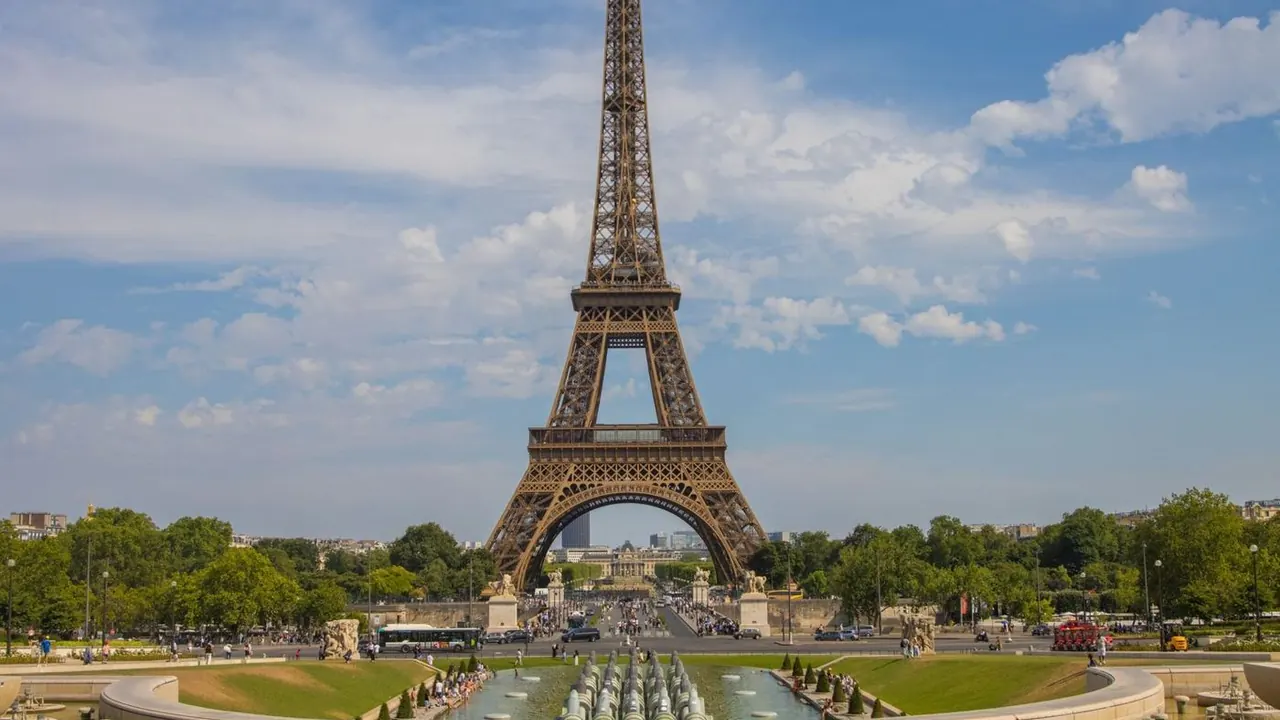
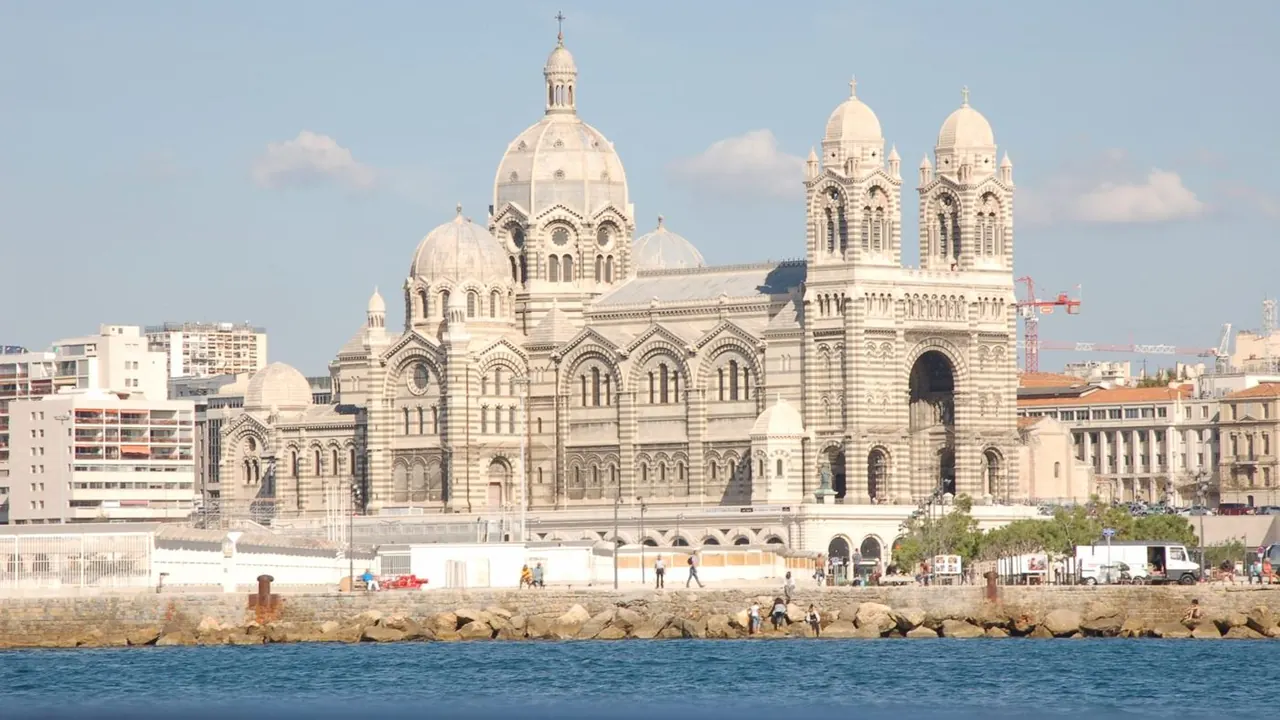
Photos: Paris by Efrem Efre, Pexels License; Marseille by Charlotte Noblet, CC BY-SA 3.0, cropped.
Paris or Marseille?
Our verdict in twelve categories, each scored against the same fixed benchmark cities, and the climate month by month, so you can choose for your trip.
Choose Paris for
- shopping
- culture and sights
- live music and the arts
For museums, serious eating, shopping and evenings out, Paris is the clear choice. The Louvre and the Orsay, the bistros and markets of every quarter, the department stores and the opera houses all lie within a centre you can walk across, with a metro station never far away. Families have far more to do, and Versailles, Chartres and Reims are easy days out by rail. What you give up is the sea, and you pay more for everything.
Choose Marseille for
- beaches
- nature and the outdoors
- prices
Marseille suits a warm-weather trip where the sea and the limestone coast matter as much as the city. Swimming off the rocks of the Corniche, walking to the inlets of the Calanques and taking the train to Aix, Cassis or Arles fill a week well, and the bill is noticeably gentler than in the capital. You need some tolerance for it, though. Marseille is steep, loud and rough at the edges, and it is harder going with small children or on a shopping afternoon.
Scoreboard
Twelve categories on one fixed scale from 0 to 100. The shaded stretch is the gap between the two.
Your match
Pick a travel style or drag the sliders, and both match scores follow your weighting.
Wins on shopping and culture and sights with your weighting.
Wins on beaches and nature and the outdoors with your weighting.
What matters to you?
Category by category
What the scores mean for a trip.
Beaches & swimming
This is the clearest win Marseille has. You get a real Mediterranean seafront inside the city: the broad Prado beaches with lawns behind them, the little Plage des Catalans and rocky inlets like the Vallon des Auffes for a swim before breakfast. The prize is the clear water of the Calanques, worth the half day it takes to reach them. The mistral can chill the sea overnight, and the city beaches sometimes close after heavy rain.
Paris has no coast. In summer the riverbanks get sand and deckchairs and you can swim in the Bassin de la Villette, which is fine for cooling off. For actual sea swimming you need Normandy, two hours away on the cooler Channel.
Food & drink
Marseille's cooking is narrower and tied to the sea. There is bouillabaisse taken seriously in the little Corniche harbours, fish sold straight off the boats on the Vieux-Port quay, chickpea panisses and wood-fired pizza. Noailles, a tight knot of North African, Comorian and Armenian grocers and bakeries, is the place to eat your way along a street.
Paris eats better both day to day and at the top. Every quarter has its boulangerie, cheese shop and market morning, and on top of that come zinc-counter bistros, natural wine bars, small inventive kitchens in the east of the city, the haute cuisine tradition and pastry treated as an art. Belleville's couscous and the pho of the 13th widen it further. In both cities, the tired set menus sit right next to the main sights.
Culture & sights
Paris is in another league. The Louvre, the Orsay, the Orangerie, the Pompidou and the Cluny would each anchor a trip on their own. Add the Gothic of the Sainte-Chapelle and the unbroken Haussmann streetscape, and you have a city you could spend a fortnight looking at.
Marseille offers a different and smaller kind of heritage. As France's oldest city, founded by Greek sailors, it scatters its sights through a working port: the striped basilica above the harbour, the forts beside the MuCEM, the stepped lanes of Le Panier and Le Corbusier's Cité Radieuse. It feels more like discovery than pilgrimage, and two or three days cover it well.
Nightlife
Paris gives you far more choice after dark. Evenings start in a wine bar or on a terrace and move through Oberkampf, the Canal Saint-Martin and Belleville, with cocktail bars in South Pigalle and a strong gay scene in the Marais. Then come clubs playing house and techno until dawn. It is chic and can be choosy at the door, and drinks are dear.
Marseille's nights are scruffier and more outdoor: graffiti-painted bars and pavement tables around Cours Julien and La Plaine, pastis on the Vieux-Port terraces, and warehouse or rooftop parties in summer. It goes quiet in winter, and some central streets are best left by taxi late at night.
Nature & outdoors
Marseille has wild country inside its own boundary. The Calanques national park offers white limestone ridges, coastal paths down to Sormiou, Sugiton and En-Vau, sport climbing on the cliffs, and kayaking and diving around the Riou islands. Sainte-Victoire and the Sainte-Baume forest are within an hour. The catch is summer, when fire risk can close the massifs.
Paris is a city of gardens and woods: the Luxembourg, the cliffs of the Buttes-Chaumont, and running or rowing in the Bois de Boulogne and Vincennes. Its best outdoor day is Fontainebleau, forty minutes away, with sandstone boulders famous among climbers, but the region has gentle walking rather than big landscapes.
Day trips
Marseille opens up Provence. Aix and Cassis are close, Arles and Avignon's Palais des Papes are easy by train, and the coastal line runs out to the fishing harbours of the Côte Bleue. The hilltop villages of the Luberon, Les Baux and Saint-Rémy give the region its colour, but they are much easier with a hire car than by public transport.
Paris has the edge, mainly because it never needs a car. Versailles, Fontainebleau, Chantilly and Chartres are about an hour away or less. Fast trains put Reims and its Champagne houses, Rouen, the Loire at Tours and even Brussels within a day.
Good for families
Paris is the easier choice with children. Disneyland and Parc Astérix are a short train ride out, and in town there are the hands-on Cité des Sciences, the zoo at Vincennes, the Trocadéro aquarium, the skeletons of the Jardin des Plantes, plus carousels and toy sailboats in the Luxembourg. Metro stairs and small hotel rooms are the main trials.
Marseille works mostly as a summer beach stay. Families get the gentle water at the Prado, Parc Borély's lake and lawns, and boat trips out to the Château d'If. With no zoo, aquarium or theme park, adult-focused museums, steep streets and heavy traffic, you will push a buggy uphill a lot.
Getting around
Marseille's walkable core runs from the Vieux-Port through Le Panier to Cours Julien, but it climbs steeply. The metro and trams link the main station, the port and the centre well enough, yet they do not reach the beaches or the Calanques trailheads. The buses that do crawl through traffic, so the summer harbour ferries to Pointe Rouge and L'Estaque make a welcome shortcut.
Paris is far simpler to get around. The centre is largely flat and made for walking, from the Marais to Saint-Germain or along the Seine to the Eiffel Tower, and a dense metro, the RER and bike-share cover nearly everything beyond it. Expect long corridors, rush-hour crushes and pickpockets on the tourist lines.
Shopping & style
Paris is one of the world's great shopping cities. Its range runs from the couture flagships of Avenue Montaigne and the Faubourg Saint-Honoré, through Galeries Lafayette and Le Bon Marché and the independent designers of the Marais, to antiques at Saint-Ouen and old prints from the bouquinistes. Chocolate, cheese and mustard from long-established specialists also make good things to take home.
Marseille's shopping is about local things rather than fashion. Look for green cubes of olive-oil soap, painted santon figures from the Le Panier workshops, and fabrics and spices in the lanes of Noailles. Rue Paradis and La Joliette cover the chains, but you will run out of boutiques within an afternoon.
Affordability
Marseille is the cheaper stay, in the middle of the range for a big Western European city. Market food, North African snacks and pizza keep everyday eating cheap, and the Calanques walks cost nothing. Rooms near the port and beaches climb sharply in July and August, though.
Paris is expensive from the hotel room upward, with terrace drinks and full-price museum tickets that add up fast. Some habits help: picnics by the river, bakery lunches, the free permanent collections of the city-run museums and a bed in the outer arrondissements.
Live music & performing arts
Marseille is solid and more Mediterranean in flavour. It has the art deco Opéra, serious drama at La Criée in the old fish market, and a mix of theatre, dance and concerts at the Friche la Belle de Mai. Its musical identity lies in French hip-hop and world music, celebrated each autumn at the Fiesta des Suds.
Paris has the bigger stage by far. There is ballet at the Palais Garnier, opera at the Bastille, and world-class orchestras at the Philharmonie and the Maison de la Radio. Chamber music in the Sainte-Chapelle, jazz cellars on the rue des Lombards and cabaret in Pigalle fill out the evenings. Theatre, led by the Comédie-Française, is mostly in French.
Wellness & relaxation
Neither city is a place to go for rest, and neither has a bathing tradition. In Paris you can find calm in town: the tiled hammam of the Grande Mosquée, luxury hotel spas, or an hour with a book in the Luxembourg gardens.
Marseille's few hammams serve mainly locals. Its slow moments come in the form of a long harbour lunch on the Corniche, and those who really want peace tend to sleep in Cassis or inland and visit the city by day.
When should you go?
Pick your month. The climate figures are measured averages, not a forecast.
Paris in July
Marseille in July
Daytime high, °C
Rainfall in the month, mm
Temperature and rainfall are climate normals, averaged over the years shown. Paris: 1991-2020 (sunshine 1961-1990) normals, Paris-Montsouris (4.6 km from centre). Marseille: 1991-2020 normals, Marseille / Marignane (20.6 km from centre).
Marseille is the warmer of the two in every month. The sea is pleasant for swimming from June to September and reaches about 22°C in August, but July afternoons climb to 31°C, which makes midday sightseeing and summer hikes heavy going. May, June and late September are the best months to combine the city, the coast and the hills. Autumn is the wettest season, with September the rainiest month at around 82mm, while high summer is almost dry. Winters are mild, and October still brings warm afternoons on a terrace.
Paris has a gentler summer, with highs near 26°C that suit long days on foot, and a cold winter when daytime highs sit around 8°C. Its rain is spread fairly evenly through the year rather than gathering in one season, so an umbrella is worth packing in any month. Late spring and early autumn are the most comfortable times for walking the city.
Which traveller are you?
On a beach and sun trip, Marseille wins outright. It has the Prado beaches for an easy swim, the turquoise Calanques inlets and the Frioul coves a short ferry ride away, and summer sea warm enough for daily swims. Paris has only dressed-up riverbanks and the cool Channel two hours away.
For a culture and arts trip, Paris is the obvious pick. The Louvre, the Orsay, the Sainte-Chapelle and the Marais townhouses come on top of two opera houses and the Philharmonie. Marseille's MuCEM, Le Panier and Notre-Dame de la Garde make a good two days rather than a week.
On a shopping trip, choose Paris. The fashion houses of Avenue Montaigne, Galeries Lafayette, Le Bon Marché, the covered passages and the Saint-Ouen flea market are a destination in themselves. Marseille gives you soap, santons and the stalls of Noailles, and its fashion streets run out quickly.
Before you go
| Measure | Paris | Marseille |
|---|---|---|
| Official language | French | French |
| Currency | Euro (EUR) | Euro (EUR) |
| Sockets | CE230 V, 50 Hz | CE230 V, 50 Hz |
| Driving side | Right | Right |
| Time zone | UTC+1, UTC+2 in summer | UTC+1, UTC+2 in summer |
| Emergency number | 112 | 112 |
| Elevation | 27 m | 0 m |
| Main airport | Charles de Gaulle International Airport (CDG)22 km from centre277 non-stop destinations | Marseille Provence Airport (MRS)21 km from centre126 non-stop destinations |
| Public holidays this year | 11 days | 11 days |
By the numbers
| Measure | Paris | Marseille |
|---|---|---|
| City population | 2,103,778 | 886,040 |
| People per km² | 19,960 | 3,683 |
| Museums within 10 km | 251 | 27 |
| UNESCO World Heritage sites within 50 km | 5 | 1 |
| Swim season, months above 21 °C | - | 2 months |
Where else could you go?
Every comparison below shares a destination with this one, so you can follow Paris or Marseille somewhere new.
- Avignonvs Marseille
- Saint-Tropezvs Marseille
- Montpelliervs Marseille
- Cannesvs Marseille
- Antibesvs Marseille
- Nicevs Marseille