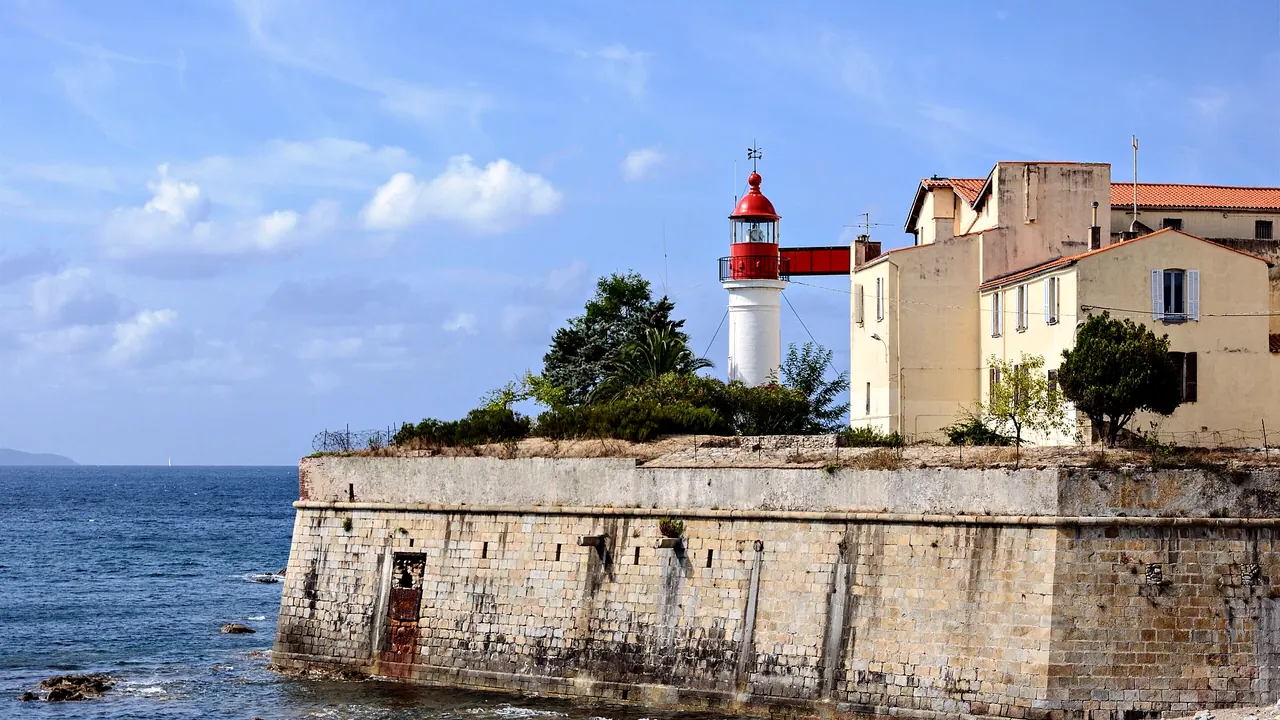
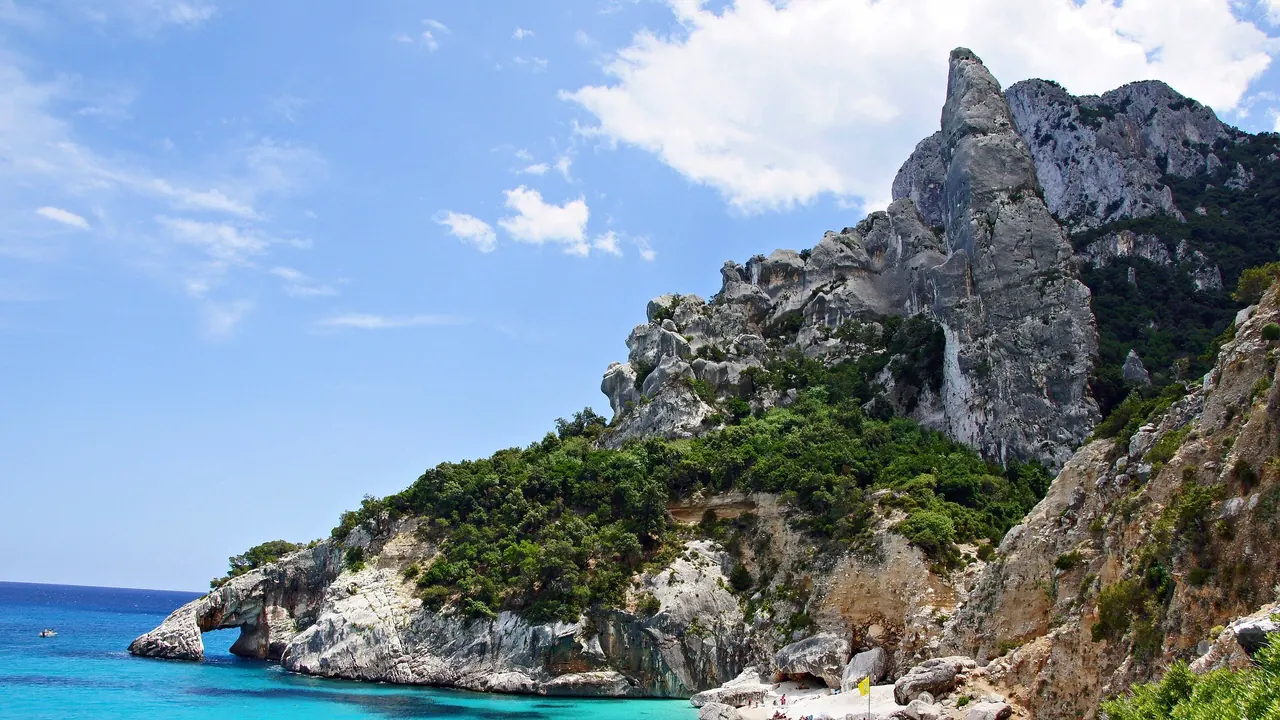
Photos: Corsica by Myrabella, CC BY-SA 3.0, cropped; Sardinia by Yesuitus2001, CC BY-SA 2.5, cropped.
Corsica or Sardinia?
Our verdict in twelve categories, each scored against the same fixed benchmark cities, and the climate month by month, so you can choose for your trip.
Choose Corsica for
- nature and the outdoors
Corsica is the island for people who want mountains as much as the sea. Its granite spine rises straight out of the water, so in one week you can walk part of the GR20, swim below the red cliffs of Piana and spend an evening inside the clifftop old town of Bonifacio. It suits walkers, divers and road-trippers who don't mind narrow roads, quiet nights and a high bill in summer.
Choose Sardinia for
- nightlife
- shopping
- families
Sardinia is the easier and broader beach vacation. It has a wider choice of shallow, sandy bays for children, more distinctive food at the farm tables inland, livelier summer nights in the northeast and around Cagliari, and costs that stay moderate away from the Costa Smeralda. Add the Bronze Age nuraghi and it is the better pick for families and for travellers who care more about eating, swimming and some evening life than about high peaks.
Scoreboard
Twelve categories on one fixed scale from 0 to 100. The shaded stretch is the gap between the two.
Your match
Pick a travel style or drag the sliders, and both match scores follow your weighting.
Wins on nature and the outdoors with your weighting.
Wins on nightlife and shopping with your weighting.
What matters to you?
Category by category
What the scores mean for a trip.
Beaches & swimming
On beaches the islands are evenly matched, and both are among the best in the Mediterranean. Corsica's finest are in the far south: Palombaggia, Santa Giulia and the round cove of Rondinara, all pale sand behind granite. The Agriates in the north add Saleccia and Lotu, which you reach by boat or a long track.
Sardinia gives you more kinds of beach to choose from. There are granite coves around the Costa Smeralda and La Maddalena, white pebble bays under the Orosei cliffs, and wading-shallow water at La Pelosa and Chia. Cagliari also has Poetto as a town beach. The island is large enough that one side is usually sheltered when the mistral blows.
Food & drink
Both islands cook shepherd's food rather than seaside food, but Sardinia's table is richer and easier to find. Corsica is excellent for charcuterie, brocciu, chestnut dishes and Patrimonio wine, mostly in village inns and in the markets of Ajaccio and Bastia. Its beach-resort menus are often ordinary.
Sardinia has the agriturismi, where long set menus of suckling pig, pane carasau, culurgiones and seadas come straight from the farm. Cagliari has far more choice than any Corsican town, with its San Benedetto market and the seafood of the Marina quarter.
Culture & sights
The two are roughly level for sightseeing, but the history is different. Corsica's is a frontier of Genoese citadels and watchtowers. The highlights are Bonifacio on its white cliffs, Calvi, Corte as the old capital of the Corsican republic, and Napoleon's Ajaccio with the Palais Fesch.
Sardinia goes much further back. It has thousands of Bronze Age nuraghi, with Su Nuraxi at Barumini as the great complex, and the Mont'e Prama giants in Cagliari's archaeological museum. The seaside ruins of Nora and Tharros and Alghero's Catalan old town add more. Both islands share Pisan Romanesque churches, and on both the sights are a road trip apart.
Nightlife
Sardinia has noticeably more going on after dinner. In July and August the Costa Smeralda around Porto Cervo has dressy beach clubs and late nightclubs. Cagliari keeps wine bars open in the Marina and Castello quarters all year, and Alghero's ramparts fill up for aperitivo.
Corsica's late nights are limited to a few open-air clubs behind Porto-Vecchio and the harbour bars of Calvi in high summer. Beyond those, most of the island has gone to bed soon after the last course.
Nature & outdoors
Corsica is the wilder island. Peaks above 2,700m rise almost from the shore, and the GR20 runs along the mountain spine. The Calanques de Piana, the Scandola reserve, Bavella and the glacial lakes above the Restonica gorge sit within a few hours of one another, with canyoning rivers in the chestnut forests between them.
Sardinia has great country too, but most of it is in the east: the Supramonte, the Gorropu gorge and the hard Selvaggio Blu cliff trek. It makes up for this at sea, with the Maddalena marine park for sailing and diving, kitesurfing at Porto Pollo and flamingos in the lagoons.
Day trips
On both islands a day out means a small town or a stretch of villages, and on both the slow mountain roads tie you to one base. The two are linked by the ferry across the strait, so Bonifacio's cliffs are a day out from Santa Teresa Gallura, and northern Sardinia is a day out from Bonifacio.
Sardinia gives you slightly more variety. You can do a northwest loop of Alghero, Bosa and Capo Caccia, cross to Carloforte, or visit the mask villages of Barbagia. Corsica has Sartène, the craft villages of the Balagne, Cap Corse, and Corte by the island railway.
Good for families
Sardinia is the easier island with children. Chia, the Costa Rei, La Pelosa and much of the Gallura have shallow, sandy water. Many resort villages run pools and children's clubs, and there are a few water parks.
Corsica can work well for a family too, with a campsite or resort near a calm bay such as Santa Giulia and outings to river pools and sea caves. It has fewer of those easy beaches, though, nothing built for children, and twisting roads that make long drives tiring.
Getting around
You need a car on both islands, but Sardinia is less hard work. The fast road between Cagliari and Sassari covers the length of the island, and with three airports at Cagliari, Olbia and Alghero you can land near your base. Boats take you to the Orosei coves and the Maddalena islands.
Corsica's roads are narrow and winding, and in summer they are slow near the resorts. The narrow-gauge railway between Ajaccio, Corte, Bastia and Calvi is a scenic ride in itself, but it does not reach the south, where most beachgoers stay.
Shopping & style
Neither island is a shopping destination, but Sardinia has more to buy. You will find red coral in Alghero, filigree gold, woven rugs, cork and Pattada folding knives. Porto Cervo has luxury boutiques in summer, and Cagliari's Via Garibaldi has ordinary shops.
Corsica's shopping is mostly the larder: charcuterie, cheese, chestnut flour, honey and wine, plus hand-forged knives and Balagne pottery. There is little fashion beyond a few summer boutiques in Porto-Vecchio and Calvi.
Affordability
Sardinia is the gentler island on the budget. Only the Costa Smeralda is truly expensive in summer. Around Cagliari, Alghero, Ogliastra and the inland villages, rooms and meals are moderate, and agriturismo menus are generous.
In Corsica, high prices in July and August are the norm across Porto-Vecchio, Bonifacio and Calvi, and car hire and ferries add to the cost. The savings are in campsites, inland villages and June or September.
Live music & performing arts
The two are close here, and on both islands the most memorable music is unaccompanied voices. Corsica's polyphonic singing fills church concerts in summer, alongside jazz in Calvi and guitar evenings in the Patrimonio vineyards.
Sardinia has the deep four-part canto a tenore, launeddas pipes and the costumed procession of Sant'Efisio. It also has the one real stage of the pair, Cagliari's Teatro Lirico with its opera and concert season.
Wellness & relaxation
On both islands rest comes from the slow pace rather than from spas, though Sardinia has a little more to offer. It has warm springs beside the Roman baths at Fordongianus, thermal hotels at Sardara and thalassotherapy at the big resorts. The unhurried villages of Ogliastra add to the calm.
In Corsica, apart from hotel spas, there are only a few simple springs such as Pietrapola. Its calm comes from siestas and quiet mountain evenings.
When should you go?
Pick your month. The climate figures are measured averages, not a forecast.
Corsica in July
Sardinia in July
Daytime high, °C
Rainfall in the month, mm
Where the figures come from
Sardinia has no rain gauge within 25 km of the centre, so its rainfall comes from a gridded climate dataset read at the destination rather than from a gauge further away.
Temperature and rainfall are climate normals, averaged over the years shown. Corsica: 1991-2020 normals, Ajaccio (5.1 km from centre). Sardinia: 1991-2020 normals, Olbia / Costa Smeralda (3.1 km from centre).
The two islands follow the same Mediterranean year, and the sea warms at the same pace on both. It is pleasant for swimming from June, reaches about 25°C in August and stays warm into September. The difference shows in the heat. Where most visitors stay in Sardinia, July and August reach around 32°C, which is hard going for walking or sightseeing at midday. Corsica peaks nearer 29°C and has long, very sunny summer days, though its low-lying coast is still hot.
Late May, June and September are the best months on both islands, warm enough for the beach and comfortable for hiking. Sardinia stays a little drier at either end of the summer. Corsica's rain arrives earlier in autumn and is heavier, with November the wettest month at about 115mm. From November to March both islands are mild but grey and wet at times, which suits walking villages more than lying on a beach.
Which traveller are you?
For an outdoors trip, Corsica is the stronger choice. It has high peaks within sight of the coast, the GR20 and the gentler Mare e Monti paths, Bavella's needles, canyoning rivers and the Scandola sea caves. Sardinia's wild country is mostly in the Supramonte in the east.
On a family trip with young children, Sardinia works better. Chia, the Costa Rei and La Pelosa have shallow sandy water, many resorts run children's clubs, and restaurants welcome children. Corsica has calm bays but fewer of them, and its winding drives are harder on children.
On a food and nightlife trip, Sardinia comes out ahead. There are agriturismo feasts of suckling pig and culurgiones, the seafood of Cagliari's Marina quarter, and summer clubs around Porto Cervo. Corsica's evenings mostly end with dinner on a harbour terrace.
Before you go
| Measure | Corsica | Sardinia |
|---|---|---|
| Official language | French | Italian |
| Currency | Euro (EUR) | Euro (EUR) |
| Sockets | CE230 V, 50 Hz | CFL230 V, 50 Hz |
| Driving side | Right | Right |
| Time zone | UTC+1, UTC+2 in summer | UTC+1, UTC+2 in summer |
| Emergency number | 112 | 112 |
| Main airport | Ajaccio Napoléon Bonaparte airport (AJA)29 non-stop destinations | Olbia Costa Smeralda Airport (OLB)79 non-stop destinations |
| Public holidays this year | 11 days | 13 days |
By the numbers
| Measure | Corsica | Sardinia |
|---|---|---|
| Population | 355,486 | 1,628,384 |
| People per km² | 41 | - |
| Swim season, months above 21 °C | 4 months | 3 months |
Where else could you go?
Every comparison below shares a destination with this one, so you can follow Corsica or Sardinia somewhere new.
- Elbavs Corsica
- Elbavs Sardinia
- French Rivieravs Corsica
- Cinque Terrevs Corsica
- Tuscanyvs Corsica
- Piedmontvs Corsica