
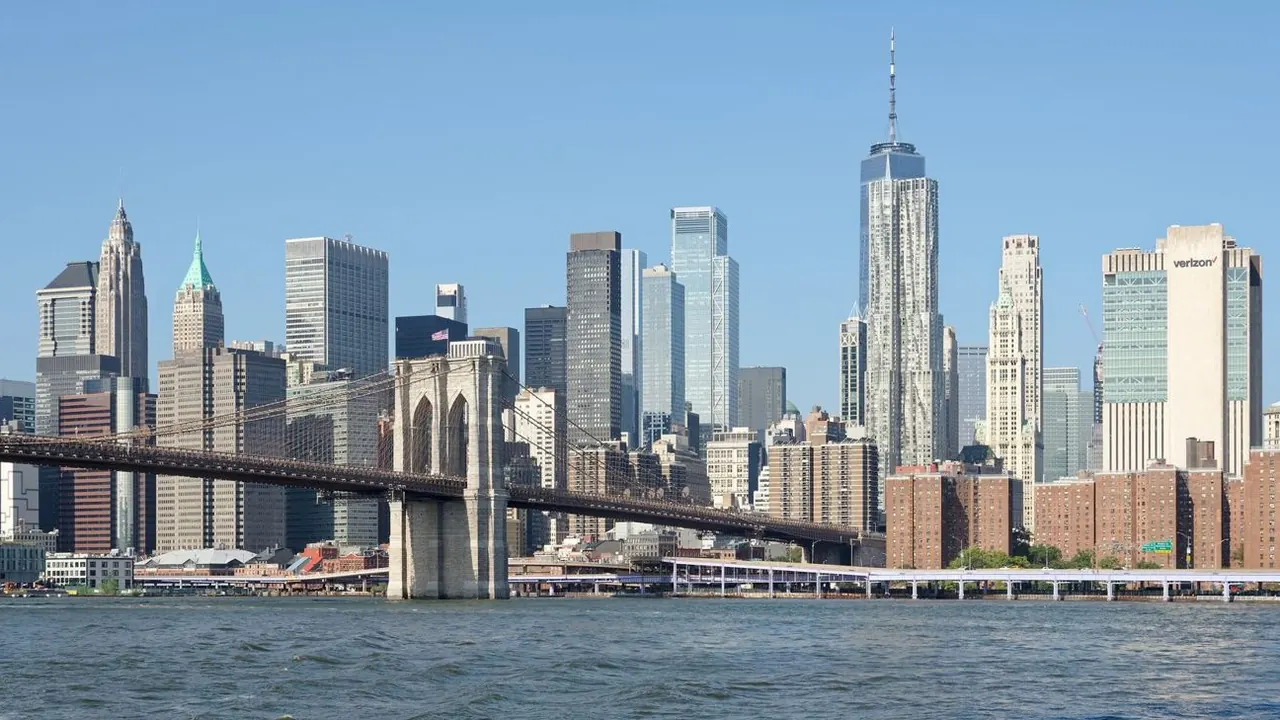
Photos: Paris by Efrem Efre, Pexels License; New York by Jakub Hałun, CC BY 4.0, cropped.
Paris or New York?
Our verdict in twelve categories, each scored against the same fixed benchmark cities, and the climate month by month, so you can choose for your trip.
Choose Paris for
- day trips
- prices
- families
Paris is the better pick for a trip built around art, architecture and the pleasure of walking. The Louvre, the Orsay and the Gothic churches sit inside a centre that is a sight in itself, the walking is easier, and Versailles, Chartres, Giverny and Champagne country are all close enough for a day out. Families find it easier going too, and though it is far from cheap, it costs noticeably less than New York.
Choose New York for
- beaches
- nightlife
- live music and the arts
New York suits the traveller who wants a city that never lets up. Its nights run later and wilder, from Village dive bars to Bushwick warehouse parties that end after sunrise, and Broadway, Lincoln Center and the jazz clubs make it the stronger choice for an evening at a show. It also has real Atlantic beaches at the end of the subway in summer, which Paris cannot match.
Scoreboard
Twelve categories on one fixed scale from 0 to 100. The shaded stretch is the gap between the two.
Your match
Pick a travel style or drag the sliders, and both match scores follow your weighting.
Too close to call, 1 point apart
Wins on day trips and prices with your weighting.
Wins on beaches and nightlife with your weighting.
What matters to you?
Category by category
What the scores mean for a trip.
Beaches & swimming
New York wins here outright, because it actually sits on the ocean. The boardwalk and amusement park at Coney Island, the longer, surf-friendly sands of the Rockaways and the big Long Island beaches give a genuine Atlantic beach day in summer, even if the crowds are heavy at weekends.
Paris is inland and its summer beaches are sand laid on the riverbanks, with swimming in the Bassin de la Villette, the Seine and some fine Art Deco pools. They are fine for cooling off, but for sea swimming you face a two-hour train to a cool Channel coast at Deauville or Trouville.
Food & drink
Both rank among the great eating cities, and the difference is one of character. New York's strength is breadth: nearly every cuisine cooked by its own community, from Flushing's Chinese to Jackson Heights' Colombian and Tibetan, plus cheap local classics like the slice, the bagel and the pastrami sandwich.
Paris eats from a deeper single tradition, built on the neighbourhood boulangerie, cheese shop and market, the classic bistro and the haute cuisine that shaped fine dining everywhere. Pastry and natural wine are high points, and Belleville and the 13th add North African and Vietnamese cooking, though the range of world kitchens is narrower than New York's.
Culture & sights
Paris comes out ahead. The Louvre, the Orsay's Impressionists, Notre-Dame and the Sainte-Chapelle carry the weight of centuries, and the city around them, with Haussmann's boulevards, the Marais townhouses and the UNESCO-listed Seine banks, makes sightseeing a pleasure between the museums.
New York's museums are just as formidable in their own way, with the Met, MoMA and the Natural History museum, and its landmarks are famous worldwide. Its history, though, is mostly from the last two centuries, seen in brownstones and cast-iron fronts rather than in a medieval core.
Nightlife
New York has the bigger, later night. Bars stay open into the small hours, the trains run all night, and the range takes in East Village dives, West Village wine bars, rooftop bars facing the skyline and North Brooklyn warehouse parties that go on past dawn.
Paris does a night out well, but in a different way: an evening that starts on a terrace or at a canal-side bottle and moves through the crowded bars of Oberkampf, Belleville and South Pigalle. Most bars close around 2am, after which the clubs take over, and the overall mood is chic rather than wild, with door policies that can be choosy.
Nature & outdoors
Neither city is a destination for wild country, and both rely on great parks. New York's are big designed landscapes like Central Park and Prospect Park, plus waterfront walks such as the High Line, and a train up the Hudson reaches the steep, rocky climbs of Breakneck Ridge, with fine October colour.
Paris leans on formal gardens and the large woods of Boulogne and Vincennes, with flat canal routes for cycling. Its best escape is Fontainebleau forest, known for its sandstone boulders, which suits gentle walks and climbing rather than the harder hiking near New York.
Day trips
Paris has far more within easy reach. Versailles, Fontainebleau, Chantilly, Chartres and Giverny are all about an hour or less away, and fast trains bring Reims and its Champagne houses, Rouen, the Loire at Tours and even Brussels into day-trip range.
New York's best outing is Philadelphia's colonial old town, with Princeton, New Haven, the Hudson Valley estates, Dia Beacon and Storm King as good options. They are worthwhile, but the list is shorter, and Long Island's wine country and the Hamptons stretch a single day.
Good for families
Paris is the more rewarding family base. Disneyland and Parc Astérix are a short train ride out, the Cité des Sciences is a vast hands-on museum, and the Luxembourg gardens with their carousels, puppets and toy sailboats suit younger children well.
New York still has excellent draws in the Natural History museum's dinosaurs, the Bronx Zoo and the free Staten Island Ferry. The daily wear is greater, though: Midtown's crowds and noise tire children quickly, so a hotel near a park makes a real difference. Both cities share the problem of stair-only stations and small hotel rooms.
Getting around
Both are easy without a car, and Paris has a slight edge for its compact centre, where a walk from the Marais to Saint-Germain or along the river to the Eiffel Tower is often the best part of the day. The RER also runs straight to the airports, Versailles and Disneyland.
New York's advantage is a subway that runs around the clock across four boroughs and a Manhattan grid that makes it hard to get lost. Distances are longer, though, the local and express lines take some learning, and airport transfers are clumsy.
Shopping & style
These are two of the world's great shopping cities, about equally strong, and the difference is in flavour. New York's range is vast and very American, from the Fifth Avenue flagships and Madison Avenue luxury to SoHo brands, Brooklyn vintage and records, and specialist sneaker and electronics stores.
Paris has the couture houses where luxury fashion began, on Avenue Montaigne and the Faubourg Saint-Honoré, plus antiques and curiosities you won't find in New York: the covered passages, the huge Saint-Ouen flea market, the riverside bouquinistes, and chocolate, cheese and mustard to carry home.
Affordability
Both are expensive, but New York is the harder on the wallet. Manhattan hotels are small and dear all year, restaurant bills carry tax and an expected tip, and observation decks and museums charge steep entry. Staying in Brooklyn, Queens or New Jersey and living on slices and food carts helps a lot.
Paris costs less day to day, though it is still far from cheap. Walking covers much of the centre, the city's own museums have free permanent collections, and bakeries, markets, lunchtime set menus and riverside picnics keep food affordable.
Live music & performing arts
New York has the edge, mostly because so much of its stage is in English. Broadway and Off-Broadway, the Met Opera, the Philharmonic and New York City Ballet at Lincoln Center, Carnegie Hall and a century of jazz in the Village and Harlem make for a choice no other city matches, and the parks host free concerts and Shakespeare in summer.
Paris is still excellent for classical music and dance, with the Palais Garnier, the Opéra Bastille, the Philharmonie and candlelit concerts in the Sainte-Chapelle. Its theatre, from the Comédie-Française down, is largely in French, which leaves the cellar jazz clubs and Pigalle cabaret as the easier evenings for most visitors.
Wellness & relaxation
Neither city is a place to unwind, and both ask you to look for calm in pockets. New York's bathing tradition is the richer, with a century-old Russian and Turkish bathhouse in the East Village, Brighton Beach banyas and big Korean spas in Queens.
Paris offers the tiled hammam of the Grande Mosquée with mint tea, and otherwise rest means a chair in the Luxembourg gardens or an evening by the Seine, against New York's quiet mornings at the Cloisters or the Brooklyn Botanic Garden.
When should you go?
Pick your month. The climate figures are measured averages, not a forecast.
Paris in July
New York in July
Daytime high, °C
Rainfall in the month, mm
Temperature and rainfall are climate normals, averaged over the years shown. Paris: 1991-2020 (sunshine 1961-1990) normals, Paris-Montsouris (4.6 km from centre). New York: 1991-2020 normals, LaGuardia Airport (12.9 km from centre).
New York has the sharper seasons. Summers are hot and humid, with July highs around 30°C, which makes long afternoons on the pavement tiring but warms the Atlantic enough for swimming from late June into early September, peaking near 23°C in August. Winters are properly cold, with January highs around 5°C. Rain falls fairly evenly through the year, so no month is reliably dry, and late spring and early autumn, with October's colour, are the most comfortable times for walking the city.
Paris is milder at both ends: summer highs stay in the mid twenties and winters are a few degrees less raw than New York's. It is also the drier city, with roughly half New York's rainfall in most months, and its wettest spell comes in May. Late spring through September suits sightseeing on foot, while the grey, cool months from November to February are better spent in the museums.
Which traveller are you?
On a beach and sun trip, New York is the clear choice, because the sea fits into an ordinary city day. From late June to early September you can see a museum in the morning, take the train to Jones Beach or Long Beach in about an hour, and be back for dinner. Paris has no sea to offer.
For a food and nightlife trip, New York gives the longer evening. Dinner might be Caribbean in Crown Heights or Italian on Arthur Avenue, then a speakeasy-style cocktail bar, a Meatpacking lounge and a halal cart on the way home. Paris is just as good at the table, with neo-bistros in the 10th and 11th, but its nights end sooner.
On a family trip with children, Paris is the better pick. New York's aircraft carrier on the Hudson and the aquarium beside the old Coney Island rides are good outings, but they are far apart. In Paris, the skeletons at the Jardin des Plantes, the rides at the Jardin d'Acclimatation and bistros that welcome children make for easy days.
Before you go
| Measure | Paris | New York |
|---|---|---|
| Official language | French | - |
| Currency | Euro (EUR) | US Dollar (USD) |
| Sockets | CE230 V, 50 Hz | AB120 V, 60 Hz |
| Driving side | Right | Right |
| Time zone | UTC+1, UTC+2 in summer | UTC-5, UTC-4 in summer |
| Emergency number | 112 | 911 |
| Elevation | 27 m | 25 m |
| Main airport | Charles de Gaulle International Airport (CDG)22 km from centre277 non-stop destinations | John F. Kennedy International Airport (JFK)21 km from centre189 non-stop destinations |
| Public holidays this year | 11 days | 13 days |
By the numbers
| Measure | Paris | New York |
|---|---|---|
| City population | 2,103,778 | 8,804,190 |
| People per km² | 19,960 | 7,256 |
| Museums within 10 km | 251 | 161 |
| UNESCO World Heritage sites within 50 km | 5 | 2 |
| Swim season, months above 21 °C | - | 3 months |
Where else could you go?
Every comparison below shares a destination with this one, so you can follow Paris or New York somewhere new.
- Philadelphiavs New York
- Atlantic Cityvs New York
- Lillevs Paris
- Cape Mayvs New York
- Rehoboth Beachvs New York
- Newport, Rhode Islandvs New York