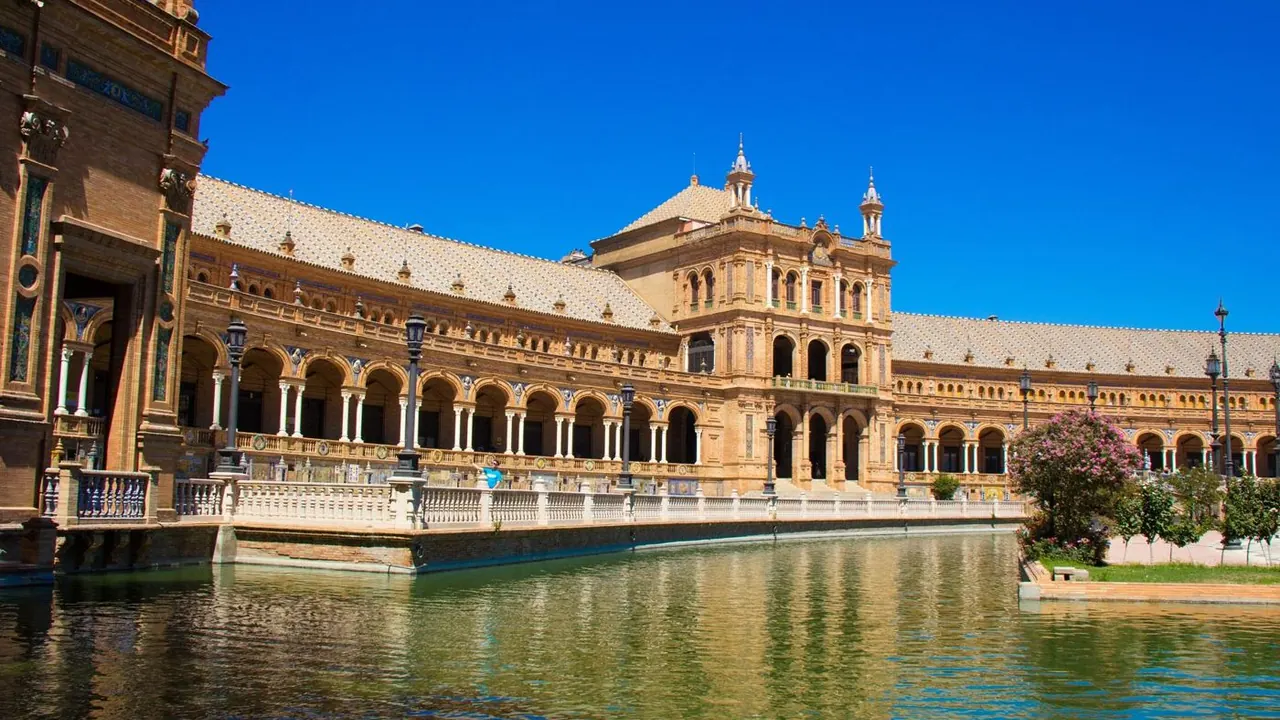
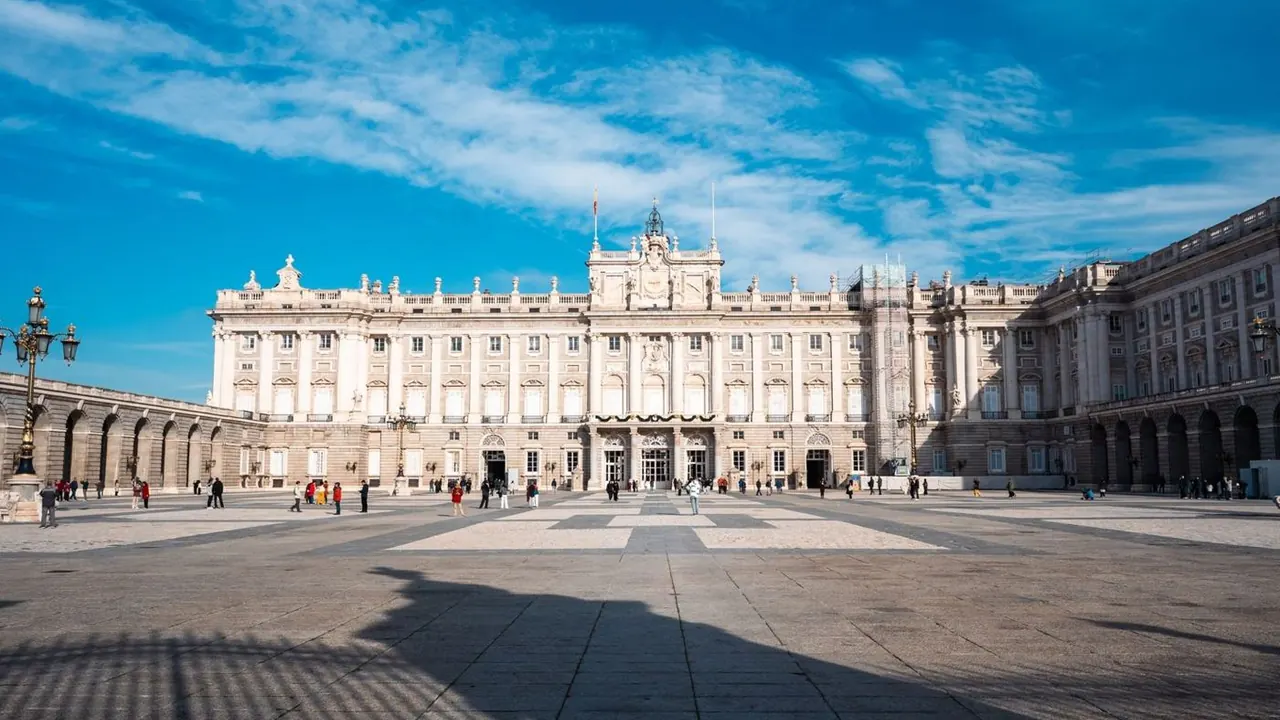
Photos: Seville by Tibor Kovacs, CC BY 2.0, cropped; Madrid by Mert Ocak, Pexels License.
Seville or Madrid?
Our verdict in twelve categories, each scored against the same fixed benchmark cities, and the climate month by month, so you can choose for your trip.
Choose Seville for
- beaches
- prices
- wellness
Seville is the better choice if you want the old Spain of Moorish palaces, Gothic stone and orange-tree squares, all close enough to see on foot. It is the home of flamenco, the tapas bars are deeply rooted in the city, and a day costs a little less. In summer the Atlantic beaches are close enough for a day out. It rewards a slower trip of long evenings outdoors, with Córdoba, Cádiz and the white villages close at hand.
Choose Madrid for
- nightlife
- shopping
- families
Madrid suits travellers who want a big capital with plenty to fill the days and nights. The Prado and its neighbours make it an art trip in themselves, the bar and club scene runs later and wider than Seville's, and the shopping covers luxury, high street and independent design. Fast trains to Toledo, Segovia and Salamanca add the medieval history the city itself lacks. It also suits families and anyone who would rather use a metro than walk everywhere.
Scoreboard
Twelve categories on one fixed scale from 0 to 100. The shaded stretch is the gap between the two.
Your match
Pick a travel style or drag the sliders, and both match scores follow your weighting.
Wins on beaches and prices with your weighting.
Wins on nightlife and shopping with your weighting.
What matters to you?
Category by category
What the scores mean for a trip.
Beaches & swimming
Both cities are inland, but Seville at least has the sea within reach. The Atlantic sands at Matalascañas and Mazagón are about an hour and a quarter away by road, so a summer beach day is possible if you give it most of the day.
Madrid has nothing like that. The coast is far too far for a day out, so cooling off means the big municipal pools or a drive to the reservoirs below the Sierra de Guadarrama.
Food & drink
Madrid has more range, while Seville goes deeper into one tradition. As the capital, Madrid brings in cooking from every Spanish region, with Galician seafood and Basque grills next to its own cocido, callos and calamari rolls near Plaza Mayor. The market halls of San Fernando and Antón Martín let you shop and eat under one roof, and churros with thick chocolate round off the night.
Seville's tile-fronted bars in Triana and El Arenal serve spinach with chickpeas, slow-cooked pork cheek and fried fish from the Cádiz coast, with manzanilla or orange-blossom vermouth to drink. Few cities do tapas with more conviction. Look beyond them, though, and the choice soon thins out, and the streets by the cathedral are not the place to eat.
Culture & sights
The two are evenly matched, but they offer very different things. Madrid's strength is painting. The Prado, the Reina Sofía with Guernica, and the Thyssen sit within a short walk of each other, set in a grand Habsburg and Bourbon city of palaces and boulevards with little medieval fabric left.
Seville is the place for buildings and atmosphere. The Mudéjar courtyards of the Real Alcázar, the vast Gothic cathedral with the Giralda, and the lanes of Santa Cruz give a sense of Islamic and Christian Spain that Madrid can only offer on a day trip.
Nightlife
Madrid has the bigger and later night out. Clubs around Gran Vía and Sol run past dawn, and each district has its own crowd, from the rock bars of Malasaña to the gay scene in Chueca.
Seville's evenings are long and sociable, but they happen on terraces, along the Alameda de Hércules and by the river rather than on the dance floor. Outside the April Fair, real clubbing here is limited and mostly for students.
Nature & outdoors
Madrid has the more striking outdoors. About an hour north, the Sierra de Guadarrama rises to granite peaks over 2,400m, with the boulder maze of La Pedriza, glacial lakes and some winter skiing.
The country around Seville is flat farmland, and the hills of Aracena are gentle. Its great asset is Doñana, a wetland with flamingos and migrating birds that suits wildlife watchers better than hikers.
Day trips
From Madrid, fast trains reach more historic cities in less time. Toledo and Segovia are each about half an hour away, and walled Ávila, Salamanca and Cuenca all fit into a day. Between them they supply the medieval streets the capital lacks, and El Escorial and Aranjuez are closer still.
Seville's trips have a different character: Córdoba in under an hour, Roman Itálica on the edge of town, sherry in Jerez, the old port of Cádiz and the white villages beyond Arcos de la Frontera. Ronda is a long day by road, and only Granada really needs an overnight stay.
Good for families
Children fit easily into late-night Spanish life in both cities, but Madrid has much more aimed at them. Casa de Campo alone has a zoo, an aquarium, a cable car and a funfair, and there are rowing boats and puppet shows in the Retiro and lifts at many metro stations.
In Seville, family time centres on María Luisa Park, the maze in the Alcázar gardens and the parks on La Cartuja. Its summer heat often passes 40°C, which is harder on small children than Madrid's summer.
Getting around
Both cities have flat centres that are easy to walk. Madrid adds one of Europe's largest metro systems, with a direct line to the airport, so the outer districts and the high-speed stations at Atocha and Chamartín are easy to reach.
In Seville you mostly walk, from the cathedral to Triana in half an hour. Beyond that there is a short tram, a single metro line and buses, plus bike lanes good enough to make cycling the most useful extra.
Shopping & style
Madrid is far better for fashion. Calle Serrano has the luxury labels, Gran Vía and Preciados the department stores, and Malasaña and Conde Duque independent and vintage shops, with El Rastro filling La Latina on Sundays.
Seville makes up for it with craft. Triana's potters sell hand-painted tiles, and the shops on Sierpes and Cuna sell flamenco dresses, mantillas and shawls made for local women. There are few luxury or design shops.
Affordability
Seville is a little easier on the budget. A tapas evening with cheap beer and wine costs less than dinner out in Madrid, and you can walk almost everywhere. The catch is hotel rates during Holy Week and the April Fair, when rooms climb steeply and sell out months ahead.
Madrid sits in the middle for a European capital. Hotels cost what you would expect, but the midday menú del día, the inexpensive metro and the museums' free hours help keep a day's spending reasonable.
Live music & performing arts
Madrid has the broader stage life. Opera at the Teatro Real, the national orchestra at the Auditorio Nacional, zarzuela, long-running musicals on Gran Vía, jazz clubs, and serious tablaos in the old centre give plenty of choice on any night.
Seville is narrower but has a deeper hold on one art. It is the home of flamenco, heard in small tablaos, cultural centres and local peñas, and every other autumn the Bienal brings in the leading performers. Beyond that and the opera at the Maestranza, there is less to choose from.
Wellness & relaxation
Neither city is built for rest, and each has only a few Arab-style bathhouses and hotel spas. What differs is how you find calm. In Seville the afternoon heat slows the whole city, and the cool Alcázar gardens and tiled courtyards make good places to sit it out. Madrid stays busier, so the quiet comes from a slow afternoon in the Retiro or the shade of the Botanical Garden.
When should you go?
Pick your month. The climate figures are measured averages, not a forecast.
Seville in July
Madrid in July
Daytime high, °C
Rainfall in the month, mm
Temperature and rainfall are climate normals, averaged over the years shown. Seville: 1991-2020 normals, Sevilla / San Pablo (8.1 km from centre). Madrid: 1991-2020 normals, Madrid (1.7 km from centre).
Both cities are best in spring and autumn, but their years differ. Madrid sits high on the plateau, so its winters are properly cold, with daytime highs around 10°C in December and January. Its summers are hot and very sunny, near 33°C in July. May, June and September are the most comfortable months for walking. October brings the wettest weather of the year, though even then the rain is moderate.
Seville is warmer all year. Winter days still reach about 16°C, which makes it a good escape from November to March, although this is also the rainy season, with up to 78mm in December. By July and August highs sit around 36°C under almost constant sun. That suits a day on the coast but makes walking at midday hard going, so April, May and October are the best months for sightseeing. In summer, Madrid is the slightly more bearable of the two.
Which traveller are you?
On a beach and sun trip, Seville is the better choice. The Huelva coast is a day out by car or coach, the summers are long and sunny, and winters stay mild. From Madrid the sea is too far to reach in a day.
For a food and nightlife trip, Madrid comes out ahead. It has a broader range of cooking, from regional seafood houses to tasting menus, and its nights carry on from tapas in La Latina to clubs on Gran Vía that stay open past dawn.
On a shopping trip, choose Madrid. Serrano has the luxury houses, Gran Vía the big flagships, Malasaña the independent design shops, and El Rastro is there on Sunday mornings. Seville's best buys are ceramics from Triana and flamenco dresses and fans.
Before you go
| Measure | Seville | Madrid |
|---|---|---|
| Official language | Spanish | Spanish |
| Currency | Euro (EUR) | Euro (EUR) |
| Sockets | CF230 V, 50 Hz | CF230 V, 50 Hz |
| Driving side | Right | Right |
| Time zone | UTC+1, UTC+2 in summer | UTC+1, UTC+2 in summer |
| Emergency number | 112 | 112 |
| Elevation | 18 m | 663 m |
| Main airport | Seville Airport (SVQ)9 km from centre96 non-stop destinations | Adolfo Suárez Madrid–Barajas Airport (MAD)14 km from centre239 non-stop destinations |
| Public holidays this year | 12 days | 12 days |
By the numbers
| Measure | Seville | Madrid |
|---|---|---|
| City population | 689,423 | 3,506,730 |
| People per km² | 4,896 | 5,801 |
| Museums within 10 km | 24 | 88 |
| UNESCO World Heritage sites within 50 km | 1 | 4 |
Where else could you go?
Every comparison below shares a destination with this one, so you can follow Seville or Madrid somewhere new.