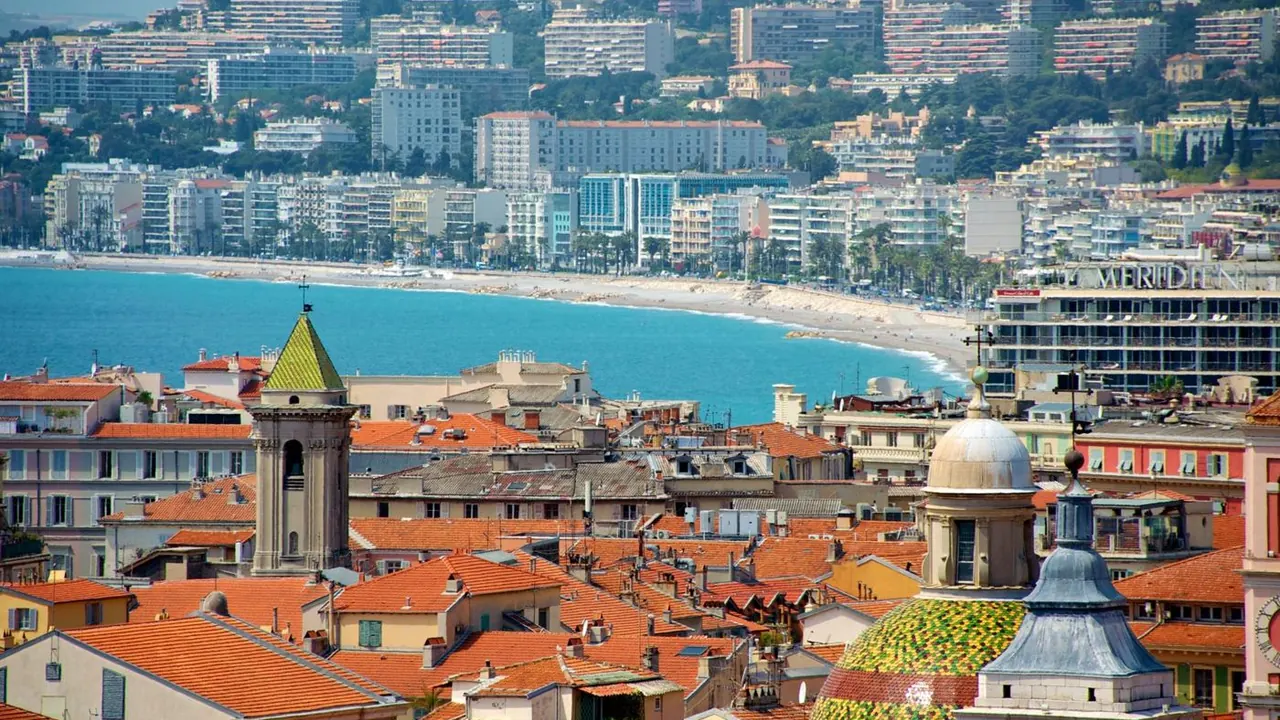
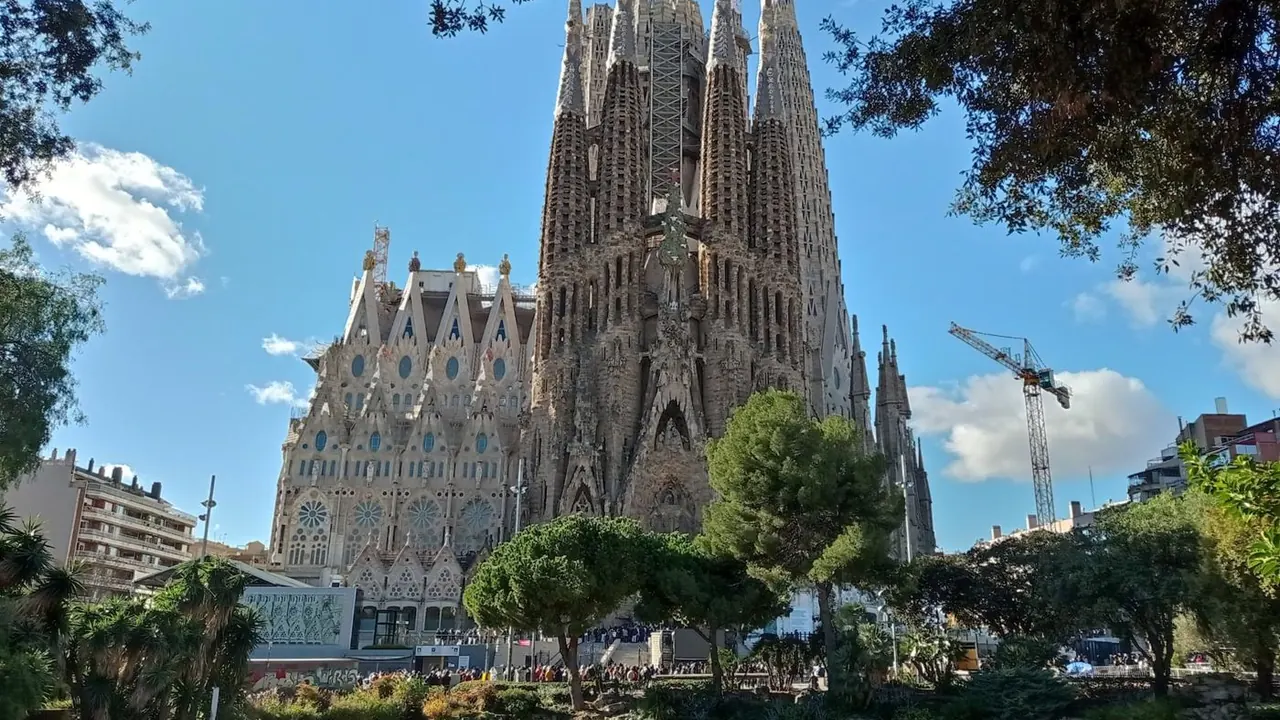
Photos: Nice by Daniel Stockman, CC BY-SA 2.0, cropped; Barcelona by Canaan, CC BY-SA 4.0, cropped.
Nice or Barcelona?
Our verdict in twelve categories, each scored against the same fixed benchmark cities, and the climate month by month, so you can choose for your trip.
Choose Nice for
- nature and the outdoors
- day trips
- wellness
Nice works best as a base for exploring rather than a city to work through. Choose it if you want to spend your days moving along the Riviera by train, to Monaco, Èze, Antibes or over the border into Italy, or to walk coastal paths and head up into the Mercantour. Evenings are quieter and the sights fill fewer days, but the clear water, the drier summer and the mountains behind the coast make for a slower, more outdoor vacation.
Choose Barcelona for
- nightlife
- live music and the arts
- culture and sights
Barcelona is the stronger choice when the city itself is the reason for the trip. It has Gaudí's buildings and the Gothic Quarter, a food scene that runs from market counters to tasting menus, nights that last until dawn and a full opera and concert calendar. It also suits families better, with the aquarium, CosmoCaixa and sandy beaches all a metro ride away, and it is slightly easier on the budget.
Scoreboard
Twelve categories on one fixed scale from 0 to 100. The shaded stretch is the gap between the two.
Your match
Pick a travel style or drag the sliders, and both match scores follow your weighting.
Wins on nature and the outdoors and day trips with your weighting.
Wins on nightlife and live music and the arts with your weighting.
What matters to you?
Category by category
What the scores mean for a trip.
Beaches & swimming
The two are evenly matched for a swim, but the beaches feel different underfoot. Barcelona's city beaches are man-made sand running from Barceloneta to Mar Bella, a metro ride from the old town. In high summer they get crowded, and pickpockets work the towels.
Nice has 7km of pebbles right below the Promenade des Anglais, with clearer water and private clubs that rent loungers to soften the stones. For sand you go east to Villefranche and Beaulieu or west to Juan-les-Pins. Barcelona's quieter beaches work the same way, a train ride down the coast at Castelldefels and Sitges.
Food & drink
Barcelona is the more rewarding city to eat in. Catalan cooking gives it a deep base. On top of that come the covered markets of Santa Caterina and Sant Antoni, the late-morning vermouth habit, seafood rice by the sea and a serious tasting-menu scene, so the range runs from cheap set lunches all the way up.
Nice has a distinct cuisine of its own, closer to Liguria than to Paris: socca from wood ovens, pissaladière and stuffed vegetables, with the Cours Saleya market and the little-known Bellet wines. It is very good for simple meals in Vieux Nice and around the port, but it runs out of depth sooner. Both cities share the same trap, tired tourist menus along their most famous strip, the Rambla in one and the promenade in the other.
Culture & sights
Barcelona fills a week, and its centrepiece is something no other city has: the Sagrada Família, Casa Batlló, La Pedrera and Park Güell. Beneath them lie Roman walls, the Gothic Quarter and Santa Maria del Mar, and the Picasso Museum and the MNAC's Romanesque frescoes add more.
Nice is a two- or three-day city by comparison. Its strength is modern art, with the Matisse and Chagall museums in Cimiez and the Nouveau Réalistes at MAMAC, alongside the ochre lanes of Vieux Nice and the Belle Époque villas of its resort years. Picasso fans can find a museum near each city, though the one near Nice is down the coast at Antibes.
Nightlife
This is where the two differ most. In Barcelona the night starts after an eleven o'clock dinner and runs until dawn. There are cocktail bars in the Born's cellars, people drinking outdoors in Gràcia's squares, the pintxos bars of Blai street, the Eixample's gay scene and a deep electronic club culture.
Nice offers a pleasant evening rather than a long night: wine bars and pubs in the lanes of Vieux Nice, a few bars at the port and the beach clubs in summer. There are few clubs, and people who want a glossier night go to Monaco or Cannes.
Nature & outdoors
Nice has the wider range of outdoors, because this is where the Alps come down to the sea. Coastal paths around Cap Ferrat and Cap d'Ail, the corniche cycling routes and the gorges behind the city are all close, and the Mercantour is within two hours. Winter adds skiing at Isola 2000 and Auron, and diving and kayaking are easy to arrange from the shore.
In Barcelona the green space starts closer to the centre. The Collserola trails and the flat Carretera de les Aigües begin at the city's edge, and the pinnacles of Montserrat are an hour away. The Pyrenees, though, are a long stretch for a single day.
Day trips
Both are excellent bases, but Nice has more places close by. The coastal railway links Villefranche, Monaco, Menton, Antibes and Cannes, buses climb to Èze and Saint-Paul-de-Vence, and Sanremo in Italy is an easy train ride. Almost all of it takes under an hour, and you never need a car.
Barcelona's trips are fewer but bigger. High-speed trains reach medieval Girona and the Dalí museum at Figueres, and Roman Tarragona can be paired with the Poblet monastery. Montserrat, Sitges and the cava cellars of the Penedès are closer still, while the Costa Brava villages need a car.
Good for families
Barcelona keeps children busier. The aquarium, the CosmoCaixa science museum, the zoo in the Ciutadella and the funfair on Tibidabo cover several days, Gaudí's buildings look like something from a picture book, and PortAventura is an hour south. Children at the table late in the evening are perfectly normal.
Nice is calmer, and its flat promenade is easy with a pushchair. The water jets of the Promenade du Paillon and the greenhouses of Parc Phoenix are good on hot days. It has no big zoo or theme park, though, and its pebbles are tougher on small feet than Barcelona's sand.
Getting around
Both are easy without a car, with Barcelona a little ahead thanks to its metro, which reaches the Sagrada Família and the upper districts on the same tickets as the buses, trams and trains. Bike lanes cover the flat stretches, while Park Güell, Montjuïc and Tibidabo are uphill and need a funicular, a cable car or a steep walk.
Nice is smaller and more compact. The old town, the port and Place Massena are a flat half-hour walk apart, a tram runs straight in from the airport, and buses climb to Cimiez. Its real asset is the coastal trains, though they can be packed in summer.
Shopping & style
Barcelona is the better city for shopping. The Passeig de Gràcia sets fashion houses among Modernista façades, but the more interesting shops are in the small streets: independent designers in the Born, craft shops in Gràcia, and vintage and record shops in the Raval. Espadrilles, ceramics and turrón make good things to take home, and Els Encants is worth a browse.
Nice is pleasant for browsing rather than a reason to go. Avenue Jean Médecin has the chains, rue Paradis has the luxury labels, and Vieux Nice sells olive oil, soaps and candied fruit. The Monday antiques market on the Cours Saleya is the highlight, and serious luxury shoppers go on to Monaco or Cannes.
Affordability
Neither is cheap, but your money goes a little further in Barcelona. Hotels and the entry fees for the Gaudí buildings add up, yet the weekday set lunch, market counters and neighbourhood tapas bars keep daily costs reasonable.
Nice is the pricier of the two, particularly from June to September, when rooms near the sea and loungers on the beach cost a lot. It wins some of that back with cheap trams and coastal trains, inexpensive city museums, and socca or market picnics. Spring and late autumn ease the bill.
Live music & performing arts
Barcelona has much more on stage. The Liceu runs a full season of opera and ballet, and under the stained glass of the Palau de la Música Catalana any concert feels like an occasion. The Teatre Lliure, the Mercat de les Flors, the jazz cellars and the flamenco stages fill the rest of the week, and Sónar, Primavera Sound and the Grec festival take over the early summer.
Nice has a handsome nineteenth-century opera house, a philharmonic orchestra and drama mostly in French, and its July jazz festival and February Carnival are long traditions. Beyond those, live music means small bars and outdoor concerts in summer.
Wellness & relaxation
Neither is a place to go for spas, and neither has a bathing tradition of its own. Barcelona has a few Arab-style bath houses in the old town, but its centre is noisy and up late, so rest comes from the Collserola paths or a long lunch in a Gràcia square.
Nice has thalassotherapy centres along the coast towards Monaco and an easier daily rhythm of early swims and evening walks on the promenade. Out of season it is the calmer of the two.
When should you go?
Pick your month. The climate figures are measured averages, not a forecast.
Nice in July
Barcelona in July
Daytime high, °C
Rainfall in the month, mm
Temperature and rainfall are climate normals, averaged over the years shown. Nice: 1991-2020 normals, Nice (8 km from centre). Barcelona: 1991-2020 normals, Barcelona / Aeropuerto (14.4 km from centre).
Both cities follow the same Mediterranean pattern. Winters are mild and fairly sunny but too cool for swimming, spring and autumn are comfortable for walking the streets, and summer highs in the high twenties make midday sightseeing hard work in July and August. The sea is warm enough to swim from June, and by August it reaches about 25°C off both coasts.
The differences come at either end of summer. Nice has the drier and sunnier summer, with almost no rain in July and August, but its autumn turns wet, with October and November the rainiest months and close to 138mm in November. Barcelona's wet spell is shorter and falls in September and October. Its sea also holds its warmth longer, still at 24°C in September against 22°C at Nice, so late-season beach days favour Barcelona, while late spring and early summer are lovely in either.
Which traveller are you?
For a food and nightlife trip, Barcelona is the clear pick. Catalan cooking, neighbourhood markets and late tapas lead on to bars in Gothic cellars and clubs that stay open until dawn, while a night out in Nice usually ends after dinner and drinks in Vieux Nice.
On a family trip with children, Barcelona has more to fill the days: the aquarium, CosmoCaixa, the zoo and the Tibidabo funfair, plus sandy beaches. Nice is easy-going, but its pebbles are harder on small feet and it has no theme park.
On an outdoors trip, Nice has the edge. Coastal paths around Cap Ferrat, cycling on the corniches, the limestone gorges inland and the high lakes of the Mercantour are all within reach, and in winter you can ski at Isola 2000 and be back by the sea the same day.
Before you go
| Measure | Nice | Barcelona |
|---|---|---|
| Official language | French | Spanish |
| Currency | Euro (EUR) | Euro (EUR) |
| Sockets | CE230 V, 50 Hz | CF230 V, 50 Hz |
| Driving side | Right | Right |
| Time zone | UTC+1, UTC+2 in summer | UTC+1, UTC+2 in summer |
| Emergency number | 112 | 112 |
| Elevation | 0 m | 9 m |
| Main airport | Nice-Côte d'Azur Airport (NCE)6 km from centre130 non-stop destinations | Josep Tarradellas Barcelona-El Prat Airport (BCN)13 km from centre235 non-stop destinations |
| Public holidays this year | 11 days | 14 days |
By the numbers
| Measure | Nice | Barcelona |
|---|---|---|
| City population | 357,737 | 1,731,649 |
| People per km² | 4,975 | 17,094 |
| Museums within 10 km | 17 | 95 |
| UNESCO World Heritage sites within 50 km | 2 | 3 |
| Swim season, months above 21 °C | 4 months | 3 months |
Where else could you go?
Every comparison below shares a destination with this one, so you can follow Nice or Barcelona somewhere new.