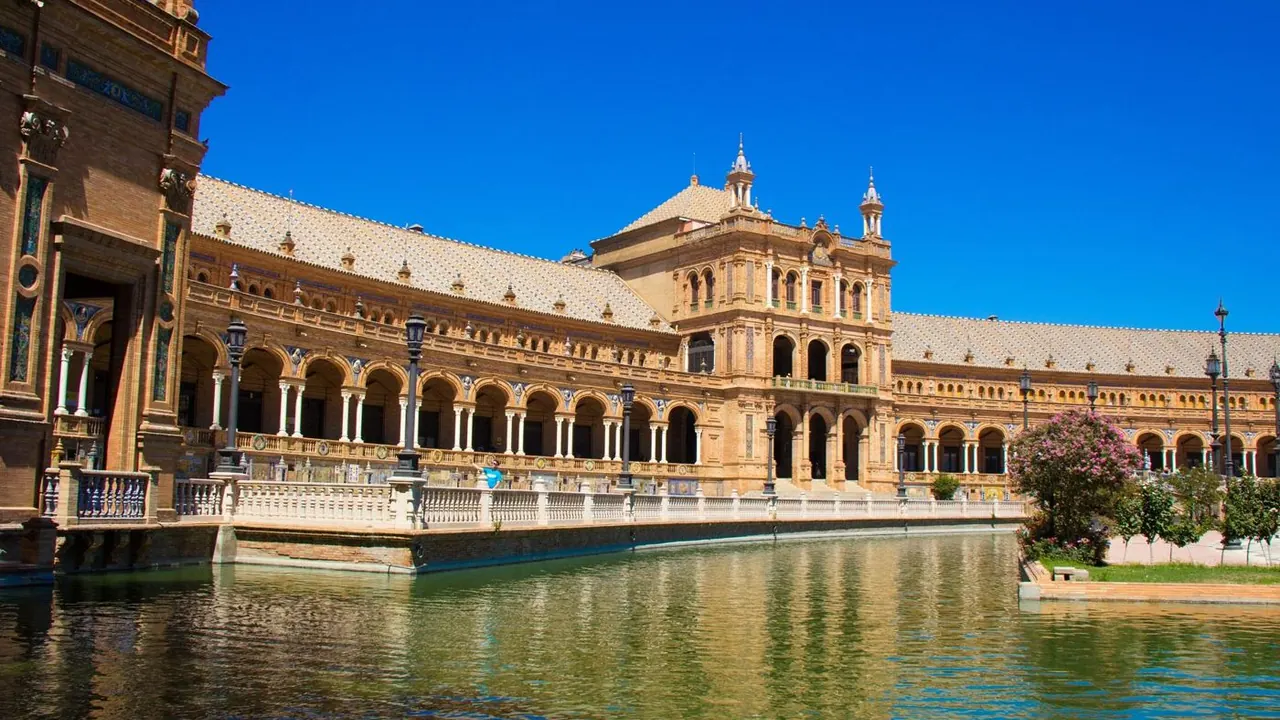
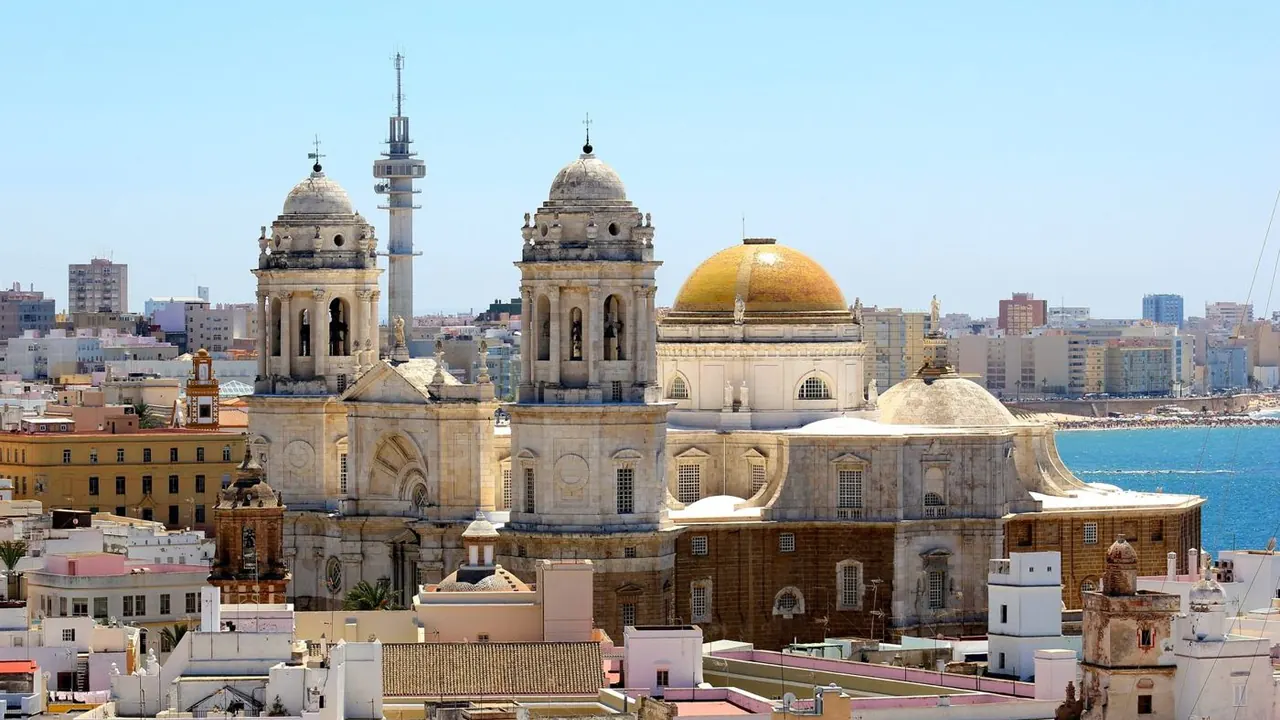
Photos: Seville by Tibor Kovacs, CC BY 2.0, cropped; Cadiz by Bronch, CC BY-SA 3.0 ES, cropped.
Seville or Cadiz?
Our verdict in twelve categories, each scored against the same fixed benchmark cities, and the climate month by month, so you can choose for your trip.
Choose Seville for
- culture and sights
- shopping
- nightlife
Travellers who come for monuments, flamenco and long evenings out should pick Seville. The Alcázar, the cathedral and the lanes of Santa Cruz fill three or four days. Flamenco is on every night, and the Maestranza stages opera and orchestral concerts. In an ordinary week, the Alameda, Triana and the Alfalfa offer a larger and more varied night out than Cadiz, whose biggest party is Carnival. The trade-off is that there is no sea, and the summer heat makes spring and autumn the time to go.
Choose Cadiz for
- beaches
- nature and the outdoors
- families
Cadiz suits a summer trip built around the sea. You can swim at a cove in the old centre, walk to kilometres of sand along Playa Victoria and reach the empty strands of the Costa de la Luz within an hour. It is smaller and slower than Seville, with two or three days of sights, fish and sherry at the table, and wetlands, cliffs and the kitesurfing coast close by. It is also much more comfortable in high summer.
Scoreboard
Twelve categories on one fixed scale from 0 to 100. The shaded stretch is the gap between the two.
Your match
Pick a travel style or drag the sliders, and both match scores follow your weighting.
Too close to call, level with your weighting
Wins on culture and sights and shopping with your weighting.
Wins on beaches and nature and the outdoors with your weighting.
What matters to you?
Category by category
What the scores mean for a trip.
Beaches & swimming
This is the widest gap between the two. In Cadiz the sea surrounds the city. You can swim at La Caleta in the old town or spread out on the fine sand of Playa Victoria, and the long strands of El Palmar, Conil and Bolonia are under an hour away. The levante wind is the one thing to plan around.
Seville is inland on the Guadalquivir, so summer swimming means a hotel or municipal pool. The Huelva beaches at Matalascañas and Mazagón take about an hour and a quarter by car, so a day at the sea uses up most of the day. Visitors who want the coast usually add a few nights there, often in Cadiz province.
Food & drink
Both cities are built on tapas, both pour manzanilla and fino from the same sherry towns, and both have little international cooking. The difference is focus. Cadiz is about the sea: cones of fried fish from the freidurías, tortillitas de camarones and almadraba bluefin tuna in the bars of La Viña.
Seville has the wider tapas repertoire, from spinach with chickpeas and salmorejo to pork cheek and sierra jamón, eaten bar to bar in Santa Cruz, El Arenal and Triana, with more inventive kitchens around the Alameda. Its weak spot is the tired paella on the streets near the cathedral.
Culture & sights
Seville has the bigger and grander set of sights. The Alcázar's Mudéjar courtyards, the Gothic cathedral and the Giralda, Plaza de España, Casa de Pilatos and the Murillos of the Museo de Bellas Artes are enough for three or four full days.
Cadiz offers something older and more compact. It is a port founded by the Phoenicians, with tall houses topped by watchtowers and a gold-domed cathedral facing the sea. It also has Phoenician sarcophagi in the Museo de Cádiz, a Roman theatre and the oratory where the 1812 constitution was signed. Two or three days are enough to see it, rather than a long museum itinerary.
Nightlife
Seville has more going on after dark in an ordinary week. The Alameda de Hércules draws a young, mixed and LGBT-friendly crowd, Triana and the Alfalfa stay busy into the small hours, and in summer the riverbanks fill with open-air bars.
Cadiz is quieter, with late tapas in La Viña and around Plaza de San Francisco and, in summer, the terraces along Playa Victoria. Its big night out is Carnival in February, when the whole city parties in costume for ten days. Seville's equivalent is the April Fair, spent all night in the casetas.
Nature & outdoors
Cadiz has the more varied outdoors. The salt pans and tidal channels of the Bahía de Cádiz natural park are on its edge, with the cliffs and pines of La Breña and the windy coast and whale-watching boats of Tarifa to the south. The Sierra de Grazalema offers proper mountain walking within two hours.
Seville is surrounded by flat farmland and orange orchards, and its green space is María Luisa Park and the river, good for rowing and cycling. Both cities can reach the Doñana wetlands, and Seville's Sierra Norte gives gentle hill walks, but its summer heat rules out most outdoor activity.
Day trips
Both are excellent bases, but they point in different directions. From Cadiz the pull is sherry country: Jerez, El Puerto de Santa María by ferry, and Sanlúcar. Beyond them are the white towns of Vejer and Arcos and the Roman ruins of Baelo Claudia, though several of these need a car.
Seville looks inland. Córdoba is under an hour by high-speed train, and Itálica, Carmona, Osuna and Écija are all close. Each city also makes a good day out from the other, under two hours apart by train.
Good for families
Cadiz has a slight edge for a summer vacation with children, mainly because the beach is in town: wide, lifeguarded Playa Victoria and the sheltered cove of La Caleta. Beyond the sand, though, there is little built for children.
Seville has more attractions, with the theme park and summer water park on La Cartuja, an aquarium and the rowing boats at Plaza de España. But July and August often pass 40°C, which makes sightseeing with small children hard work. Both cities are relaxed about children staying out late in the squares.
Getting around
Both are flat, walkable cities and getting about is easy in either. Cadiz has a small, mostly car-free old town, buses along the isthmus to Playa Victoria, and trains and a bay catamaran to Jerez, Seville and El Puerto. The coast and the white villages, though, need a car.
Seville's centre is larger but still within a half-hour walk. It has a tram, a single metro line, dense buses and an extensive network of bike lanes with a public bike scheme. Its problem is the midday heat in summer.
Shopping & style
Seville is the better place to shop, though for crafts rather than fashion. Triana's pottery workshops sell hand-painted tiles. Around Sierpes and Cuna there are flamenco dresses, shawls, mantillas and guitars, and the Thursday flea market on Calle Feria is good for browsing.
Cadiz has a few streets of chains and family shops around Calle Ancha and Plaza de las Flores, and the Mercado Central is its best place to browse. Fans, ceramics and sherry make good buys, but for anything more its own shoppers head to Seville.
Affordability
The two cost much the same. Tapas, beer and sherry are cheap in both, and so is getting around. The difference is when rooms get expensive. In the Cadiz old town they are scarce and cost more in July, August and Carnival week, so staying near Playa Victoria or coming in spring or autumn saves money.
Seville is the opposite in summer, when the heat keeps rooms good value. Its expensive weeks are Holy Week and the April Fair. Its main sightseeing cost is tickets for the Alcázar and the cathedral, while the sights in Cadiz charge little or nothing.
Live music & performing arts
Seville is the stronger choice for live performance. Flamenco is on nightly in tablaos, cultural centres and peñas, and the Bienal brings the leading performers in the autumn of even-numbered years. The Teatro de la Maestranza stages opera and concerts by the Royal Symphony Orchestra of Seville.
Cadiz is more local. Its peñas in the Santa María quarter keep alegrías alive, and the Gran Teatro Falla is home to the Carnival chirigotas and an autumn festival of Ibero-American theatre. For opera or orchestral music, you have to go to Seville.
Wellness & relaxation
Neither city has a bathing tradition, and in both, relaxing is more about the pace of the day than about treatments. Seville has Arab-style baths in old mansions in the centre and cool courtyards to escape into. Against that are noisy streets at night and the crowds of Holy Week and the Fair.
Cadiz has no baths of its own. The nearest are in Jerez, with resort spas at Novo Sancti Petri, but its slow days of sea walls, siestas and sunsets over La Caleta make unwinding easy.
When should you go?
Pick your month. The climate figures are measured averages, not a forecast.
Seville in July
Cadiz in July
Daytime high, °C
Rainfall in the month, mm
Temperature and rainfall are climate normals, averaged over the years shown. Seville: 1991-2020 normals, Sevilla / San Pablo (8.1 km from centre). Cadiz: 1991-2020 normals, Cadiz Bay / Puntales (5.2 km from centre).
Cadiz is at its best in summer. From June to August highs reach about 28°C, almost no rain falls and the sun shines for most of the day. September stays warm but brings the first showers. The Atlantic is warm enough for swimming from June into early October and peaks at 23°C in July and August. Spring is sunny but the sea is still cool, and from October the rain returns, with November the wettest month at 89mm.
Seville has the same dry summer and wet late autumn but no sea breeze to soften the heat. July and August reach around 36°C, too hot for walking the streets in the middle of the day, and June and September are not far behind. March, April and October are the best months for sightseeing, with highs in the low to mid twenties, and May is already warm at about 28°C. Winter is mild in both cities, with highs in the mid teens.
Which traveller are you?
On a beach and sun trip, Cadiz is the clear choice. La Caleta and Playa Victoria are a short walk or bus ride from your room, and the Costa de la Luz is close by. From Seville, every beach day means a car and most of a day.
For a culture and arts trip, Seville wins. The Alcázar, the cathedral with the Giralda and the Archivo de Indias form a UNESCO-listed group, and the Museo de Bellas Artes holds Murillo. In the evenings, flamenco and opera give it a depth Cadiz cannot match.
On an outdoors trip, Cadiz puts more within reach: kayaking and birdwatching among the salt pans of the bay, cliff walks at La Breña, kitesurfing and whale-watching from Tarifa, and mountain trails in Grazalema. Seville's flat farmland and summer heat give far less to do.
Before you go
| Measure | Seville | Cadiz |
|---|---|---|
| Official language | Spanish | Spanish |
| Currency | Euro (EUR) | Euro (EUR) |
| Sockets | CF230 V, 50 Hz | CF230 V, 50 Hz |
| Driving side | Right | Right |
| Time zone | UTC+1, UTC+2 in summer | UTC+1, UTC+2 in summer |
| Emergency number | 112 | 112 |
| Elevation | 18 m | 11 m |
| Main airport | Seville Airport (SVQ)9 km from centre96 non-stop destinations | Jerez Airport (XRY)31 km from centre25 non-stop destinations |
| Public holidays this year | 12 days | 12 days |
By the numbers
| Measure | Seville | Cadiz |
|---|---|---|
| City population | 689,423 | 109,950 |
| People per km² | 4,896 | 9,087 |
| Museums within 10 km | 24 | 11 |
| UNESCO World Heritage sites within 50 km | 1 | 0 |
| Swim season, months above 21 °C | - | 3 months |
Where else could you go?
Every comparison below shares a destination with this one, so you can follow Seville or Cadiz somewhere new.