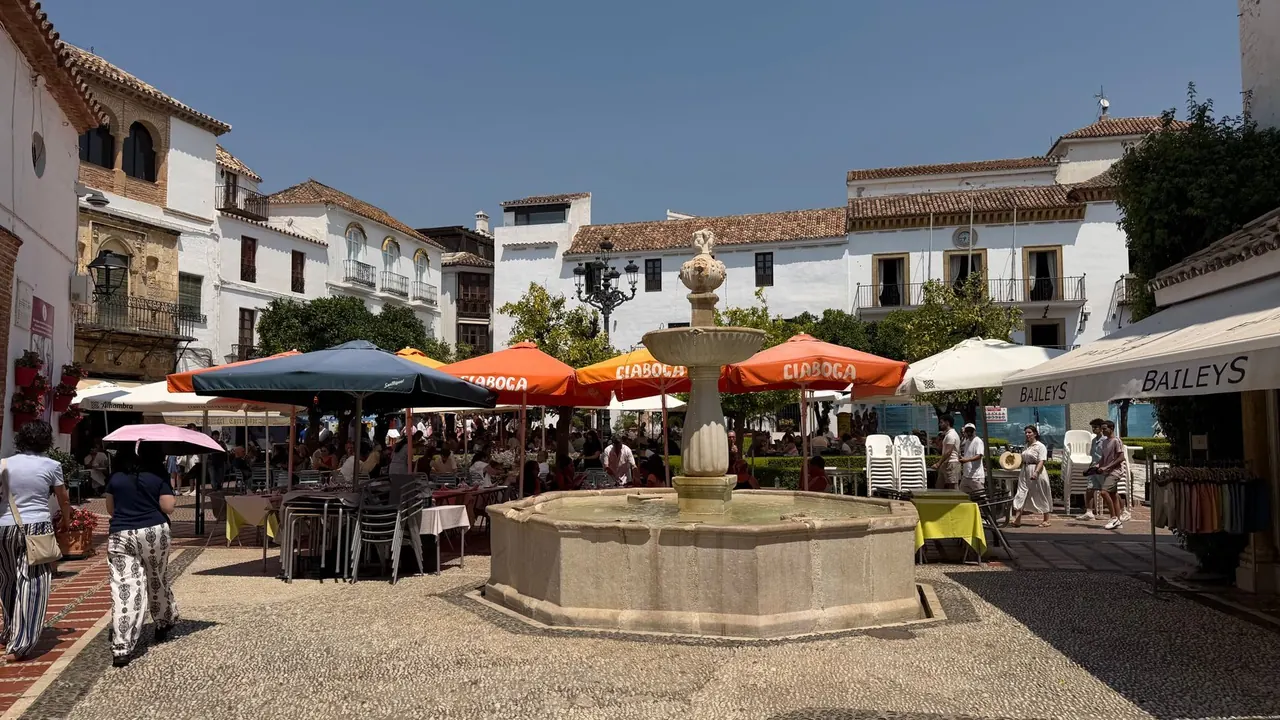
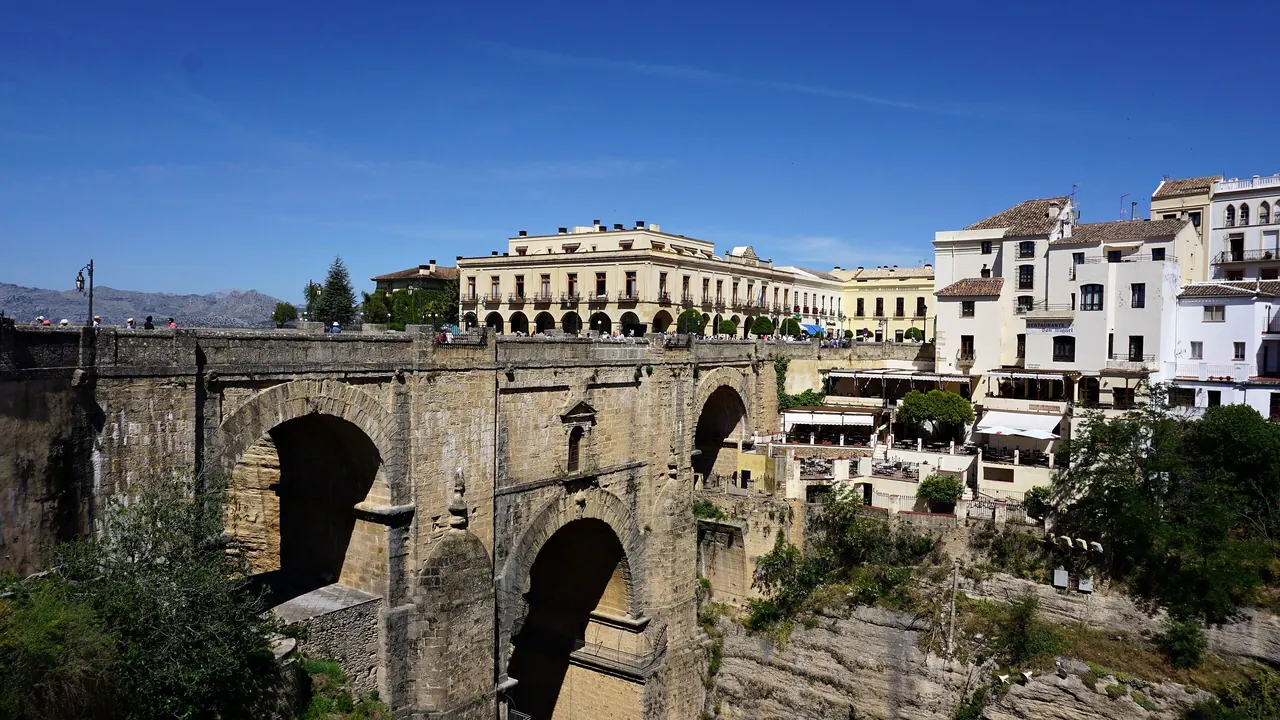
Photos: Marbella by Décio Franchini, Pexels License; Ronda by Julia Kostecka, CC BY 2.0, cropped.
Marbella or Ronda?
Our verdict in twelve categories, each scored against the same fixed benchmark cities, and the climate month by month, so you can choose for your trip.
Choose Marbella for
- beaches
- nightlife
- families
Marbella suits a sun-and-sea vacation with evenings out. It has a long string of beaches, a summer scene running from Golden Mile beach clubs to the late bars and clubs of Puerto Banús, and resort pools and coastal attractions that keep children busy. It costs more, and its own heritage fills an afternoon rather than a week.
Choose Ronda for
- prices
- culture and sights
- getting around
Ronda is for travellers who would rather walk the hills than lie on a lounger. The gorge, the Puente Nuevo, the old bullring and the Arab baths give it far more history than the coast. The Grazalema and Sierra de las Nieves mountains start at its edge, and your money goes noticeably further. The trade-off is quiet nights, and the sea is an hour of hairpin bends away.
Scoreboard
Twelve categories on one fixed scale from 0 to 100. The shaded stretch is the gap between the two.
Your match
Pick a travel style or drag the sliders, and both match scores follow your weighting.
Wins on beaches and nightlife with your weighting.
Wins on prices and culture and sights with your weighting.
What matters to you?
Category by category
What the scores mean for a trip.
Beaches & swimming
This is where Marbella wins outright. About 27km of shore holds more than two dozen beaches, from La Venus and El Fuerte in the centre to the dunes at Cabopino. The sand is fine and greyish, with sun loungers and grilled-sardine stalls along it, and the beaches are a walk from most places you might stay.
From Ronda, the nearest sand is around San Pedro, which is Marbella's own western district, down a winding mountain road. Most visitors there cool off in a hotel or farmhouse pool instead.
Food & drink
Marbella has the wider range. You can eat skewered sardines on the beach, tapas behind the Alameda and acclaimed tasting menus on the Golden Mile, though the overpriced seafront middle is best skipped.
Ronda's cooking is narrower but has more local character. It is the food of the Serranía: oxtail stew, lamb and game, mountain hams, and chestnuts and mushrooms from the Genal valley in autumn. Both towns pour Sierras de Málaga wines, but only around Ronda can you visit the wineries themselves.
Culture & sights
Ronda has much more to see. The town is split by the Tajo gorge, more than 100m deep, and joined by the Puente Nuevo. It also has one of Spain's oldest bullrings, some of the country's best-preserved Arab baths and the stairway cut through the rock at the Casa del Rey Moro, enough to fill one or two unhurried days.
Marbella's heritage is pleasant but brief. There is the Plaza de los Naranjos with its 16th-century town hall, a print museum, Dalí bronzes along the Avenida del Mar and Roman mosaics at Río Verde. Many people staying in Marbella make Ronda their day of sightseeing.
Nightlife
The gap here is wide. In summer, Marbella is one of Spain's best-known places to go out, with daytime beach clubs that turn into evening parties, champagne bars facing the yachts at Puerto Banús and clubs open until dawn. The old town's terraces offer a gentler night.
A night in Ronda means a late dinner and a drink around the Plaza del Socorro, and the town is asleep by the early hours, apart from during the September fair. In winter the difference narrows, because Marbella's scene also shrinks to a quiet drink.
Nature & outdoors
Marbella pairs mountain and sea. Sierra Blanca rises straight behind the town, and the climb to La Concha is a demanding half-day with views to Gibraltar and Morocco on clear days. The Spanish fir forests of the Sierra de las Nieves are within easy reach by car, and the coast adds paddleboarding, sailing and dolphin-watching, though the shore itself is heavily built up.
Ronda goes further, because it sits inside the landscape rather than beside it. A path drops from the town to the foot of the Tajo gorge, whose cliffs draw climbers. The crags of Grazalema, the Garganta Verde ravine and its griffon vultures lie to the west, the Sierra de las Nieves lies to the east, and the Genal chestnut woods turn copper in autumn. From either town, the Caminito del Rey makes a good day out.
Day trips
The two are about level, but they face different ways. From Marbella the outings run along the coast and up to its edges: Málaga's Alcazaba and Picasso Museum, Gibraltar, hilltop Casares and Mijas, and Granada for a long day.
Ronda points inland, to the white villages of the Sierra de Cádiz. Setenil de las Bodegas, with its houses under the rock, is twenty minutes away, and Zahara and Grazalema are within the hour. There are also the Palaeolithic paintings of the Cueva de la Pileta, and Seville is within range. Each town counts the other as an easy outing, and from either one a hire car makes the trips far simpler.
Good for families
Marbella is much easier with children. Its town beaches are sheltered and lifeguarded in season, the flat promenade suits scooters and buggies, and many places to stay are built around pools. The animal park, zoo, water parks and cable car along the coast are a short drive away.
Ronda's steep cobbled lanes are hard work with a pushchair, and it has no zoo or aquarium. Older children do enjoy the bridge, the path into the gorge and the nearby caves, and a country house with a pool works well as a base.
Getting around
Ronda is the easier town to get around. The bridge, the bullring, the old town and the Mercadillo are minutes apart on foot, though some lanes are steep, and a railway station on the Algeciras line helps with arriving.
Marbella stretches thinly along the motorway from San Pedro to Cabopino. Only the old town and the central seafront are walkable, there is no train, and visitors rely on coastal buses and taxis. In both places the outings beyond town really call for a car.
Shopping & style
Marbella is the place for shopping, specifically for luxury. Puerto Banús has a dense strip of international fashion and jewellery boutiques facing the yachts, with a department store beside them, while the old town sells linen, leather and ceramics.
Ronda has little beyond Carrera Espinel's everyday shops and souvenirs near the bridge. The best things to bring home from Ronda are edible: local wine, cured meats and convent sweets.
Affordability
Ronda is clearly the cheaper stay. Mercadillo tapas and set lunches are good value, the sights charge modest fees, and rural houses are fairly priced. Costs rise mainly at hotels overlooking the gorge, at Easter and during the September fair.
Marbella is expensive by Spanish standards, and steeply so in July and August, especially for beach clubs and dinner around Puerto Banús. Old-town tapas and cheaper rooms outside summer soften that, and some visitors save by staying in a neighbouring town.
Live music & performing arts
Neither town is a destination for live performance, but Marbella has a little more in summer. An outdoor festival in an old quarry amphitheatre brings big international pop and rock acts, and the hotels and beach clubs put on concerts. For opera or serious flamenco, people go on to Málaga.
Ronda offers small-venue flamenco for visitors and an occasional theatre programme. Its one distinctive event is the Corrida Goyesca at the September fair, a bullfight in eighteenth-century costume held in the historic ring.
Wellness & relaxation
Marbella has far more on offer for pampering. Spa resorts, yoga retreats and detox clinics line the Golden Mile and the hills behind it, and a few Arab-style bathhouses have hot and cold pools. It is most restful from October to May, before the summer crowds and parties arrive.
Ronda's Arab baths are a monument to visit, not somewhere to bathe, and it has only a few hotel spas. What it offers instead is stillness once the day-trippers leave, and farmhouses among olive groves where you can do very little for a few days.
When should you go?
Pick your month. The climate figures are measured averages, not a forecast.
Marbella in July
Ronda in July
Daytime high, °C
Rainfall in the month, mm
Where the figures come from
Marbella's temperatures are measured 40 km from the centre, at Malaga / Aeropuerto.
Marbella has no rain gauge within 25 km of the centre, so its rainfall comes from a gridded climate dataset read at the city rather than from a gauge further away.
Ronda has no weather station within reach, so its figures come from a gridded climate model rather than a measured record, and read a broad area rather than the city itself.
Temperature and rainfall are climate normals, averaged over the years shown. Marbella: 1991-2020 normals, Malaga / Aeropuerto (39.7 km from centre). Ronda: 1991-2020 normals, TerraClimate 4 km grid at the town, no weather station within 90 km.
Marbella's beach season runs from June to early October, with the sea warming to about 22°C in August. July and August are hot and almost completely dry, so the old town is best walked early or late. Rain sets in from October and is heaviest in December, at around 115mm. Winters stay mild and sunny, though, so the promenade and the hills behind town are pleasant from November to March.
Ronda sits higher and has a sharper year. Winter highs fall to about 13°C in December and January, and November to March is the wet stretch. In July and August the town reaches 32°C, much the same as the coast, which makes afternoons in the lanes and on the trails hard going. Its best weeks are April and May and from late September into October, when the countryside is good for walking. Marbella's long, mild season starts earlier and lasts longer.
Which traveller are you?
On a beach and sun trip, Marbella is the clear pick. It has two dozen beaches along its shore, calm water that stays swimmable into autumn, and chiringuitos grilling sardines on the sand. From Ronda, every swim means a whole day's drive.
For a food and nightlife trip, Marbella gives you far more. You can eat anything from tapas in the Casco Antiguo to tasting menus on the Golden Mile, then go out until dawn in Puerto Banús. Ronda's evenings end after tapas around the Plaza del Socorro.
On a tight budget, Ronda goes much further. The Mercadillo's tapas bars and set lunches are good value, the compact town costs nothing to walk, and country houses are fairly priced. In Marbella, high-summer rates and port dining add up quickly.
Before you go
| Measure | Marbella | Ronda |
|---|---|---|
| Official language | Spanish | Spanish |
| Currency | Euro (EUR) | Euro (EUR) |
| Sockets | CF230 V, 50 Hz | CF230 V, 50 Hz |
| Driving side | Right | Right |
| Time zone | UTC+1, UTC+2 in summer | UTC+1, UTC+2 in summer |
| Emergency number | 112 | 112 |
| Elevation | 22 m | 724 m |
| Main airport | Málaga-Costa del Sol Airport (AGP)39 km from centre166 non-stop destinations | Málaga-Costa del Sol Airport (AGP)60 km from centre166 non-stop destinations |
| Public holidays this year | 12 days | 12 days |
By the numbers
| Measure | Marbella | Ronda |
|---|---|---|
| City population | 159,786 | 33,671 |
| People per km² | 1,398 | 87 |
| Museums within 10 km | 6 | 5 |
| UNESCO World Heritage sites within 50 km | 0 | 0 |
| Swim season, months above 21 °C | 3 months | 1 month |
Where else could you go?
Every comparison below shares a destination with this one, so you can follow Marbella or Ronda somewhere new.