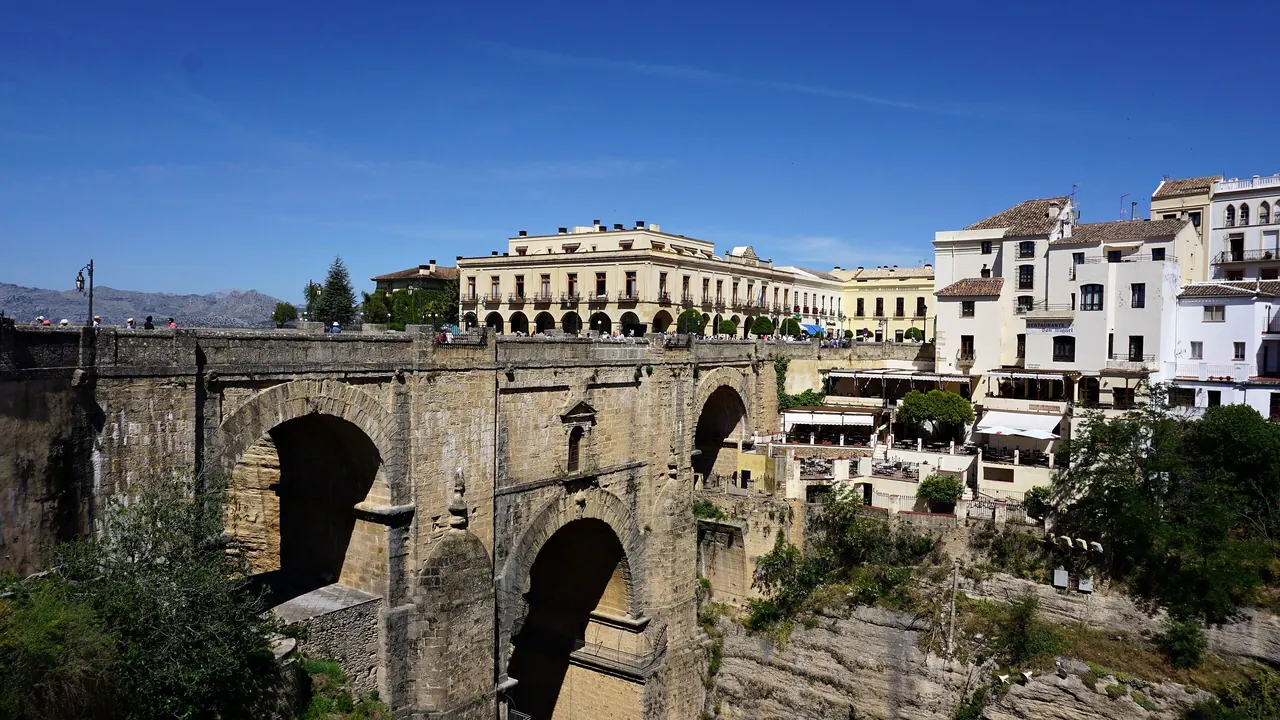
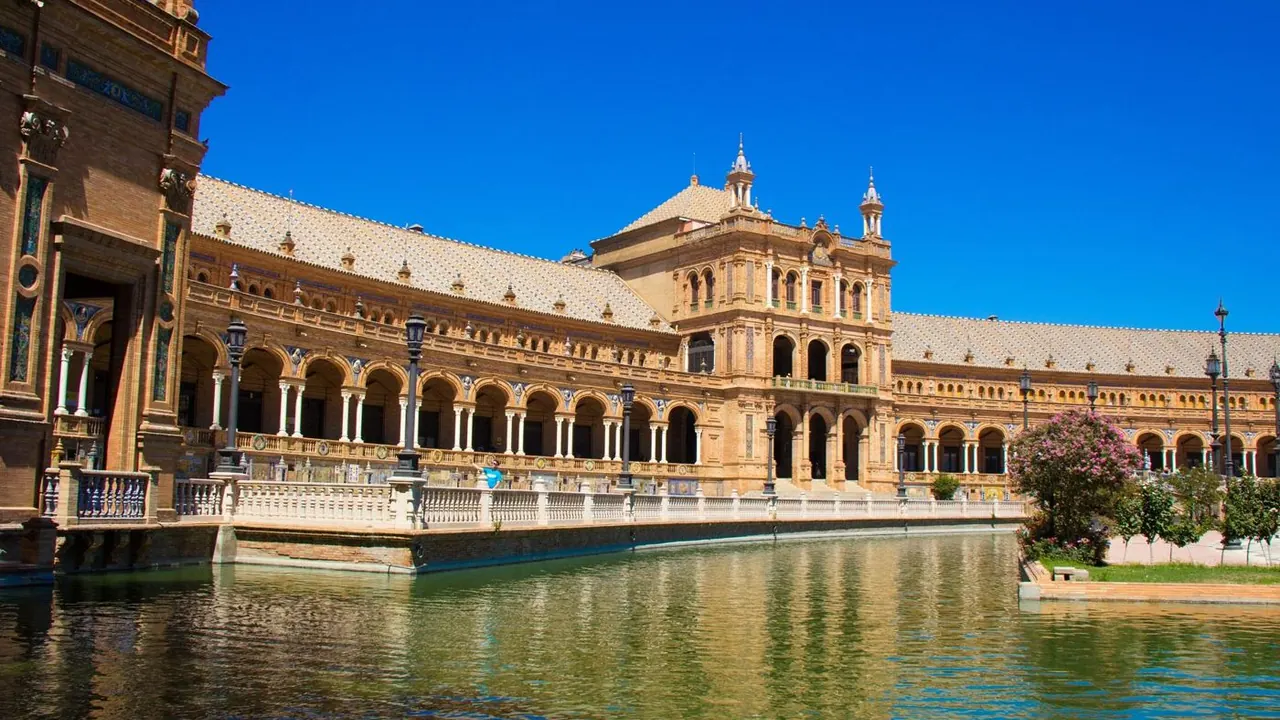
Photos: Ronda by Julia Kostecka, CC BY 2.0, cropped; Seville by Tibor Kovacs, CC BY 2.0, cropped.
Ronda or Seville?
Our verdict in twelve categories, each scored against the same fixed benchmark cities, and the climate month by month, so you can choose for your trip.
Choose Ronda for
- nature and the outdoors
- prices
- beaches
Ronda suits travellers who want mountains more than monuments. It is a base for walking in the Sierra de Grazalema and the Sierra de las Nieves, for driving out to the white villages, and for slow evenings in a small town once the day-trippers have gone. It works best with a hire car and a country house, and it rewards a few unhurried days far more than a packed sightseeing schedule.
Choose Seville for
- live music and the arts
- nightlife
- food and drink
Pick Seville for a fuller city trip. The Alcázar, the cathedral and the lanes of Santa Cruz go well beyond Ronda's compact set of sights. Its evenings, with tapas, flamenco in tablaos and peñas, and late terraces in Triana and on the Alameda, give it a life after dark that Ronda lacks. It is also the easier base without a car, with Córdoba under an hour away by train.
Scoreboard
Twelve categories on one fixed scale from 0 to 100. The shaded stretch is the gap between the two.
Your match
Pick a travel style or drag the sliders, and both match scores follow your weighting.
Wins on nature and the outdoors and prices with your weighting.
Wins on live music and the arts and nightlife with your weighting.
What matters to you?
Category by category
What the scores mean for a trip.
Beaches & swimming
Neither city is a beach destination, and from either one the sea takes an hour or more by road and fills most of a day. The two coasts are quite different, though. From Ronda you wind down hairpin bends to the long, built-up Mediterranean sands around Estepona and San Pedro de Alcántara.
From Seville the drive crosses flat country to the Atlantic beaches of Matalascañas and Mazagón, with the long sands of Cádiz province further on. For everyday cooling off, Ronda means a pool at a rural house and Seville a hotel rooftop or a municipal pool.
Food & drink
Ronda's cooking is hearty and fairly narrow: oxtail stew, lamb and game, cured meats from the hills, and chestnuts and wild mushrooms from the Genal valley in autumn. It is best eaten in the Mercadillo's tapas bars rather than on the gorge-view terraces. The wineries just outside town are a real draw, but a few days covers the menu.
Seville is the better place to eat. Tapas are a way of life there, from old tiled bars in Santa Cruz, Triana and El Arenal to more inventive kitchens around the Alameda, with fried fish from the Cádiz coast, salmorejo and pork cheek, washed down with manzanilla or orange-blossom vermouth.
Culture & sights
Ronda's great sight is its setting: the Puente Nuevo spanning El Tajo between the Moorish old town and the Mercadillo. Around it sits a small group of real heritage, including the Real Maestranza bullring, the well-preserved Arab baths and Santa María la Mayor. It is memorable, and a day or two is enough to see it.
Seville is on another scale altogether. The Mudéjar courtyards of the Alcázar, the cathedral with the Giralda, the Archivo de Indias, Casa de Pilatos and the Museo de Bellas Artes can easily fill three or four days, and all of them are within walking distance of each other.
Nightlife
A night in Ronda means a late dinner and perhaps a drink around the Plaza del Socorro, and then the town goes quiet. Apart from the September fair, there is almost nothing more.
Seville goes on much longer, moving from tapas bars to terraces on the Alameda de Hércules, in Triana and around the Alfalfa until the early hours, with open-air bars along the river in summer. Neither city is much good for clubbing, but only Seville is a place for a proper night out.
Nature & outdoors
Ronda is the place for the outdoors. It sits in a ring of limestone mountains, with the green crags, the Garganta Verde and the vultures of the Sierra de Grazalema on one side and the Spanish fir forests of the Sierra de las Nieves on the other. There is climbing on the Tajo cliffs, and the Caminito del Rey is within an hour.
Seville's surroundings are flat farmland and orchards, so outdoors in town means María Luisa Park and rowing or cycling along the river. Its best natural attraction is the Doñana wetland, which is excellent for birds but is a long guided outing rather than a walk from your door.
Day trips
Both cities make strong bases, but they open up different parts of Andalusia. Ronda is the gateway to the white villages, including Setenil, Grazalema and Zahara, and to the Roman ruins of Acinipo and the painted Cueva de la Pileta, though nearly all of these need a car.
Seville reaches further with less effort. Córdoba is under an hour away by fast train, Jerez and Cádiz are easy rail trips, and Itálica and Carmona are close by. That gives it the edge, especially for travellers without a car.
Good for families
Ronda has a few things that older children enjoy: the bridge, the walk down into the gorge, the rock-cut stairway at the Casa del Rey Moro and the caves nearby. The steep cobbled lanes are hard going with a pushchair, though, and little is aimed at children, so a country house with a pool works best.
Seville is the easier city with children. The centre is flat, María Luisa Park has rowing boats and horse carriages, and the Alcázar gardens have a maze. On La Cartuja, the 1992 Expo island, there is a theme park with a summer water park, and there is also an aquarium by the river. The one serious drawback is the midsummer heat.
Getting around
You can walk around both centres. Ronda's is tiny and steep in places. Seville's is larger and flat, and a tram, a metro line, buses and a public bike scheme that makes cycling practical all back it up.
The bigger difference comes when you leave town. Ronda's villages and natural parks really need a car, and parking in the old town is tight. From Seville, trains cover the main day trips, and a car is mostly useful for the coast or the countryside. In the centre it is just a nuisance.
Shopping & style
Shopping in Ronda is limited to the ordinary shops on Carrera Espinel and souvenirs near the bridge. The best things to take home are edible: local wine, cured meats and convent sweets.
Seville has a real shopping character of its own. Triana's workshops sell hand-painted tiles and ceramics, and around Calle Sierpes there are shops for flamenco dresses, shawls, fans and guitars, made largely for locals preparing for the Fair. There are also the main high-street chains and the Thursday flea market on Calle Feria.
Affordability
Both cities are good value, and in both the tapas bars are where you save most. Where the costs fall is different. In Ronda the biggest extra is usually a hire car, along with the higher prices at hotels with gorge views. Seville needs no car, but its hotel rates climb steeply during Holy Week and the April Fair, and its rooms are cheapest in the summer heat.
Live music & performing arts
Ronda offers flamenco for visitors in small venues and an occasional programme at its municipal theatre. Its one standout is the Corrida Goyesca, the bullfight in eighteenth-century costume held during the September fair.
Seville is the heartland of flamenco, with performances every night in tablaos, cultural centres and local peñas, and the Bienal bringing in leading performers in autumn of even-numbered years. Opera and the Royal Symphony Orchestra at the Teatro de la Maestranza add more, so for evenings of music and dance Seville is the obvious choice.
Wellness & relaxation
Ronda's Arab baths are a monument to look at, not somewhere to bathe, and treatments are limited to a few hotel spas. What it offers instead is quiet, in country hotels with pools among the olive groves.
Seville has the edge if you want treatments: Arab-style bath houses in old mansions offer warm, hot and cold pools and massages. It also has cool courtyards and long lunches. The trade-off is noise in its narrow streets at night.
When should you go?
Pick your month. The climate figures are measured averages, not a forecast.
Ronda in July
Seville in July
Daytime high, °C
Rainfall in the month, mm
Where the figures come from
Ronda has no weather station within reach, so its figures come from a gridded climate model rather than a measured record, and read a broad area rather than the city itself.
Temperature and rainfall are climate normals, averaged over the years shown. Ronda: 1991-2020 normals, TerraClimate 4 km grid at the town, no weather station within 90 km. Seville: 1991-2020 (sunshine 1981-2010, rainfall 1981-2010) normals, Sevilla / San Pablo (8.1 km from centre).
Ronda sits high on its plateau, so it stays a few degrees cooler than Seville all year. Late April, May and September are its best months for walking, with mild days and little rain. Summer peaks at around 32°C, which is hot in the afternoons but bearable. October is when the rain returns, and it gets heavier through the winter, reaching about 120mm in December, with cold nights until March. On the Costa del Sol below, the sea is only really warm enough for swimming from July to September, when it reaches about 22°C.
Seville is the warmer city in every month. Its winters are mild, with highs in the mid-teens and plenty of sunshine, and March, April and early May are the easiest months for walking the streets. July and August average 36°C, which is too hot for sightseeing in the middle of the day, and the autumn rain arrives in October. In high summer Ronda's mountain air is more comfortable, and in winter Seville is the kinder of the two.
Which traveller are you?
On an outdoors trip, Ronda is the clear choice. The green crags of the Sierra de Grazalema, the fir forests of the Sierra de las Nieves, the path down the Tajo and the Caminito del Rey are all close by. Seville is surrounded by flat farmland.
For a food and nightlife trip, choose Seville. Its tapas bars in Triana, El Arenal and around the Alameda offer far more than Ronda's hearty mountain cooking, and the evenings carry on through terraces and squares into the early hours, long after Ronda has gone quiet.
On a culture and arts trip, Seville offers much more: the Alcázar, the cathedral and Giralda, the Murillos in the Museo de Bellas Artes, flamenco every night and opera at the Maestranza. Ronda's gorge, bridge, bullring and Arab baths fill a day or two.
Before you go
| Measure | Ronda | Seville |
|---|---|---|
| Official language | Spanish | Spanish |
| Currency | Euro (EUR) | Euro (EUR) |
| Sockets | CF230 V, 50 Hz | CF230 V, 50 Hz |
| Driving side | Right | Right |
| Time zone | UTC+1, UTC+2 in summer | UTC+1, UTC+2 in summer |
| Emergency number | 112 | 112 |
| Elevation | 724 m | 18 m |
| Main airport | Málaga-Costa del Sol Airport (AGP)60 km from centre166 non-stop destinations | Seville Airport (SVQ)9 km from centre96 non-stop destinations |
| Public holidays this year | 12 days | 12 days |
By the numbers
| Measure | Ronda | Seville |
|---|---|---|
| City population | 33,671 | 689,423 |
| People per km² | 87 | 4,896 |
| Museums within 10 km | 5 | 24 |
| UNESCO World Heritage sites within 50 km | 0 | 1 |
| Swim season, months above 21 °C | 1 month | - |
Where else could you go?
Every comparison below shares a destination with this one, so you can follow Ronda or Seville somewhere new.