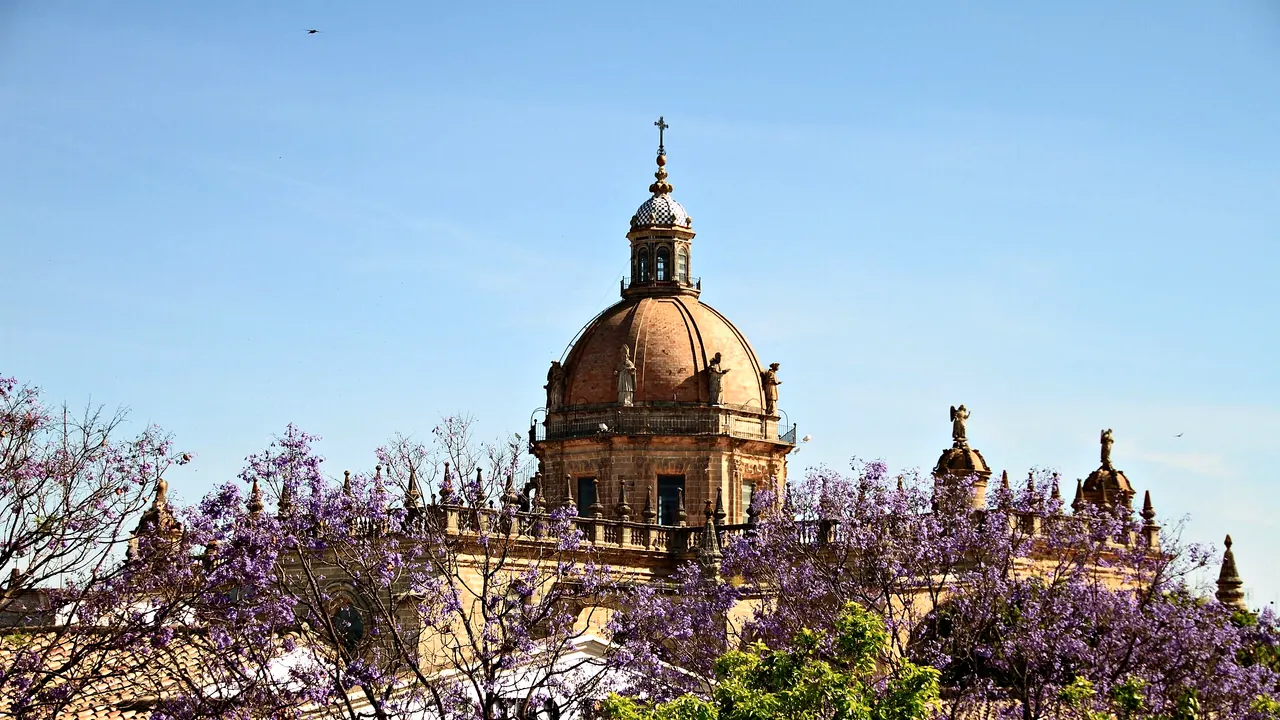
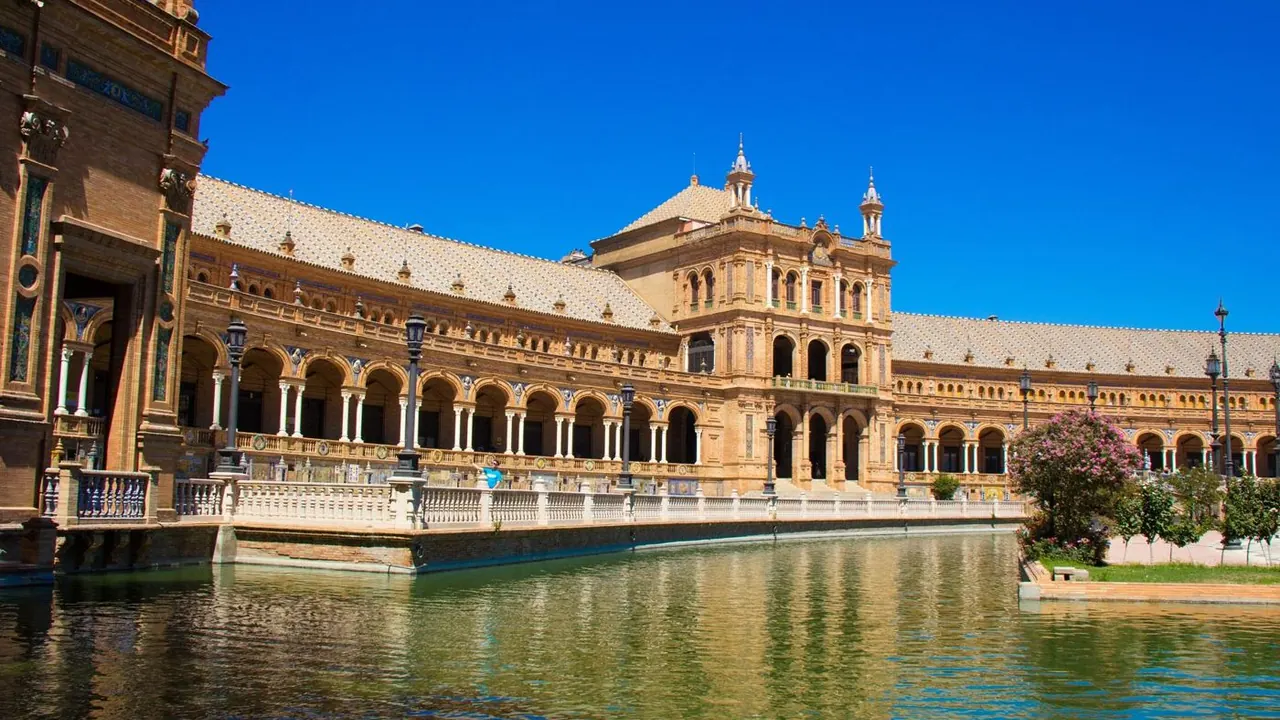
Photos: Jerez de la Frontera by PEPE GADEIRAS, CC BY 4.0, cropped; Seville by Tibor Kovacs, CC BY 2.0, cropped.
Jerez de la Frontera or Seville?
Our verdict in twelve categories, each scored against the same fixed benchmark cities, and the climate month by month, so you can choose for your trip.
Choose Jerez de la Frontera for
- beaches
- nature and the outdoors
- prices
Jerez suits travellers who want sherry, flamenco close to its roots and the Atlantic within easy reach. The beaches of El Puerto, Cádiz and Sanlúcar are a short train ride or drive away. The vineyards and the Sierra de Grazalema are on the doorstep, and the city costs a little less. It works best as a base for a slower stay of several days, not as a sightseeing marathon.
Choose Seville for
- culture and sights
- nightlife
- shopping
For a first trip to Andalusia, or for anyone who puts monuments first, Seville is the stronger choice. The Alcázar, the cathedral and the lanes of Santa Cruz make up one of Europe's great historic centres. The tapas bars are a step up, and evenings in Triana and on the Alameda run later and busier. The sea is far off, though, so beach time means a separate stay on the coast.
Scoreboard
Twelve categories on one fixed scale from 0 to 100. The shaded stretch is the gap between the two.
Your match
Pick a travel style or drag the sliders, and both match scores follow your weighting.
Wins on beaches and nature and the outdoors with your weighting.
Wins on culture and sights and nightlife with your weighting.
What matters to you?
Category by category
What the scores mean for a trip.
Beaches & swimming
Neither city has a beach in town, but the gap between them is wide. From Jerez, Valdelagrana, El Puerto and the Cádiz beaches of La Caleta and Playa de la Victoria are half an hour or less by train. The wide golden sands of Sanlúcar, Chipiona and La Barrosa are within an hour, so a beach afternoon fits easily into a city stay.
From Seville, the nearest sand is at Matalascañas or Mazagón on the Huelva coast, well over an hour by car. In the city, a swim means a rooftop or municipal pool. Anyone who wants the sea often should stay in Jerez, or split a Seville trip with a few nights on the coast.
Food & drink
Seville is the better city to eat in over several days. It has more tapas bars and more variety, from the tiled old counters of Santa Cruz, El Arenal and Triana to the more inventive kitchens around the Alameda. Dishes such as spinach with chickpeas, salmorejo and pringá are done with real care.
Jerez is narrower but goes deeper in one thing, sherry. You can taste in the bodegas, drink fino from the barrel in a tabanco and eat kidneys or oxtail cooked in sherry. Seville pours manzanilla and fino from the coast, but in Jerez you drink them where they are made.
Culture & sights
Here Seville pulls well ahead. The Real Alcázar, the cathedral with the Giralda and the Archivo de Indias form a UNESCO-listed group. Casa de Pilatos, Plaza de España and the Murillos and Zurbaráns in the Museo de Bellas Artes add three or four days of first-rate sightseeing.
Jerez has a smaller old town that is pleasant to wander. It has its own Almohad Alcázar, a Baroque cathedral and Gothic-Mudéjar parish churches. It also has two things Seville cannot match: the cathedral-like sherry bodegas and the dancing horses of the Royal Andalusian School of Equestrian Art. Two or three days cover it well.
Nightlife
Seville has far more going on after dinner. The Alameda de Hércules draws a young, mixed and LGBT-friendly crowd, Triana and the streets around the Alfalfa stay busy into the early hours, and in summer the riverside bars fill up once the heat breaks.
Jerez keeps the same late hours but on a provincial scale, with tabancos and copa bars around Plaza del Arenal and Calle Larga and only a few clubs. Each city has one great week of all-night casetas: the April Fair in Seville and the Feria del Caballo in Jerez in May.
Nature & outdoors
Jerez is better placed for the outdoors. The limestone gorges and marked trails of the Sierra de Grazalema are a little over an hour away, and the cork forest of Los Alcornocales lies to the south-east. The salt marshes of the Bay of Cádiz are close for birdwatching, the Tarifa coast is a kitesurfing area, and riding is easy to arrange in this horse country.
Seville is surrounded by flat farmland, so its green space is María Luisa Park and the river, which is good for rowing and kayaking. Both cities can reach Doñana: from Seville on guided 4x4 trips, from Jerez by boat from Sanlúcar. In both, the summer heat pushes hiking to spring and autumn.
Day trips
Both make excellent bases, and each appears on the other's list, about an hour apart by train. What differs is the direction. Jerez looks to the coast and the hills: Cádiz, El Puerto, Sanlúcar, Arcos and the white towns, with Ronda, Tarifa and Gibraltar further on. Many of these are easiest by car.
Seville looks north and east, and much of it is reachable by rail. Córdoba is under an hour by high-speed train, the Roman ruins of Itálica are on the city's edge and Carmona is half an hour away. The baroque towns of Osuna and Écija are also within reach.
Good for families
Neither city is built around children, but both welcome them at late dinners and on terraces, so they are close. The difference lies in the outings. Jerez has a well-regarded zoo and botanical garden, the dancing-horse show, and wide, gently sloping beaches nearby.
Seville has rowing boats at Plaza de España, the maze in the Alcázar gardens, an aquarium, and a theme park with a summer water park on La Cartuja. Its summer heat is the harder of the two to manage with small children.
Getting around
Both centres are flat and compact, but Seville is easier to get around once you go beyond the walking core. It has a tram, a metro line, a dense bus network and a public bike scheme on extensive bike lanes, and orange trees shade some of the pedestrian streets.
Jerez is smaller, so its sights and tapas streets are only a few minutes' walk apart. The station has direct trains to Seville and Cádiz and a short ride to the airport. Its weak point is the countryside: the white towns, Grazalema and many beaches really need a hired car.
Shopping & style
Seville is better for shopping, mainly for crafts. Triana's old pottery workshops sell hand-painted tiles and ceramics, and around Calle Sierpes and Calle Cuna there are flamenco dresses, mantillas and fans. Add the Thursday flea market on Calle Feria and the main high-street chains.
In Jerez, Calle Larga is a modest provincial shopping street. The things worth buying are local: sherry and brandy straight from the bodega, and leather riding boots and saddlery from craftsmen who serve the horse world.
Affordability
Jerez is the cheaper stay. Sherry and tapas in the tabancos cost little, bodega tours are inexpensive, mid-range hotels in the centre are moderately priced and nearly everything is within walking distance. Room rates rise during the Feria, the winter flamenco festival and the motorcycle race weekends.
Seville is still reasonable for Western Europe, and tapas evenings keep food bills down. Hotels cost more, though, and during Holy Week and the April Fair prices climb steeply and the best places fill well in advance. Tickets for the Alcázar and the cathedral add to the cost.
Live music & performing arts
Both are leading flamenco cities, and the difference is mainly one of scale and setting. Jerez, home of the bulería, keeps flamenco closest to its roots. You hear it in the peñas of Santiago and San Miguel and in rough, close-up sessions in the tabancos, and its late-winter festival at the Teatro Villamarta draws students from around the world.
Seville has more on every night, from tablaos in Santa Cruz and Triana to cultural centres devoted to flamenco, as well as the Bienal in the autumn of even-numbered years. It also has more beyond flamenco, with opera and the Royal Symphony Orchestra at the Teatro de la Maestranza.
Wellness & relaxation
Neither city is a spa destination. Each has Arab-style bathhouses with warm pools and massage, a few in old mansions in Seville and one in the old town of Jerez. Beyond those, there are only hotel spas.
What both offer is a slow pace, and Jerez is the quieter of the two, with shaded patios and evening strolls. Seville's cool courtyards and Alcázar gardens come with noisy streets at night and crowds during Holy Week and the Fair.
When should you go?
Pick your month. The climate figures are measured averages, not a forecast.
Jerez de la Frontera in July
Seville in July
Daytime high, °C
Rainfall in the month, mm
Temperature and rainfall are climate normals, averaged over the years shown. Jerez de la Frontera: 1991-2020 normals, Jerez De La Fronteraaeropuerto (9.9 km from centre). Seville: 1991-2020 (sunshine 1981-2010, rainfall 1981-2010) normals, Sevilla / San Pablo (8.1 km from centre).
Both cities are at their best in spring and autumn. In March and April the days reach the low twenties, ideal for walking the old streets, though April can bring a few showers in Seville. May and October are warmer, in the mid to upper twenties. From June to August both are hot, almost rainless and very sunny, and in July and August midday sightseeing is hard work. Jerez peaks at about 34°C and Seville at about 36°C, so Seville is the harsher of the two.
Jerez also has a beach season, from June to September, when the nearby Atlantic reaches about 23°C. Earlier in the year the water is fresh. September stays hot in both, but in Jerez the first rain returns that month, while Seville remains largely dry until October. From then through the winter both get most of their rain, and Seville's wettest month is November, with around 122mm. Winters are mild in both, with highs around 17°C, which is pleasant for walking but not for swimming.
Which traveller are you?
On a beach and sun trip, Jerez is the clear pick. Cádiz and the sands of El Puerto are half an hour or less by train, and Sanlúcar and La Barrosa are within an hour. From Seville, every trip to the sea takes most of a day.
For a culture and arts trip, choose Seville. The Alcázar, the cathedral and Giralda, the Bellas Artes and nightly flamenco in Santa Cruz and Triana fill several days. Jerez's bodegas and equestrian school then make an easy day out by train.
On a food and nightlife trip, Seville offers more of both. It has a deeper tapas scene from Triana to the Alameda, and later nights around the Alfalfa and the river. Jerez is the better choice only if sherry, drunk in tabancos and bodegas, is the main reason for going.
Before you go
| Measure | Jerez de la Frontera | Seville |
|---|---|---|
| Official language | Spanish | Spanish |
| Currency | Euro (EUR) | Euro (EUR) |
| Sockets | CF230 V, 50 Hz | CF230 V, 50 Hz |
| Driving side | Right | Right |
| Time zone | UTC+1, UTC+2 in summer | UTC+1, UTC+2 in summer |
| Emergency number | 112 | 112 |
| Elevation | 58 m | 18 m |
| Main airport | Jerez Airport (XRY)10 km from centre26 non-stop destinations | Seville Airport (SVQ)9 km from centre96 non-stop destinations |
| Public holidays this year | 12 days | 12 days |
By the numbers
| Measure | Jerez de la Frontera | Seville |
|---|---|---|
| City population | 213,634 | 689,423 |
| People per km² | 180 | 4,896 |
| Museums within 10 km | 14 | 24 |
| UNESCO World Heritage sites within 50 km | 1 | 1 |
| Swim season, months above 21 °C | 3 months | - |
Where else could you go?
Every comparison below shares a destination with this one, so you can follow Jerez de la Frontera or Seville somewhere new.
- Cadizvs Jerez de la Frontera
- Rondavs Jerez de la Frontera
- Cadizvs Seville
- Rondavs Seville
- Marbellavs Jerez de la Frontera
- Cordobavs Seville