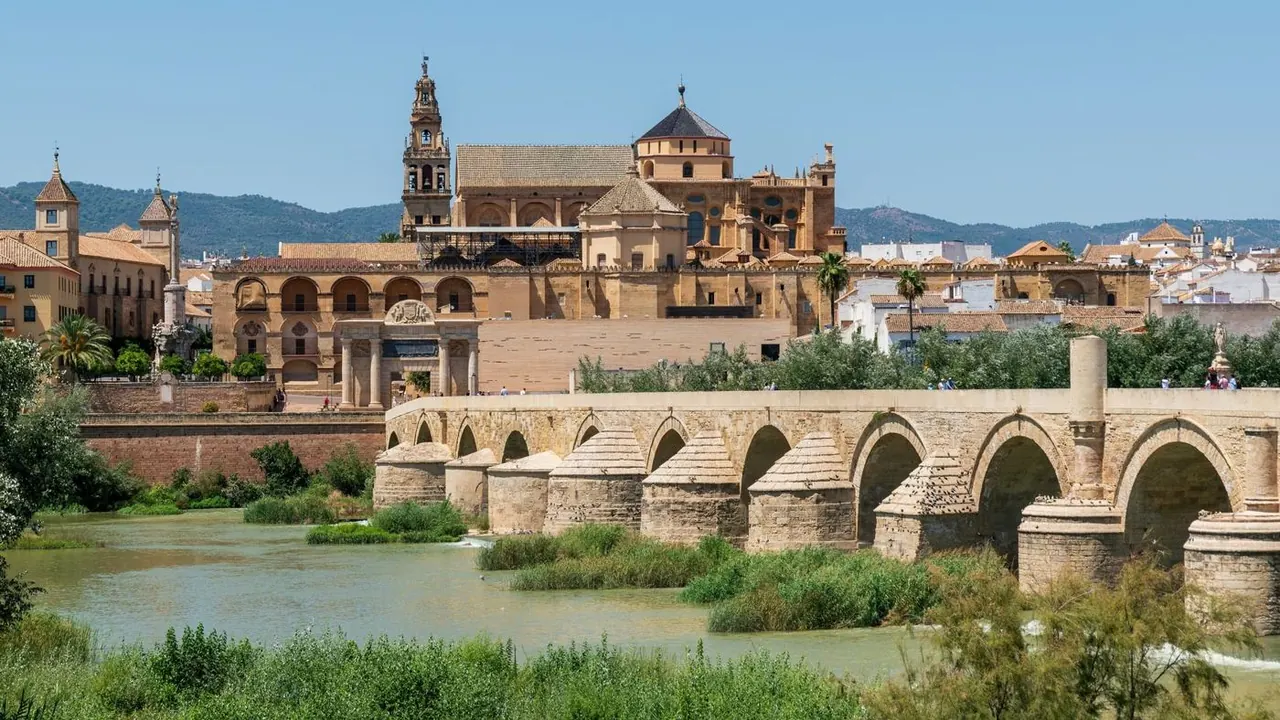
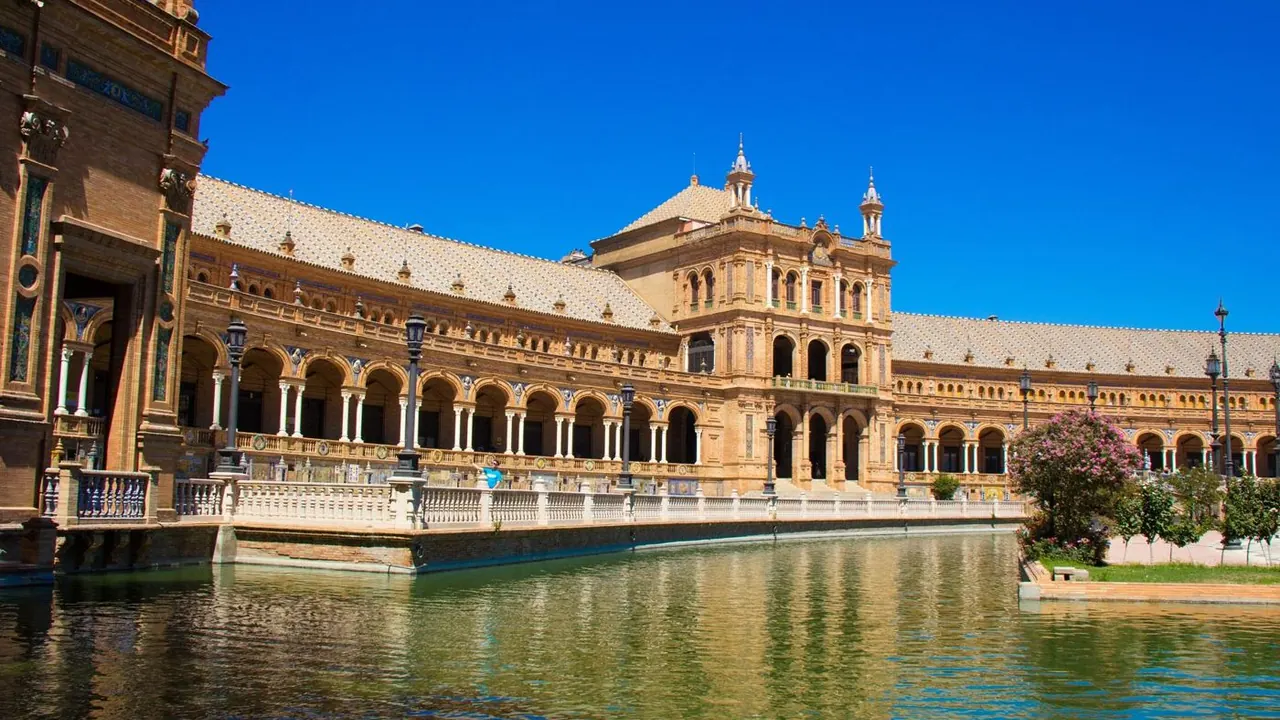
Photos: Cordoba by Jose María Ligero Loarte, CC BY-SA 4.0, cropped; Seville by Tibor Kovacs, CC BY 2.0, cropped.
Cordoba or Seville?
Our verdict in twelve categories, each scored against the same fixed benchmark cities, and the climate month by month, so you can choose for your trip.
Choose Cordoba for
- day trips
- prices
Cordoba suits travellers who want one extraordinary monument with a quiet old town around it, seen over a few unhurried days. It is also the better base if you plan to see Seville, Granada and Malaga on day trips by fast train. Evenings mean tapas in patio tabernas rather than a long night out, and the city rewards a slower pace.
Choose Seville for
- nightlife
- live music and the arts
- shopping
Pick Seville if you want the fuller city. It has a deeper tapas culture, flamenco every night of the week, opera at the Maestranza, later evenings in Triana and the Alameda, and more for children, from María Luisa Park to the aquarium. It takes longer to see and asks a little more of your budget in its busiest weeks, but there is simply more going on.
Scoreboard
Twelve categories on one fixed scale from 0 to 100. The shaded stretch is the gap between the two.
Your match
Pick a travel style or drag the sliders, and both match scores follow your weighting.
Wins on day trips and prices with your weighting.
Wins on nightlife and live music and the arts with your weighting.
What matters to you?
Category by category
What the scores mean for a trip.
Beaches & swimming
Neither city is a beach destination, and the real difference is which coast you head for. From Cordoba, the nearest sea is the Mediterranean at Malaga. That means about an hour on the fast train, then a walk or a bus to the city beaches. Seville's nearest sands are on the Atlantic at Matalascañas and Mazagón, about an hour and a quarter by car, with the long beaches of Cádiz further on.
In both cities, a summer swim in town means a pool, though Cordoba also has reservoirs in the Sierra Morena. If the sea matters to you, either city works best with a few nights on the coast added.
Food & drink
Both cities share salmorejo, late lunches and old tiled bars, but Seville's tapas culture is broader and livelier. Cordoba's strength is its own dishes: flamenquin, rabo de toro and crisp aubergine with cane honey, eaten in patio tabernas around Santa Marina and San Agustin with a chilled glass of Montilla-Moriles.
Seville offers more bars and more variety in a single evening, from fried fish brought up from the Cádiz coast to spinach with chickpeas. There are old counters in Triana and El Arenal and more inventive kitchens around the Alameda, with manzanilla or orange-blossom vermouth to drink. Neither city does much fine dining or international food.
Culture & sights
Both cities hold some of the greatest Islamic and Christian monuments in Spain, and the difference is one of scale rather than quality. Cordoba centres on a single overwhelming building, the Mezquita, with its forest of striped arches and a cathedral built into its heart. Around it are the Juderia, the Roman bridge and, just outside town, the ruins of Medina Azahara, all seen properly in two or three days.
Seville spreads its riches over more places: the Alcázar's Mudéjar courtyards, the vast Gothic cathedral with the Giralda, the Archivo de Indias, Plaza de España and a real art museum with Murillo and Zurbarán. It needs a day or so longer and gives you more paintings, while Cordoba offers a more intimate scale and its flower-filled patios.
Nightlife
Neither is a clubbing city, but Seville has far more to fill an ordinary night. The Alameda de Hércules draws a mixed, young and LGBT-friendly crowd, and Triana and the Alfalfa stay busy into the early hours all year, not only in summer.
Cordoba's evenings are gentler. People take late drinks on the terraces of the Corredera, Las Tendillas and the riverside, and student bars fill up at weekends. Outside summer and the May fair, things quieten noticeably, and the streets around the Mezquita empty early.
Nature & outdoors
Seville has the standout landscape in Doñana, one of Europe's great wetlands, about an hour and a half away, with flamingos, migrating birds and guided 4x4 trips. In town you can kayak or row on the old river channel.
Cordoba's countryside is hillier and closer to the city. The wooded Sierra Morena starts at the edge of town, Hornachuelos has large birds of prey, and the Subbetica offers walks through gorges and karst. In both, a car helps, and summer rules out most activity after dawn.
Day trips
Cordoba has the edge as a base because it sits in the middle of the high-speed line. Seville is under an hour away, Malaga about an hour and Granada about an hour and a half, so the region's other great cities are all day trips. With a car, Ubeda and Baeza, the dolmens at Antequera and the bodegas of Montilla are within reach.
Seville's best day trip is Cordoba itself, and Granada works better with an overnight stay. Instead, Seville opens up the southwest: Roman Itálica on the doorstep, Jerez and its sherry, the old port of Cádiz and the white villages beyond Arcos.
Good for families
Seville gives children more to do. María Luisa Park, with its rowing boats on the canal at Plaza de España, and the maze in the Alcázar gardens come first. La Cartuja adds a theme park with a summer water park, and there is an aquarium by the river.
Cordoba's traffic-free lanes are easy to wander with children. The fountains of the Alcazar, the horse show at the royal stables and the castle at Almodovar del Rio please most of them, but beyond those the sights are aimed at adults. The summer heat is the same problem in both cities.
Getting around
Both are walking cities, and the difference lies in what backs up your feet. Cordoba is the smaller and tighter of the two, with the Mezquita, Juderia, Alcazar and patio quarters minutes apart and the station a short walk away. Its narrow cobbles are awkward with luggage, though, and Medina Azahara needs a bus or a taxi.
Seville's flat centre covers more ground, about a half-hour walk from end to end. It adds a tram, a metro line, a dense bus network and a public bike scheme on a wide web of bike lanes, so cycling is a practical option.
Shopping & style
Both cities lean towards crafts rather than fashion, but Seville has more of them and more variety. Triana's centuries-old pottery workshops, the flamenco dresses, shawls, fans and mantillas around Sierpes and Cuna, and the Thursday flea market on Calle Feria make for a good day's browsing.
Cordoba's range is narrower but distinctive: silver filigree, embossed guadameci and cordobán leather, and ceramics and guitars from local workshops. These are worth seeking out away from the souvenir stalls of the Juderia. Its high street around Cruz Conde is smaller.
Affordability
There is little to choose between them on cost. Tapas, local wine and a walkable centre keep daily spending modest in both.
What differs is the expensive season. In Cordoba it is May, when the patio festival, the crosses and the fair push room rates up. In Seville it is Holy Week and the April Fair, when the best hotels fill months ahead. Seville's summer heat brings good-value rooms, and the Mezquita offers a free early-morning visit on some days.
Live music & performing arts
For live performance, this is the clearest gap between the two. Seville has flamenco every night in tablaos around Santa Cruz and Triana, in cultural centres devoted to the art and in local peñas, and the Bienal brings in the leading performers in even-numbered years. The Teatro de la Maestranza adds opera and the Royal Symphony Orchestra of Seville.
Cordoba has a serious flamenco history of its own, with small tablaos, peñas, a guitar festival and the Noche Blanca del Flamenco, a summer night of free shows in the squares. The Gran Teatro hosts the city orchestra and touring productions. It makes a good evening out, but it is not a reason to choose the city.
Wellness & relaxation
Neither city is the place for a spa vacation. Both have Arab-style bath houses with warm and hot pools and massages, plus hotel spas. Cordoba has the ruins of the Caliphal Baths and quiet old quarters away from the Mezquita, while Seville's rooftop pools appeal in summer but its narrow streets are noisier at night and packed in Holy Week and during the Fair.
When should you go?
Pick your month. The climate figures are measured averages, not a forecast.
Cordoba in July
Seville in July
Daytime high, °C
Rainfall in the month, mm
Temperature and rainfall are climate normals, averaged over the years shown. Cordoba: 1991-2020 normals, Cordoba / Aeropuerto (7.6 km from centre). Seville: 1991-2020 normals, Sevilla / San Pablo (8.1 km from centre).
The two cities have almost the same climate, so one calendar works for both. Spring is the best time. March and April are warm enough for terraces and long walks, and May is drier and sunnier than April, though it still brings some showers. The rain only really stops in June. From June to August there is almost no rain and near-constant sunshine, and the heat is fierce. July highs reach 37°C in Cordoba and 36°C in Seville, so sightseeing shrinks to the early morning and late evening. September is still hot, and October brings walking weather back, along with the autumn rain.
The differences are small. Cordoba, further up the valley, is a touch cooler in winter and wetter from October onwards. December is its wettest month at around 91mm, against 78mm in Seville. Winter days in both stay mild, in the mid-teens, and between showers they are pleasant for sightseeing. Both cities are inland, so there are no beach months to plan around.
Which traveller are you?
For a short city break, Cordoba is the easier choice. Everything you come for sits in one small old town, so a long weekend covers it properly with time left for slow lunches. The station is close by, so little of the trip goes on getting in and out.
On a food and nightlife trip, Seville is the stronger pick. Tapas culture runs through more neighbourhoods, so several nights of eating out never repeat themselves. Even on an ordinary weekday there is somewhere to go late, which Cordoba rarely offers outside summer.
On a family trip with children, Seville makes it easier to balance monuments with play. Its parks and riverside attractions fill easy half-days between the sights, while Cordoba's attractions for children run out after a day or so. In either city, spring or autumn is far kinder than summer.
Before you go
| Measure | Cordoba | Seville |
|---|---|---|
| Official language | Spanish | Spanish |
| Currency | Euro (EUR) | Euro (EUR) |
| Sockets | CF230 V, 50 Hz | CF230 V, 50 Hz |
| Driving side | Right | Right |
| Time zone | UTC+1, UTC+2 in summer | UTC+1, UTC+2 in summer |
| Emergency number | 112 | 112 |
| Elevation | 120 m | 18 m |
| Main airport | Córdoba Airport (ODB)8 km from centre3 non-stop destinations | Seville Airport (SVQ)9 km from centre96 non-stop destinations |
| Public holidays this year | 12 days | 12 days |
By the numbers
| Measure | Cordoba | Seville |
|---|---|---|
| City population | 323,262 | 689,423 |
| People per km² | 258 | 4,896 |
| Museums within 10 km | 16 | 24 |
| UNESCO World Heritage sites within 50 km | 2 | 1 |
Where else could you go?
Every comparison below shares a destination with this one, so you can follow Cordoba or Seville somewhere new.