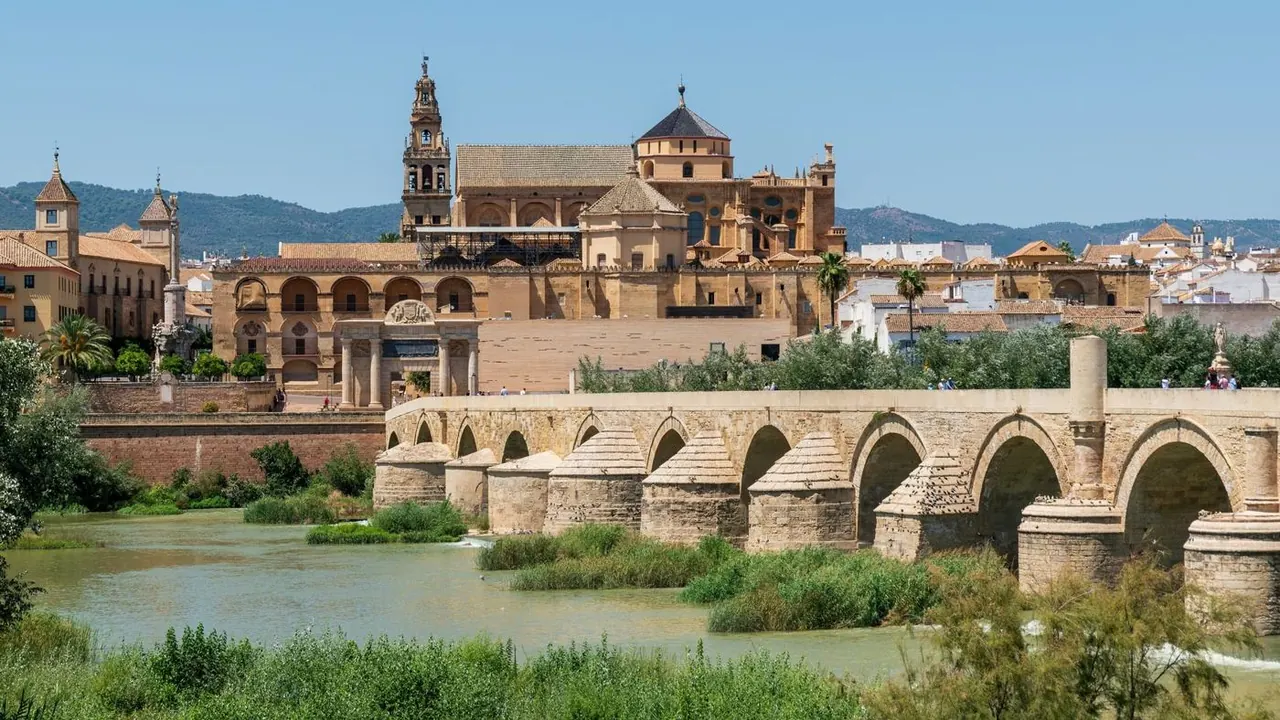
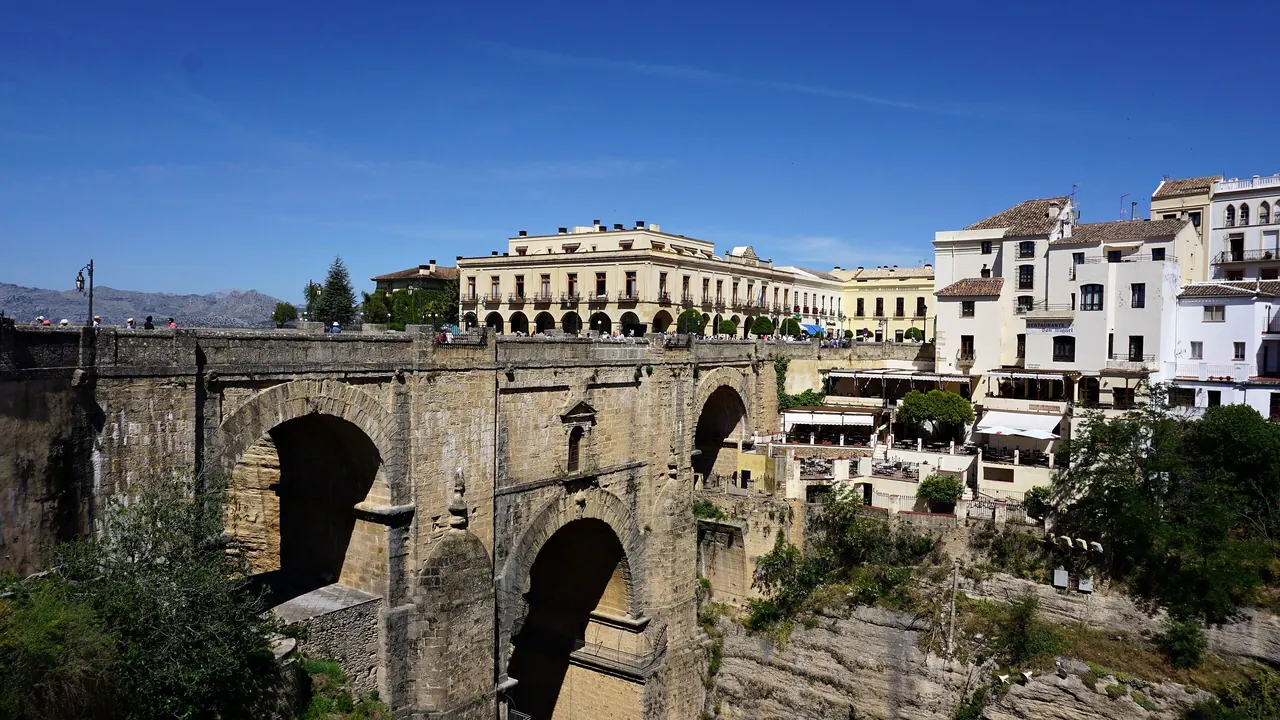
Photos: Cordoba by Jose María Ligero Loarte, CC BY-SA 4.0, cropped; Ronda by Julia Kostecka, CC BY 2.0, cropped.
Cordoba or Ronda?
Our verdict in twelve categories, each scored against the same fixed benchmark cities, and the climate month by month, so you can choose for your trip.
Choose Cordoba for
- live music and the arts
- nightlife
- culture and sights
Cordoba is the better pick for a trip built around history and good eating. The Mezquita-Cathedral, the Juderia, the Alcazar and Medina Azahara add up to a richer set of monuments than Ronda has. The taberna food is better, evenings run later, and there are flamenco peñas to go to. Fast trains to Seville, Granada and Malaga also make it a strong base for seeing more of Andalusia without changing hotel.
Choose Ronda for
- nature and the outdoors
- beaches
Ronda wins for travellers who want landscape more than monuments. The town's main sight is the Tajo gorge with its bridge, and the Sierra de Grazalema, the Sierra de las Nieves and the white villages are all close by. It suits a slower stay with a hire car, walking boots and a country house with a pool. Evenings are quiet and the town is small, so a few days covers it.
Scoreboard
Twelve categories on one fixed scale from 0 to 100. The shaded stretch is the gap between the two.
Your match
Pick a travel style or drag the sliders, and both match scores follow your weighting.
Wins on live music and the arts and nightlife with your weighting.
Wins on nature and the outdoors and beaches with your weighting.
What matters to you?
Category by category
What the scores mean for a trip.
Beaches & swimming
Neither is a beach destination, but Ronda is closer to the sea. The sandy, built-up Costa del Sol near Estepona is about 50km away, roughly an hour down a winding mountain road.
From Cordoba the coast is about 160km away, and the fast train to Malaga makes a swim a long day out. Ronda's beaches are really only practical by car. In summer, people in both places mostly use pools to cool off.
Food & drink
Cordoba eats better. Its tabernas, often old houses with tiled patios, serve salmorejo (which started here), flamenquin and fried aubergine with cane honey. You drink chilled Montilla-Moriles wine with them, and the Mercado Victoria adds grazing counters.
Ronda's cooking is hearty mountain food: oxtail, lamb, game, hams and autumn chestnuts from the Genal valley. The best of it is in the Mercadillo's tapas bars, away from the set menus on the gorge-side terraces. It is satisfying, but the range is narrow and a few days is enough.
Culture & sights
Cordoba has the stronger heritage. The Mezquita-Cathedral, with its striped arches and the Renaissance cathedral built into its middle, is one of Spain's great buildings. Around it are the Juderia, its synagogue, the Alcazar gardens, the Roman bridge and the caliphal ruins of Medina Azahara.
In Ronda the setting is the main attraction: the Puente Nuevo over the Tajo gorge and the views from the cliff paths. The Real Maestranza bullring, the well-preserved Arab baths and the Mondragón palace make a good compact group, but one or two days covers them.
Nightlife
Neither has much of a club scene, but Cordoba stays up later. After ten on warm nights the squares around the Corredera, Las Tendillas and the river fill up, students keep weekend bars busy, and summer brings open-air terrace bars.
Ronda's evenings centre on dinner and a drink around the Plaza del Socorro, and the town is quiet by the early hours. Each place has a fair when the rules change: Cordoba's in May and Ronda's in September.
Nature & outdoors
Ronda wins easily. The town is ringed by limestone mountains, with the unusually green Sierra de Grazalema and its vultures on one side and the Spanish fir forests of the Sierra de las Nieves on the other. A path runs from the town down into the gorge, and the cliffs draw climbers.
Cordoba has the gentle, wooded Sierra Morena to the north, and better hiking about an hour away in the Sierras Subbeticas. Its fierce summers also limit outdoor activity to dawn for months at a time.
Day trips
Both are good bases, but Cordoba has the edge thanks to the high-speed railway. Seville, Granada and Malaga are each an hour or so away by train, with no car needed, and Ubeda, Baeza and Carmona are within reach for drivers.
Ronda's outings are more rural. Setenil de las Bodegas, Zahara de la Sierra, Grazalema, the Cueva de la Pileta and the Roman ruins of Acinipo are all close. The big cities take one and a half to two hours, and a hire car is close to essential.
Good for families
Cordoba is the easier of the two with children, though neither is built around them. Its old centre is compact and largely closed to traffic, so families can wander from square to square without watching for cars. There are also a few outings that suit younger visitors: the fountains and water channels of the Alcazar gardens, the horse show at the royal stables, the castle at Almodovar del Rio and a modest zoo. Summer heat is the main drawback, so spring or autumn is the sensible time to bring small children.
In Ronda the attraction for children is the setting itself. Older ones usually love the path down into the gorge, the rock-cut stairway at the Casa del Rey Moro and the painted cave nearby. There is no zoo or anything like it, though, steep cobbles make pushchairs hard going, and at the exposed viewpoints you need to keep younger ones close. Many families end up in a country house with a pool and make short trips into the hills.
Getting around
Both centres are best on foot. Cordoba is the easier of the two: its sights lie close together on level ground, and the station has fast trains to Seville, Madrid and Malaga, a short walk or taxi ride from the old town.
Ronda is just as walkable but hillier, especially down into La Ciudad. Its trains and buses are slow and infrequent, so the villages and natural parks really require a car.
Shopping & style
Cordoba has more worth buying. There are real craft traditions in silver filigree and embossed guadameci leather, plus guitars from local workshops, and high-street shopping around Cruz Conde.
Ronda has Carrera Espinel's ordinary chain stores and souvenir ceramics. Its best buys are edible: local wine, cured meats and convent sweets.
Affordability
Both are cheap by Western European standards, but you spend your money differently. In Cordoba, tabernas, generous lunch menus and a walkable centre keep costs down, and the main expense comes in May, when festivals push room prices up.
In Ronda, food and sights are also inexpensive and country houses are fairly priced. The usual extra is a hire car, and rooms with gorge views cost noticeably more.
Live music & performing arts
Cordoba has far more to see. Its flamenco tradition runs from old-town tablaos to aficionado peñas, and it has a well-known guitar festival and the all-night Noche Blanca del Flamenco. The nineteenth-century Gran Teatro hosts the city orchestra.
Ronda offers flamenco for visitors in small venues and an occasional programme at the municipal theatre. Its one great event is the costumed Corrida Goyesca at the September fair.
Wellness & relaxation
Cordoba offers a bit more pampering. A few Arab-style bath houses in the old town have warm and hot pools under horseshoe arches, and massages, and shaded courtyards make for slow afternoons.
Ronda's Arab baths are a monument rather than a place to bathe, and spa treatments mean a few hotel spas. Its strength is the country hotels in the hills, with pools and wide views for a few quiet days.
When should you go?
Pick your month. The climate figures are measured averages, not a forecast.
Cordoba in July
Ronda in July
Daytime high, °C
Rainfall in the month, mm
Where the figures come from
Ronda has no weather station within reach, so its figures come from a gridded climate model rather than a measured record, and read a broad area rather than the city itself.
Temperature and rainfall are climate normals, averaged over the years shown. Cordoba: 1991-2020 normals, Cordoba / Aeropuerto (7.6 km from centre). Ronda: 1991-2020 normals, TerraClimate 4 km grid at the town, no weather station within 90 km.
Spring and autumn are the best seasons in both places, but their summers are very different. Cordoba is one of the hottest cities in Spain, with July and August highs around 37°C and long hours of sunshine. That makes midday sightseeing hard work, so walking the streets is for early mornings and late evenings. Ronda sits higher and stays a few degrees cooler, around 32°C at the peak, which is more manageable for walking, though summer afternoons are still hot. Both get almost no rain from June to August.
From October the rain returns to both. Ronda's winters are wetter and colder, with highs of about 13°C and well over 100mm of rain in its wettest months, so gorge walks are less pleasant. Cordoba stays a little milder and drier. For a swim on the coast below Ronda, the sea is warmest in August and September, at about 22°C.
Which traveller are you?
On a culture and arts trip, Cordoba is the clear choice. The Mezquita-Cathedral alone is worth the journey, and the Juderia, the patio houses, Medina Azahara and serious flamenco fill two or three days. Ronda's heritage is real but smaller.
For an outdoors trip, choose Ronda. Gorge paths start in the town itself, the green crags of Grazalema and the fir forests of the Sierra de las Nieves are close, and the Caminito del Rey is within driving distance. Cordoba's low hills come a distant second.
On a food and nightlife trip, Cordoba is the better fit. Tapas rounds through Santa Marina and San Agustin, chilled Montilla and late terraces around the Corredera make for longer, livelier evenings than Ronda, which goes quiet after dinner.
Before you go
| Measure | Cordoba | Ronda |
|---|---|---|
| Official language | Spanish | Spanish |
| Currency | Euro (EUR) | Euro (EUR) |
| Sockets | CF230 V, 50 Hz | CF230 V, 50 Hz |
| Driving side | Right | Right |
| Time zone | UTC+1, UTC+2 in summer | UTC+1, UTC+2 in summer |
| Emergency number | 112 | 112 |
| Elevation | 120 m | 724 m |
| Main airport | Córdoba Airport (ODB)8 km from centre3 non-stop destinations | Málaga-Costa del Sol Airport (AGP)60 km from centre166 non-stop destinations |
| Public holidays this year | 12 days | 12 days |
By the numbers
| Measure | Cordoba | Ronda |
|---|---|---|
| City population | 323,262 | 33,671 |
| People per km² | 258 | 87 |
| Museums within 10 km | 16 | 5 |
| UNESCO World Heritage sites within 50 km | 2 | 0 |
| Swim season, months above 21 °C | - | 1 month |
Where else could you go?
Every comparison below shares a destination with this one, so you can follow Cordoba or Ronda somewhere new.