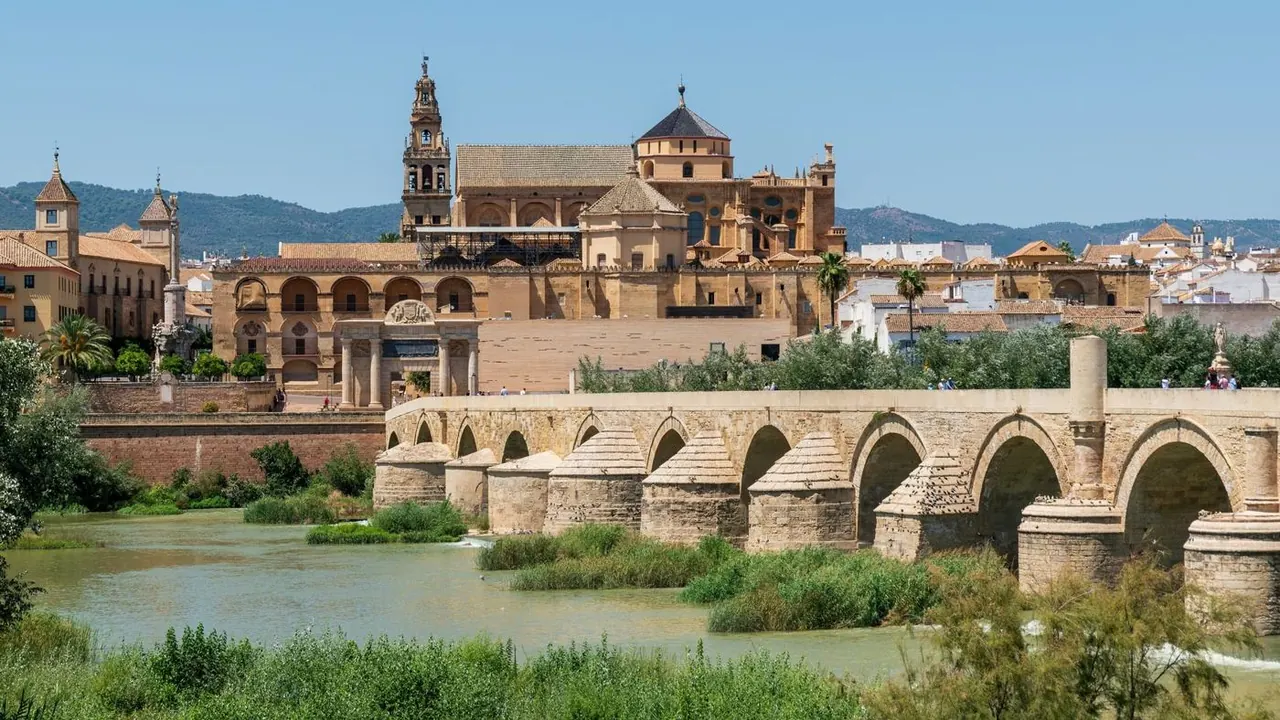
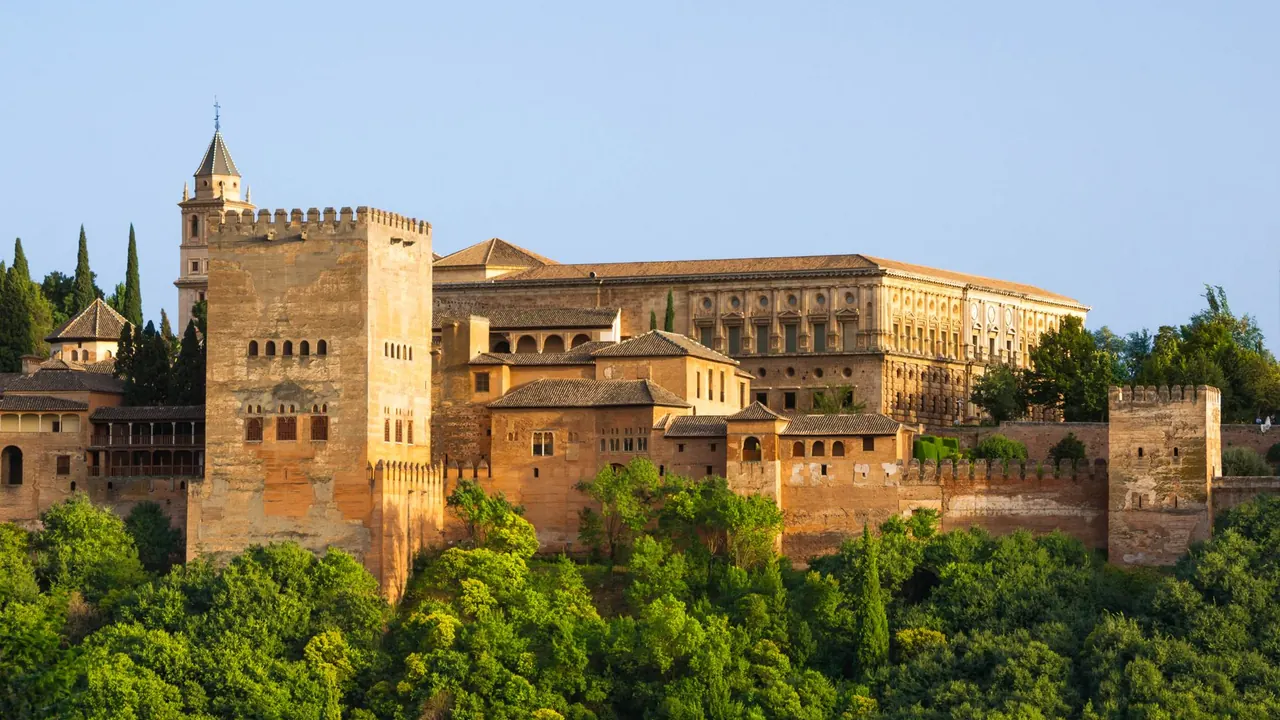
Photos: Cordoba by Jose María Ligero Loarte, CC BY-SA 4.0, cropped; Granada by Jebulon, CC0.
Cordoba or Granada?
Our verdict in twelve categories, each scored against the same fixed benchmark cities, and the climate month by month, so you can choose for your trip.
Choose Cordoba for
- day trips
- culture and sights
Cordoba suits travellers who want one extraordinary monument, a flat old town they can cover on foot, and a base for seeing the rest of Andalusia. With Seville, Malaga and Granada itself all within easy reach by fast train, you can see the region's great cities without moving hotel. Evenings mean a long dinner on the squares, not a late night out, so the city rewards people who like a slower pace.
Choose Granada for
- nature and the outdoors
- beaches
- nightlife
Granada is the stronger choice if you want the city and the mountains on one trip. Behind the Alhambra the Sierra Nevada offers skiing in winter and high walking in summer, the Alpujarras villages are close by, and the coast is an hour to the south. The student bars, the free tapa with every drink and flamenco in the Sacromonte caves give it livelier evenings. The cost is steep, cobbled hills.
Scoreboard
Twelve categories on one fixed scale from 0 to 100. The shaded stretch is the gap between the two.
Your match
Pick a travel style or drag the sliders, and both match scores follow your weighting.
Wins on day trips and culture and sights with your weighting.
Wins on nature and the outdoors and beaches with your weighting.
What matters to you?
Category by category
What the scores mean for a trip.
Beaches & swimming
Neither city is a beach destination, but Granada has the sea closer. The Costa Tropical is about an hour away by road, with pebble and dark-sand coves at Salobreña, Almuñécar and La Herradura that are calm and clear enough for snorkelling.
From Cordoba, the Costa del Sol is about 160km away. You can manage it in a day using the fast train to Malaga and the city beaches, but it is a long day for one swim. In summer most people in Cordoba stay in the pools or head to the reservoirs in the Sierra Morena.
Food & drink
The two eat equally well but differently. Cordoba's tabernas, often old houses with tiled patios, serve the city's own dishes: salmorejo, which began here, flamenquin and rabo de toro, with chilled Montilla-Moriles wine from just south of town. The Mercado Victoria adds grazing counters.
Granada's strength is the custom of a free tapa with each drink, which makes an evening around the Realejo and the lower Albaicín easy to eat your way through. Alpujarras ham and the Moroccan tea houses of Calderería Nueva add a flavour Cordoba lacks. Neither city has much fine dining or international food.
Culture & sights
These are two of Spain's great Moorish monuments, and the cities are evenly matched. Cordoba centres on the Mezquita, with its forest of striped arches and a cathedral built into the middle. Around it are the Juderia, the Roman bridge, the Alcazar gardens, the patios of San Basilio and the Palacio de Viana, with the ruins of Medina Azahara just outside the city.
Granada's Alhambra is a palace rather than a place of worship: carved stucco courts and the Generalife gardens, set against the Sierra Nevada. Below it lie the Royal Chapel, the Carthusian monastery and the Sacromonte caves, with the Albaicín viewpoints facing the palace across the valley. In both cities two or three unhurried days cover the essentials.
Nightlife
Granada goes out later and more often, because a large student population fills Calle Elvira, the Plaza Nueva area and the pubs around Pedro Antonio de Alarcón. On weekends the clubs run towards dawn. The scene is informal, with few big clubs, and it quietens in summer when the students leave.
Cordoba's nights are mostly late tapas on the terraces of the Corredera, Las Tendillas and the riverside. Its busiest time is the opposite of Granada's: summer terrace bars and the May fair, when the casetas dance until dawn. At other times there is little beyond a few late bars.
Nature & outdoors
Granada has real mountains on its doorstep. The Sierra Nevada is snow-capped for much of the year, with skiing above Pradollano, summer routes towards Mulhacén and Veleta, and the chestnut woods and mule paths of the Alpujarras. In high summer you can escape the heat by going up into the mountains.
Cordoba's landscape is gentler: the wooded holm oak hills of the Sierra Morena, birds of prey in Hornachuelos, and the limestone gorges of the Subbeticas about an hour's drive away. Most of it needs a car, and in summer, when it passes 40°C, you can only walk at dawn.
Day trips
Cordoba is the better base for touring Andalusia. Seville is under an hour away by fast train, Malaga about an hour, and Granada around an hour and a half. With a car you can add Carmona, Ecija, Priego de Cordoba and the Montilla wine towns.
Granada reaches Cordoba and Malaga easily too, but Seville is too far for a comfortable return trip. Its own day trips lean towards mountains and villages: Pampaneira and Capileira in the Alpujarras, the cave quarter of Guadix, Antequera with El Torcal, and Nerja on the coast. Both cities can reach Úbeda and Baeza.
Good for families
Granada has more for children. The Parque de las Ciencias, with its planetarium and butterfly house, can fill most of a day, and in winter a snow day in the Sierra Nevada is easy to add. The drawback is the steep, stepped lanes of the Albaicín and the Alhambra hill, which are hard going with a pushchair.
Cordoba is flatter and largely free of traffic, which makes it easy with small children. Beyond the Alcazar fountains, the horse show at the royal stables, Almodovar castle and a modest zoo, though, its sights are made for adults, and its summer is hotter still.
Getting around
Both centres are compact enough to explore on foot. The difference is the ground. Cordoba's sights lie on the flat around the Mezquita, the station is within walking distance, and only the narrow cobbles make wheeling a suitcase awkward.
In Granada, small red minibuses climb to the Alhambra, the Albaicín and Sacromonte, and they save real effort on those hills, while the lower town is easy walking. In both cities you need a car for the countryside.
Shopping & style
Neither city is a shopping destination, and in both the best buys are crafts rather than fashion. In Cordoba that means silver filigree jewellery and the embossed, painted guadameci leather, best bought from the workshops rather than the souvenir stalls in the Juderia lanes.
Granada's crafts are taracea inlaid woodwork and the blue and green Fajalauza ceramics. The Alcaicería beside the cathedral is a more atmospheric place to browse, though much of what it sells is souvenirs. Both cities have guitar workshops and a high street of Spanish chains, around Cruz Conde in Cordoba and Calle Recogidas in Granada.
Affordability
Both are good value by Spanish standards, and what costs more is where they differ. Granada's free tapa makes evening eating especially cheap, but the city gets dearer close to the Alhambra, with boutique stays in the Albaicín, terrace restaurants with views and busy spring weekends.
In Cordoba, small glasses of Montilla, generous lunch menus and a walkable centre keep daily costs low. Rooms cost more beside the Mezquita and become much more expensive in May, during the patio festival and the fair.
Live music & performing arts
Flamenco is at the heart of both, but Granada has more to offer. Its cave houses in Sacromonte stage the zambra, and since 1952 the International Festival of Music and Dance has held concerts and ballet in the Alhambra's palaces and the Generalife's open-air theatre. The legacy of Lorca and Falla, an orchestra and an autumn jazz festival fill out the rest of the year.
Cordoba's flamenco is serious, with peñas for aficionados, a respected guitar festival and the Noche Blanca del Flamenco, a summer night of free performances in its squares. Beyond that, the Gran Teatro carries a modest programme of concerts and theatre.
Wellness & relaxation
Both cities have revived the Moorish bathing tradition in Arab-style bath houses with warm and hot pools and massage. Granada goes further, with real thermal waters within an hour at Lanjarón in the Alpujarras and Alhama de Granada.
In Cordoba, relaxing mostly means the quiet courtyards with fountains and orange trees, the spas of the better hotels, and the long summer siesta that the heat imposes.
When should you go?
Pick your month. The climate figures are measured averages, not a forecast.
Cordoba in July
Granada in July
Daytime high, °C
Rainfall in the month, mm
Temperature and rainfall are climate normals, averaged over the years shown. Cordoba: 1991-2020 normals, Cordoba / Aeropuerto (7.6 km from centre). Granada: 1991-2020 normals, Granada / Caserío Hospicio (5 km from centre).
Spring and autumn are the best seasons in both cities, but the timing differs. Cordoba warms up sooner, so April and May are already pleasant for walking. Granada sits higher and stays cooler, around 20°C in April, and is at its best from May into early June and again in late September and October. In July and August both are very dry and sunny, but Cordoba is the harder of the two, with highs around 37°C that leave only the early morning and late evening for sightseeing. Granada is a few degrees cooler and has the mountains close by for escaping the heat.
Neither city is on the sea, so a beach day is an outing to the coast, and June to September are the months for it. Winter is mild in both. Cordoba gets noticeably more rain, with about 91mm in December against roughly 44mm in Granada. Granada's colder winter nights bring snow to the Sierra Nevada, close enough for a day out.
Which traveller are you?
On an outdoors trip, Granada wins clearly. The Sierra Nevada starts about 45 minutes away, with ski slopes in winter, routes towards Mulhacén in summer, and the terraced Alpujarras valleys for gentler walks. Cordoba's hills are lower, and the summer heat cuts walking short.
For a food and nightlife trip, Granada gives you more. Every drink comes with a free tapa, so a bar crawl through the Realejo or along Calle Elvira becomes dinner, and the student clubs keep going towards dawn. In Cordoba, evenings end earlier except at fair time.
For a short city break, Cordoba is the easier choice. The Mezquita, Juderia, Alcazar and Roman bridge sit close together on flat ground a walk from the fast-train station, so two days cover it without the climbs that Granada's hills demand.
Before you go
| Measure | Cordoba | Granada |
|---|---|---|
| Official language | Spanish | Spanish |
| Currency | Euro (EUR) | Euro (EUR) |
| Sockets | CF230 V, 50 Hz | CF230 V, 50 Hz |
| Driving side | Right | Right |
| Time zone | UTC+1, UTC+2 in summer | UTC+1, UTC+2 in summer |
| Emergency number | 112 | 112 |
| Elevation | 120 m | 693 m |
| Main airport | Córdoba Airport (ODB)8 km from centre3 non-stop destinations | F.G.L. Airport Granada-Jaén Airport (GRX)16 km from centre13 non-stop destinations |
| Public holidays this year | 12 days | 12 days |
By the numbers
| Measure | Cordoba | Granada |
|---|---|---|
| City population | 323,262 | 233,975 |
| People per km² | 258 | 2,659 |
| Museums within 10 km | 16 | 20 |
| UNESCO World Heritage sites within 50 km | 2 | 1 |
Where else could you go?
Every comparison below shares a destination with this one, so you can follow Cordoba or Granada somewhere new.