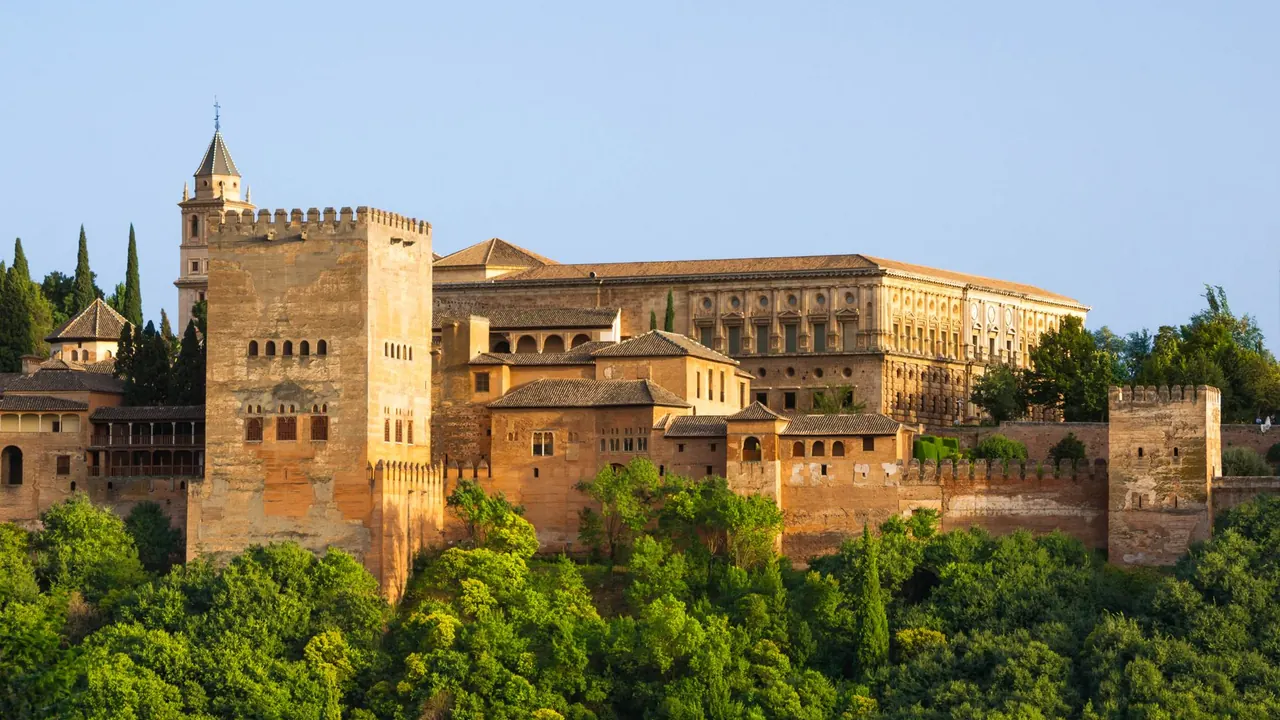
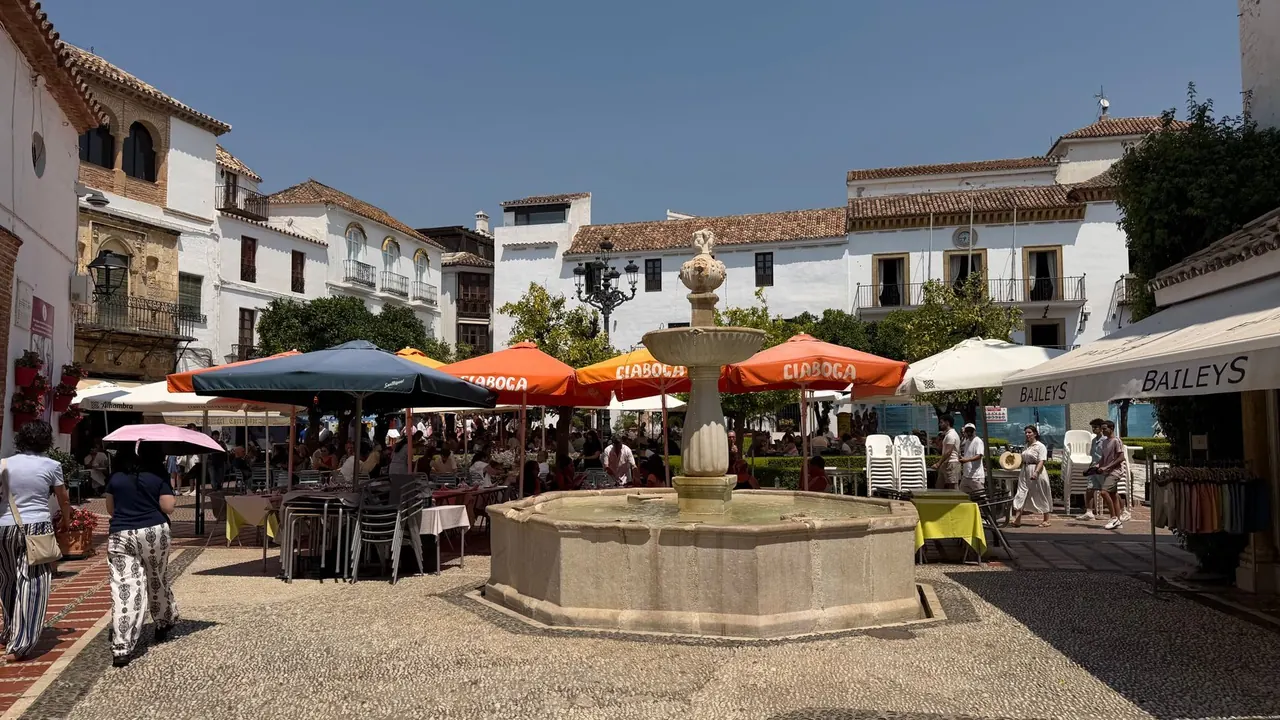
Photos: Granada by Jebulon, CC0; Marbella by Décio Franchini, Pexels License.
Granada or Marbella?
Our verdict in twelve categories, each scored against the same fixed benchmark cities, and the climate month by month, so you can choose for your trip.
Choose Granada for
- culture and sights
- prices
- getting around
Granada is the choice for a trip built around history and walking. The Alhambra and the Albaicín are among the great sights of Spain, the Sierra Nevada stands right behind the city, and the free tapa with every drink keeps evenings cheap. It suits travellers who will happily give up a beach in exchange for steep lanes, flamenco in Sacromonte and mountain air, and who come in spring or autumn rather than in the baking summer.
Choose Marbella for
- beaches
- families
- shopping
For a sun-and-sea vacation, Marbella wins easily. Its beaches run the length of the town, families get sheltered sand and pools, and summer nights at Puerto Banús are polished and expensive. Expect to pay more and to rely on a car or taxis. For the heritage the town itself lacks, you drive to Ronda or Granada.
Scoreboard
Twelve categories on one fixed scale from 0 to 100. The shaded stretch is the gap between the two.
Your match
Pick a travel style or drag the sliders, and both match scores follow your weighting.
Wins on culture and sights and prices with your weighting.
Wins on beaches and families with your weighting.
What matters to you?
Category by category
What the scores mean for a trip.
Beaches & swimming
Granada has no beach of its own. The Costa Tropical at Salobreña, Almuñécar and La Herradura is about an hour south over the mountains, with pebble and dark-sand coves that are good for snorkelling. Even so, it is a day out, and in the city swimming means a pool.
Marbella lives on its shore. It has more than two dozen beaches along about 27km, from La Venus and El Fuerte in town to the dunes at Cabopino, with fine grey sand, loungers and sardines grilled on the sand. Anyone who wants to swim every day should stay here.
Food & drink
The two are evenly matched for food but eat in different ways. Granada's strength is going from bar to bar for tapas, with a free plate for each drink, through Calle Navas, the Realejo and the lower Albaicín. Expect Alpujarras ham, aubergine with cane honey and mint tea in the Moroccan teterías of Calderería Nueva. It has little to offer at the top end.
Marbella is the reverse. Along the Golden Mile and around Puerto Banús it has the tasting-menu kitchens and international range that Granada lacks, as well as beach sardines and old-town tapas. The tourist restaurants in between, near the port, are weak and costly.
Culture & sights
Here Granada is in another league. The Alhambra's Nasrid palaces and the Generalife gardens alone justify the trip. The Albaicín, the Royal Chapel with the tombs of Ferdinand and Isabella, the Carthusian monastery and the Sacromonte caves fill a few unhurried days.
Marbella has a pretty Casco Antiguo around the Plaza de los Naranjos, a print museum, Dalí bronzes on the Avenida del Mar and Roman mosaics at Río Verde, which together fill an afternoon. Visitors who want more culture end up driving to Ronda, Málaga or Granada itself.
Nightlife
Marbella has the edge for a big night out, at least in summer. Puerto Banús pairs yachts with champagne bars and clubs that run until dawn, and the beach clubs of the Golden Mile carry the party from day into night. It is a dressed-up, costly scene, and it shrinks from November to March.
Granada's nights are cheaper and driven by its students. Tapas bars lead on to Calle Elvira, with pubs and clubs around Pedro Antonio de Alarcón and terraces in the Realejo. The city is lively in term time and quieter in summer, just when Marbella is at its busiest.
Nature & outdoors
Both have mountains close by, but Granada's are bigger. The Sierra Nevada brings skiing above Pradollano, about 45 minutes away, in winter and summer hikes towards Mulhacén, the highest peak in mainland Spain. The Alpujarras add terraced valleys and old mule paths.
In Marbella, the climb up Sierra Blanca to La Concha, with views to Gibraltar and the Rif mountains of Morocco, makes a fine half day, and the Sierra de las Nieves is close. Its advantage is the sea, with paddleboarding, sailing and dolphin-watching boats, and winters mild enough for walking all year.
Day trips
From Granada, the best day trips go by train. Córdoba and its Mezquita are about an hour and a half away, Málaga is a little over an hour, and Antequera, with its dolmens and the karst of El Torcal, is closer still. By car or bus you can reach the Renaissance towns of Úbeda and Baeza, the cave quarter of Guadix and the white villages of the Alpujarras.
Marbella's day trips depend on a car, because there is no train and the buses are slow. With a car, Ronda on its gorge is an hour inland, Málaga is about 45 minutes along the coast, and Gibraltar and hilltop Casares lie to the west. Nerja and Frigiliana can be reached from either city, and from Marbella the Alhambra is a long but possible day.
Good for families
Marbella is the easier family choice. Sheltered, lifeguarded beaches, a long flat promenade for buggies and scooters, and resorts built around pools make daily life simple. The zoo, water parks, marine park and cable car along the coast are an easy drive away.
Granada has the Parque de las Ciencias, worth most of a day, and the Alhambra's fountains keep children interested. The cobbled hills are hard work with a pushchair, though, and summer afternoons are very hot. Families do best there in spring or autumn, or in winter with a day in the snow.
Getting around
Granada is far simpler to get around. The flat lower town is easy on foot, and small red minibuses climb to the Alhambra, the Albaicín and Sacromonte. A car is only worth having for the mountain villages.
Marbella stretches along the motorway from San Pedro to Cabopino, and only the old town and the seafront are really walkable. Buses run along the coast but there is no train, so most visitors hire a car or take taxis between their hotel, the port and the beach.
Shopping & style
Marbella is the better place to shop, as long as you want big brands. Puerto Banús has a strip of international fashion and jewellery boutiques along the harbour, with a department store and malls nearby. The old town adds linen, leather and ceramics.
Granada is about crafts rather than fashion: taracea inlaid woodwork, Fajalauza pottery and guitars from local workshops. These sit alongside the souvenirs in the Alcaicería, and the Spanish chains on Calle Recogidas cover everything else.
Affordability
Granada costs a good deal less. Free tapas, cheap buses and modest rooms in the lower town keep a stay inexpensive. The higher prices are limited to boutique stays in the Albaicín, terraces with Alhambra views and spring weekends.
Marbella is expensive by Spanish standards, especially in July and August, and its beach clubs and port restaurants push budgets hard. Old-town tapas bars, winter rates or a room in a neighbouring town bring costs closer to normal.
Live music & performing arts
Granada has the stronger live arts, rooted in Lorca and Falla. There is zambra flamenco in the Sacromonte caves, rawer nights in the Albaicín peñas, the summer music and dance festival in the Alhambra's palaces and the Generalife theatre, and the city orchestra playing all year at the Auditorio Manuel de Falla.
Marbella's live music is mostly summer pop and rock in its quarry amphitheatre, DJs at beach clubs and flamenco staged for visitors. For serious music, you go to Málaga.
Wellness & relaxation
The two are close here, but they offer different kinds of rest. Granada revives Moorish bathing in hammams in the lower Albaicín, and the spa towns of Lanjarón and Alhama de Granada are within an hour. Siestas and tea houses keep the pace slow.
Marbella's version is the resort spa, with retreats, detox clinics and yoga across the Golden Mile and the hills, plus golf and walks along the promenade. It is restful from October to May but loses that calm in the crowded summer.
When should you go?
Pick your month. The climate figures are measured averages, not a forecast.
Granada in July
Marbella in July
Daytime high, °C
Rainfall in the month, mm
Where the figures come from
Marbella's temperatures are measured 40 km from the centre, at Malaga / Aeropuerto.
Marbella has no rain gauge within 25 km of the centre, so its rainfall comes from a gridded climate dataset read at the city rather than from a gauge further away.
Temperature and rainfall are climate normals, averaged over the years shown. Granada: 1991-2020 normals, Granada / Caserío Hospicio (5 km from centre). Marbella: 1991-2020 normals, Malaga / Aeropuerto (39.7 km from centre).
Granada has a hard inland climate. July and August reach about 35°C with almost no rain, which makes the Alhambra hill too hot to climb in the afternoon. Winter days stay around 13°C and feel crisp under clear skies. April, May, late September and October are the months for walking the city, and the autumn and winter rain is moderate and spread out.
Marbella is gentler at both ends of the year. Winter highs stay near 17°C, though October to December is wet, and December is the rainiest month at about 115mm. Summer is warm rather than scorching, and the sea is good for swimming from June to early October, at its warmest in August at about 22°C. Both cities are very sunny from May to August. The real difference is that Marbella suits midsummer and winter, while Granada is best in spring and autumn.
Which traveller are you?
For a culture and arts trip, Granada is the clear pick. The Alhambra, the Albaicín, the cathedral and the Royal Chapel fill several days, and in the evenings there is zambra in the Sacromonte caves and summer concerts in the Generalife. Marbella's old town takes an afternoon.
On a beach and sun trip, Marbella makes far more sense. Its sandy town beaches, chiringuitos and beach clubs are part of every day there. From Granada, the Costa Tropical is an hour's drive over the mountains and a separate outing.
On a tight budget, Granada is the easier trip to plan. The sights are within walking distance, so you need no hire car, and dinner can simply be the evening tapas round. Marbella is spread out, which means paying for a car or taxis, and its big attractions, the beach clubs and the port, are where the money goes.
Before you go
| Measure | Granada | Marbella |
|---|---|---|
| Official language | Spanish | Spanish |
| Currency | Euro (EUR) | Euro (EUR) |
| Sockets | CF230 V, 50 Hz | CF230 V, 50 Hz |
| Driving side | Right | Right |
| Time zone | UTC+1, UTC+2 in summer | UTC+1, UTC+2 in summer |
| Emergency number | 112 | 112 |
| Elevation | 693 m | 22 m |
| Main airport | F.G.L. Airport Granada-Jaén Airport (GRX)16 km from centre13 non-stop destinations | Málaga-Costa del Sol Airport (AGP)39 km from centre166 non-stop destinations |
| Public holidays this year | 12 days | 12 days |
By the numbers
| Measure | Granada | Marbella |
|---|---|---|
| City population | 233,975 | 159,786 |
| People per km² | 2,659 | 1,398 |
| Museums within 10 km | 20 | 6 |
| UNESCO World Heritage sites within 50 km | 1 | 0 |
| Swim season, months above 21 °C | - | 3 months |
Where else could you go?
Every comparison below shares a destination with this one, so you can follow Granada or Marbella somewhere new.