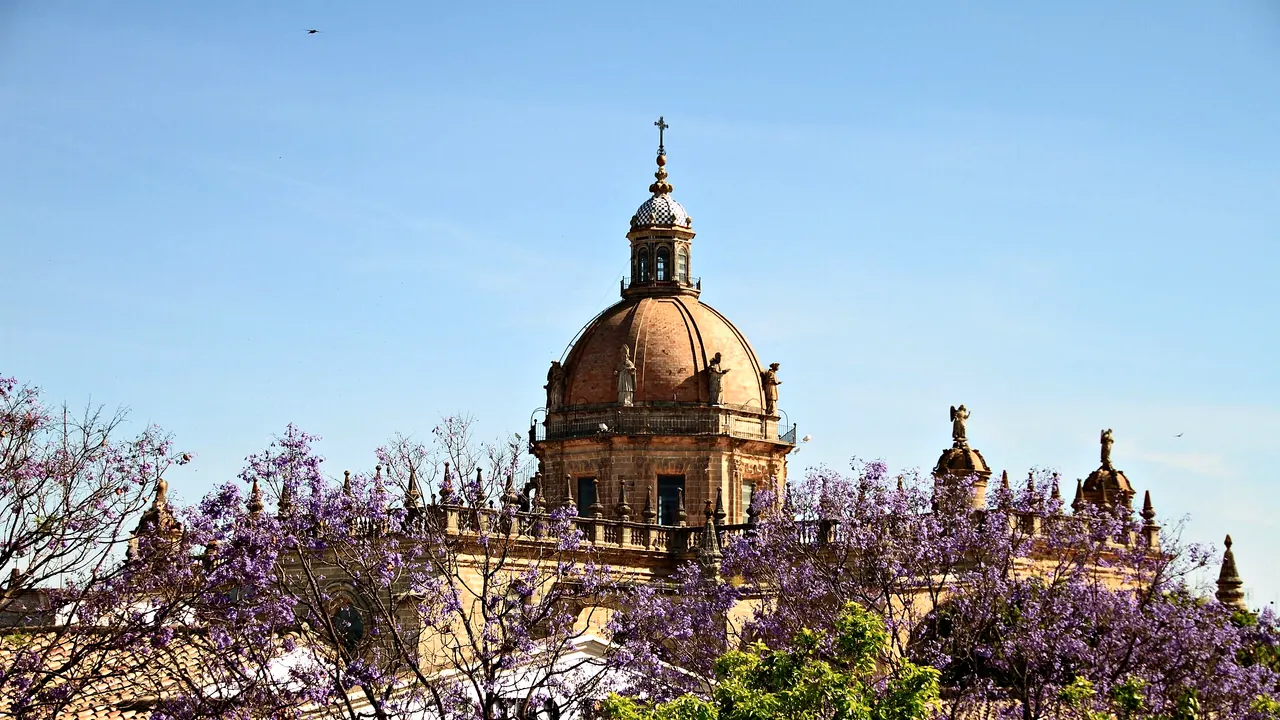
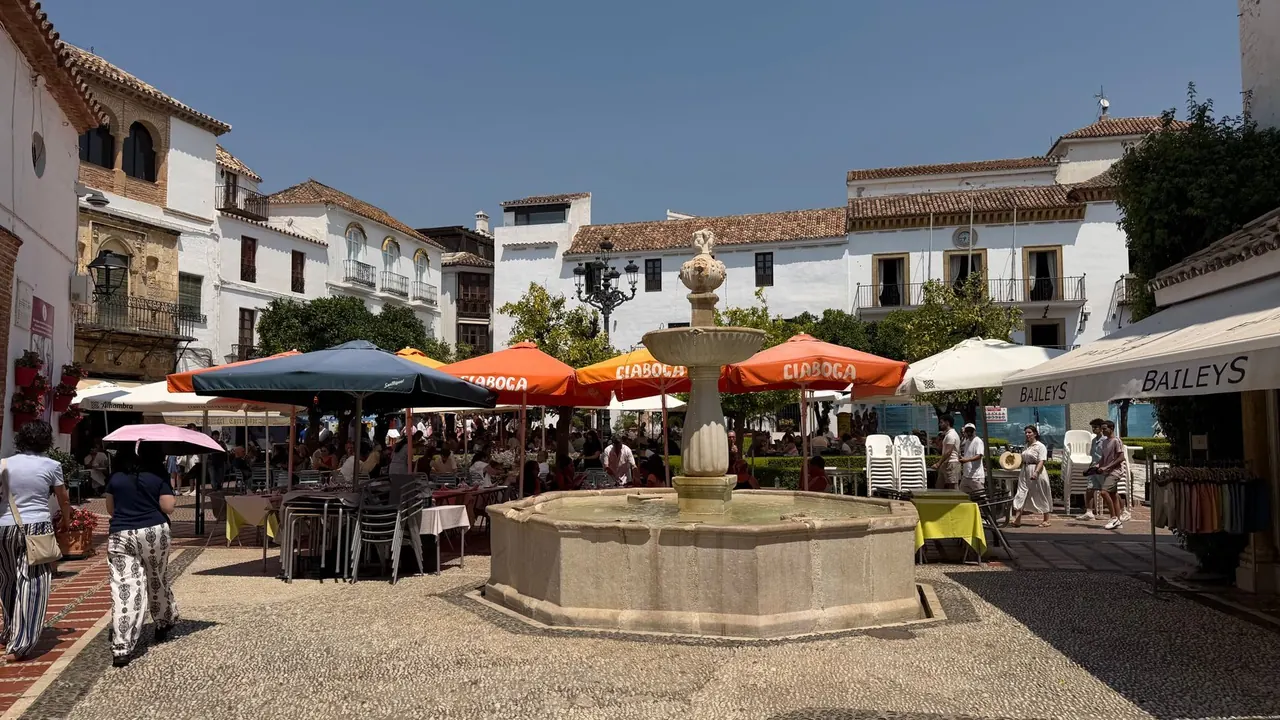
Photos: Jerez de la Frontera by PEPE GADEIRAS, CC BY 4.0, cropped; Marbella by Décio Franchini, Pexels License.
Jerez de la Frontera or Marbella?
Our verdict in twelve categories, each scored against the same fixed benchmark cities, and the climate month by month, so you can choose for your trip.
Choose Jerez de la Frontera for
- prices
- live music and the arts
- culture and sights
Jerez suits travellers who want Andalusia at its most local. You get sherry poured from the barrel in the tabancos, flamenco in the peñas of Santiago and San Miguel, and a flat old centre where the Alcázar, the cathedral and the bodegas are all a short walk apart. Trains run to Seville and Cádiz. It costs noticeably less, and the beach is a day out rather than the point of the stay.
Choose Marbella for
- nightlife
- shopping
- beaches
Choose Marbella when the sea comes first. Its long run of beaches, a promenade made for families, resort pools, polished summer nights at Puerto Banús and the spas and boutiques of the Golden Mile make it a resort, not a city of sights. Expect to pay more and to want a car, and plan to drive out when you want history.
Scoreboard
Twelve categories on one fixed scale from 0 to 100. The shaded stretch is the gap between the two.
Your match
Pick a travel style or drag the sliders, and both match scores follow your weighting.
Too close to call, 1 point apart
Wins on prices and live music and the arts with your weighting.
Wins on nightlife and shopping with your weighting.
What matters to you?
Category by category
What the scores mean for a trip.
Beaches & swimming
Jerez has no beach of its own. The Atlantic sands of Valdelagrana, Cádiz and, further out, Sanlúcar or La Barrosa are a train ride or a short drive away. They are wide and golden but exposed to the Levante wind, so a swim there means planning a day out.
Marbella has the sea on its doorstep, with more than two dozen beaches along roughly 27km of shore, chiringuitos grilling sardines and generally calmer, clearer water. The sand is greyer, but a beach is part of every day rather than an excursion.
Food & drink
Both eat well, but in different directions. Jerez goes deep into one tradition: sherry tasted in the bodegas and tabancos, oxtail and kidneys cooked in it, berza stew, and fish from the nearby coast at late tapas around Plaza del Arenal.
Marbella has the wider range, from sardines skewered over beach fires to tasting menus on the Golden Mile and around Puerto Banús. The middle ground by the port is weak, though, and the good everyday cooking is a few streets inland in the old town.
Culture & sights
Jerez has far more to see, and much of it is unique to the town. There is the Almohad Alcázar with its Arab baths, the Baroque cathedral, the old parish churches, the barrel-filled bodegas as working heritage, and the dressage horses of the Royal Andalusian School of Equestrian Art. Two or three days are well spent here.
Marbella's old town around the Plaza de los Naranjos, the Spanish prints museum and the Dalí bronzes on the Avenida del Mar fill an afternoon. For major monuments you have to drive elsewhere.
Nightlife
Marbella is the place for a big night out in summer. Beach clubs with DJs run into evening parties, and the champagne bars and clubs at Puerto Banús stay open until dawn for an international, well-off crowd. From November to March it goes quiet.
Jerez keeps to tabancos, copa bars and late tapas terraces, which are friendly but provincial. The exception is Feria del Caballo week in May, when the casetas carry on until morning.
Nature & outdoors
Marbella has the mountains closer. Sierra Blanca rises right behind the town, La Concha is a demanding half-day climb with views to Morocco, and the fir forests of the Sierra de las Nieves are under an hour away. On the water there is paddleboarding and dolphin-watching, and the mild winters allow walking all year.
Around Jerez the vineyards on white albariza soil are gentle country. The gorges of Grazalema, the cork oaks of Los Alcornocales and Doñana need a drive or a boat from Sanlúcar, and the summer heat limits hiking to spring and autumn. In return Jerez offers horse riding and birdwatching in the Bay of Cádiz marshes.
Day trips
Both make strong bases, but they point in different directions. From Jerez, Seville and Cádiz are easy by train, the other sherry towns are close, and Arcos and the white towns of the hills open up by car.
Marbella faces east and inland, towards Málaga, Ronda, Mijas and Casares, with Granada as a long day. There is no train, so nearly all of it is done by road.
Good for families
Marbella is the easier choice with children. The town beaches are sheltered and lifeguarded, the long flat promenade suits buggies, many apartments are built around pools, and the coast has an animal park, a zoo, water parks and an aquarium within driving distance.
Jerez has a good zoo and botanical garden, the dancing horses, and wide, gently sloping beaches nearby. Beyond those there is little built for children, and the town is hotter in July and August.
Getting around
Jerez is much easier without a car. The sights, bodegas and tapas streets are a short, flat walk apart, and the station near the centre has direct trains to Seville, Cádiz and the airport. You only need a hire car for the hills and the white towns.
Marbella stretches from San Pedro to Cabopino and has no railway. The old town and the promenade are pleasant on foot, but reaching the port, the beach clubs and most day trips means buses, taxis or your own car.
Shopping & style
Marbella is a real shopping destination if you are after luxury. International fashion and jewellery boutiques line Puerto Banús, a department store and malls stand nearby, and the old-town lanes have linen, leather and ceramics.
Jerez offers little browsing, but what it has is its own: sherry and brandy bought at the bodegas, saddlery and leather riding boots made for the horse world, and flamenco dresses, shawls and guitars near the old quarters.
Affordability
Jerez is much the cheaper stay. Sherry and tapas in the tabancos cost little, central hotels are moderately priced, bodega tours are inexpensive and you seldom pay for transport. Rooms only become expensive during the Feria, the flamenco festival and the motorcycle race weekends.
Marbella is expensive, especially in July and August around Puerto Banús and the beach clubs. To cut the cost, eat at old-town tapas bars, come outside summer or stay in a neighbouring town.
Live music & performing arts
Flamenco is the dividing line. In Jerez, the home of the bulería, it is still a local art. You can hear it close up in the peñas of Santiago and San Miguel and in the tabancos, and the late-winter festival brings major dancers to the Teatro Villamarta.
Marbella has big summer pop and rock concerts in its quarry amphitheatre, and flamenco shows staged for visitors. For opera, classical music or serious flamenco, people travel to Málaga.
Wellness & relaxation
Marbella has the spa resorts, retreats and detox clinics of the Golden Mile and the hills behind it. From October to May it is calm and mild, with promenade walks and golf, though high summer is anything but restful.
Jerez has one Arab-style bathhouse and a few hotel spas. Its restfulness comes from long lunches, shaded patios and a quiet afternoon rhythm, not from treatments.
When should you go?
Pick your month. The climate figures are measured averages, not a forecast.
Jerez de la Frontera in July
Marbella in July
Daytime high, °C
Rainfall in the month, mm
Where the figures come from
Marbella's temperatures are measured 40 km from the centre, at Malaga / Aeropuerto.
Marbella has no rain gauge within 25 km of the centre, so its rainfall comes from a gridded climate dataset read at the city rather than from a gauge further away.
Temperature and rainfall are climate normals, averaged over the years shown. Jerez de la Frontera: 1991-2020 normals, Jerez De La Fronteraaeropuerto (9.9 km from centre). Marbella: 1991-2020 normals, Malaga / Aeropuerto (39.7 km from centre).
Both have long, dry, sunny summers and wet late autumns, but the inland heat sets them apart. Jerez reaches 34°C in July and August, too hot for walking the streets by day, so its best city months are April, May and October. The Atlantic beaches nearby are warm enough from June to September, with the water around 23°C at its warmest. Rain returns in October and lasts through December.
Marbella stays a little cooler in midsummer at about 31°C, and its beach season runs comfortably from June into early October, though the sea is a degree or so cooler than off Cádiz. Its winters are mild and bright enough for coastal walks, but late autumn and winter bring its heaviest rain, with December the wettest month at 115mm.
Which traveller are you?
For a culture and arts trip, Jerez is the clear choice. Moorish, Gothic-Mudéjar and Baroque buildings stand a few streets apart, and flamenco is still sung by local people rather than staged. Marbella's heritage barely fills an afternoon.
On a family trip with children, Marbella is the easier base. The sea is part of every day rather than a train ride away, and midsummer is a few degrees cooler. Jerez's pleasures, sherry and late flamenco, are mostly for adults.
On a tight budget, Jerez makes the money go further. Sherry and tapas in the tabancos cost little, central rooms are moderately priced, and walking everywhere saves on fares. In Marbella, summer room rates climb steeply and an evening around Puerto Banús is expensive.
Before you go
| Measure | Jerez de la Frontera | Marbella |
|---|---|---|
| Official language | Spanish | Spanish |
| Currency | Euro (EUR) | Euro (EUR) |
| Sockets | CF230 V, 50 Hz | CF230 V, 50 Hz |
| Driving side | Right | Right |
| Time zone | UTC+1, UTC+2 in summer | UTC+1, UTC+2 in summer |
| Emergency number | 112 | 112 |
| Elevation | 58 m | 22 m |
| Main airport | Jerez Airport (XRY)10 km from centre26 non-stop destinations | Málaga-Costa del Sol Airport (AGP)39 km from centre165 non-stop destinations |
| Public holidays this year | 12 days | 12 days |
By the numbers
| Measure | Jerez de la Frontera | Marbella |
|---|---|---|
| City population | 213,634 | 159,786 |
| People per km² | 180 | 1,398 |
| Museums within 10 km | 14 | 6 |
| UNESCO World Heritage sites within 50 km | 1 | 0 |
| Swim season, months above 21 °C | 3 months | 3 months |
Where else could you go?
Every comparison below shares a destination with this one, so you can follow Jerez de la Frontera or Marbella somewhere new.
- Cadizvs Jerez de la Frontera
- Rondavs Marbella
- Malagavs Marbella
- Sevillevs Jerez de la Frontera
- Rondavs Jerez de la Frontera
- Cadizvs Marbella