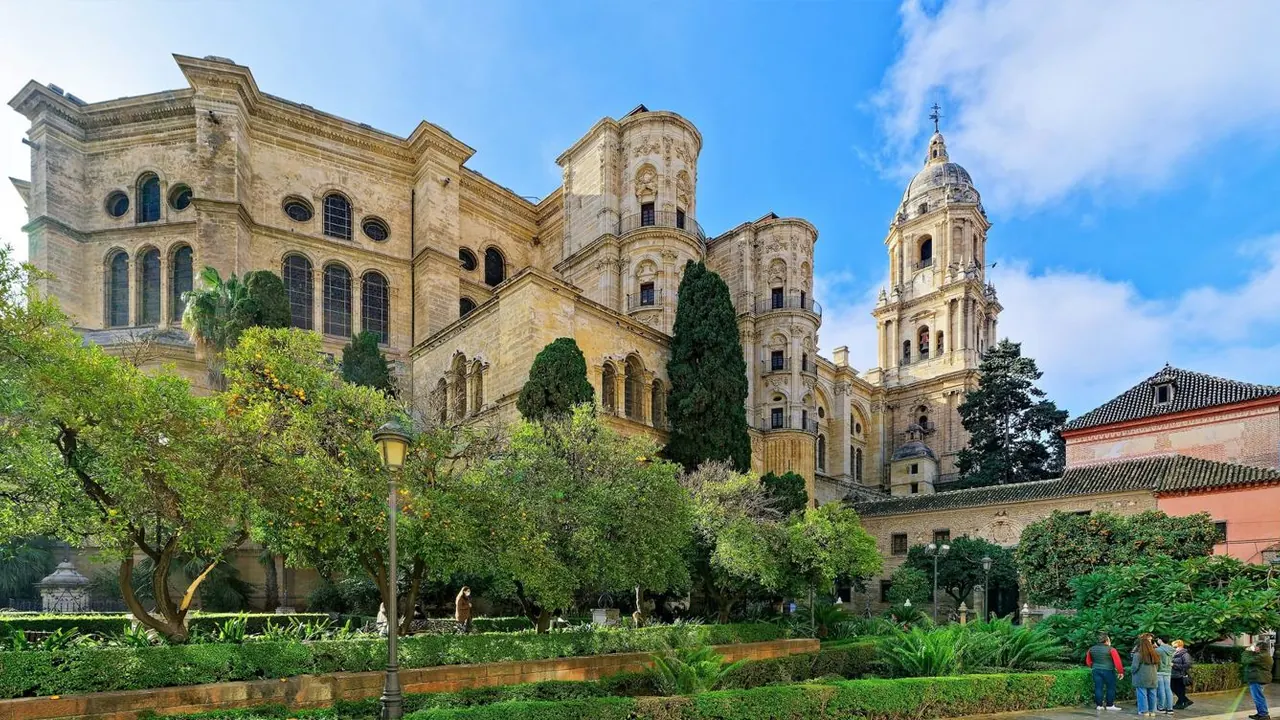
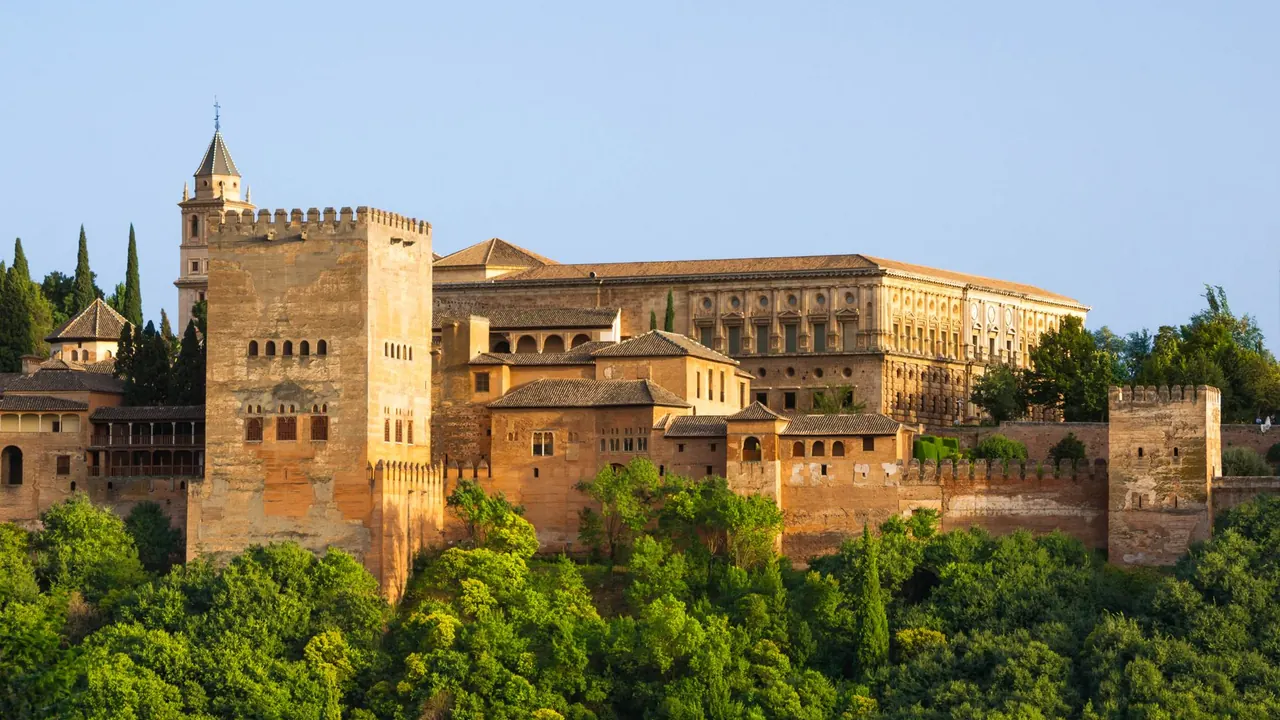
Photos: Malaga by Holger Uwe Schmitt, CC BY-SA 4.0, cropped; Granada by Jebulon, CC0.
Malaga or Granada?
Our verdict in twelve categories, each scored against the same fixed benchmark cities, and the climate month by month, so you can choose for your trip.
Choose Malaga for
- beaches
- families
- shopping
Pick Malaga if you want the sea in the same trip as the sights. The beach is a short walk from the cathedral, the centre is flat and easy with a pushchair, and the coastal train reaches resort beaches, zoos and aquariums. It is also the better base for travelling around Andalucia, with Córdoba, Ronda, Antequera and even Granada itself within reach. Families, beach lovers and anyone visiting in winter will find it the easier and milder choice.
Choose Granada for
- culture and sights
- live music and the arts
- prices
Granada suits the traveller who comes for history and mountains. The Alhambra, the lanes of the Albaicín and the Sierra Nevada on the skyline give it the deeper set of sights and the bigger landscape. Flamenco in the Sacromonte caves and cheap evenings built on free tapas add to that. It works best as a few unhurried days in spring or autumn, for people who don't mind steep cobbles and want to see the monuments and get up into the hills.
Scoreboard
Twelve categories on one fixed scale from 0 to 100. The shaded stretch is the gap between the two.
Your match
Pick a travel style or drag the sliders, and both match scores follow your weighting.
Wins on beaches and families with your weighting.
Wins on culture and sights and live music and the arts with your weighting.
What matters to you?
Category by category
What the scores mean for a trip.
Beaches & swimming
This is where the two differ most. Malaga has its own urban beaches of grey-brown sand starting a few minutes from the cathedral. The fishing quarters of Pedregalejo and El Palo lie to the east, and the long Costa del Sol strip to the west is on the suburban train. The sand is ordinary, but you can swim every day without planning.
Granada has no beach of its own. The pebble and dark-sand coves of the Costa Tropical, around Salobreña and La Herradura, are an hour away over the mountains, so a swim takes a whole day. In the city itself, a pool is the only answer to the summer heat.
Food & drink
Both cities live on tapas, but Malaga has a little more range and the sea gives it its own character: sardine espetos grilled on the beach, plates of fried fish in El Palo, sweet moscatel poured from the barrel and ajoblanco in summer. The Atarazanas market lets you eat at the counters as well as shop.
Granada's food comes from the mountains: Alpujarras ham, habas con jamón, aubergine with cane honey. Its pleasure is the bar crawl around Calle Navas, with a free plate arriving with each drink. The Moroccan tea houses of Calderería Nueva add something Malaga does not have.
Culture & sights
Granada is in a different league here. The Alhambra's Nasrid palaces and the Generalife gardens are among the great sights of Europe. Around them sit the Albaicín, the cathedral and Royal Chapel, the Carthusian sacristy and the cave houses of Sacromonte, which together give several full days of looking.
Malaga's Alcazaba and Gibralfaro are smaller echoes of the same Moorish past, with a Roman theatre beside them. The city's real cultural strength is its museums, with the Picasso Museum and the Carmen Thyssen collection leading. It is a satisfying two days, but you would not travel to Malaga for its monuments the way you would to Granada.
Nightlife
Both keep late Spanish hours, and neither is a clubbing destination, so they are much of a muchness on going out. The difference is the crowd. Granada's nights belong to students, in the bars of Calle Elvira and the pubs around Pedro Antonio de Alarcón, and the city goes quiet in summer when term ends.
Malaga is busiest exactly then. Its terraces around Plaza de la Merced and the beach bars of Pedregalejo draw a mix of ages, and Torremolinos's bigger clubs and gay scene are a short train ride away.
Nature & outdoors
Granada has the bigger landscape on its doorstep. The Sierra Nevada rises straight behind it, with ski slopes about 45 minutes away and summer routes up Mulhacén, and the terraced valleys of the Alpujarras lie on its southern side. When the city bakes in summer, you can still climb into cooler air.
Malaga's outdoors are gentler and more varied: the pine forest of the Montes de Malaga on the city edge, the Caminito del Rey gorge walkway, the limestone stacks of El Torcal, and kayaking and snorkelling under the Maro cliffs. The high mountains are two hours away.
Day trips
Granada's excursions run inland and into the mountains, while Malaga has the longer reach and the better connections. From Granada, Córdoba is about an hour and a half by fast train and Antequera is closer still. The trips that set it apart are the Renaissance towns of Úbeda and Baeza, the cave quarter of Guadix and the Alpujarras villages of Pampaneira and Capileira. Seville is too far to get there and back comfortably in a day.
Malaga sits where the region's railways meet the coast. Córdoba is about an hour away by fast train and Antequera half an hour. Ronda, Nerja with Frigiliana, the white streets of Mijas, Marbella's old quarter and even Gibraltar all fit into a day. Seville is just about possible, and Granada itself is within reach, though the Alhambra deserves a full day of its own.
Good for families
Malaga is the easier city with children. The centre is flat and pedestrianised, the city beaches slope gently into calm water, and the coast west of town has the Bioparc zoo, an aquarium and dolphin and safari parks, all reachable without a car.
Granada is safe and relaxed and its science park is worth most of a day, but beyond that the choice thins. The steep, stepped lanes of the Albaicín and the Alhambra hill wear out small legs and pushchairs, and summer afternoons there are hotter.
Getting around
Granada's sights sit on steep, cobbled hills, so the small red minibuses up to the Alhambra, the Albaicín and Sacromonte do much of the work. The flat lower town is easy on foot, and the light rail serves the station and suburbs more than anything a visitor wants to see.
Malaga is flat almost everywhere except the climb to Gibralfaro, and the cathedral, museums, market and beach are all a short walk apart. The suburban train reaches the airport in about ten minutes and carries on along the resort coast. That suits a stay split between the city and the beach.
Shopping & style
Malaga is the better place for shopping, though neither city is a serious shopping destination. Calle Larios gives a polished high street of Spanish chains, Muelle Uno adds shops by the port and Soho has a few independents. Puerto Banús is within reach for luxury.
Granada's appeal is its crafts rather than its shops: inlaid taracea woodwork, Fajalauza ceramics and handmade guitars. These are worth seeking out among the souvenir stalls of the Alcaicería.
Affordability
Granada stretches a budget further. The free tapa with every drink makes a night out cheap, and rooms in the lower town and the Realejo cost less than on the coast. Costs only climb around the Alhambra, with Albaicín boutique stays and terraces looking out at the palace.
Malaga eats just as fairly, but its beds are the problem. Old town and beachside rooms are in heavy demand from spring to autumn, so a stay there adds up faster unless you come in winter.
Live music & performing arts
Granada has the richer stage. The zambra danced in the Sacromonte caves and the small flamenco peñas of the Albaicín give rawer evenings. Each summer the music and dance festival puts concerts and ballet inside the Alhambra and the Generalife theatre, and the legacy of Lorca and Falla runs through the year.
Malaga relies on the Teatro Cervantes and its philharmonic, tourist tablaos with a few genuine peñas, and small bar stages. Its great show is Semana Santa in the streets.
Wellness & relaxation
Neither city is a spa destination, and Granada is only a little ahead. Several hammams in the lower Albaicín recreate the old Arab baths, and the real thermal towns of Lanjarón and Alhama de Granada are within an hour.
Malaga has a single Arab-style bathhouse in the old town and otherwise relies on hotel and resort spas towards Marbella. Its strengths are a sea-front walk along the Paseo Marítimo and a mild winter sun that Granada cannot match.
When should you go?
Pick your month. The climate figures are measured averages, not a forecast.
Malaga in July
Granada in July
Daytime high, °C
Rainfall in the month, mm
Temperature and rainfall are climate normals, averaged over the years shown. Malaga: 1991-2020 normals, Malaga / Aeropuerto (8.2 km from centre). Granada: 1991-2020 normals, Granada / Caserío Hospicio (5 km from centre).
Granada sits inland and high, so its seasons are sharper. Summer is dry and very hot, with afternoons around 35°C in July, too hot for climbing the Albaicín in the middle of the day. Winter days are cool and nights are cold. The best months for walking are April, May, late September and October, when the days are warm and the long dry summer has either not yet begun or has just broken. Rain comes in modest amounts from autumn to spring, and the city is very sunny for most of the year.
Malaga is milder at both ends of the year. Its summer peaks a few degrees lower, its winter days stay pleasant at around 17°C, and the sea is warm enough for comfortable swimming from June to October, reaching 23°C in August. The trade-off is winter rain, heaviest in November and December at up to 88mm a month. For a winter escape Malaga is clearly the better choice, while in spring and autumn both cities are at their best.
Which traveller are you?
For a beach and sun trip, Malaga wins easily. La Malagueta is in the city itself, Pedregalejo and El Palo lie just east, and the Costa del Sol resorts are a train ride away. In Granada the coast is a day out over the mountains.
On a culture and arts trip, choose Granada. The Alhambra, the Albaicín, the Royal Chapel and the Carthusian monastery make a richer set of sights. On top of that come flamenco in Sacromonte and a summer festival staged inside the palaces.
On a family trip with children, Malaga is the easier pick. It has a flat, pedestrianised centre, gently shelving beaches and a zoo, an aquarium and safari parks along the coast. Granada has a fine science museum but steep, cobbled hills that are hard work with a pushchair.
Before you go
| Measure | Malaga | Granada |
|---|---|---|
| Official language | Spanish | Spanish |
| Currency | Euro (EUR) | Euro (EUR) |
| Sockets | CF230 V, 50 Hz | CF230 V, 50 Hz |
| Driving side | Right | Right |
| Time zone | UTC+1, UTC+2 in summer | UTC+1, UTC+2 in summer |
| Emergency number | 112 | 112 |
| Elevation | 18 m | 693 m |
| Main airport | Málaga-Costa del Sol Airport (AGP)8 km from centre166 non-stop destinations | F.G.L. Airport Granada-Jaén Airport (GRX)16 km from centre13 non-stop destinations |
| Public holidays this year | 12 days | 12 days |
By the numbers
| Measure | Malaga | Granada |
|---|---|---|
| City population | 599,063 | 233,975 |
| People per km² | 1,517 | 2,659 |
| Museums within 10 km | 32 | 20 |
| UNESCO World Heritage sites within 50 km | 1 | 1 |
| Swim season, months above 21 °C | 3 months | - |
Where else could you go?
Every comparison below shares a destination with this one, so you can follow Malaga or Granada somewhere new.