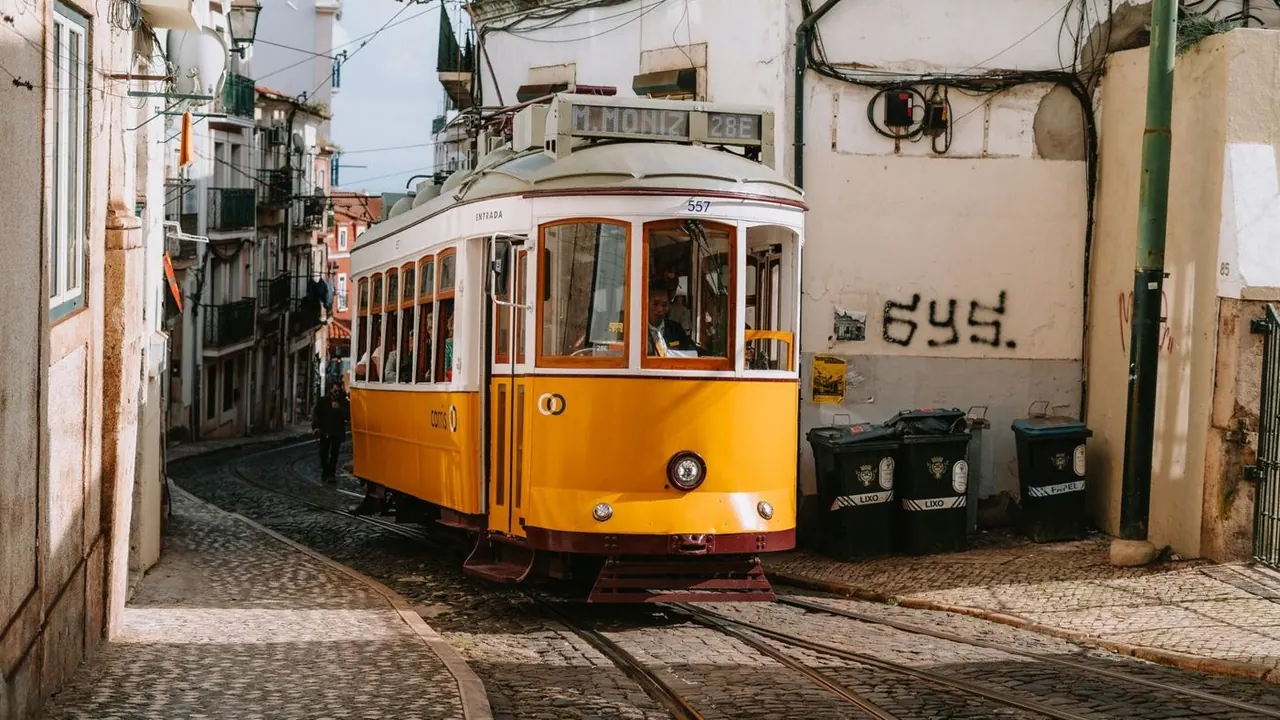
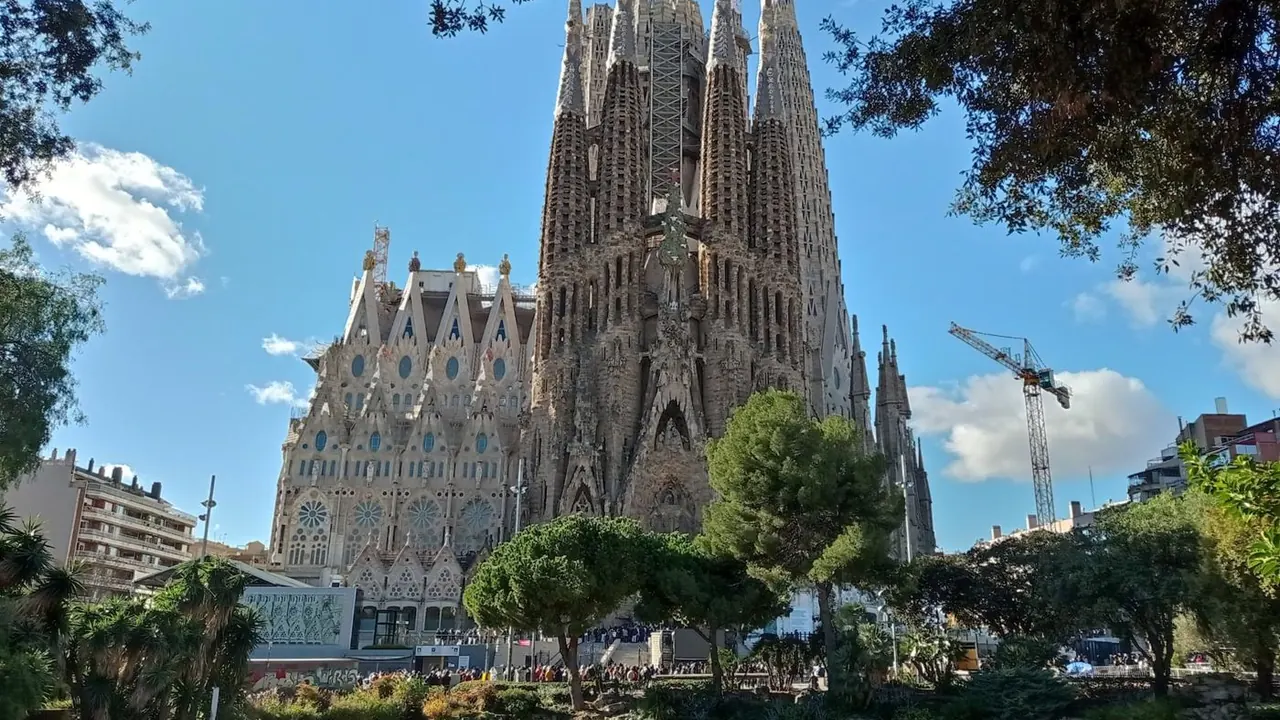
Photos: Lisbon by Riccardo Toso, Pexels License; Barcelona by Canaan, CC BY-SA 4.0, cropped.
Lisbon or Barcelona?
Our verdict in twelve categories, each scored against the same fixed benchmark cities, and the climate month by month, so you can choose for your trip.
Choose Lisbon for
- prices
- nature and the outdoors
- day trips
Lisbon is the better pick for a slower, cheaper trip built around neighbourhoods, viewpoints and fado rather than big-ticket sights. Its strength lies just outside the city, in Sintra's palaces, the Atlantic surf coast and a string of monastery towns, and it rewards anyone happy to climb hills in exchange for lower everyday costs.
Choose Barcelona for
- beaches
- shopping
- families
Barcelona suits travellers who want everything in one place: a real city beach, a week's worth of Gaudí and Gothic streets, a deep food scene and nights that run until dawn. It is also the easier city to move around, flat and well served by the metro, which matters with children in tow or on a packed sightseeing plan.
Scoreboard
Twelve categories on one fixed scale from 0 to 100. The shaded stretch is the gap between the two.
Your match
Pick a travel style or drag the sliders, and both match scores follow your weighting.
Wins on prices and nature and the outdoors with your weighting.
Wins on beaches and shopping with your weighting.
What matters to you?
Category by category
What the scores mean for a trip.
Beaches & swimming
Barcelona has what Lisbon lacks: sand inside the city itself. The run from Barceloneta to Mar Bella is a short walk or metro ride from the Born, and the Mediterranean is warm enough for an after-work swim through summer. The catch is the crowds and pickpockets in high season, which sends many people out to Sitges, Castelldefels or the Maresme.
Lisbon sits on an estuary, so every beach day starts with a train to Carcavelos and Cascais or a trip across the river to Costa da Caparica. The Atlantic is noticeably colder and often better for surfing than swimming, with the calm, clear Arrábida coves an hour's drive away. It works as a day out, not as the reason for a trip.
Food & drink
Barcelona has the wider range. Catalan cooking, from calçots with romesco to suquet, sits beside tapas bars, vermouth at midday and one of Europe's most serious tasting-menu scenes, with markets like Santa Caterina and Sant Antoni at the centre of daily eating.
Lisbon is simpler and more about the sea: grilled fish and bacalhau in family tascas, clams and prawns in beer halls, and warm custard tarts at every pastelaria. Its wine by the glass is a real strength and very cheap. In both cities the tourist strips, the Rambla and the Baixa, are where to avoid eating.
Culture & sights
The two cities' heritage comes from different golden ages. Barcelona's signature is Modernisme, which you can see nowhere else: the Sagrada Família, Casa Batlló, La Pedrera and Park Güell, built beside a Gothic Quarter that keeps its Roman walls and the soaring Santa Maria del Mar. Add the Picasso Museum and the MNAC's Romanesque frescoes, and Barcelona holds a curious visitor for longer.
Lisbon's great age was the maritime one, remembered in the Manueline stonework of Belém, alongside the Baixa grid rebuilt after the 1755 earthquake and the medieval lanes of Alfama below the castle. It has fewer museums, but they are well chosen, especially the Gulbenkian and the National Tile Museum, and three or four days cover the essentials.
Nightlife
Barcelona's nights are bigger and more varied. Each district has its own tone, from cellar cocktail bars in the Born to outdoor drinking in Gràcia's squares, and electronic music runs deep, with serious club nights and summer open-air parties that keep weekends going until morning.
Lisbon's going out happens largely in the street, with crowds spilling through Bairro Alto's lanes and later into Cais do Sodré, then on to riverside warehouse clubs. Sunset drinks at the miradouros are a ritual of their own. It is cheaper and more relaxed, but a much smaller scene.
Nature & outdoors
The two are close, but the landscapes differ. Barcelona looks inland to hills and rock: the Collserola trails and the Carretera de les Aigües at the city's edge, the pinnacles of Montserrat, the Montseny range and, at a stretch, the Pyrenees.
Lisbon looks to the Atlantic. Sintra's misty hills lead down to Cabo da Roca and the cliffs and dunes at Guincho, a kitesurfing spot, while Ericeira and Carcavelos draw surfers all year and Setúbal has boats out to the Sado dolphins. It has no real mountains, but much wilder coast than the Catalan seafront.
Day trips
Both are excellent bases, and the choice is between Catalan and Portuguese history. From Barcelona, fast trains reach walled Girona in under forty minutes, Dalí's museum at Figueres and Roman Tarragona, with Montserrat, Sitges and the Penedès cava cellars closer still.
Lisbon's headline is Sintra, whose palaces fill a whole day, and beyond it lie Roman Évora among Alentejo vineyards and the three UNESCO monasteries of Alcobaça, Batalha and Tomar. Barcelona's trips lean on quick rail links, while several of Lisbon's work best with a car or a tour.
Good for families
Barcelona is the easier city with children. The aquarium, the hands-on CosmoCaixa, the zoo and the funicular up to Tibidabo's old funfair cover several days, Gaudí's buildings tend to delight them, and PortAventura is an hour south.
Lisbon's Oceanário is a match for anything in Barcelona, with the science centre and cable car next door, and the yellow trams are a treat. The problem is the terrain: stairways, steep lanes and slick limestone make pushchairs hard work, so the old quarters suit a baby carrier better.
Getting around
Barcelona's centre is flat, and you can walk from the Gothic Quarter through the Eixample grid to Gràcia in under an hour. The metro covers most of the city, so only Park Güell, Montjuïc and Tibidabo need a climb or a funicular.
Lisbon is compact but built on hills, and walking between Baixa, Alfama and Bairro Alto means steep climbs and slippery stone. The metro misses Belém and the old quarters, leaving the slow, crowded trams and funiculars to fill the gaps, though the trains to Sintra and Cascais and the river ferries are easy.
Shopping & style
Barcelona offers more depth, with the Passeig de Gràcia's fashion houses among Modernista façades, Spanish high-street brands everywhere, and independent designers in the Born and vintage shops in the Raval. Espadrilles, conserves and cava make good things to take home.
Lisbon's appeal is its crafts rather than its range. Hand-painted azulejos, cork, Burel wool and decorated sardine tins are distinctive buys, best found in Chiado, Príncipe Real, the LX Factory and the Feira da Ladra, but international fashion is thin beyond the Avenida da Liberdade.
Affordability
Lisbon is the cheaper of the two day to day. Coffee at the counter, tasca lunches, house wine and transport all cost little, and museum fees are modest.
In both cities rooms are the big expense, rising in summer and near the centre. Barcelona adds a tourist tax and steep tickets for the Gaudí buildings, so a sightseeing-heavy trip costs noticeably more there, though its weekday set lunches and market counters help.
Live music & performing arts
Grand stages and festivals in one city, fado in small neighbourhood rooms in the other: that is the split, and Barcelona offers the wider evening out. The Liceu runs a full season of opera and ballet, any concert under the Palau de la Música's stained glass feels like an occasion, and in early summer Sónar and Primavera Sound draw music fans from across Europe. On ordinary nights there are jazz cellars and flamenco.
Lisbon's high point is hearing fado where it grew up, in Alfama, Mouraria and Bairro Alto, in anything from polished dining rooms to tiny places where neighbours take turns to sing. Beyond that, the Gulbenkian's concert season and the São Carlos opera make up a smaller formal scene. In both cities most theatre is in the local language.
Wellness & relaxation
Neither city is built for rest, and both centres are crowded and noisy late into the night. Barcelona at least has a few Arab-style bath houses in the old town, while Lisbon has no baths at all beyond hotel spas.
Calm in both comes from the local pace: a long lunch on a Gràcia square or under Montjuïc's trees, or an evening at a Lisbon viewpoint over the river. For a truly restful stay, Lisbon's easy answer is to sleep along the Cascais coast or in the Sintra hills, as Barcelona's is a nearby seaside town.
When should you go?
Pick your month. The climate figures are measured averages, not a forecast.
Lisbon in July
Barcelona in July
Daytime high, °C
Rainfall in the month, mm
Temperature and rainfall are climate normals, averaged over the years shown. Lisbon: 1991-2020 normals, Lisboa / Geof (1.1 km from centre). Barcelona: 1991-2020 normals, Barcelona / Aeropuerto (14.4 km from centre).
Both cities share almost the same summer heat, peaking around 28°C in July and August, and both are pleasant for walking in spring and autumn. The difference is in the sea and the rain. Barcelona's Mediterranean warms to about 25°C by August and stays swimmable into late September, while Lisbon's Atlantic never gets much past 19°C, so a proper swimming trip points to Barcelona from June to September.
Lisbon has the drier, sunnier summer, with barely 3mm of rain in July, but its winters are wet, with heavy rain from October through December. Barcelona's rain is spread more evenly and peaks in September and October at around 83mm a month, though its winters stay drier than Lisbon's. For a winter city break, Barcelona is the safer bet for dry days, while Lisbon is slightly milder.
Which traveller are you?
On a beach and sun trip, Barcelona is the clear pick. You can swim in a warm sea without leaving the city, while Lisbon's beaches are a train ride out and its Atlantic stays bracing even at the height of summer.
On a trip on a tight budget, Lisbon makes the money go further. Ordinary eating, drinking and getting about cost less there, while in Barcelona a plan built around the headline sights soon becomes the expensive part of the trip.
On a family trip with young children, Barcelona is the easier choice. Its attractions for children fill several days, the beach is close at hand, and the flat centre is far kinder to small legs and pushchairs than Lisbon's hills.
Before you go
| Measure | Lisbon | Barcelona |
|---|---|---|
| Official language | Portuguese | Spanish |
| Currency | Euro (EUR) | Euro (EUR) |
| Sockets | CF230 V, 50 Hz | CF230 V, 50 Hz |
| Driving side | Right | Right |
| Time zone | UTC, UTC+1 in summer | UTC+1, UTC+2 in summer |
| Emergency number | 112 | 112 |
| Elevation | 100 m | 9 m |
| Main airport | Lisbon Humberto Delgado Airport (LIS)7 km from centre156 non-stop destinations | Josep Tarradellas Barcelona-El Prat Airport (BCN)13 km from centre235 non-stop destinations |
| Public holidays this year | 14 days | 14 days |
By the numbers
| Measure | Lisbon | Barcelona |
|---|---|---|
| City population | 545,796 | 1,731,649 |
| People per km² | 5,453 | 17,094 |
| Museums within 10 km | 80 | 95 |
| UNESCO World Heritage sites within 50 km | 3 | 3 |
| Swim season, months above 21 °C | None | 3 months |
Where else could you go?
Every comparison below shares a destination with this one, so you can follow Lisbon or Barcelona somewhere new.