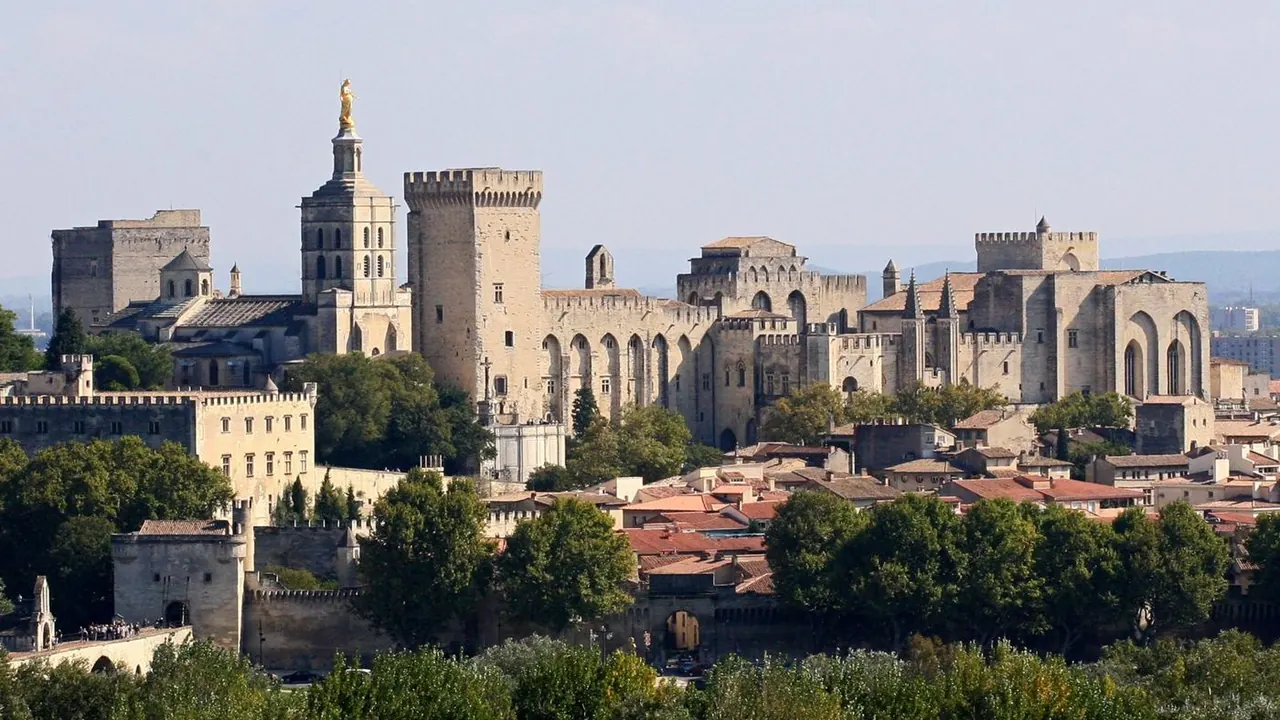
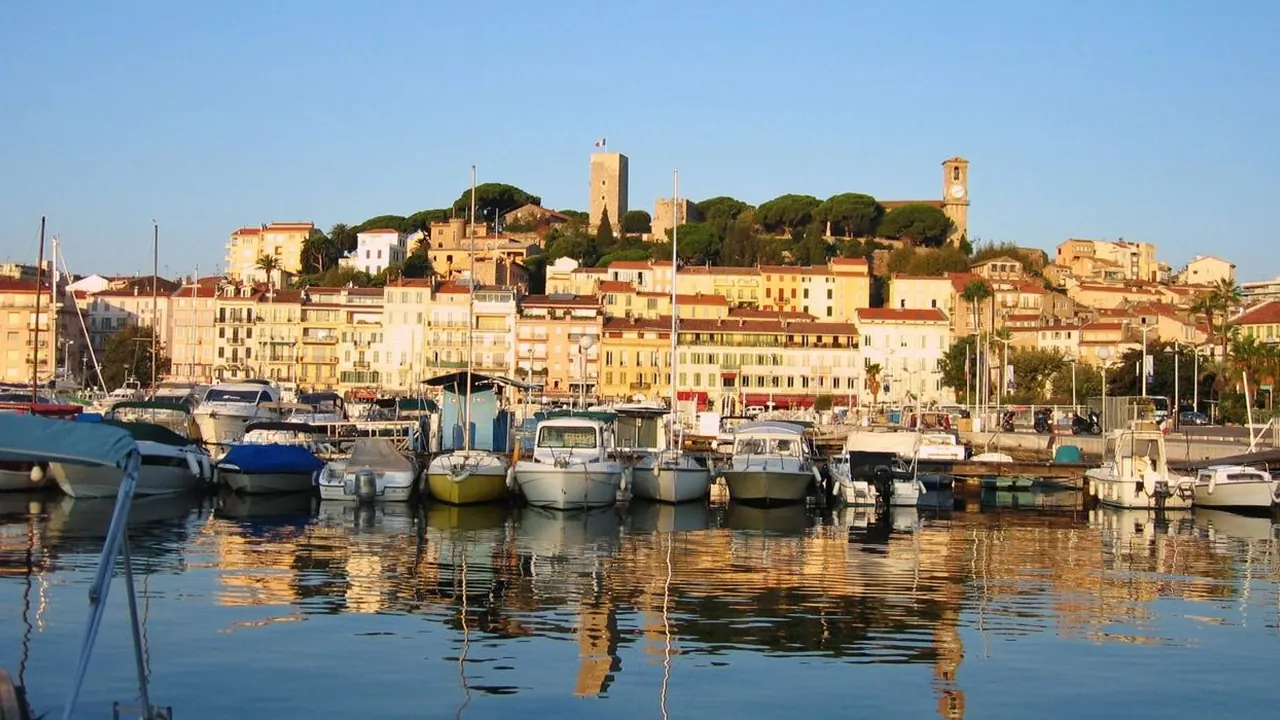
Photos: Avignon by BlueBreezeWiki, CC BY-SA 3.0, cropped; Cannes by qwesy qwesy, CC BY 3.0, cropped.
Avignon or Cannes?
Our verdict in twelve categories, each scored against the same fixed benchmark cities, and the climate month by month, so you can choose for your trip.
Choose Avignon for
- culture and sights
- live music and the arts
- prices
Avignon suits travellers who want history and a base for exploring. The papal palace, the ramparts and the museums give it far more to see than Cannes, and in July it hosts one of the world's great theatre festivals. Roman Nîmes, Arles and Orange are all close by. It is also the cheaper stay. There is no beach, though, and the hill villages need a car.
Choose Cannes for
- beaches
- shopping
- nightlife
Pick Cannes for a summer by the sea. There is sand in the middle of town, the Esterel and the Lérins islands are minutes away, and the coastal train makes Antibes, Nice and Monaco easy. Evenings are livelier in season and the Croisette is the place for luxury shopping. You will pay well for all of it, and the list of sights is short.
Scoreboard
Twelve categories on one fixed scale from 0 to 100. The shaded stretch is the gap between the two.
Your match
Pick a travel style or drag the sliders, and both match scores follow your weighting.
Too close to call, 2 points apart
Wins on culture and sights and live music and the arts with your weighting.
Wins on beaches and shopping with your weighting.
What matters to you?
Category by category
What the scores mean for a trip.
Beaches & swimming
On beaches the two are barely comparable. Avignon sits inland on a Rhône that is too fast to swim in. A summer swim means half an hour's drive to the green pools of the Gardon below the Pont du Gard, or well over an hour to the Camargue sands at Saintes-Maries-de-la-Mer. That makes a day out, not a daily habit.
In Cannes the beach is the heart of a summer stay. There is fine sand along the Croisette and the wider, mostly free Plage du Midi, plus a short boat ride to rocky swimming spots on the Lérins islands. The red coves of the Esterel are just to the west.
Food & drink
Both towns eat Provençal food at much the same standard, but from different sides of Provence. Avignon cooks from the land, with daube, lamb with herbs and tians, and wine is its strength: Châteauneuf-du-Pape and Côtes du Rhône are poured by the glass, and Les Halles on Place Pie cooks lunch at its counters.
Cannes cooks from the sea, with bouillabaisse, grilled fish and socca around the Forville market, and pink rosé on every terrace. It also has a fine-dining tier in the palace hotels and up towards Mougins. In both towns, the best tables are away from the main squares and the waterfront.
Culture & sights
Avignon is far richer in sights. The Palais des Papes is the largest Gothic palace in Europe and the centre of a UNESCO-listed group with the cathedral and the broken Pont Saint-Bénezet. Almost 4km of ramparts enclose cardinals' mansions and museums ranging from the Italian primitives of the Petit Palais to contemporary art at the Collection Lambert.
Cannes has the castle museum and church on Le Suquet, the Belle Époque hotels of the Croisette and the red-carpet steps of the Palais des Festivals. You can see it all in a morning.
Nightlife
Cannes is the better place for a night out, though both towns depend on the season. From June to September, its beach clubs turn into party venues, a handful of clubs stay open until dawn and the lanes behind the old port fill with cocktail bars. The mood is champagne and dressing up.
Avignon goes out more gently, with an aperitif on Place Pie and a few student bars. The streets go quiet by midnight, except in July, when the festival keeps the terraces full until the small hours.
Nature & outdoors
Both have fine country close by, but of different kinds. Around Avignon it is land: the bare summit of Mont Ventoux at 1,910m, the Luberon's ochre trails, the Dentelles and Alpilles, canoeing down the Gardon, and the flamingos and white horses of the Camargue.
Around Cannes it is the coast: the red volcanic rock of the Esterel, pine paths on Sainte-Marguerite, the shore path round Cap d'Antibes, and sailing and diving around the islands, with skiing inland in winter. Each has its own hazard: the mistral in Avignon, and summer fire closures on Cannes's forest trails.
Day trips
Both make superb bases, and Avignon has the edge in depth. Within half an hour are the arenas of Nîmes and Arles, the theatre at Orange and the Pont du Gard, which together make up some of the finest Roman heritage outside Italy. Further out are the wine villages around Châteauneuf-du-Pape and the Luberon hill villages, though these need a car.
From Cannes, the coastal train runs to Antibes's Picasso museum, Nice, Monaco and Menton. Saint-Paul-de-Vence, Grasse and the Lérins monastery are all close too. The trips are easier without a car, but they are mostly Riviera towns rather than ancient sites.
Good for families
Cannes is the easier family choice. Its sandy beaches slope gently into calm water, the flat Croisette suits pushchairs and scooters, and there are carousels along the way. The boat to the pine woods of the Lérins islands makes a good outing.
Avignon has a few treats for children: the augmented-reality tour of the Palais, dancing on the bridge from the song, and the playground on the Rocher des Doms. But the cobbled lanes are hard work with a pushchair, and the real family days out, such as swimming at the Pont du Gard, need a car.
Getting around
Both centres are walkable in about twenty minutes. Cannes has a slight edge because its station is right in town and the coastal train covers most of its day trips. The steep climb up Le Suquet and the summer traffic are its drawbacks.
Avignon's walled centre is just as easy on foot, but the TGV station is outside the walls and reached by a shuttle train. Regional trains serve Arles, Nîmes and Orange well, but the vineyards and Mont Ventoux really need a hire car.
Shopping & style
Avignon is the place to shop for Provence rather than for clothes. Its main street from the station is mostly chain stores, so the real browsing is in the lanes around Rue Joseph Vernet and Rue des Marchands, among printed cottons, lavender, soap and olive-wood. Many visitors bring home more from the market stalls and the wine cellars than from the shops. Serious antiques hunters drive out to L'Isle-sur-la-Sorgue.
Cannes gives a shopper far more to do. The Paris fashion and jewellery houses line the seafront in numbers you would not expect in a town this size. One street back, Rue d'Antibes covers the middle range with French labels, shoes and chocolatiers. Rue Meynadier sells olive oil, cheese and Provençal fabrics as well, so you still get a taste of Provence here.
Affordability
Avignon is noticeably cheaper. Outside July it costs what a provincial French town does, with fair set lunches in the side streets and good wine bought direct from producers. The main extra cost is a hire car for the countryside. The festival is the exception, when rooms inside the walls are booked far ahead at steep rates.
Cannes is expensive almost all year, and dearer still during the film festival and trade fairs. Public beaches, picnics from Forville and staying in a neighbouring town help, but the seafront is priced for a wealthy crowd.
Live music & performing arts
Avignon is far ahead. The Festival d'Avignon, founded in 1947, stages major productions in the Cour d'honneur of the Palais des Papes. Alongside it, the Off fills every cellar and courtyard with well over a thousand shows a day. The rest of the year, the opera house on Place de l'Horloge, a dozen small theatres and a jazz club keep a steady programme.
Cannes's famous festival is a closed industry event, though the public can watch free open-air screenings on the beach. Beyond that, it has concerts at the Palais, a dance festival, summer concerts in the castle courtyard and the jazz festival at nearby Juan-les-Pins.
Wellness & relaxation
Neither has a bathing tradition, but Cannes offers a little more. There are polished spas in the Croisette palace hotels, thalassotherapy centres along the coast and calm evening walks by the bay in spring and autumn.
In Avignon, relaxing usually means leaving the walls for a farmhouse guesthouse with a pool among the vineyards. When the mistral blows for days, it can wear on the nerves. Both towns are poor choices for rest during their festival weeks.
When should you go?
Pick your month. The climate figures are measured averages, not a forecast.
Avignon in July
Cannes in July
Daytime high, °C
Rainfall in the month, mm
Where the figures come from
Avignon has no rain gauge within 25 km of the centre, so its rainfall comes from a gridded climate dataset read at the city rather than from a gauge further away.
Avignon's sunshine is measured 65 km from the centre, at Marseille / Marignane.
Temperature and rainfall are climate normals, averaged over the years shown. Avignon: 2005-2020 (sunshine 1991-2020, rainfall 1991-2020) normals, Avignon / Morières-lès-Avignon (8.6 km from centre). Cannes: 2004-2020 (sunshine 1991-2020, rainfall 1991-2020) normals, Cannes (5.8 km from centre).
Avignon is best in spring and early autumn. May and late September bring warm, very sunny days for walking the ramparts. July and August reach 31°C, which is hard going on stone streets with no sea nearby to cool off in. Autumn is the wet season: October is the rainiest month at 109mm, and September and November stay damp. Winters are bright but chilly.
Cannes is milder at both ends of the year, with summer highs around 29°C and softer winters. The sea is warm enough to swim in from June, peaks at 25°C in August and stays pleasant through September. Summers are very dry, but heavy rain arrives in October and peaks at 138mm in November. Avignon gets slightly more summer sunshine, while Cannes is the gentler choice for a winter or shoulder-season walk.
Which traveller are you?
On a beach and sun trip, Cannes wins easily. There is sand right in the centre and the water is calm. The Lérins islands and the Esterel coves add clearer swimming. From Avignon, the nearest sea is over an hour's drive away.
For a culture and arts trip, Avignon is the stronger choice. The Palais des Papes, the ramparts and the Petit Palais fill two unhurried days. July brings its great theatre festival, and Roman Nîmes, Arles and Orange are close by.
On a trip on a tight budget, your money goes further in Avignon. Outside July, rooms and meals cost what they do in provincial France, and wine from local producers is good value. Cannes prices its seafront, beaches and hotels for a wealthy crowd.
Before you go
| Measure | Avignon | Cannes |
|---|---|---|
| Official language | French | French |
| Currency | Euro (EUR) | Euro (EUR) |
| Sockets | CE230 V, 50 Hz | CE230 V, 50 Hz |
| Driving side | Right | Right |
| Time zone | UTC+1, UTC+2 in summer | UTC+1, UTC+2 in summer |
| Emergency number | 112 | 112 |
| Elevation | 10 m | 0 m |
| Main airport | Marseille Provence Airport (MRS)65 km from centre126 non-stop destinations | Nice-Côte d'Azur Airport (NCE)20 km from centre130 non-stop destinations |
| Public holidays this year | 11 days | 11 days |
By the numbers
| Measure | Avignon | Cannes |
|---|---|---|
| City population | 92,188 | 74,350 |
| People per km² | 1,420 | 3,793 |
| Museums within 10 km | 11 | 16 |
| UNESCO World Heritage sites within 50 km | 6 | 2 |
| Swim season, months above 21 °C | - | 4 months |
Where else could you go?
Every comparison below shares a destination with this one, so you can follow Avignon or Cannes somewhere new.