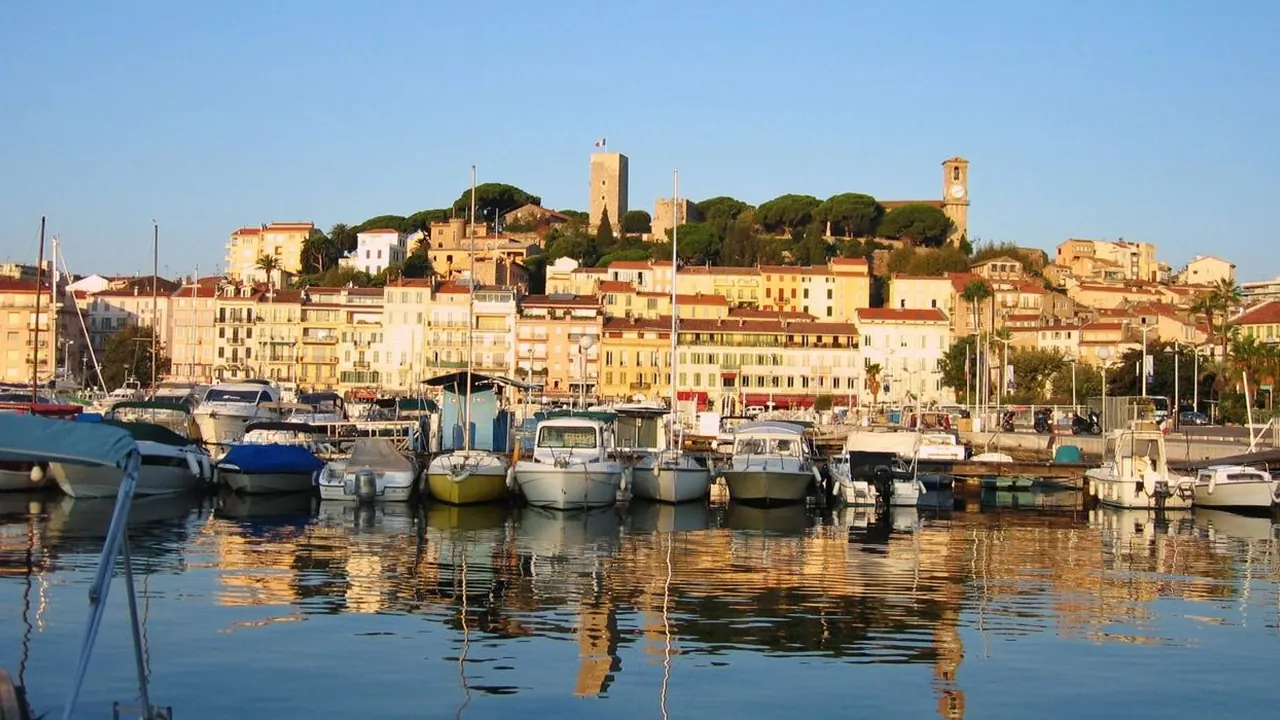
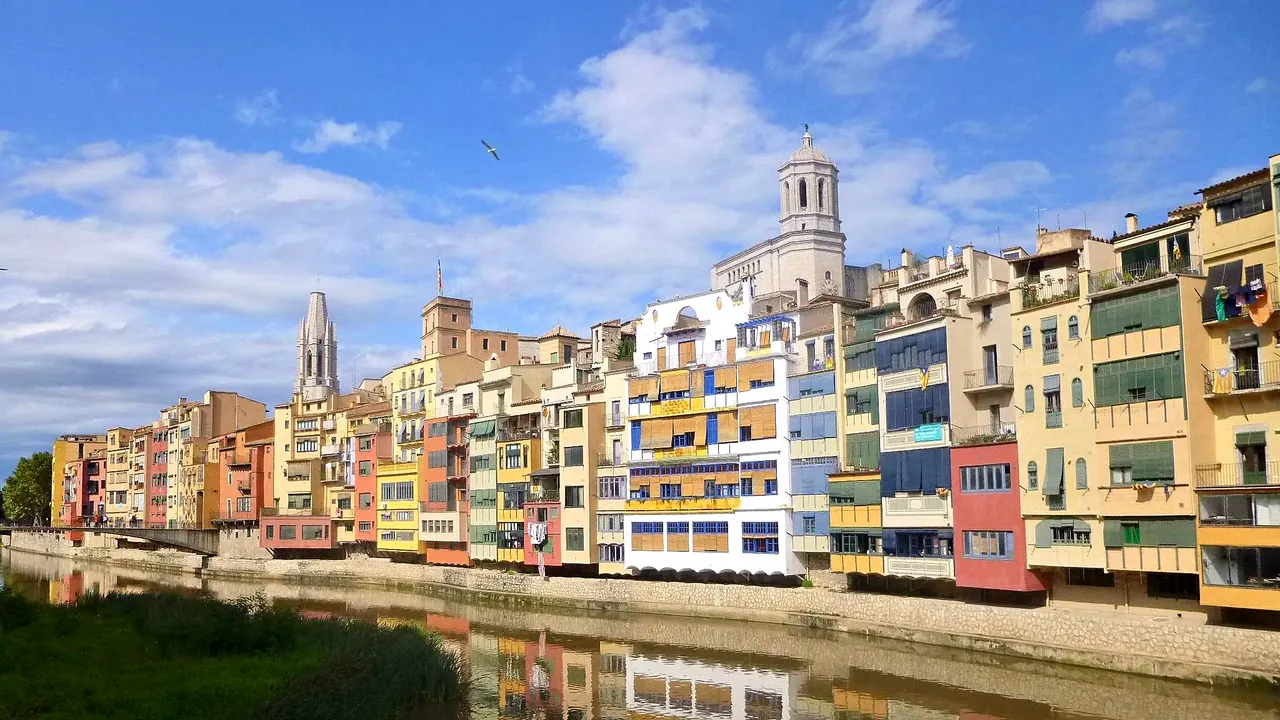
Photos: Cannes by qwesy qwesy, CC BY 3.0, cropped; Girona by Zarateman, CC0.
Cannes or Girona?
Our verdict in twelve categories, each scored against the same fixed benchmark cities, and the climate month by month, so you can choose for your trip.
Choose Cannes for
- beaches
- shopping
- nightlife
Cannes suits a sun-and-sea vacation with some polish. The sand is right along the Croisette, the Lérins islands sit just offshore, and you also get luxury shopping and summer evenings out. The coastal train links Antibes, Nice and Monaco without a car. Families with small children will also find it the easier stay. Expect high costs, and a town whose own sights fill only a morning.
Choose Girona for
- prices
- culture and sights
- food and drink
If you would rather explore a walled medieval city on foot, eat serious Catalan cooking and have cycling lanes, greenways and volcanic hills on the doorstep, Girona is the better choice. Staying and eating there cost noticeably less, and Barcelona is under forty minutes away by fast train. The trade-off is that the beach is a day out on the Costa Brava rather than at the end of the street, and nights are quiet.
Scoreboard
Twelve categories on one fixed scale from 0 to 100. The shaded stretch is the gap between the two.
Your match
Pick a travel style or drag the sliders, and both match scores follow your weighting.
Too close to call, 1 point apart
Wins on beaches and shopping with your weighting.
Wins on prices and culture and sights with your weighting.
What matters to you?
Category by category
What the scores mean for a trip.
Beaches & swimming
Cannes has the beach on its doorstep. A curve of fine sand with calm water runs along the Croisette, the wider Plage du Midi is mostly free, and there is rocky swimming on the Lérins islands a short boat ride away. Private concessions take much of the frontage, and the central sand is packed in high summer.
Girona has no beach of its own, and the Costa Brava starts about forty minutes away. The coves around Begur and L'Escala have some of the clearest water on that coast, but getting there is a day out, and without a car the buses limit how far you can go.
Food & drink
Cannes cooks from the Forville market and the sea. You will find bouillabaisse and grilled fish in the bistros of Le Suquet, socca and stuffed vegetables, and rosé on a terrace, with fine dining in the palace hotels and out towards Mougins. Much of the Croisette and the old port serves predictable, expensive food, though, and few dishes come from the town itself.
Girona is the better place to eat. Its menus are built on Catalan home cooking, such as botifarra with white beans and mar i muntanya plates, and the city has an international reputation for fine dining. The cream-filled xuixos pastries are its own. The Empordà wines are local, and cava is on most lists. Where it falls short is range, with little street food or international cooking.
Culture & sights
Girona's walled Barri Vell makes it much the better place for sightseeing. It has a cathedral with one of the widest Gothic naves anywhere, the Romanesque cloister of Sant Pere de Galligants, the Arab Baths and the alleys of the Jewish Call. You can also walk the medieval walls for views towards the Pyrenees.
Cannes is pleasant rather than deep. The castle museum and the church on Le Suquet, the Belle Époque palace hotels and the steps of the Palais des Festivals all fit into a morning, and for serious art you travel along the coast.
Nightlife
Neither is a nightlife city, but Cannes goes further in summer. From June to September the beach clubs on the Croisette become party venues, a few clubs stay open until dawn and the streets behind the old port fill with cocktail bars, all on the glamorous, expensive side. Off-season the town goes quiet.
Girona's evenings mean terraces and long dinners, student bars around Plaça de la Independència in term time and a few small late venues at weekends. For a big night out from either, take the train: to Nice or Juan-les-Pins from Cannes, to Barcelona from Girona.
Nature & outdoors
Both have fine country close by, and Girona has a little more of it. Road cyclists base themselves there for the quiet lanes up Rocacorba and Els Àngels, and flat greenways run to Olot and the coast. The Garrotxa volcanic zone, Cap de Creus and the high Pyrenees are all within reach.
Cannes leans towards the sea: the red volcanic rock of the Esterel, the pine paths of Sainte-Marguerite and the shore path around Cap d'Antibes, with sailing, kayaking and diving around the islands. In high summer, fire risk can close the forest trails.
Day trips
Both make superb bases, and the difference is in kind. From Cannes, the coastal train strings together Antibes, Nice, Villefranche, Monaco and Menton. The perched villages of Saint-Paul-de-Vence and Èze, and the perfume town of Grasse, lie just behind, so a lot can be done without a car.
Girona's great draw is Barcelona, under forty minutes away by fast train. Add Dalí's Figueres and Cadaqués, Besalú, the stone villages of Pals and Peratallada, the ruins of Empúries and even Perpignan across the border. Its villages and wineries are much easier with a car.
Good for families
Cannes is the easier stay for families. The sand slopes gently into calm water close to town, and the flat promenade with its carousels and play areas suits pushchairs and scooters. The boat to the Lérins islands makes a good picnic day, although little in town is built for children.
Girona is calm and welcoming, and walking the walls feels like an adventure, but the stairs and cobbles of the Barri Vell are hard work with a pushchair. Beach days mean a trip to the coast, so the shady Devesa park is the main outdoor space in town.
Getting around
Cannes is a little easier to get around. Its centre is mostly flat apart from the climb to Le Suquet, the station sits in the heart of town, and regional trains and island ferries cover most outings. Inland villages need a car, and summer traffic and parking are a struggle.
Girona is just as compact but steeper, with an old town full of stairs. Its fast trains run mainly to Barcelona and Figueres, and buses to the coast and Olot are infrequent, so many visitors hire a car for part of their stay.
Shopping & style
For its size, Cannes is a real shopping town. The great Paris fashion and jewellery houses face the sea along the Croisette, Rue d'Antibes adds a long run of mid-range French fashion and chocolatiers, and Rue Meynadier sells olive oil, soaps and Provençal fabrics.
Shopping in Girona is small-scale and independent: fashion, bookshops and delicatessens around the Rambla, Empordà produce at the Mercat del Lleó and plenty of cycling kit. There are no luxury streets, so serious shoppers go to Barcelona.
Affordability
Girona costs noticeably less. Weekday set lunches and taverns are good value and you can walk almost everywhere. The main expense is an old-town room in summer, during the spring flower festival or in the cycling season, plus a hire car if you want the villages.
Cannes is an expensive stay. Seafront dining, cocktails and private loungers are priced for wealthy visitors, and hotel rates climb during the film festival and trade fairs. Backstreet lunches, market picnics, the public beaches and staying in a cheaper neighbouring town all bring costs down.
Live music & performing arts
Neither has a large stage scene, and both rely on festivals. Cannes has its film festival, closed to the public apart from the free beach screenings. It also has the regional philharmonic, a respected dance festival, summer concerts in the Le Suquet castle courtyard and the Juan-les-Pins jazz festival nearby.
Girona's highlight is Temporada Alta, a long autumn festival of international theatre and dance, and the Auditori hosts touring concerts. Many plays are in Catalan. Outside the festival seasons, both programmes are thin.
Wellness & relaxation
In both towns, rest comes more from the pace than from the facilities. Cannes has polished spas in its palace hotels and seawater thalassotherapy along the coast, and quiet seafront mornings in spring and autumn, but festival weeks and August are noisy.
Girona's slow lanes and river walks do the same job, and it has the only real bathing option of the two. The thermal-spring town of Caldes de Malavella is about twenty minutes south, with hotels built around its spring water.
When should you go?
Pick your month. The climate figures are measured averages, not a forecast.
Cannes in July
Girona in July
Daytime high, °C
Rainfall in the month, mm
Temperature and rainfall are climate normals, averaged over the years shown. Cannes: 2004-2020 (sunshine 1991-2020, rainfall 1991-2020) normals, Cannes (5.8 km from centre). Girona: 1991-2020 normals, Gerona / Costa Brava (10.1 km from centre).
Cannes is a summer beach town in the full sense. From June to September the days are warm, and July and August reach about 29°C with almost no rain. The sea is at its warmest in August, around 25°C, and swimming lasts into early October. After that the wettest stretch arrives, with October and November the rainiest months at up to 138mm. Spring and late September are the gentlest times for walking the Croisette and climbing Le Suquet.
Girona lies inland and gets hotter in midsummer, around 31°C in July and August, which makes afternoons on the old town's stairs hard going. That is when the cooler coast is the place to be. Its rain is spread more evenly through the year, with a milder autumn peak, and Cannes has clearly more sunshine through the summer. In Girona, April to June and September to October are the best months for walking and cycling.
Which traveller are you?
On a beach and sun trip, Cannes is the clear pick. Fine sand runs along the Croisette in town, the free Plage du Midi is a short walk away, and the Lérins islands and the Esterel coves are close. From Girona, every beach day starts with a forty-minute journey.
For a culture and arts trip, Girona has far more to offer. The walled Barri Vell, the cathedral's vast Gothic nave, the Jewish Call and the Arab Baths fill two unhurried days, and Dalí's museum at Figueres is half an hour away. The sights of Cannes fit into a morning.
On a trip on a tight budget, your money goes much further in Girona. Set lunches and taverns are reasonably priced, and almost everything is within walking distance. Cannes near the seafront is priced for a wealthy crowd, though public beaches, market picnics and cheap coastal trains help.
Before you go
| Measure | Cannes | Girona |
|---|---|---|
| Official language | French | Spanish |
| Currency | Euro (EUR) | Euro (EUR) |
| Sockets | CE230 V, 50 Hz | CF230 V, 50 Hz |
| Driving side | Right | Right |
| Time zone | UTC+1, UTC+2 in summer | UTC+1, UTC+2 in summer |
| Emergency number | 112 | 112 |
| Elevation | 0 m | 70 m |
| Main airport | Nice-Côte d'Azur Airport (NCE)20 km from centre130 non-stop destinations | Girona-Costa Brava Airport (GRO)10 km from centre18 non-stop destinations |
| Public holidays this year | 11 days | 14 days |
By the numbers
| Measure | Cannes | Girona |
|---|---|---|
| City population | 74,350 | 108,666 |
| People per km² | 3,793 | 2,779 |
| Museums within 10 km | 16 | 9 |
| UNESCO World Heritage sites within 50 km | 2 | 0 |
| Swim season, months above 21 °C | 4 months | 3 months |
Where else could you go?
Every comparison below shares a destination with this one, so you can follow Cannes or Girona somewhere new.
- Antibesvs Cannes
- Nicevs Cannes
- Monacovs Cannes
- Saint-Tropezvs Cannes
- Barcelonavs Girona
- Aix-en-Provencevs Cannes