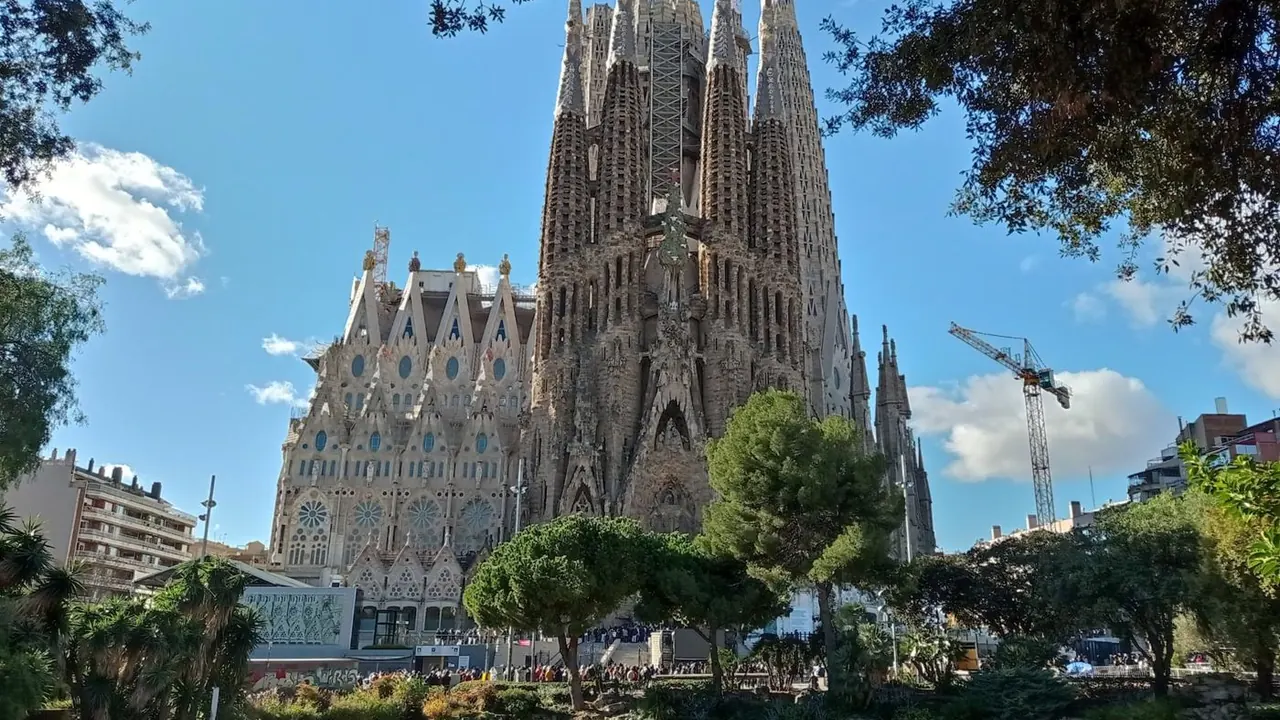
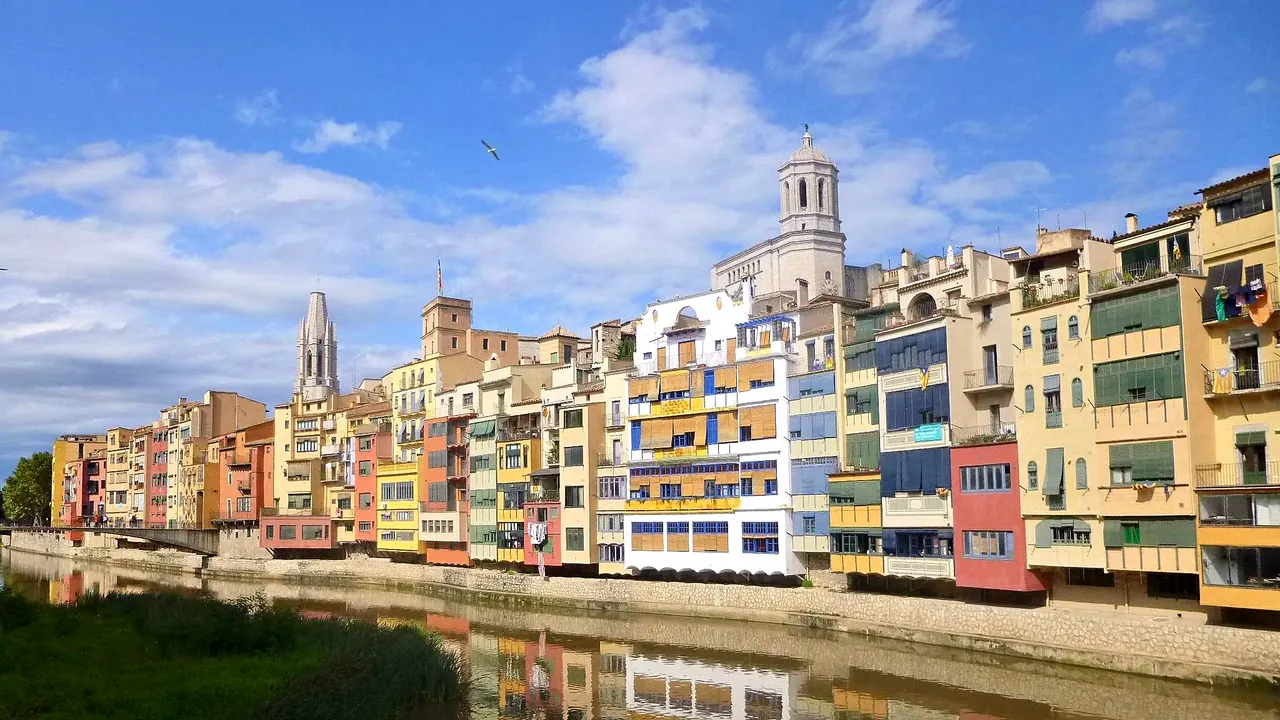
Photos: Barcelona by Canaan, CC BY-SA 4.0, cropped; Girona by Zarateman, CC0.
Barcelona or Girona?
Our verdict in twelve categories, each scored against the same fixed benchmark cities, and the climate month by month, so you can choose for your trip.
Choose Barcelona for
- nightlife
- shopping
- live music and the arts
Barcelona suits travellers who want a full city on their doorstep. Gaudí's Modernista buildings and the Gothic Quarter could fill a week, dinners in Sant Antoni or Gràcia run late, nights go on until dawn, and a sandy beach is a metro ride from the centre. It is also the easier choice with children and the one with real stages, from opera at the Liceu to concerts under the glass ceiling of the Palau de la Música.
Choose Girona for
- prices
- nature and the outdoors
- day trips
Girona is the better pick for a slower trip built around the region rather than the city itself. The walled Barri Vell and the old Jewish quarter take a day or two of unhurried walking. After that come the quiet lanes and greenways that draw cyclists, the volcanic Garrotxa, Dalí's Figueres and Cadaqués, and the Costa Brava coves. It costs a little less, but evenings mean terraces and a long dinner, and a car gets you much more out of a stay.
Scoreboard
Twelve categories on one fixed scale from 0 to 100. The shaded stretch is the gap between the two.
Your match
Pick a travel style or drag the sliders, and both match scores follow your weighting.
Wins on nightlife and shopping with your weighting.
Wins on prices and nature and the outdoors with your weighting.
What matters to you?
Category by category
What the scores mean for a trip.
Beaches & swimming
Barcelona has the beach and Girona does not. A run of sand from Barceloneta to Mar Bella lies a short walk or metro ride from the old town, so a swim fits into an ordinary sightseeing day. The trade-off is man-made beaches that are packed in high summer, and the better sand at Sitges or Castelldefels is a train ride away.
From Girona the sea means a planned day out of about 40 minutes by car or bus. The reward is better scenery: pine-backed coves around Begur and L'Escala with some of the clearest water on this coast. Without a car the infrequent buses limit how far you get.
Food & drink
Both cook Catalan at heart, with pa amb tomàquet and botifarra with white beans on every menu, but Barcelona has far more range. A whole network of covered markets, from the Boqueria to Santa Caterina and Sant Antoni, sits alongside workers' set lunches, seafood rice by the sea and one of Europe's leading tasting-menu scenes, spread over several neighbourhoods worth eating your way through.
Girona punches above its size with its own fine-dining reputation, mar i muntanya cooking, xuixos pastries and Empordà wines from just up the road. Variety is the gap, with little street food or international cooking, so after a few days the choice runs short in a way it never does in Barcelona.
Culture & sights
Barcelona is the bigger cultural destination by some distance. Gaudí's Sagrada Família, Casa Batlló, La Pedrera and Park Güell exist nowhere else, and beneath them lie the Roman walls and medieval squares of the Gothic Quarter, plus the Picasso Museum and the MNAC's Romanesque frescoes. You can spend a week on it.
Girona offers one superb old town rather than a whole city of sights. The walled Barri Vell climbs to a cathedral with one of the widest Gothic naves anywhere, and the Call is among Europe's best-preserved Jewish quarters. Its museums are modest, and a day or two covers the essentials.
Nightlife
This is the widest gap between the two. Barcelona's nights start after an eleven o'clock dinner and run until dawn, with cocktail bars in Born cellars, scruffy Raval bars, the Eixample's gay scene, beachfront clubs and serious electronic nights.
Girona has student bars around Plaça de la Independència in term time and a handful of small late venues at weekends. Locals who want a big night out take the train to Barcelona.
Nature & outdoors
Girona has the edge, chiefly because it sits in the middle of open country. Road cyclists come for the quiet lanes and climbs that start at the edge of town, old railway lines have become greenways to Olot and the sea, and the Gavarres hills begin on the outskirts. The Garrotxa volcanic zone, the Cap de Creus headland and the coast-guard path above the coves are all within about an hour, and the Pyrenees are only a little further.
Barcelona's outdoors is more urban. Its strengths are the Collserola hills and their flat Carretera de les Aigües, Montjuïc's gardens, and paddleboarding or windsurfing off Mar Bella, with Montserrat's pinnacles an hour out.
Day trips
Girona is the slightly better base, mostly because of where it sits. Barcelona itself is under 40 minutes by fast train, Figueres is half an hour away, and Dalí's Púbol and Portlligat, the stone villages of Pals and Peratallada, the ruins of Empúries and even Perpignan across the French border are all close. A car opens up most of it.
Barcelona reaches Girona and Figueres just as easily by train and also covers the south, which Girona cannot: Roman Tarragona, the monastery at Poblet, Sitges, the cava cellars of the Penedès and Montserrat. More of that is possible without a car.
Good for families
Barcelona is much easier with children. The aquarium, the hands-on CosmoCaixa, the zoo in the Ciutadella and the funicular up to Tibidabo's funfair give plenty to do, the beach is close and PortAventura is about an hour away. The crowds and narrow old-town streets are the main downside.
Girona is calm and safe, and walking the walls feels like an adventure, but nothing there is built for children. The Barri Vell's stairs defeat pushchairs, so families usually treat it as a quiet base and head to the Costa Brava for the day.
Getting around
Both have walkable centres, but Barcelona's is flat and backed by a simple metro, with trams, buses, local trains and bike lanes on the same system. Only Park Güell, Montjuïc and Tibidabo involve a climb or a funicular, and a car is never needed.
Girona is small enough to cross on foot in about twenty minutes, though the old quarter is all stairs and cobbles. The real difference is beyond the city, where infrequent buses make a hire car the practical way to reach villages, coves and wineries.
Shopping & style
Barcelona is the shopping city here. The Passeig de Gràcia has luxury and Spanish fashion houses among Modernista façades, and the more interesting finds are in Born concept stores, Gràcia's craft shops, Raval vintage and record shops, and the Els Encants flea market.
Girona's shopping is pleasant but small: independent fashion, shoe shops and bookshops around its Rambla, and Empordà cheeses, sausages and oil at the Mercat del Lleó. Its one speciality is cycling kit. Anyone wanting more takes the train south.
Affordability
Girona is somewhat cheaper, though neither is a bargain. Barcelona's hotels are its biggest expense, and the tourist tax and steep entry fees for the Gaudí buildings add up on a sightseeing trip. Eating like a local at set lunches and market counters keeps food costs reasonable.
In Girona you walk everywhere and the taverns are kinder on the budget. Rooms in the old town are limited, though, and climb in summer, at flower festival time and in the cycling season, and a hire car can eat into the savings.
Live music & performing arts
Barcelona has a full stage calendar all year: opera and ballet at the Liceu, concerts at the Palau de la Música and L'Auditori, serious theatre at the Lliure and Mercat de les Flors, jazz cellars and flamenco. In early summer Sónar and Primavera Sound take over the city.
Girona's offer is seasonal. Temporada Alta brings international theatre and dance in autumn, and summer adds concerts in castle gardens along the coast, but there is no resident opera or orchestra. Outside those months there is little on.
Wellness & relaxation
Neither city is a true wellness destination, and the difference is mostly one of pace. Barcelona offers Arab-style bath houses in the old town, but its streets are noisy and its nights late, so rest means long lunches, Gràcia terraces or the Collserola paths.
Girona is quieter by nature, with morning lanes and evening walks by the river. Its Arab Baths are a monument rather than a place to bathe, but the thermal waters of Caldes de Malavella, about 20 minutes away, give it a real spa option that Barcelona does not have as close by.
When should you go?
Pick your month. The climate figures are measured averages, not a forecast.
Barcelona in July
Girona in July
Daytime high, °C
Rainfall in the month, mm
Temperature and rainfall are climate normals, averaged over the years shown. Barcelona: 1991-2020 normals, Barcelona / Aeropuerto (14.4 km from centre). Girona: 1991-2020 normals, Gerona / Costa Brava (10.1 km from centre).
Barcelona sits on the sea and Girona inland, so summer heat differs more than the rest of the year. July and August reach about 29°C in Barcelona, where the sea breeze helps. Girona climbs to around 31°C, which makes midday walks on its steep stairs hard going. In both, the sea is warm enough for swimming from June to late September. Barcelona's water is a touch warmer and peaks at about 25°C in August, while the Costa Brava coves near Girona stay a little cooler. From spring to early autumn Barcelona also gets slightly more sun, and Girona has a little more in the depths of winter.
In both cities, spring and autumn are the best seasons for sightseeing, hiking and cycling. Barcelona's driest spell is June and July. Rain picks up in August and is heaviest in September and October. Girona is wetter for most of the year, with damp spells in April and May and its wettest month in October at around 86mm, but in August and September Barcelona actually gets slightly more rain. Winters are mild and much alike, with highs of about 14°C. That is pleasant enough for walking the streets but too cold for the beach.
Which traveller are you?
On a food and nightlife trip, Barcelona is the clear choice. Its markets, vermouth bars, pintxos on Blai street and serious tasting menus lead into cocktail cellars, Gràcia's squares and clubs open until dawn, while Girona's evenings end over dinner on a terrace.
On a family trip with children, Barcelona has far more to offer. The aquarium, CosmoCaixa, the zoo and Tibidabo's funfair are all an easy ride away, and the beach is close. Girona has no attractions built for children and is mainly a quiet base for days on the coast.
For an outdoors trip, especially by bike, Girona is the better base. Road climbs to Rocacorba and Els Àngels, traffic-free greenways to Olot and the coast, and the Garrotxa volcanoes and Cap de Creus are all close, which Barcelona's Collserola hills cannot match.
Before you go
| Measure | Barcelona | Girona |
|---|---|---|
| Official language | Spanish | Spanish |
| Currency | Euro (EUR) | Euro (EUR) |
| Sockets | CF230 V, 50 Hz | CF230 V, 50 Hz |
| Driving side | Right | Right |
| Time zone | UTC+1, UTC+2 in summer | UTC+1, UTC+2 in summer |
| Emergency number | 112 | 112 |
| Elevation | 9 m | 70 m |
| Main airport | Josep Tarradellas Barcelona-El Prat Airport (BCN)13 km from centre235 non-stop destinations | Girona-Costa Brava Airport (GRO)10 km from centre18 non-stop destinations |
| Public holidays this year | 14 days | 14 days |
By the numbers
| Measure | Barcelona | Girona |
|---|---|---|
| City population | 1,731,649 | 108,666 |
| People per km² | 17,094 | 2,779 |
| Museums within 10 km | 95 | 9 |
| UNESCO World Heritage sites within 50 km | 3 | 0 |
| Swim season, months above 21 °C | 3 months | 3 months |
Where else could you go?
Every comparison below shares a destination with this one, so you can follow Barcelona or Girona somewhere new.
- Carcassonnevs Girona
- Montpelliervs Girona
- Carcassonnevs Barcelona
- Toulousevs Girona
- Toulousevs Barcelona
- Marseillevs Girona