Photos: Carcassonne by Susanne Jutzeler, suju-foto, Pexels License; Girona by Zarateman, CC0.
Carcassonne or Girona?
Our verdict in twelve categories, each scored against the same fixed benchmark cities, and the climate month by month, so you can choose for your trip.
Choose Carcassonne for
- families
- prices
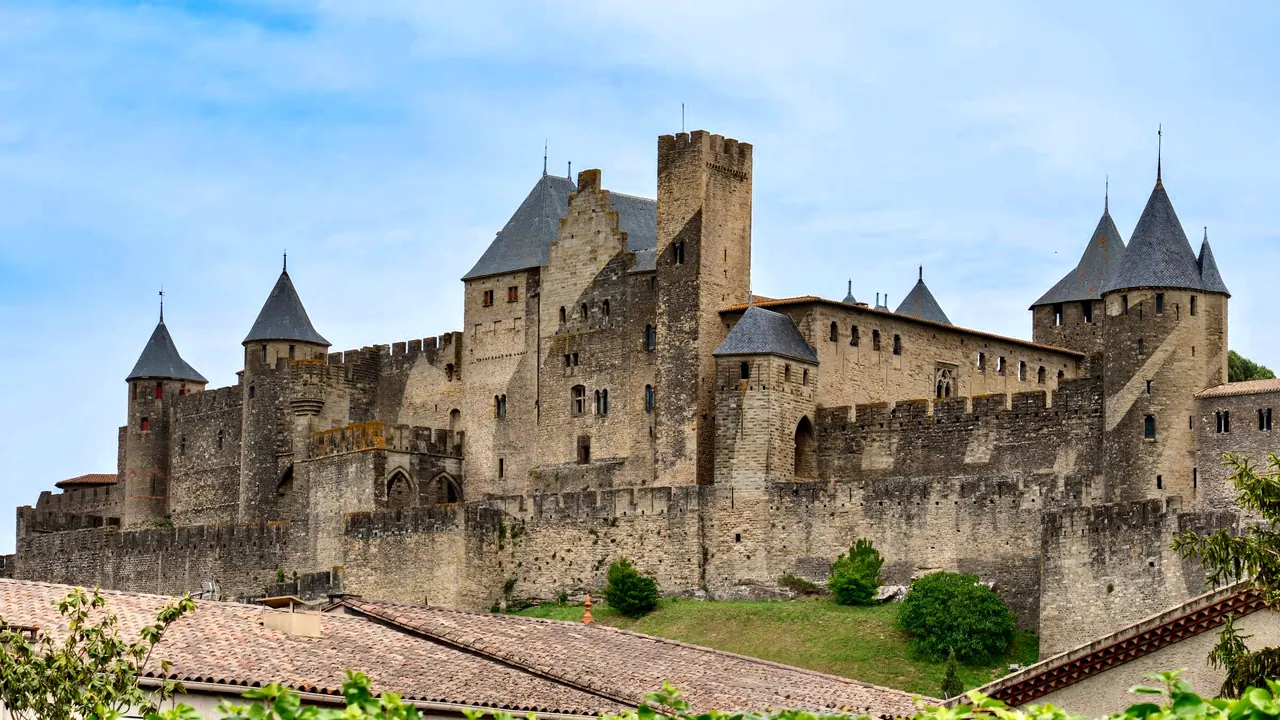
Carcassonne suits a trip built around one great sight. The walled Cité on its hill is the main event, and the castle, the jousting in summer and the lake beach nearby make it the easier of the two for children. Add the Cathar castles on their ridges and the Corbières vineyards, and it works well for a few days of history and wine at a gentle, provincial pace.
Choose Girona for
- nature and the outdoors
- food and drink
- beaches
Girona is the better choice for almost everything else. It eats better, its countryside is greener and better for cycling and walking, the Costa Brava coves are closer, and Barcelona is a short train ride away for a day out. Its evenings are livelier too, though still not wild. If you want a small medieval city as a base for food, coast and the outdoors, choose Girona.
Scoreboard
Twelve categories on one fixed scale from 0 to 100. The shaded stretch is the gap between the two.
Your match
Pick a travel style or drag the sliders, and both match scores follow your weighting.
Wins on families and prices with your weighting.
Wins on nature and the outdoors and food and drink with your weighting.
What matters to you?
Category by category
What the scores mean for a trip.
Beaches & swimming
Neither city is on the sea, but Girona is much closer to good swimming. Carcassonne's nearest option is the Lac de la Cavayère, a pleasant lifeguarded reservoir. The real beaches at Gruissan and Narbonne-Plage are an hour's drive away, and there they are long, sandy and often roughened by the tramontane.
From Girona the Costa Brava starts about 40 minutes away, and the choice is far wider. There are big sandy bays at Platja d'Aro, small pine-backed coves around Begur and some of the clearest water on the Spanish Mediterranean. It is still a day out rather than a beach base, but it is a much easier one.
Food & drink
Girona is the better place to eat. Its Catalan cooking ranges from pa amb tomàquet and mar i muntanya plates to tasting menus that have given the city an international reputation. Add xuixos from the pastry shops, the Mercat del Lleó and Empordà wines on every list.
Carcassonne offers fewer kinds of meal but one great dish, cassoulet. Its wine is a strength too, from Corbières and Minervois reds to the blanquette of Limoux. In both towns, avoid the tourist menus in the old quarter: eat in Carcassonne's Bastide around Place Carnot, and across the Onyar in Girona.
Culture & sights
The two are equally rewarding, but in different ways. Carcassonne is one huge monument: the double walls and towers of La Cité, heavily restored by Viollet-le-Duc, with the Château Comtal and the stained glass of Saint-Nazaire inside. You come mainly for the skyline and the ramparts walk.
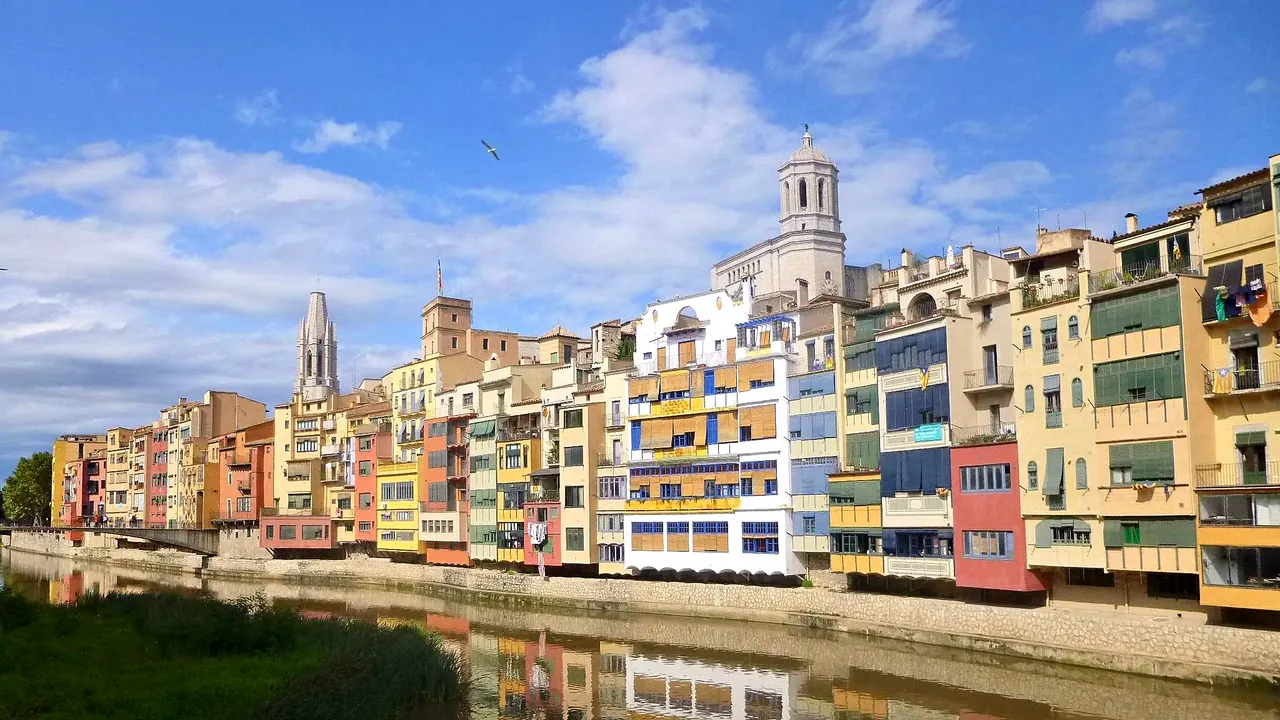
Girona's old town is a lived-in quarter rather than a fortress. There's the wide Gothic nave of the cathedral at the top of its Baroque stairs, the narrow alleys of the Jewish Call, the Arab Baths and the painted houses over the Onyar. In both cities the museums are small, and two days covers the sights.
Nightlife
What sets the two apart after dark is the clock. Carcassonne's evenings end early: the best of them is a stroll on the floodlit walls of the Cité once the day visitors have left, then a glass at a wine bar or on the café terraces around Place Carnot. Clubs and late nights barely exist, and anyone wanting one drives to Toulouse or Montpellier.
Girona keeps going longer because it runs on Spanish time, with dinner late and the terraces full afterwards. In term time students crowd the bars around Plaça de la Independència, and at weekends a few music bars and small clubs on the edge of the centre stay open into the small hours. For a proper big night, Girona's answer is the train to Barcelona.
Nature & outdoors
Girona is the stronger outdoor base, and it is famous among road cyclists. Quiet lanes, climbs and traffic-free greenways start at the edge of town. Within about an hour you can reach the volcanic beech woods of the Garrotxa, the coast-guard path above the Costa Brava coves and the bare headland of Cap de Creus.
Carcassonne's countryside is drier and rougher. It has the chestnut forests of the Montagne Noire, garrigue hills topped with Cathar ruins, the gorges of Galamus and rafting on the upper Aude. The flat, shaded towpath of the Canal du Midi is the easy option, but almost everything else needs a car.
Day trips
Both are very good bases, and Girona has a little more within easy reach. Barcelona is under 40 minutes by high-speed train. Figueres and the Dalí Theatre-Museum, Besalú's fortified bridge, Pals, Peratallada and the ruins of Empúries are all close.
Carcassonne's best trip is to the Cathar castles of Peyrepertuse and Quéribus on their limestone ridges. Lagrasse, Minerve and Narbonne add more, and Toulouse is an hour by train. Collioure is reachable from both, which shows how close the two regions are.
Good for families
Carcassonne is the better choice with children, because its main sight is a castle. There are drawbridges and ramparts, and jousting and falconry shows in summer. The Lac de la Cavayère adds a lifeguarded beach and a water park.
Girona is safe, and children are welcome in its squares late into the evening. Walking the walls is fun for them, but there is no zoo or theme park and the museums are for adults. Families tend to spend their days on the Costa Brava instead. Both old towns are steep and cobbled, so a pushchair is hard work.
Getting around
Girona is easier to get around. The river, the old town and the modern centre are all within a short walk of each other, though the Barri Vell is full of stairs. Fast trains from Girona reach Barcelona, Figueres and Perpignan, and a bike works well for short trips.
Carcassonne is in two parts. The Bastide is flat and next to the station, but the Cité is a walk across the Pont Vieux and up a steady climb. Trains serve Toulouse and Narbonne well, but the castles and wine villages are poorly connected, so a hire car is more necessary here than in Girona.
Shopping & style
Neither town is worth the trip for shopping, but Girona gives you more to browse. Carcassonne's shops fall into two camps. In the Cité the lanes live off the castle, selling toy weapons and costume armour, while the Bastide's high street is mostly French chains with a few independents, much like any provincial town. What's worth carrying home from Carcassonne is what you can eat and drink: local reds, a bottle of Limoux fizz, cassoulet in a tin.
Girona's old town has the character Carcassonne's lacks. Owner-run clothes and book shops take the place of the souvenir trade, and the covered market is a good place to stock up on Empordà cheese and charcuterie. Visiting riders will also find plenty of bike shops. Even so, the choice is small, and for luxury labels or a department store you need a day in Barcelona.
Affordability
The two cost about the same, and both are cheaper than their countries' big cities. In each, set lunches are good value and walking keeps transport costs down.
They differ in where the cost comes from. In Carcassonne, hotels and restaurants inside the Cité walls charge a premium, and July and August are expensive. In Girona, rooms in the old town are scarce and expensive in summer, during the spring flower festival and in the cycling season. In both, car hire is the usual extra cost.
Live music & performing arts
Girona has more on its stages through the year. The Auditori hosts touring orchestras and jazz, and Temporada Alta brings international theatre and dance in autumn, though many plays are in Catalan.
Carcassonne's season is mostly July. That is when the Festival de Carcassonne puts headline acts in the open-air theatre inside the Cité, a memorable setting, and Bastille Day ends with fireworks over the walls. For opera or a major orchestra, you go to Toulouse from Carcassonne, and to Barcelona from Girona.
Wellness & relaxation
Girona is the better choice for a proper spa day. Caldes de Malavella, a thermal-spring town with Roman roots and spa hotels, is about 20 minutes south. Carcassonne's spa villages, Rennes-les-Bains and Alet-les-Bains, are an hour away up the Aude valley and are modest local places.
Otherwise both offer the same slow pleasures: long lunches and quiet walks, along the Onyar in Girona and on the shaded Canal du Midi in Carcassonne. In Carcassonne that calm mostly disappears in high summer, when the Cité is crowded.
When should you go?
Pick your month. The climate figures are measured averages, not a forecast.
Carcassonne in July
Girona in July
Daytime high, °C
Rainfall in the month, mm
Where the figures come from
Carcassonne has no rain gauge within 25 km of the centre, so its rainfall comes from a gridded climate dataset read at the city rather than from a gauge further away.
Carcassonne's sunshine is measured 68 km from the centre, at Perpignan.
Temperature and rainfall are climate normals, averaged over the years shown. Carcassonne: 1999-2020 (sunshine 1991-2020, rainfall 1991-2020) normals, Carcassonne (2.8 km from centre). Girona: 1991-2020 normals, Gerona / Costa Brava (10.1 km from centre).
Both cities follow the same pattern: hot, dry summers and mild, damp autumns. Girona runs a few degrees warmer all year. In July and August Carcassonne reaches about 29°C and Girona about 31°C, which is hot work on the ramparts or the steep stairs of the Barri Vell, and you'll need early mornings and long lunches. Carcassonne's July is especially dry. Girona's sea is warmest in August at around 24°C, so late June to September is the window for the Costa Brava. Both cities get plenty of sunshine through the summer.
For walking and sightseeing, May, June and September are the best months in both. October is the wettest month in each, with Girona the damper at around 86mm. In winter Carcassonne is clearly cooler, with highs near 10°C, while Girona stays milder and is the more comfortable choice for a cool-season city stroll.
Which traveller are you?
On an outdoors trip, Girona wins clearly. Cyclists ride from the town straight out to Rocacorba and Els Àngels, and the greenways and the Garrotxa volcanoes are close by. Within reach are the Costa Brava cliff paths and, in winter, the Pyrenean ski slopes.
For a food and nightlife trip, Girona is the stronger pick. It has serious tasting-menu kitchens as well as Catalan taverns, and vermouth before lunch is a weekend habit. Students and the late Spanish rhythm keep its terraces going longer than Carcassonne's quiet squares.
On a family trip with children, Carcassonne has the edge. The Cité looks like a storybook castle, with jousting and falconry in summer, and the Lac de la Cavayère has a supervised beach and a water park. There is also an animal park, while Girona has little built for children.
Before you go
| Measure | Carcassonne | Girona |
|---|---|---|
| Official language | French | Spanish |
| Currency | Euro (EUR) | Euro (EUR) |
| Sockets | CE230 V, 50 Hz | CF230 V, 50 Hz |
| Driving side | Right | Right |
| Time zone | UTC+1, UTC+2 in summer | UTC+1, UTC+2 in summer |
| Emergency number | 112 | 112 |
| Elevation | 81 m | 70 m |
| Main airport | Carcassonne Salvaza Airport (CCF)4 km from centre10 non-stop destinations | Girona-Costa Brava Airport (GRO)10 km from centre18 non-stop destinations |
| Public holidays this year | 11 days | 14 days |
By the numbers
| Measure | Carcassonne | Girona |
|---|---|---|
| City population | 46,080 | 108,666 |
| People per km² | 708 | 2,779 |
| Museums within 10 km | 6 | 9 |
| UNESCO World Heritage sites within 50 km | 2 | 0 |
| Swim season, months above 21 °C | - | 3 months |
Where else could you go?
Every comparison below shares a destination with this one, so you can follow Carcassonne or Girona somewhere new.
- Toulousevs Carcassonne
- Barcelonavs Girona
- Montpelliervs Carcassonne
- Montpelliervs Girona
- Barcelonavs Carcassonne
- Toulousevs Girona