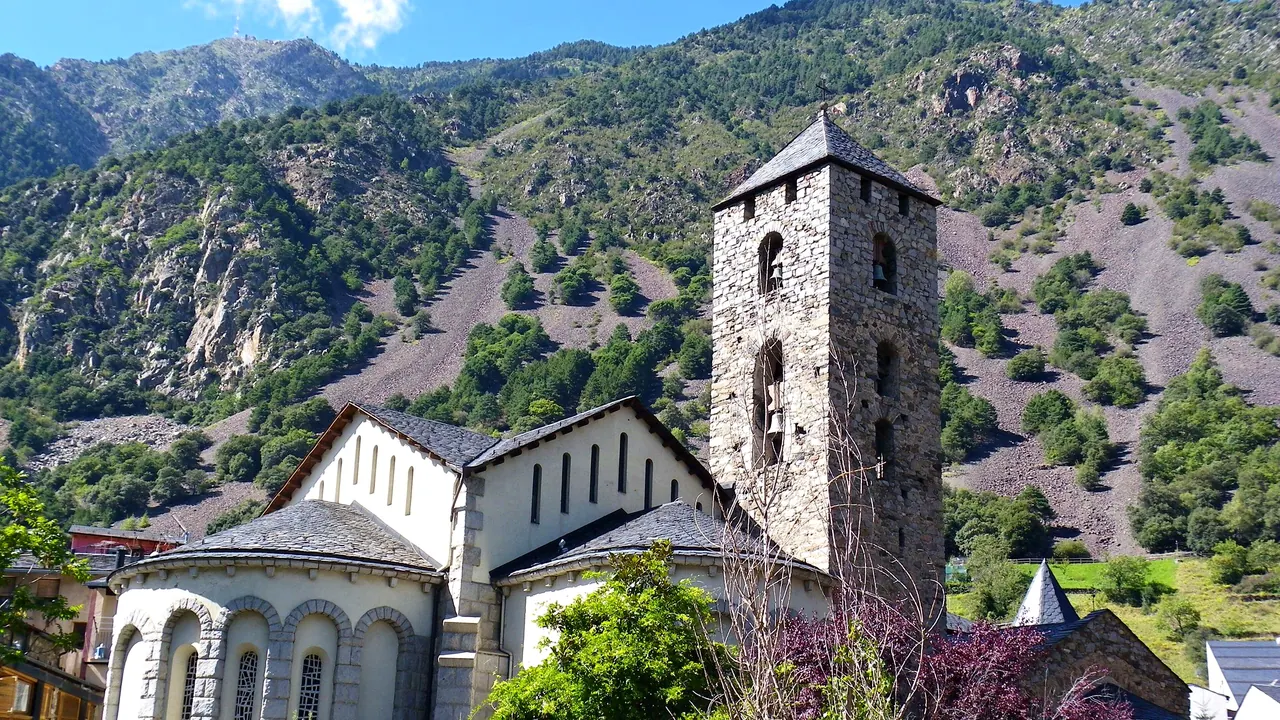
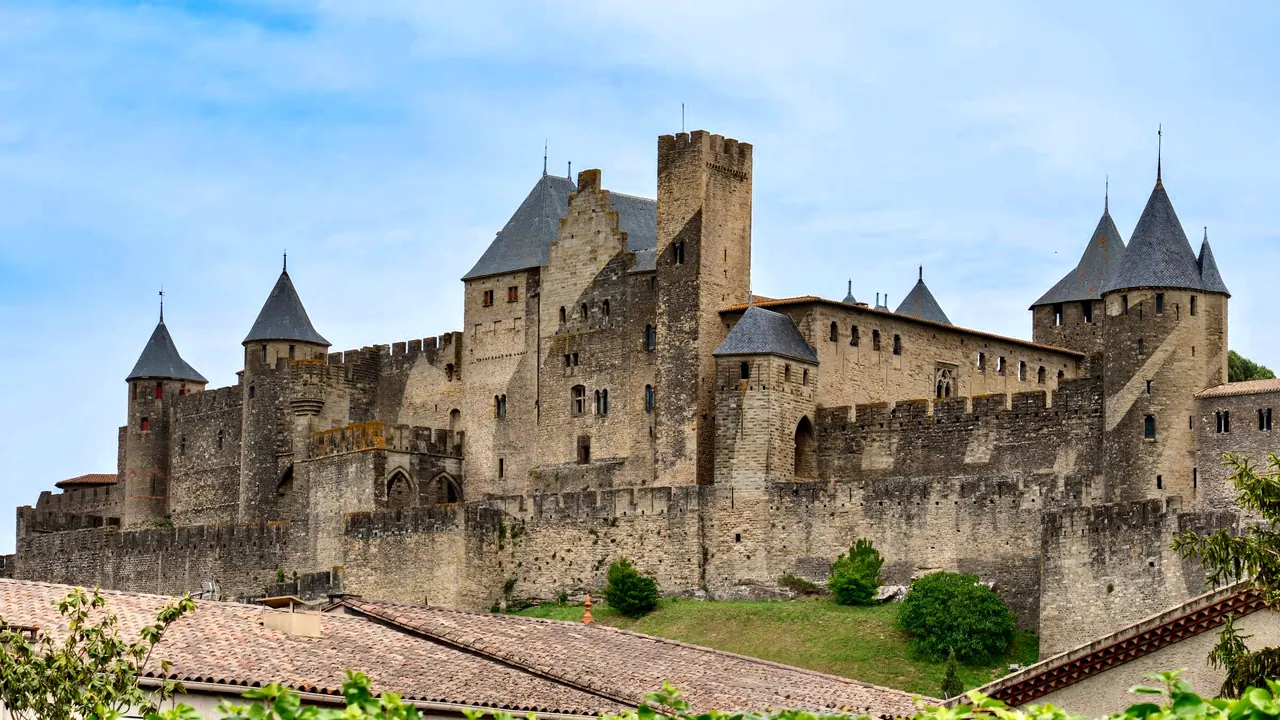
Photos: Andorra la Vella by KRLS, CC BY-SA 3.0, cropped; Carcassonne by Susanne Jutzeler, suju-foto, Pexels License.
Andorra la Vella or Carcassonne?
Our verdict in twelve categories, each scored against the same fixed benchmark cities, and the climate month by month, so you can choose for your trip.
Choose Andorra la Vella for
- shopping
- nature and the outdoors
- wellness
Andorra la Vella is the choice for travellers who want the mountains on the doorstep. Ski areas are a short ride away in winter, and in summer marked trails lead to glacial lakes and high refuges. A long low-tax shopping strip and a large thermal complex fill the gaps between days outdoors. It suits active trips, gear-buying weekends and anyone happy to spend evenings in a spa pool rather than a museum.
Choose Carcassonne for
- day trips
- culture and sights
- beaches
Carcassonne rewards the traveller who comes for history and a car full of excursions. The walled Cité and the Bastide below fill a couple of days, and then the Cathar castles, wine villages and the cities of Toulouse and Narbonne take over. It is also the warmer and sunnier of the two, with a lake to swim in and the Mediterranean within an hour's drive, so summer sightseeing can end at the water.
Scoreboard
Twelve categories on one fixed scale from 0 to 100. The shaded stretch is the gap between the two.
Your match
Pick a travel style or drag the sliders, and both match scores follow your weighting.
Too close to call, 1 point apart
Wins on shopping and nature and the outdoors with your weighting.
Wins on day trips and culture and sights with your weighting.
What matters to you?
Category by category
What the scores mean for a trip.
Beaches & swimming
Neither is a beach destination, but Carcassonne at least gives you somewhere to swim. Andorra la Vella is landlocked in the Pyrenees, about three hours from the sea, and its mountain lakes are too cold to bathe in, so a swim means a pool or the thermal lagoons.
Carcassonne has the supervised sandy shores of the Lac de la Cavayère a short drive away, warm enough in high summer, and the long, shallow Mediterranean beaches of Gruissan and Narbonne-Plage within an hour by car.
Food & drink
Neither is a place to travel for the food, and both eat best away from the main tourist strip. In Andorra la Vella that means the bordas in the side valleys, stone barns where lamb and sausages are grilled over wood fires, with escudella and trinxat as hearty mountain fare.
Carcassonne's cooking is southern French and built around cassoulet, and its real strength is the glass: Corbières, Minervois and Limoux blanquette from vineyards on the doorstep. Skip the set menus inside the Cité and eat in the Bastide, around the Place Carnot market.
Culture & sights
Andorra la Vella's heritage takes about a day. Spend the morning on the Casa de la Vall, the old parliament house, and the stone lanes of the Barri Antic, then take a short ride out to the Romanesque churches in the valleys, such as Santa Coloma with its round bell tower. Beyond that, the town is mostly shops and apartment blocks.
Carcassonne is far ahead here. La Cité, with its fifty-two towers, the ramparts of the Château Comtal and the stained glass of Saint-Nazaire, is one of Europe's great medieval sights. Below it, the arcaded Bastide and the Canal du Midi give you a second day of sightseeing.
Nightlife
Both go quiet after dinner, and neither has much in the way of clubs. Andorra la Vella has pubs and late bars that fill on winter weekends, though the real après-ski happens up in the resort villages. Carcassonne's appeal is gentler: a floodlit walk on the walls, then a glass on the café terraces of Place Carnot, with Toulouse the nearest proper night out.
Nature & outdoors
Andorra la Vella is surrounded by high mountains, with peaks near 3,000m, lift-linked ski areas close by and the glacial Madriu-Perafita-Claror valley starting at the edge of town. From spring to autumn the same slopes carry trails to lakes and refuges, and the passes draw road cyclists.
Carcassonne's landscape is softer and more varied: beech forest in the Montagne Noire, garrigue and Cathar ridges in the Corbières, rafting in the upper Aude gorges and the flat, shaded Canal du Midi towpath. It is good walking country, but it needs a car and lacks the alpine scale.
Day trips
Carcassonne is the far better base for excursions. Cathar castles such as Peyrepertuse, Quéribus and Lastours, the villages of Lagrasse and Minerve, and the cities of Toulouse, Narbonne and Albi give you a week of varied days out, with wine estates in between.
From Andorra la Vella the list is shorter: La Seu d'Urgell and its cathedral half an hour south, Puigcerdà and Llívia in the Cerdanya, and Ax-les-Thermes and Foix over the pass into France.
Good for families
Both suit families about equally, but for different children. Andorra la Vella works for active ones: ski schools and beginner slopes in winter, toboggan runs, rope courses and a wildlife park in summer, and Caldea's family pools when it rains.
Carcassonne's draw is the storybook castle itself, with jousting and falconry in summer, plus the lake's beach and water park. Its weak point is the steep, crowded Cité in the July heat, while Andorra's is a traffic-heavy centre that bores children who are not out on the mountain.
Getting around
Andorra la Vella edges it on the ground. Its small centre runs straight into Escaldes-Engordany along the river, and national buses and winter ski buses reach the other valleys, though there is no train and arriving means a long drive from Spanish or French airports.
Carcassonne has a rail link, with trains to Toulouse and Narbonne, and a flat, walkable Bastide, but the climb to the Cité takes about twenty-five minutes on foot and the castles and villages beyond barely see public transport, so a car becomes almost essential.
Shopping & style
Andorra la Vella is built for shopping in a way Carcassonne is not. Low taxes line its main avenues with department stores and shops selling ski and outdoor gear, electronics, watches and perfume, though there is little local craft or character.
Carcassonne's Cité lanes are given over to plastic swords and Cathar trinkets, and the Bastide has an ordinary provincial high street. The things worth buying are wine, blanquette and tinned cassoulet.
Affordability
Costs are much the same in both, but they bite in different places. In Andorra la Vella the expense is the mountain itself: ski passes, equipment hire and peak winter hotels, offset by cheap spirits and good-value rooms outside ski weeks.
In Carcassonne the premium is for sleeping and eating inside the Cité walls, and July and August push prices up. Rooms in the Bastide and local wine stay reasonable, while car hire is the cost most visitors add.
Live music & performing arts
Carcassonne has the stronger offer, almost entirely thanks to July. The Festival de Carcassonne puts headline concerts, theatre and dance on the open-air stage inside the Cité, and Bastille Day brings fireworks over the walls.
Andorra la Vella's summer brings a jazz festival in Escaldes-Engordany and classical concerts in Ordino, but outside that season there is little on in either town.
Wellness & relaxation
Andorra la Vella has a clear advantage in Caldea, the thermal complex fed by Escaldes-Engordany's hot springs, with lagoons, saunas and an adults-only section that makes a natural end to a ski or hiking day. The town itself is busy, though, and real quiet lies in the side-valley villages.
Carcassonne has only a few hotel spas and the modest old spa villages of the upper Aude. Its calmer side is a matter of pace: long lunches, canal walks and the walls at dusk, best outside high summer.
When should you go?
Pick your month. The climate figures are measured averages, not a forecast.
Andorra la Vella in July
Carcassonne in July
Daytime high, °C
Rainfall in the month, mm
Where the figures come from
Andorra la Vella has no weather station within reach, so its figures come from a gridded climate model rather than a measured record, and read a broad area rather than the city itself.
Carcassonne has no rain gauge within 25 km of the centre, so its rainfall comes from a gridded climate dataset read at the city rather than from a gauge further away.
Carcassonne's sunshine is measured 68 km from the centre, at Perpignan.
Temperature and rainfall are climate normals, averaged over the years shown. Andorra la Vella: 1991-2020 normals, TerraClimate 4 km grid at the town, no weather station within 90 km. Carcassonne: 1999-2020 (sunshine 1991-2020, rainfall 1991-2020) normals, Carcassonne (2.8 km from centre).
Andorra la Vella sits high and stays cool. Winter days hover just above freezing, which is ski weather rather than strolling weather, and even July and August only reach about 23°C, comfortable for hiking but never hot. Rain is spread through the year, heaviest in late spring and again in autumn, peaking around 115mm in November, so June to September is the best window for trails, with the caveat of afternoon storms.
Carcassonne is a different climate altogether. Spring and autumn are mild and ideal for walking the ramparts and the Corbières, while July and August climb to about 29°C, the driest and sunniest months with only around 22mm of rain and close to 300 hours of sunshine. That heat suits the lake and a day on the coast but makes the steep Cité tiring at midday. Winters are gentle, around 10°C, but grey and quieter.
Which traveller are you?
For a culture and arts trip, Carcassonne is the clear pick. Its double-walled Cité, the Basilica of Saint-Nazaire and the arcaded Bastide outweigh Andorra's small old quarter, and a July festival inside the walls adds evenings of theatre and music.
On an outdoors trip, Andorra la Vella wins. The UNESCO-listed Madriu valley begins at the edge of town, the ski areas are a short bus ride away, and summer opens up lakes, refuges and long Pyrenean road climbs for hikers and cyclists.
On a shopping trip, Andorra la Vella is the place. Low taxes fill its long avenues with ski gear, electronics, perfume and spirits, while Carcassonne offers little beyond Cité souvenirs, a modest high street and the wine and cassoulet worth carrying home.
Before you go
| Measure | Andorra la Vella | Carcassonne |
|---|---|---|
| Official language | Catalan | French |
| Currency | Euro (EUR) | Euro (EUR) |
| Sockets | CF220 V, 50 Hz | CE230 V, 50 Hz |
| Driving side | Right | Right |
| Time zone | UTC+1, UTC+2 in summer | UTC+1, UTC+2 in summer |
| Emergency number | 112 or 118 | 112 |
| Elevation | 1,022 m | 81 m |
| Main airport | Josep Tarradellas Barcelona-El Prat Airport (BCN)142 km from centre235 non-stop destinations | Carcassonne Salvaza Airport (CCF)4 km from centre10 non-stop destinations |
| Public holidays this year | 14 days | 11 days |
By the numbers
| Measure | Andorra la Vella | Carcassonne |
|---|---|---|
| City population | 24,042 | 46,080 |
| People per km² | 801 | 708 |
| Museums within 10 km | 13 | 6 |
| UNESCO World Heritage sites within 50 km | 4 | 2 |
Where else could you go?
Every comparison below shares a destination with this one, so you can follow Andorra la Vella or Carcassonne somewhere new.
- Toulousevs Carcassonne
- Gironavs Andorra la Vella
- Toulousevs Andorra la Vella
- Montpelliervs Carcassonne
- Barcelonavs Andorra la Vella
- Gironavs Carcassonne