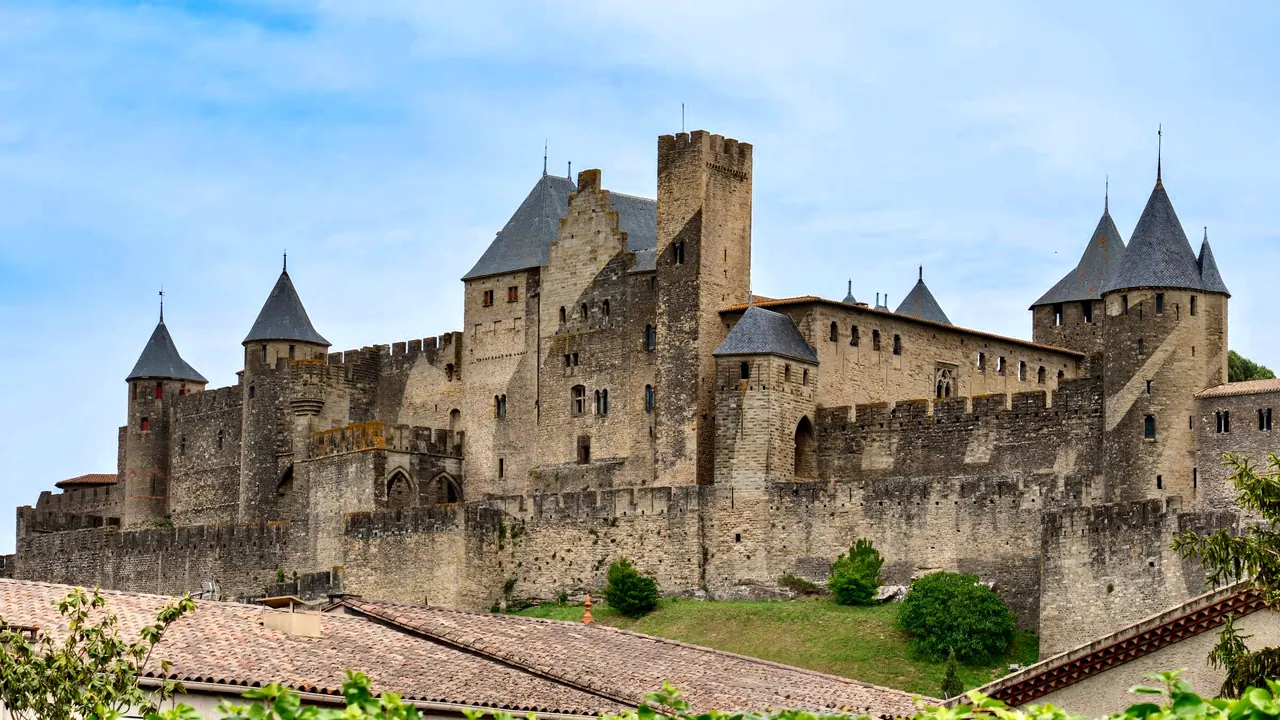
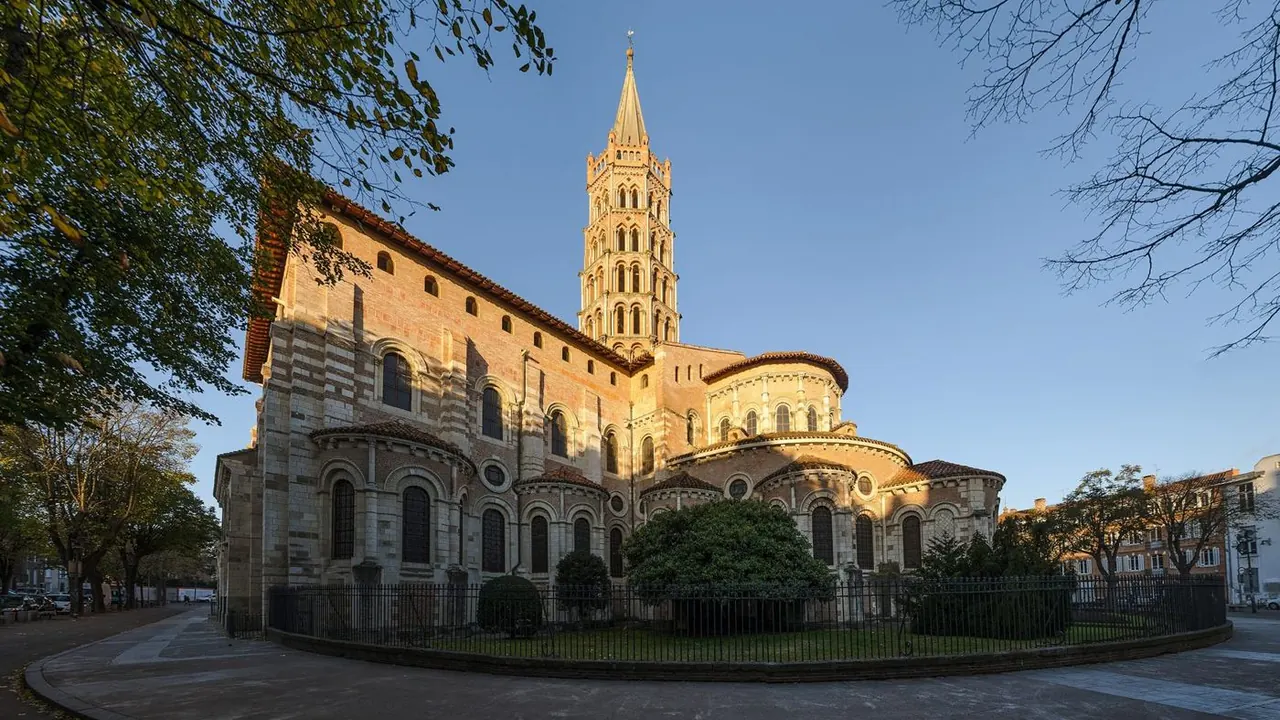
Photos: Carcassonne by Susanne Jutzeler, suju-foto, Pexels License; Toulouse by ZbebVial, CC BY-SA 3.0, cropped.
Carcassonne or Toulouse?
Our verdict in twelve categories, each scored against the same fixed benchmark cities, and the climate month by month, so you can choose for your trip.
Choose Carcassonne for
- beaches
- prices
- wellness
Carcassonne suits a slower trip built around one extraordinary sight and the country around it. The walled Cité, the Canal du Midi and a ring of Cathar castles, wine villages and gorges make it a strong base for travellers with a car. It also works for those who like quiet evenings, lower costs and a lake or the Mediterranean within reach.
Choose Toulouse for
- nightlife
- live music and the arts
- shopping
Choose Toulouse if you want a real city around you once the sightseeing is done. It eats better, stays out later, and has an opera house and a fine orchestra. Its metro and walkable brick centre make a car optional. Families get the space centre and the aircraft museum, and Carcassonne itself is an easy day trip by train.
Scoreboard
Twelve categories on one fixed scale from 0 to 100. The shaded stretch is the gap between the two.
Your match
Pick a travel style or drag the sliders, and both match scores follow your weighting.
Wins on beaches and prices with your weighting.
Wins on nightlife and live music and the arts with your weighting.
What matters to you?
Category by category
What the scores mean for a trip.
Beaches & swimming
Neither is a beach destination, but Carcassonne is closer to the water in both senses. The Lac de la Cavayère, with sandy shores and lifeguards, is a short drive from the Cité. The long, shallow beaches of Gruissan and Narbonne-Plage are about an hour away, an easy day out.
From Toulouse the same coast is roughly two hours each way, so the sea becomes an expedition rather than an afternoon. Swimming in the city means the leisure lakes at Sesquières and La Ramée, or a hotel pool.
Food & drink
Both claim cassoulet, but Toulouse is where south-western cooking is at its fullest: duck confit, foie gras, garbure and violet sweets. Upstairs at the Victor Hugo market, small counters serve lunch above the stalls. The student quarters keep casual eating cheap, and Fronton, Gaillac and Armagnac come from nearby.
Carcassonne's range is narrower, and the set menus inside the Cité are uneven, so the better meals are down in the Bastide around Place Carnot. Its strength is the wine from the surrounding vineyards: Corbières, Minervois and the sparkling blanquette of Limoux, poured at fair prices almost everywhere.
Culture & sights
Both need about two days, but they offer different things. Carcassonne is about one spectacle: the double-walled Cité with its towers, the ramparts of the Château Comtal and the stained glass of Saint-Nazaire, plus the Bastide grid town below. Its museums are few and small.
Toulouse spreads its interest across a rose-brick city. There is Saint-Sernin and the palm-tree vault of the Jacobins, the Capitole's painted rooms, art in the Augustins cloister and the Hôtel d'Assézat, and modern work at Les Abattoirs. Its aerospace collections have no equivalent in Carcassonne.
Nightlife
Here the gap is wide. Toulouse's large student population fills the terraces of Place Saint-Pierre and spills onto the quays on warm nights. Wine and cocktail bars around Carmes and the Daurade suit an older crowd, and there are clubs for those who want to stay out, though the city is quieter in July and August.
Carcassonne's evenings are for a walk on the floodlit walls and a glass on a terrace near Place Carnot. Visitors who want a proper night out go to Toulouse.
Nature & outdoors
The countryside is equally good around both, but it lies differently. Carcassonne sits between the beech forests of the Montagne Noire and the garrigue and castle ridges of the Corbières. The Galamus and Aude gorges, with summer rafting, are to the south. All of it is close, but you need a car.
Toulouse's own surroundings are flat farmland, so its outdoors means travelling further. The high Pyrenees, with serious hiking and winter skiing, are under two hours away, and the Aveyron gorges offer canoeing. Long, flat canal towpath rides start in the city itself.
Day trips
Both are excellent bases, and each is a day trip from the other. From Carcassonne the trips are rural and medieval: Peyrepertuse and Quéribus on their ridges, Lastours, the abbey at Lagrasse, Minerve above its gorges and the Corbières wine estates. You need a car for most of them.
Toulouse's best trips are easier by train: the Cité at Carcassonne, and Albi with its cathedral and Toulouse-Lautrec museum. Moissac's cloister and Montauban are close too. With a car, Cordes-sur-Ciel and Foix are within reach.
Good for families
Carcassonne gives children one great day: a real castle with drawbridges and ramparts, and jousting and falconry in summer. The lake beach and water park make a good second day. But the Cité is steep, cobbled and crowded in high summer, and hard going with a pushchair.
Toulouse keeps children busy for longer. They can see the Ariane rocket and step inside the Mir module at the Cité de l'espace, walk through a Concorde at the aircraft museum and watch the mechanical creatures in Montaudran. Add the Jardin des Plantes and these fill several days, and the flat centre is easy with a pushchair.
Getting around
Toulouse is much easier without a car. Its flat centre inside the boulevards is pleasant on foot, and two automated metro lines, trams and buses reach the rest. Bike hire and the riverside paths help too. Only the aerospace sites and the lakes need a ride out.
Carcassonne's Bastide is compact and close to the station. Reaching the Cité, though, means a walk of about twenty-five minutes with a climb at the end, or a shuttle bus in season. The castles and vineyards around the town are poorly served by public transport, so most visitors hire a car.
Shopping & style
Toulouse has a proper shopping centre. There are chains and a department store on Rue d'Alsace-Lorraine, independent boutiques and antiques around Saint-Étienne and Rue des Filatiers, and a large Sunday market around Saint-Sernin. In Carcassonne, the shops in the Cité sell mostly plastic swords and souvenirs, and the Bastide has a modest high street.
In both cities, the best things to take home are food and drink: violet sweets and Armagnac from Toulouse, blanquette and Corbières wine from Carcassonne.
Affordability
Carcassonne is the cheaper stay. It has the prices of a small provincial town: moderately priced rooms in the Bastide and by the canal, cheap local wine and everything within walking distance. The exceptions are the higher cost of staying or eating inside the Cité walls, high-summer prices and the car hire most visitors need.
Toulouse is reasonable for a French city, with set lunches, cheap student-quarter food and inexpensive public transport. Still, evening meals and wine add up, and hotel prices rise during trade fairs.
Live music & performing arts
Toulouse has a year-round programme that Carcassonne cannot match. There is opera and ballet at the Théâtre du Capitole, and the Orchestre National du Capitole plays in the round Halle aux Grains. Add a national theatre stage, jazz bars and the Rio Loco festival on the riverside.
Carcassonne comes alive in July, when its festival puts headline concerts and theatre on the open-air stage inside the Cité walls. On Bastille Day, fireworks light up the ramparts. Outside summer there is little beyond the municipal theatre.
Wellness & relaxation
Neither city has a bathing tradition of its own, so rest here comes more from the slow pace than from spas. Carcassonne has a slight edge outside high summer. The small thermal villages of Rennes-les-Bains and Alet-les-Bains are within an hour, and the walls are quiet in the evening once the day visitors leave.
From Toulouse, the hot springs at Bagnères-de-Luchon or Ax-les-Thermes are up to two hours away and work best with an overnight stay. In the city itself, relaxing means long lunches and slow rides along the Garonne.
When should you go?
Pick your month. The climate figures are measured averages, not a forecast.
Carcassonne in July
Toulouse in July
Daytime high, °C
Rainfall in the month, mm
Where the figures come from
Carcassonne has no rain gauge within 25 km of the centre, so its rainfall comes from a gridded climate dataset read at the city rather than from a gauge further away.
Carcassonne's sunshine is measured 68 km from the centre, at Perpignan.
Temperature and rainfall are climate normals, averaged over the years shown. Carcassonne: 1999-2020 (sunshine 1991-2020, rainfall 1991-2020) normals, Carcassonne (2.8 km from centre). Toulouse: 1991-2020 normals, Toulouse / Blagnac (7 km from centre).
The two cities have almost the same temperatures through the year. Both reach about 29°C in July and August. That is warm enough for the lakes and the coast, but hard going on the Cité's ramparts or on a long midday walk through the brick centre. Late April to early June and September into October are the comfortable months for walking in either city. Winters are cool and damp, and neither city is at its best from December to February.
The difference is rain and sun. Carcassonne is sunnier all year and much drier in high summer, with only 22mm of rain in July against 40mm in Toulouse. Its wet season comes in autumn, and October is the wettest month at 76mm. In Toulouse the rain peaks in late spring, with 74mm in May. Toulouse is also noticeably greyer in winter.
Which traveller are you?
On a beach and sun trip, Carcassonne is the better of the two inland options. It gets more sunshine, has a lifeguarded lake beach a short drive away and the sands of Gruissan about an hour off. From Toulouse, the coast takes about two hours.
For a food and nightlife trip, Toulouse is the clear choice. You can start at the Victor Hugo market, eat duck and cassoulet in their home city, then move to the student terraces on Place Saint-Pierre and the later bars around Carmes. Carcassonne is quiet after dark.
On a trip on a tight budget, your money goes further in Carcassonne, as long as you sleep in the Bastide rather than inside the Cité. Rooms are moderately priced outside summer, local wine is cheap and the town is easy to walk. The main extra cost is car hire.
Before you go
| Measure | Carcassonne | Toulouse |
|---|---|---|
| Official language | French | French |
| Currency | Euro (EUR) | Euro (EUR) |
| Sockets | CE230 V, 50 Hz | CE230 V, 50 Hz |
| Driving side | Right | Right |
| Time zone | UTC+1, UTC+2 in summer | UTC+1, UTC+2 in summer |
| Emergency number | 112 | 112 |
| Elevation | 81 m | 115 m |
| Main airport | Carcassonne Salvaza Airport (CCF)4 km from centre10 non-stop destinations | Toulouse-Blagnac Airport (TLS)7 km from centre84 non-stop destinations |
| Public holidays this year | 11 days | 11 days |
By the numbers
| Measure | Carcassonne | Toulouse |
|---|---|---|
| City population | 46,080 | 514,819 |
| People per km² | 708 | 4,352 |
| Museums within 10 km | 6 | 24 |
| UNESCO World Heritage sites within 50 km | 2 | 2 |
Where else could you go?
Every comparison below shares a destination with this one, so you can follow Carcassonne or Toulouse somewhere new.
- Montpelliervs Carcassonne
- Gironavs Carcassonne
- Montpelliervs Toulouse
- Barcelonavs Carcassonne
- Bordeauxvs Toulouse
- Gironavs Toulouse