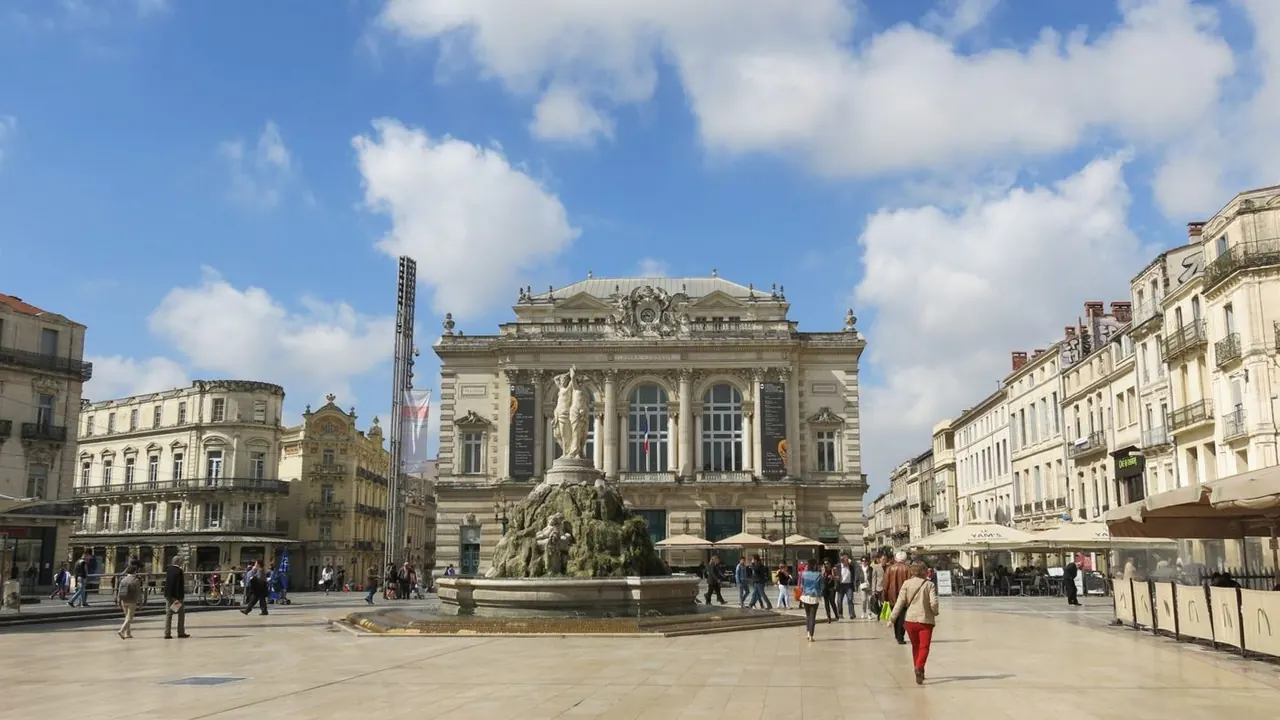
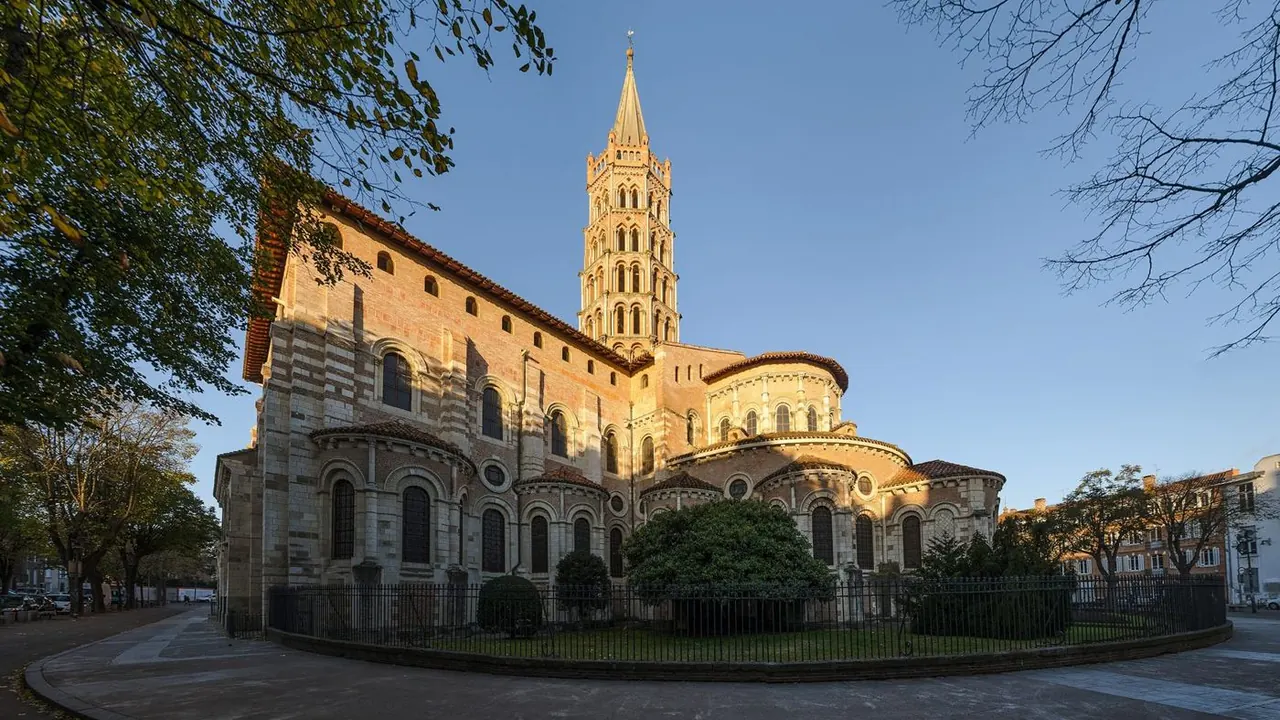
Photos: Montpellier by Peter, CC BY 2.0, cropped; Toulouse by ZbebVial, CC BY-SA 3.0, cropped.
Montpellier or Toulouse?
Our verdict in twelve categories, each scored against the same fixed benchmark cities, and the climate month by month, so you can choose for your trip.
Choose Montpellier for
- beaches
- wellness
- nature and the outdoors
Montpellier suits travellers who want the Mediterranean within reach of a city stay. Sandy beaches lie a tram and bus ride away, flamingo lagoons and the garrigue hills sit on either side, and Nîmes, Arles and Avignon make it an excellent base for Roman Provence. It is the better choice for a warm, sunny trip that mixes town, sea and excursions.
Choose Toulouse for
- culture and sights
- shopping
- food and drink
Toulouse is for those happy to leave the beach out. Its rose-brick centre, the great Romanesque basilica of Saint-Sernin and the aerospace museums give it more monumental sightseeing, and the cooking is hearty south-western duck and cassoulet. With the Pyrenees on the horizon it also works as a gateway to mountain walking and winter skiing.
Scoreboard
Twelve categories on one fixed scale from 0 to 100. The shaded stretch is the gap between the two.
Your match
Pick a travel style or drag the sliders, and both match scores follow your weighting.
Wins on beaches and wellness with your weighting.
Wins on culture and sights and shopping with your weighting.
What matters to you?
Category by category
What the scores mean for a trip.
Beaches & swimming
Montpellier is the only one of the two where the beach fits into a city stay. Palavas-les-Flots and Carnon are about 11km away, and from there a flat ribbon of fine sand runs east to the wild dunes of l'Espiguette, with shallow, easy water and Sète's lagoon-backed beaches to the west. It makes a few good beach days rather than a full beach vacation, and the nearer stretches get crowded in high summer.
Toulouse is firmly inland on the Garonne. The Mediterranean at Narbonne and Gruissan is a long day out, and in practice locals cool off at the supervised lakes of Sesquières and La Ramée or by a hotel pool.
Food & drink
Both cities eat well, but at different ends of the south. Montpellier faces the lagoon and the sea: oysters and mussels from Thau, Sète's spicy octopus tielle, brandade from Nîmes and the reds of Pic Saint-Loup, best seen at the Halles Castellane and the Arceaux market.
Toulouse is duck country, built around cassoulet, confit, foie gras and magret, washed down with Fronton reds and Armagnac, with the Victor Hugo market and its upstairs lunch counters as the centrepiece. Both lean on student-priced casual places and set lunches rather than top-tier dining.
Culture & sights
The two are well matched for sightseeing, but the character differs. Montpellier's appeal is the car-free Écusson with its hidden courtyards, the formal Peyrou terrace and aqueduct, the Musée Fabre's strong collection of European painting and Bofill's neoclassical Antigone district.
Toulouse has the grander monuments: Saint-Sernin, one of Europe's largest Romanesque churches, the palm-tree vault of the Jacobins and the painted rooms of the Capitole, all in the same rose-red brick. Its aircraft museums and the space centre on the outskirts add a strand of aviation and science to the churches and mansions.
Nightlife
Both are big student cities that go out more than their size would suggest, so the scale is much the same. In Montpellier the night centres on Place Jean-Jaurès and the Écusson squares, then moves by taxi to clubs towards Lattes and the coast, and in summer the beach towns take over.
Toulouse keeps its night in town, around the riverside terraces of Place Saint-Pierre, with wine and cocktail bars in Carmes for an older crowd and a solid electronic scene. It goes quieter in July and August, when the students leave.
Nature & outdoors
Montpellier has the richer outdoors close at hand. Flamingos and herons wade in the étangs just south of town, the Camargue is about an hour away, and to the north the garrigue climbs to Pic Saint-Loup and the deep Hérault gorges near Saint-Guilhem-le-Désert, with the Cirque de Navacelles beyond. The windy coast adds kitesurfing and windsurfing.
Toulouse sits on a gentle farming plain, so near the city it is mostly flat cycling along the Canal du Midi towpaths and the Garonne. Its trump card is the Pyrenees, with serious hiking and skiing, but they are a drive of up to two hours.
Day trips
Montpellier is the stronger base. Nîmes is about half an hour by train with its Roman arena and temple, the Pont du Gard is just beyond, and Arles and Avignon are each about an hour away, while Sète and walled Aigues-Mortes are close by. Carcassonne is reachable too, in about an hour and a half.
Toulouse has excellent outings of its own, with Carcassonne and the brick cathedral town of Albi each about an hour away, Moissac's Romanesque cloister and the Ingres museum at Montauban. The choice beyond those leans more heavily on a car.
Good for families
Both are easy with children, in different ways. Montpellier pairs the Zoo de Lunaret in its wooded park and the aquarium and planetarium at Odysseum with calm, warm beaches nearby, so a stay can split between sea and city.
Toulouse wins children over with space and flight: the Ariane rocket and Mir module at the Cité de l'espace, walking inside a Concorde at the aircraft museum, and the giant mechanical creatures at Montaudran. In both, high summer is very hot in town.
Getting around
Both have compact, walkable centres and good public transport. Montpellier's Écusson is small and largely car-free but sits on a low hill with slopes and uneven paving, and its colourful trams link the station, Antigone and Odysseum, with the beaches a slower tram and bus combination.
Toulouse's centre inside the boulevards is flat and easy on foot, and two automated metro lines plus trams cover the city. Its outlying sights such as the space centre need a bus. In both cases the hills, gorges and mountains are far simpler with a car.
Shopping & style
Neither city is a shopping destination, and neither has a luxury street. Montpellier offers small boutiques and wine shops in the Écusson lanes and the Polygone mall beside the Comédie; Toulouse has the chains and a department store on Rue d'Alsace-Lorraine and antiques and independent fashion around Saint-Étienne. The best souvenirs reflect the food: Languedoc wine and olive oil in Montpellier, violet sweets, Armagnac and jars of cassoulet in Toulouse, where the Sunday market around Saint-Sernin adds bric-a-brac.
Affordability
Costs are much alike: mid-range Western European, kept in check by students, set lunches and cheap transport, with restaurant dinners and wine by the bottle where the money goes. The pressure points differ. In Montpellier rooms in town and along the coast climb in July and August, while in Toulouse it is big trade fairs and aerospace events that push hotel rates up, and some municipal museums are free on certain days.
Live music & performing arts
Montpellier has a slight edge, mostly thanks to its summer. Contemporary dance is its specialism, with the Montpellier Danse festival and a national choreographic centre, and the Radio France festival brings many free classical and jazz concerts while the Printemps des Comédiens fills the Domaine d'O.
Toulouse is the place for orchestral music: the Orchestre National du Capitole plays in the round Halle aux Grains, the Théâtre du Capitole has its own opera and ballet company, and the Jacobins cloister hosts a piano festival in late summer.
Wellness & relaxation
Montpellier is the easier of the two for a restful stay. Balaruc-les-Bains, a long-established thermal town on the Thau lagoon, is about half an hour away and welcomes day visitors, and lazy beach days add to the unwinding.
Toulouse offers hotel spas, a few hammam-style day spas and its riverside and canal walks. Its real thermal water is up in the Pyrenees at Luchon or Ax-les-Thermes, up to two hours away, so it suits an overnight trip better than an afternoon.
When should you go?
Pick your month. The climate figures are measured averages, not a forecast.
Montpellier in July
Toulouse in July
Daytime high, °C
Rainfall in the month, mm
Temperature and rainfall are climate normals, averaged over the years shown. Montpellier: 1991-2020 normals, Montpellier (7.8 km from centre). Toulouse: 1991-2020 normals, Toulouse / Blagnac (7 km from centre).
Montpellier is the warmer and much sunnier of the two. Its summers are hot and very dry, with July around 30°C, and the sea is pleasant for swimming from late June to September, peaking near 22°C in August. Autumn is its wet season: September to November bring heavy downpours, with October the wettest at around 93mm. Late spring and early autumn suit walking the old town best, as the stone streets get very hot in high summer.
Toulouse runs a little cooler and greyer through the year, with winter days near 10°C and rain spread evenly rather than concentrated in autumn. Late spring is its dampest stretch, May bringing about 74mm, while summer is hot but less scorching than on the coast. May, June and September are the comfortable months for exploring on foot.
Which traveller are you?
On a beach and sun trip, Montpellier is the obvious choice. Fine sand from Palavas to l'Espiguette is a tram and bus ride away, the water shelves gently, and its summers are far sunnier. Toulouse offers lakes and a hotel pool instead.
On an outdoors trip, Montpellier puts more within easy reach: the climb up Pic Saint-Loup, canoeing in the Hérault gorges and kitesurfing on the windy coast. Toulouse's best ground, the Pyrenees, rewards serious hikers but means a long drive each way.
For a culture and arts trip, Toulouse edges ahead on monuments. Saint-Sernin, the Jacobins and the Capitole fill two full days, with the Augustins and Les Abattoirs for art. Montpellier answers with the Musée Fabre and the livelier summer festival stage.
Before you go
| Measure | Montpellier | Toulouse |
|---|---|---|
| Official language | French | French |
| Currency | Euro (EUR) | Euro (EUR) |
| Sockets | CE230 V, 50 Hz | CE230 V, 50 Hz |
| Driving side | Right | Right |
| Time zone | UTC+1, UTC+2 in summer | UTC+1, UTC+2 in summer |
| Emergency number | 112 | 112 |
| Elevation | 7 m | 115 m |
| Main airport | Montpellier-Méditerranée Airport (MPL)8 km from centre41 non-stop destinations | Toulouse-Blagnac Airport (TLS)7 km from centre84 non-stop destinations |
| Public holidays this year | 11 days | 11 days |
By the numbers
| Measure | Montpellier | Toulouse |
|---|---|---|
| City population | 310,240 | 514,819 |
| People per km² | 5,452 | 4,352 |
| Museums within 10 km | 14 | 24 |
| UNESCO World Heritage sites within 50 km | 2 | 2 |
| Swim season, months above 21 °C | 2 months | - |
Where else could you go?
Every comparison below shares a destination with this one, so you can follow Montpellier or Toulouse somewhere new.