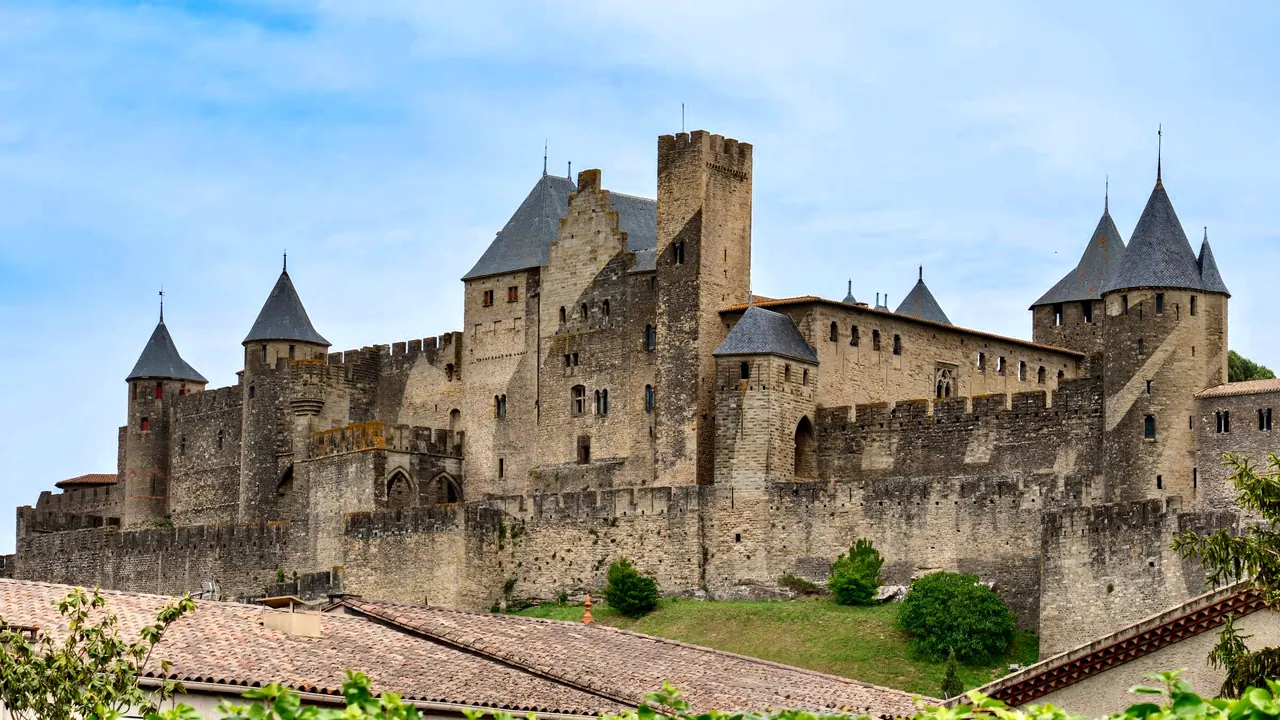
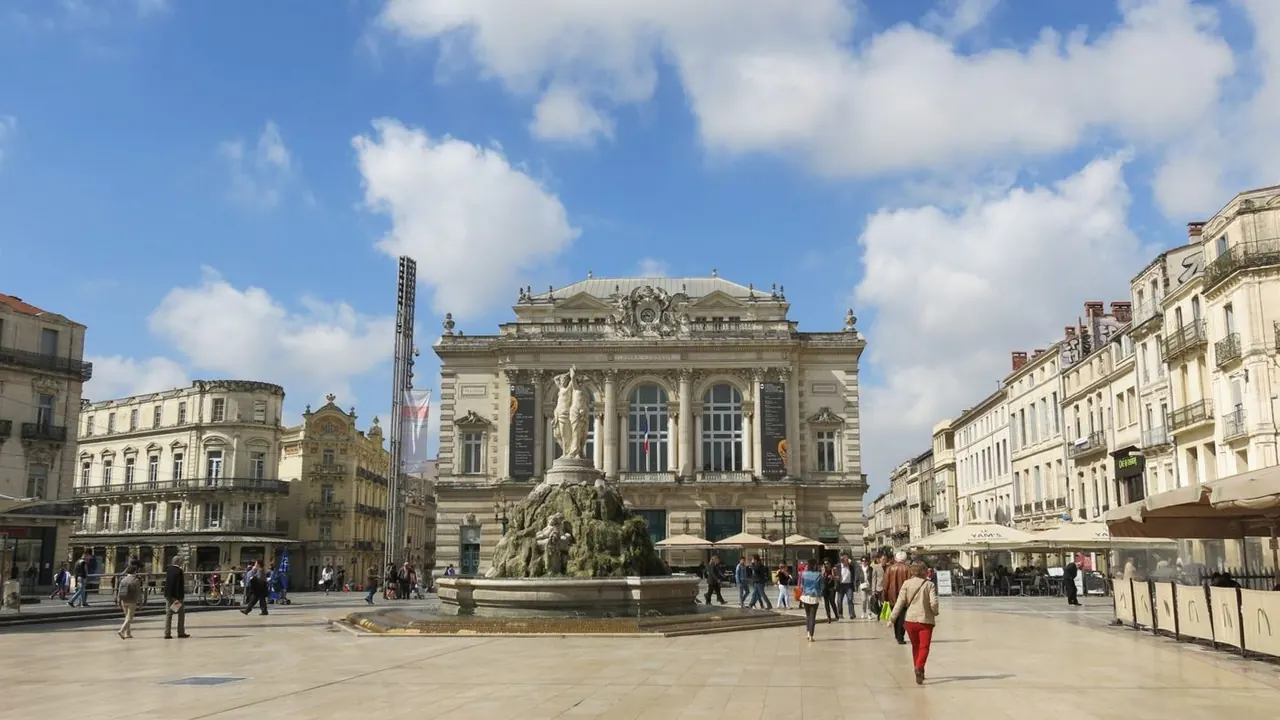
Photos: Carcassonne by Susanne Jutzeler, suju-foto, Pexels License; Montpellier by Peter, CC BY 2.0, cropped.
Carcassonne or Montpellier?
Our verdict in twelve categories, each scored against the same fixed benchmark cities, and the climate month by month, so you can choose for your trip.
Choose Carcassonne for
- prices
- culture and sights
Carcassonne suits a traveller who comes for one great sight and the country around it. The walled Cité, the Bastide below it and the Cathar castles on their ridges make a short, focused stay, best with a car and best outside high summer, when evenings on the floodlit walls are calm and the town is quiet. Choose it if you want medieval atmosphere and wine country and don't mind early nights.
Choose Montpellier for
- nightlife
- live music and the arts
- beaches
Montpellier is the better base for a longer or more varied stay. Trams and a car-free old town make it easy to get around, the sand begins a short ride away, the student crowd keeps the bars full, and there is a real stage for opera and dance. Its day trips reach Roman Nîmes, Avignon and the Camargue, and Carcassonne itself is within range by train.
Scoreboard
Twelve categories on one fixed scale from 0 to 100. The shaded stretch is the gap between the two.
Your match
Pick a travel style or drag the sliders, and both match scores follow your weighting.
Wins on prices and culture and sights with your weighting.
Wins on nightlife and live music and the arts with your weighting.
What matters to you?
Category by category
What the scores mean for a trip.
Beaches & swimming
Neither city is on the sea, but Montpellier lives much closer to it. Palavas-les-Flots and Carnon are about 11km away by tram and bus, and the sand runs on to the dunes of l'Espiguette and the lagoon-backed beaches of Sète. That makes an afternoon swim easy after a morning in town.
From Carcassonne the everyday option is the Lac de la Cavayère, a lifeguarded reservoir with sandy shores. The Mediterranean at Gruissan or Narbonne-Plage is an hour's drive, so a beach day there takes planning.
Food & drink
Both cities cook Languedoc food, but Montpellier has more range and more of the sea in it. Thau lagoon shellfish, octopus tielle and brandade sit alongside Pic Saint-Loup wines, and the Halles Laissac and the Arceaux market give you good places to graze. The student population also keeps casual places plentiful.
Carcassonne is narrower and heavier: cassoulet everywhere, with good Corbières, Minervois and Limoux blanquette to drink with it. The best meals are down in the Bastide around Place Carnot rather than among the set menus inside the Cité walls.
Culture & sights
These two are about level, but the experience differs. Carcassonne is a single overwhelming monument: the double-walled Cité with its fifty-two towers, Viollet-le-Duc's restored roofs, the basilica's Gothic glass and the Canal du Midi below. Away from the Cité, though, museums are few.
Montpellier spreads its interest across a whole city. There are the courtyards of the Écusson, the Peyrou terrace and aqueduct, the oldest botanical garden in France and Bofill's Antigone, and the Musée Fabre's paintings give it the art collection Carcassonne lacks.
Nightlife
This is one of the widest gaps between them. Montpellier's student crowd fills the bars around Place Jean-Jaurès on weeknights too, and later the night moves on to clubs towards Lattes and the coast.
Carcassonne goes quiet once the day visitors leave. A few wine bars, terraces around Place Carnot and a stroll on the lit walls are the evening, and anyone wanting a club tends to head to Montpellier or Toulouse.
Nature & outdoors
Montpellier has the more varied outdoors close at hand. Flamingos stand in the étangs just south of the city and the Camargue is about an hour away. To the north, Pic Saint-Loup offers a summit climb and the Hérault gorges are good for canoeing, while the windy coast adds kitesurfing.
Carcassonne's countryside is wilder and more remote. There is the Montagne Noire's beech forest, the Corbières garrigue with castle ruins on the ridges, and gorges and rafting towards the Pyrenees. Apart from the canal towpath, nearly all of it needs a car.
Day trips
Both are excellent bases, and Montpellier is the stronger one, mostly because its best trips go by train. Roman Nîmes is half an hour away, and Arles and Avignon about an hour, with Sète, Aigues-Mortes and Saint-Guilhem-le-Désert closer still.
Carcassonne's region is just as rewarding: Peyrepertuse and Quéribus on their limestone ridges, Lagrasse, Minerve and the wine estates. Apart from Toulouse and Narbonne, however, almost all of it needs a car.
Good for families
Montpellier is the easier city with children. The pedestrian old town and pushchair-friendly trams help, gently shelving beaches are close by, and the Lunaret zoo, aquarium and planetarium give you options for rainy or very hot afternoons.
Carcassonne has the bigger single thrill: a real castle with drawbridges, plus jousting and falconry in summer, and the lake with its water park. However, the steep cobbles are hard with a pushchair and the summer crowds are heavy.
Getting around
Both towns are walkable, but Montpellier also has a tram network linking the station, the Écusson, Antigone and Odysseum, plus bike-share and fast trains to Nîmes, Avignon and Arles. You only need a car for the hills and the Camargue.
In Carcassonne you get around on foot: the flat Bastide, then a twenty-five minute walk up to the Cité, with a seasonal shuttle. Beyond the town, public transport thins out quickly, and most visitors end up hiring a car.
Shopping & style
Montpellier offers ordinary city shopping, done pleasantly. There are boutiques, bookshops and delicatessens in the Écusson lanes, plus the Polygone and Odysseum for the big brands.
In Carcassonne, the Cité's lanes mostly sell plastic swords and Cathar trinkets, and the Bastide high street is modest. In both places the best things to take home are edible, cassoulet and blanquette in one and olive oil and Pic Saint-Loup wine in the other.
Affordability
The two cost much the same, with Carcassonne a touch cheaper, but the costs fall in different places. In Carcassonne, the Cité is the trap: hotels and restaurants inside the walls charge a premium, while the Bastide is reasonable. Car hire is the extra cost most visitors face there.
In Montpellier, student bars and market halls keep everyday spending low and the tram means you don't need a car, but restaurant dinners and summer rooms on the coast add up.
Live music & performing arts
Montpellier has a proper year-round stage. Opera, ballet and the national orchestra play at the Opéra Comédie and the Corum, and Montpellier Danse is one of Europe's respected contemporary dance festivals. In summer the Radio France festival and the Printemps des Comédiens add more.
Carcassonne's arts life is concentrated in July. The Festival de Carcassonne puts headline shows in the open-air theatre inside the walls, and there are Bastille Day fireworks over the ramparts. For the rest of the year it offers little.
Wellness & relaxation
Neither has a bathing tradition, and Montpellier is only a little better placed. Balaruc-les-Bains on the Thau lagoon is a real spa town half an hour away, but the city centre itself is lively rather than restful.
Carcassonne's small thermal villages in the upper Aude are modest and local. Its calm comes instead from quiet spring and autumn days, long lunches and the shaded Canal du Midi towpath.
When should you go?
Pick your month. The climate figures are measured averages, not a forecast.
Carcassonne in July
Montpellier in July
Daytime high, °C
Rainfall in the month, mm
Where the figures come from
Carcassonne has no rain gauge within 25 km of the centre, so its rainfall comes from a gridded climate dataset read at the city rather than from a gauge further away.
Carcassonne's sunshine is measured 68 km from the centre, at Perpignan.
Temperature and rainfall are climate normals, averaged over the years shown. Carcassonne: 1999-2020 (sunshine 1991-2020, rainfall 1991-2020) normals, Carcassonne (2.8 km from centre). Montpellier: 1991-2020 normals, Montpellier (7.8 km from centre).
The two share a Mediterranean pattern, but Montpellier runs a little warmer and much sunnier through the year. Both reach about 29°C in July and August, warm enough for the beach but heavy going on Carcassonne's ramparts or in Montpellier's stone lanes at midday. Summer is the driest season in both. Montpellier's sea is only warm enough for comfortable swimming from July to September, when it reaches about 22°C.
Spring and early autumn are the best times for walking in both cities, but the autumn rain differs. In Montpellier it arrives hard, with around 93mm in October and nearly as much in September, while Carcassonne's rain is spread more evenly, peaking at 76mm in October. Winters are cool in both, and slightly milder in Montpellier, at about 12°C in January.
Which traveller are you?
For a short city break, Carcassonne is the neater choice. The Cité, the Château Comtal ramparts and the Bastide Saint-Louis fill two unhurried days on foot, and the floodlit walls after dark give the stay its own atmosphere.
On a food and nightlife trip, Montpellier wins clearly. Oysters from the Thau lagoon, tielle from Sète and Pic Saint-Loup wines feed long evenings on Écusson terraces, and the student bars run late, where Carcassonne's evenings end early around Place Carnot.
For a beach and sun trip, Montpellier is the one to pick. Long sandy beaches at Palavas, Carnon and l'Espiguette are a tram and bus ride away, and the city gets more sunshine. From Carcassonne the beach means a lake or an hour's drive.
Before you go
| Measure | Carcassonne | Montpellier |
|---|---|---|
| Official language | French | French |
| Currency | Euro (EUR) | Euro (EUR) |
| Sockets | CE230 V, 50 Hz | CE230 V, 50 Hz |
| Driving side | Right | Right |
| Time zone | UTC+1, UTC+2 in summer | UTC+1, UTC+2 in summer |
| Emergency number | 112 | 112 |
| Elevation | 81 m | 7 m |
| Main airport | Carcassonne Salvaza Airport (CCF)4 km from centre10 non-stop destinations | Montpellier-Méditerranée Airport (MPL)8 km from centre40 non-stop destinations |
| Public holidays this year | 11 days | 11 days |
By the numbers
| Measure | Carcassonne | Montpellier |
|---|---|---|
| City population | 46,080 | 310,240 |
| People per km² | 708 | 5,452 |
| Museums within 10 km | 6 | 14 |
| UNESCO World Heritage sites within 50 km | 2 | 2 |
| Swim season, months above 21 °C | - | 2 months |
Where else could you go?
Every comparison below shares a destination with this one, so you can follow Carcassonne or Montpellier somewhere new.
- Avignonvs Montpellier
- Toulousevs Carcassonne
- Marseillevs Montpellier
- Aix-en-Provencevs Montpellier
- Gironavs Carcassonne
- Toulousevs Montpellier