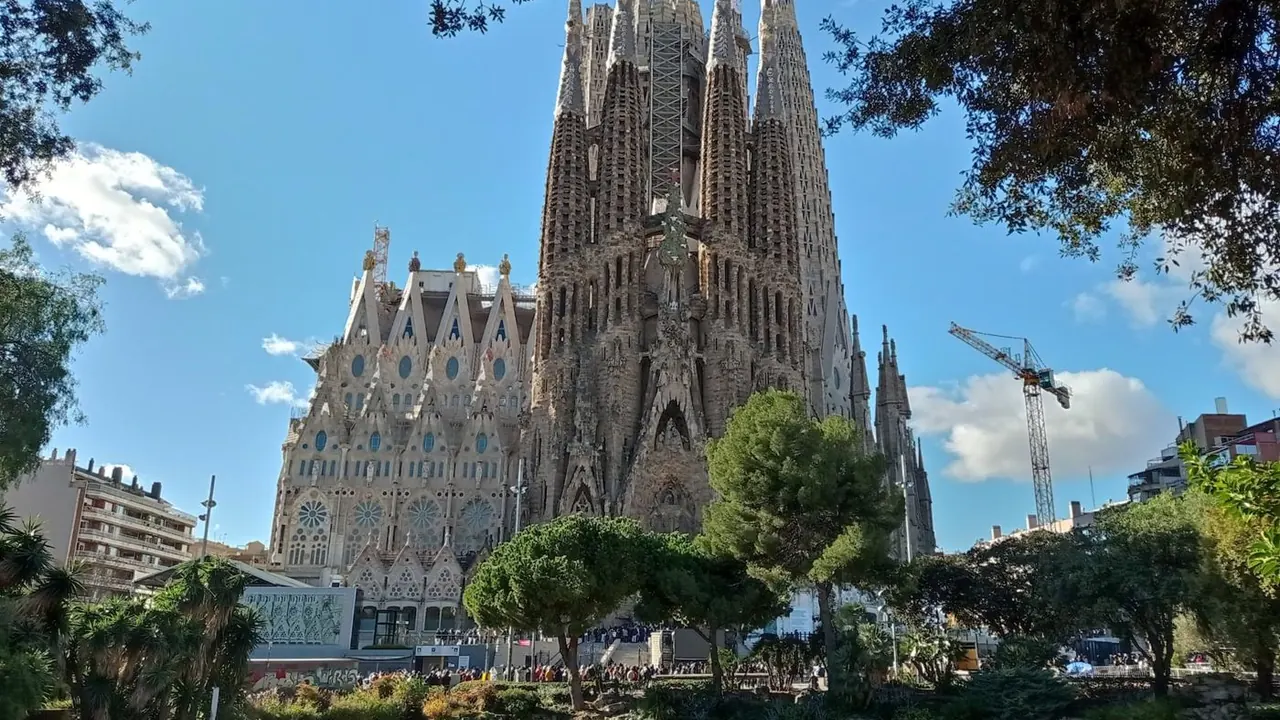
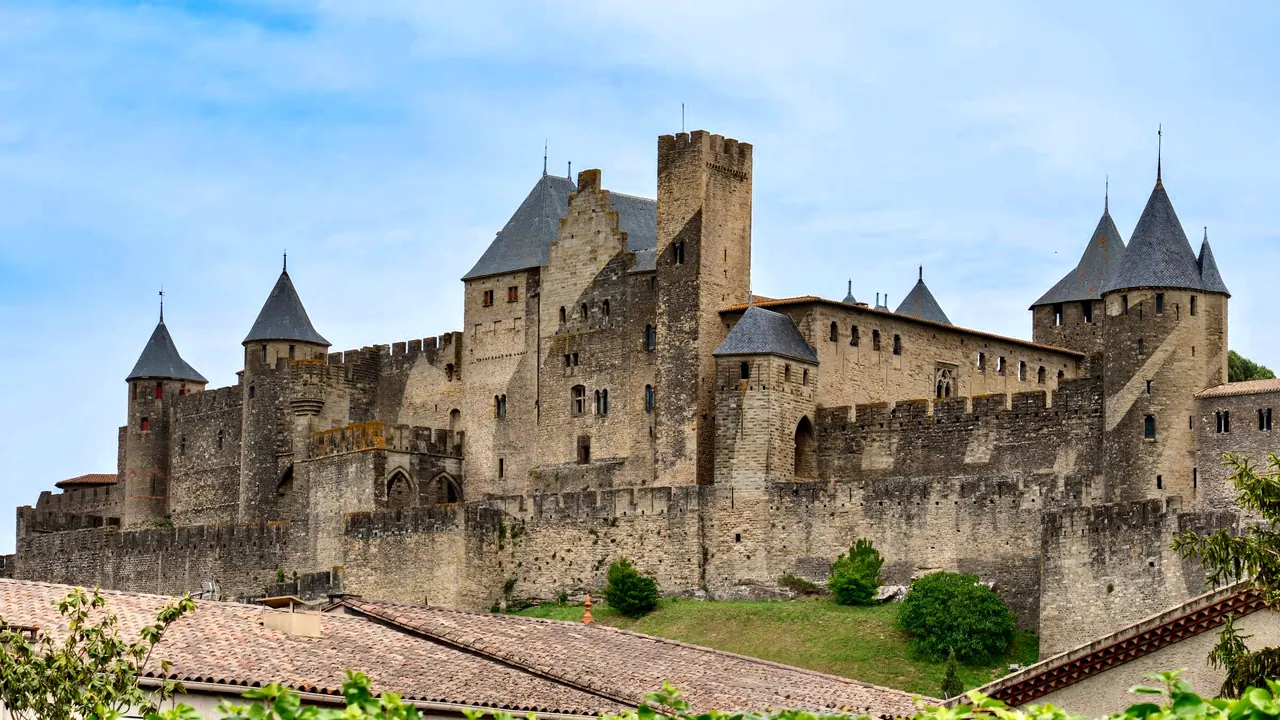
Photos: Barcelona by Canaan, CC BY-SA 4.0, cropped; Carcassonne by Susanne Jutzeler, suju-foto, Pexels License.
Barcelona or Carcassonne?
Our verdict in twelve categories, each scored against the same fixed benchmark cities, and the climate month by month, so you can choose for your trip.
Choose Barcelona for
- nightlife
- shopping
- live music and the arts
Barcelona suits travellers who want a lot from one trip: Gaudí and the Gothic Quarter by day, a swim off a city beach in the afternoon, dinner after nine and bars that run until dawn. It rewards a week, works without a car and has far more to eat, hear and buy, though it costs more and is rarely calm.
Choose Carcassonne for
- prices
Carcassonne is for a slower, smaller trip built around one extraordinary sight. The walled Cité, the Canal du Midi and a ring of Cathar castles and wine villages make a fine base for a couple of days of sightseeing followed by drives into the hills. Evenings are quiet, a car opens up most of the region, and it is easier on the budget.
Scoreboard
Twelve categories on one fixed scale from 0 to 100. The shaded stretch is the gap between the two.
Your match
Pick a travel style or drag the sliders, and both match scores follow your weighting.
Wins on nightlife and shopping with your weighting.
Wins on prices with your weighting.
What matters to you?
Category by category
What the scores mean for a trip.
Beaches & swimming
Barcelona has the sea at the end of the metro line. Sandy beaches run for kilometres from Barceloneta past Bogatell to Mar Bella, and the coastal trains reach roomier, cleaner sand at Castelldefels, Sitges or the Maresme. The city beaches are man-made and packed in high summer, but swimming is part of daily life.
Carcassonne is an inland town. Its swimming is the lifeguarded lake at the Cavayère, fine for an afternoon off from the walls, and the Mediterranean at Gruissan or Narbonne-Plage is about an hour's drive and often roughened by the tramontane.
Food & drink
Barcelona has a whole cuisine of its own to explore, from suquet and botifarra with white beans to calçots with romesco in late winter, plus late-morning vermouth, seafood rice by the sea and one of Europe's serious tasting-menu scenes. Skip the frozen paella on the Rambla and eat in Sant Antoni, Poble Sec, Gràcia or the Eixample, or at the counters of the Santa Caterina market.
Carcassonne eats well within a narrower range: cassoulet, solid southern French bistros, and Corbières, Minervois and Limoux wines at fair prices. The set menus inside the Cité are uneven, so for better meals go down to the Bastide. There you'll find the restaurants around Place Carnot, the square's morning market and, as a separate stop, the town's covered market hall.
Culture & sights
Barcelona offers a week of sights in several layers: Gaudí's Sagrada Família, Casa Batlló and Park Güell, the Roman and medieval Gothic Quarter, Santa Maria del Mar, and museums from the Picasso to the MNAC's Romanesque frescoes.
Carcassonne has one tremendous set piece rather than depth. La Cité's double walls and towers, the Château Comtal and the stained glass of Saint-Nazaire are unforgettable, and the Bastide and Canal du Midi round them out, but museums are few and two days covers it.
Nightlife
Barcelona is one of the great late-night cities of the Mediterranean, with cellar cocktail bars in the Born, outdoor drinking in Gràcia's squares, pintxos on Blai and electronic club nights that run to dawn.
Carcassonne's evenings are for a floodlit walk on the walls and a glass of wine on a terrace in the Bastide. There are no real clubs, and anyone wanting a night out drives to Toulouse or Montpellier.
Nature & outdoors
Barcelona's outdoors starts at the city's edge: the wooded Collserola hills and the Carretera de les Aigües above Gràcia, Montjuïc's gardens, and paddleboarding or windsurfing off Mar Bella. Montserrat's pinnacles and the Costa Brava's coastal paths are a train or short drive away.
Carcassonne's landscapes are wilder but harder to reach without a car: the forests of the Montagne Noire, the garrigue and castle ridges of the Corbières, and rafting in the Aude gorges. The Canal du Midi towpath is the easy exception, flat and shaded for cycling.
Day trips
Both are excellent bases, but in different ways. From Barcelona, fast trains do most of the work, reaching Girona's Jewish quarter, Dalí's museum in Figueres and Roman Tarragona, with Montserrat, Sitges and the Penedès cava cellars closer still.
From Carcassonne the classic outings are by car: the Cathar castles of Peyrepertuse and Quéribus on their limestone ridges, the abbey village of Lagrasse, Minerve above its gorges and wine estates for tastings. Toulouse and Narbonne are the easy train trips.
Good for families
Barcelona keeps children busy for days with the aquarium, CosmoCaixa, the Tibidabo funfair reached by funicular, city beaches and PortAventura about an hour south. Children are welcome in restaurants late into the evening.
Carcassonne has the better single thrill, a real castle with drawbridges, ramparts and summer jousting, plus the lake beach, water park and animal park. Beyond a few days it relies on car outings, and the steep cobbles of the Cité are as hard on pushchairs as Barcelona's old town.
Getting around
Barcelona's flat centre and simple metro, with buses, trams and local trains on the same tickets, mean you never need a car. The only effort is the climb to Park Güell, Montjuïc or Tibidabo.
Carcassonne itself is small enough to walk, from the station by the canal through the Bastide and up to the Cité. Beyond the town, though, the castles and villages are poorly served by public transport, so a hire car becomes almost essential.
Shopping & style
Barcelona is a proper shopping city, with fashion houses along the Passeig de Gràcia, independent designers in the Born, small makers in Gràcia, vintage and records in the Raval, and espadrilles and ceramics to take home.
Carcassonne offers souvenir swords in the Cité and a modest provincial high street in the Bastide. Its best buys are edible ones: tinned cassoulet, blanquette and wine from the Place Carnot market.
Affordability
Carcassonne is the cheaper stay. Bastide rooms, local wine and set lunches are moderately priced, and walking replaces transport, though hotels inside the Cité and July and August prices push costs up, and car hire is the usual extra.
In Barcelona, hotels are the big cost, and the tourist tax and Gaudí entry fees add up on a sightseeing trip. Set lunches, market counters and transport passes help keep it manageable.
Live music & performing arts
Barcelona has a year-round season: opera and ballet at the Liceu, concerts under the stained glass of the Palau de la Música, jazz cellars and flamenco, plus Sónar, Primavera Sound and the Grec festival on Montjuïc.
Carcassonne's stage life is mostly confined to July, when its festival brings headline acts to the open-air theatre inside the Cité walls, and to the Bastille Day fireworks. For the rest of the year the municipal theatre keeps a modest programme going.
Wellness & relaxation
Neither is a spa destination, and the calm in each depends on how you slow down. Barcelona has a few Arab-style bath houses and hotel spas, but its old town is noisy and late, and rest comes from long lunches in Gràcia or evening walks in Collserola.
Carcassonne is quieter by nature outside high summer, with plane-shaded walks along the canal and the Cité's ramparts empty at dusk. The small thermal villages of Rennes-les-Bains and Alet-les-Bains are within an hour's drive.
When should you go?
Pick your month. The climate figures are measured averages, not a forecast.
Barcelona in July
Carcassonne in July
Daytime high, °C
Rainfall in the month, mm
Where the figures come from
Carcassonne has no rain gauge within 25 km of the centre, so its rainfall comes from a gridded climate dataset read at the city rather than from a gauge further away.
Carcassonne's sunshine is measured 68 km from the centre, at Perpignan.
Temperature and rainfall are climate normals, averaged over the years shown. Barcelona: 1991-2020 normals, Barcelona / Aeropuerto (14.4 km from centre). Carcassonne: 1999-2020 (sunshine 1991-2020, rainfall 1991-2020) normals, Carcassonne (2.8 km from centre).
The two share a hot, sunny summer, with highs around 29°C in July and August in both, but they part ways in the other seasons. Barcelona stays milder through winter and has the sea: the water reaches about 24°C in high summer and is comfortable from June to late September. Its wet spell comes in September and October, at around 83mm a month, so early autumn swims can be interrupted by heavy showers.
Carcassonne is inland and has a cooler, damper winter, with January highs near 10°C and steady rain from October through spring. July is its driest month at about 22mm, but the heat makes the ramparts hard going at midday. For walking the Cité and the hills, May, June and September suit it best, while Barcelona's streets are pleasant for longer, from March to May and again in October and November.
Which traveller are you?
For a beach and sun trip, Barcelona is the clear choice. Its sandy beaches run from Barceloneta to Mar Bella within a walk or metro ride, with Sitges a short train away, while Carcassonne offers a lake and a drive to the coast.
On a food and nightlife trip, Barcelona wins comfortably. Catalan cooking, market counters and late tapas lead into bars in Gràcia, the Born and Poble Sec and clubs open until dawn. Carcassonne has cassoulet and good wine, then quiet evenings.
On a trip with a tight budget, Carcassonne goes further. Rooms in the Bastide, cheap local wine and set lunches keep costs down outside high summer, whereas Barcelona's hotels, tourist tax and Gaudí entry fees add up quickly.
Before you go
| Measure | Barcelona | Carcassonne |
|---|---|---|
| Official language | Spanish | French |
| Currency | Euro (EUR) | Euro (EUR) |
| Sockets | CF230 V, 50 Hz | CE230 V, 50 Hz |
| Driving side | Right | Right |
| Time zone | UTC+1, UTC+2 in summer | UTC+1, UTC+2 in summer |
| Emergency number | 112 | 112 |
| Elevation | 9 m | 81 m |
| Main airport | Josep Tarradellas Barcelona-El Prat Airport (BCN)13 km from centre235 non-stop destinations | Carcassonne Salvaza Airport (CCF)4 km from centre10 non-stop destinations |
| Public holidays this year | 14 days | 11 days |
By the numbers
| Measure | Barcelona | Carcassonne |
|---|---|---|
| City population | 1,731,649 | 46,080 |
| People per km² | 17,094 | 708 |
| Museums within 10 km | 95 | 6 |
| UNESCO World Heritage sites within 50 km | 3 | 2 |
| Swim season, months above 21 °C | 3 months | - |
Where else could you go?
Every comparison below shares a destination with this one, so you can follow Barcelona or Carcassonne somewhere new.
- Toulousevs Carcassonne
- Gironavs Barcelona
- Montpelliervs Carcassonne
- Gironavs Carcassonne
- Avignonvs Carcassonne
- Marseillevs Carcassonne