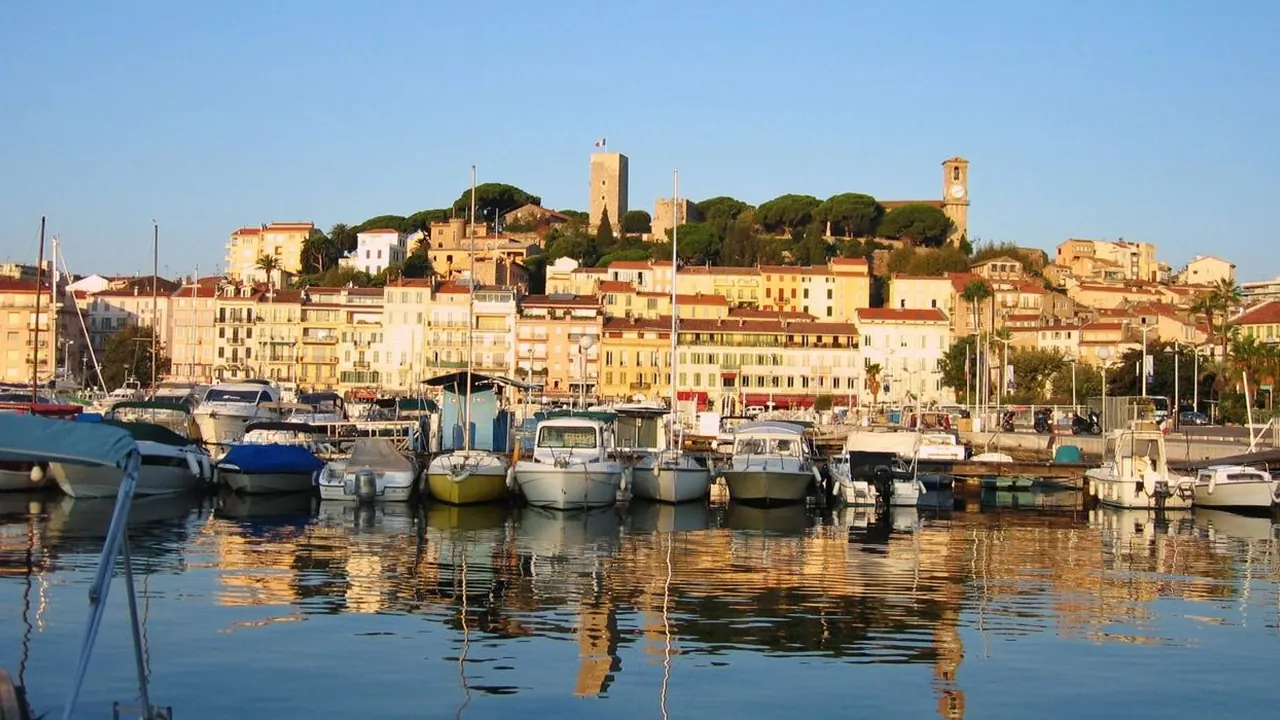
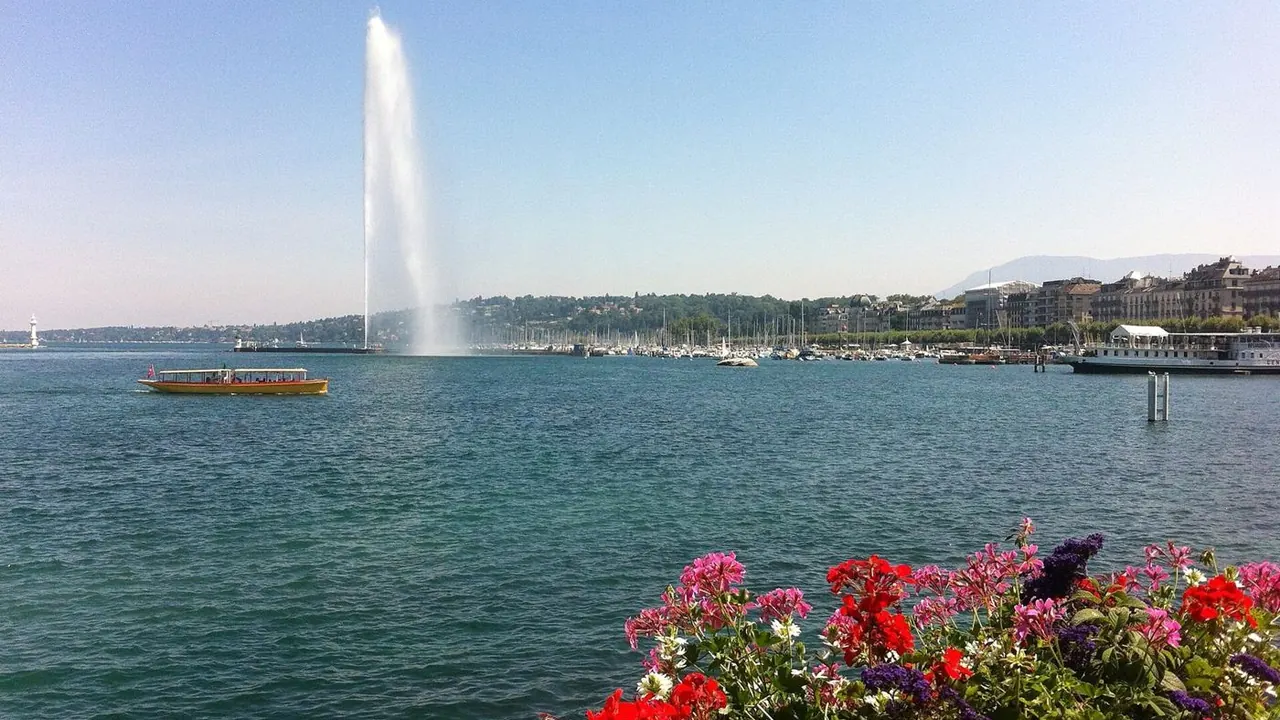
Photos: Cannes by qwesy qwesy, CC BY 3.0, cropped; Geneva by Diviosen, CC BY-SA 3.0, cropped.
Cannes or Geneva?
Our verdict in twelve categories, each scored against the same fixed benchmark cities, and the climate month by month, so you can choose for your trip.
Choose Cannes for
- beaches
- prices
- day trips
Cannes is the choice for a summer by the sea. It has sandy beaches on calm water and the pine-shaded Lérins islands offshore, and the whole Riviera lies along a coastal train line for days out. It suits travellers who want sun, swimming and a glamorous evening or two, and who are happy to find their art and history in Antibes, Nice or the hill villages. It is also the gentler of two expensive places on the wallet.
Choose Geneva for
- live music and the arts
- culture and sights
- getting around
For more to do in the city itself, Geneva wins. It has Reformation heritage, the international institutions and CERN, a full opera and orchestra season, and trams and boats that make getting around easy. With mountains on every horizon, it is the better base for walking and skiing, and it works in more seasons than a beach resort. Bring a generous budget, though, because few cities in Europe cost more.
Scoreboard
Twelve categories on one fixed scale from 0 to 100. The shaded stretch is the gap between the two.
Your match
Pick a travel style or drag the sliders, and both match scores follow your weighting.
Too close to call, 2 points apart
Wins on beaches and prices with your weighting.
Wins on live music and the arts and culture and sights with your weighting.
What matters to you?
Category by category
What the scores mean for a trip.
Beaches & swimming
Cannes is a true beach resort. It has fine sand along the Croisette, calm water, a long and mostly free stretch at Plage du Midi, and clearer, rocky swimming on the Lérins islands or in the red coves of the Esterel. The season runs from June into early October.
Geneva swims in its lake, and does it with real enthusiasm, diving off the Bains des Pâquis jetty or lying on the lawns at Genève-Plage. But it is a lido rather than a beach, the water stays cold until June, and the season is short.
Food & drink
Both cities cook in the French tradition but with different accents. Cannes is Provençal and coastal: the Forville market, bouillabaisse and socca in the streets of Le Suquet, and rosé on a terrace, although too much of the waterfront serves dull food to passing crowds.
Geneva leans Alpine and international. It has lake perch, fondue in wood-panelled brasseries, its own Chasselas and Gamay, and a wider range of world cuisines thanks to the international organisations. Cheap casual eating is harder to find there than in the backstreets of Cannes.
Culture & sights
Geneva has far more to see. St Pierre Cathedral, where Calvin preached, the Reformation Wall, the Palais des Nations, the Red Cross museum and CERN tell the story of a city that shaped both religion and diplomacy. The art, history and watchmaking museums fill out two or three days.
In Cannes, the castle museum and church on Le Suquet, the Belle Époque palace hotels and a look at the festival steps together take a morning. For serious art, visitors head along the coast.
Nightlife
Neither city is built for nights out, and the difference is one of style and season. Cannes comes alive in summer and during festivals, when the beach clubs on the Croisette turn into party venues and cocktail bars fill the streets behind the old port. It is all champagne and dressing up, and off-season the town goes to bed early.
Geneva is steadier through the year but low-key. There are late bars in the Pâquis, wine terraces in Carouge and a small electronic scene in the squat-born cultural centres of Plainpalais and Jonction, though weeknights are quiet.
Nature & outdoors
Geneva has the bigger outdoors. Mont Blanc shows at the end of the lake, the Salève cable car and the Jura ridge are on the doorstep, and Chamonix and the ski resorts are about an hour away, so mountain walks and winter ski days are easy to plan.
Cannes has fine scenery of its own in the red volcanic Esterel and on the pine paths of the Lérins islands, plus sailing and diving in warm water. The pre-Alps and the ski slopes lie much further inland, and summer fire risk can close the forest trails.
Day trips
Both are excellent bases, with Cannes slightly ahead because so much lies on one train line. Antibes is a quarter of an hour away, with Nice, Villefranche, Monaco and Menton beyond, while Grasse, Mougins and the hill villages of Saint-Paul-de-Vence and Èze are a short drive.
Geneva's list is more varied in kind. Lake steamers run to Lausanne, Montreux and Chillon, past the Lavaux vineyard terraces, and Annecy and Yvoire are just over the French border. Gruyères and Bern each make a longer day out.
Good for families
Both are safe and easy with children but have little made for them, so the difference lies in what fills the days. In Cannes it is the sea: gently sloping sand, calm water, the flat Croisette with its carousels, and the boat to the Lérins islands for a picnic.
Geneva relies on the Natural History Museum's animal dioramas, small animal enclosures, lakeside playgrounds and rides on the yellow harbour boats, with a mountain day to fill the gaps. Cannes suits a summer beach trip, and Geneva copes better in the cooler months.
Getting around
Geneva is the easier city to get around. Trams and buses are frequent and punctual, the harbour boats belong to the same network, the airport is a few minutes by train, and even the mountains can largely be reached without a car.
Cannes is compact and walkable, and its central station makes Antibes, Nice and Monaco easy to reach. Away from the coastal line it gets harder: the hill villages, Grasse and the Esterel corniche are easier by car, and summer traffic and scarce parking make driving tiresome.
Shopping & style
Both have a luxury strip, but Geneva's is the more serious, with the flagship boutiques of the great Swiss watch houses along Rue du Rhône. For something less polished, there are design and craft workshops in Carouge and the Plainpalais flea market.
Cannes has the Paris fashion and jewellery houses on the Croisette, mid-range French fashion along Rue d'Antibes, and olive oil, soaps and Provençal fabrics on Rue Meynadier. There is little independent design, and buying perfume usually means a trip to Grasse.
Affordability
Neither city is cheap, but Cannes is the more forgiving. Away from the seafront, prices fall towards ordinary French levels. Backstreet lunch menus, market picnics, free public beaches and cheap coastal trains keep a stay manageable, especially in spring and autumn outside event weeks.
Geneva is costly at every level and all year, from hotel rooms to a glass of wine. Free museums, free local transport for hotel guests and cheap lidos help, and many visitors sleep or eat across the border in France.
Live music & performing arts
Geneva has a proper year-round stage. There are opera and ballet at the Grand Théâtre, the Orchestre de la Suisse Romande in Victoria Hall, French-language theatre at the Comédie, and concerts and dance at the Bâtiment des Forces Motrices, a former pumping station in the middle of the Rhône.
Cannes is famous for a film festival that most visitors cannot attend, apart from the free screenings on the beach. The Palais des Festivals, the regional philharmonic, summer concerts on Le Suquet and the jazz festival at nearby Juan-les-Pins add something, but the rest of the year is quiet.
Wellness & relaxation
Geneva has the more genuine bathing habit. In winter the Bains des Pâquis becomes a sauna and hammam, with plunges straight into the cold lake, and the spa towns of Évian and Divonne are a short trip away. Its quiet Sundays and orderly pace also help.
Cannes offers polished palace-hotel spas, thalassotherapy along the coast and a calm seafront in spring and autumn. In August and during festival weeks, though, the noise and crowds make rest difficult.
When should you go?
Pick your month. The climate figures are measured averages, not a forecast.
Cannes in July
Geneva in July
Daytime high, °C
Rainfall in the month, mm
Temperature and rainfall are climate normals, averaged over the years shown. Cannes: 2004-2020 (sunshine 1991-2020, rainfall 1991-2020) normals, Cannes (5.8 km from centre). Geneva: 1991-2020 normals, Geneve-Cointrin (5.7 km from centre).
Cannes has the long warm season. From June to September the days are in the mid to high twenties, and the sea is comfortable for swimming from June to early October, reaching about 25°C in August. July is almost dry and very sunny. The rain arrives in autumn. October and November are the wettest months, with around 138mm in November, and winter is mild but too cool for the beach, so it suits walking the streets better. Spring, from April to early June, is pleasant for exploring on foot.
Geneva is colder and more even. Winter highs are around 5°C in January, with little sunshine, so the city is at its best from May to September, when days reach the mid twenties and the lake lidos open up. Rain is spread through the year instead of falling mostly in autumn, so a Geneva summer is noticeably wetter and less sunny than one in Cannes. In every month Cannes is the warmer of the two, and the gap is widest in winter.
Which traveller are you?
On a beach and sun trip, Cannes is the obvious choice. Your days there can be built around the sea from early summer into autumn. In Geneva a lake swim is a pleasant break between other plans, not the reason to go.
For a culture and arts trip, Geneva is the better place to stay. Its story of religious reform and world diplomacy fills several days, with opera and concerts through the season. In Cannes the serious art is in other towns along the coast.
On a trip on a tight budget, Cannes is the one that can work. Costs ease once you step back from the seafront or come outside summer. Geneva stays dear in every season, so even careful spending adds up quickly.
Before you go
| Measure | Cannes | Geneva |
|---|---|---|
| Official language | French | French, German, Italian, Romansh |
| Currency | Euro (EUR) | Swiss Franc (CHF) |
| Sockets | CE230 V, 50 Hz | CJ230 V, 50 Hz |
| Driving side | Right | Right |
| Time zone | UTC+1, UTC+2 in summer | UTC+1, UTC+2 in summer |
| Emergency number | 112 | 112 |
| Elevation | 0 m | 403 m |
| Main airport | Nice-Côte d'Azur Airport (NCE)20 km from centre130 non-stop destinations | Geneva International Airport (GVA)5 km from centre150 non-stop destinations |
| Public holidays this year | 11 days | 9 days |
By the numbers
| Measure | Cannes | Geneva |
|---|---|---|
| City population | 74,350 | 211,152 |
| People per km² | 3,793 | 13,280 |
| Museums within 10 km | 16 | 34 |
| UNESCO World Heritage sites within 50 km | 2 | 2 |
| Swim season, months above 21 °C | 4 months | - |
Where else could you go?
Every comparison below shares a destination with this one, so you can follow Cannes or Geneva somewhere new.