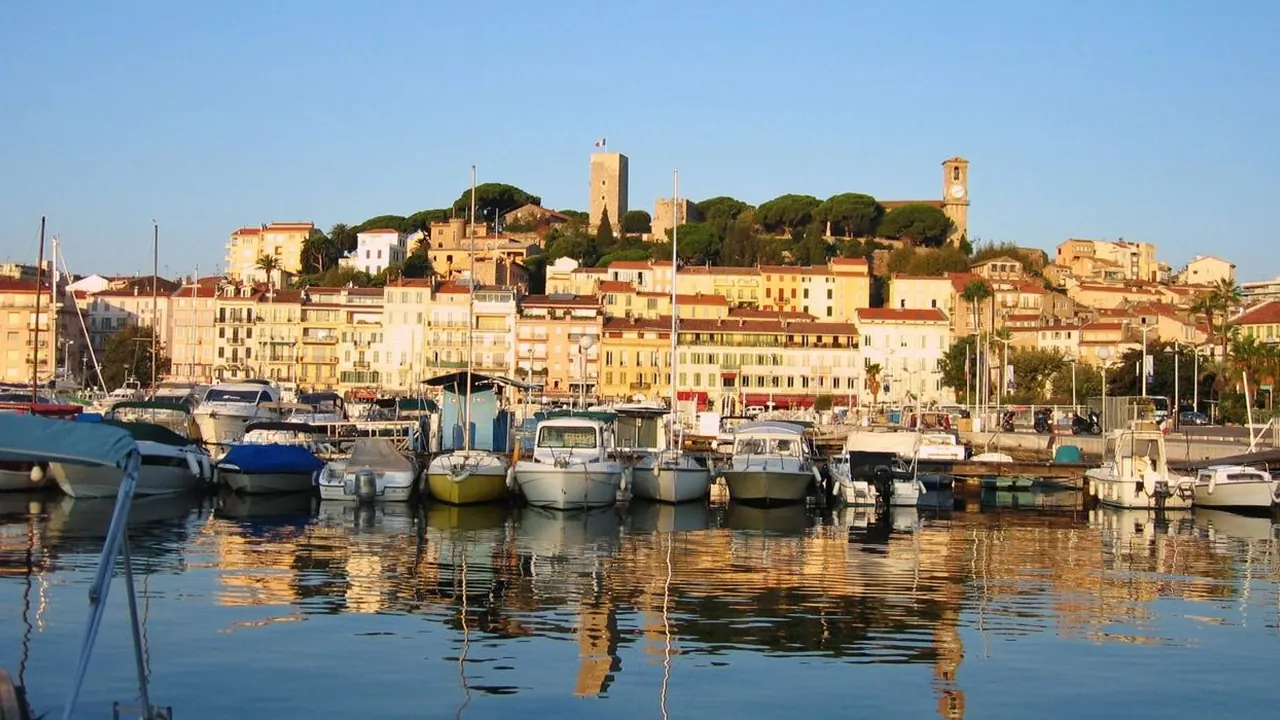
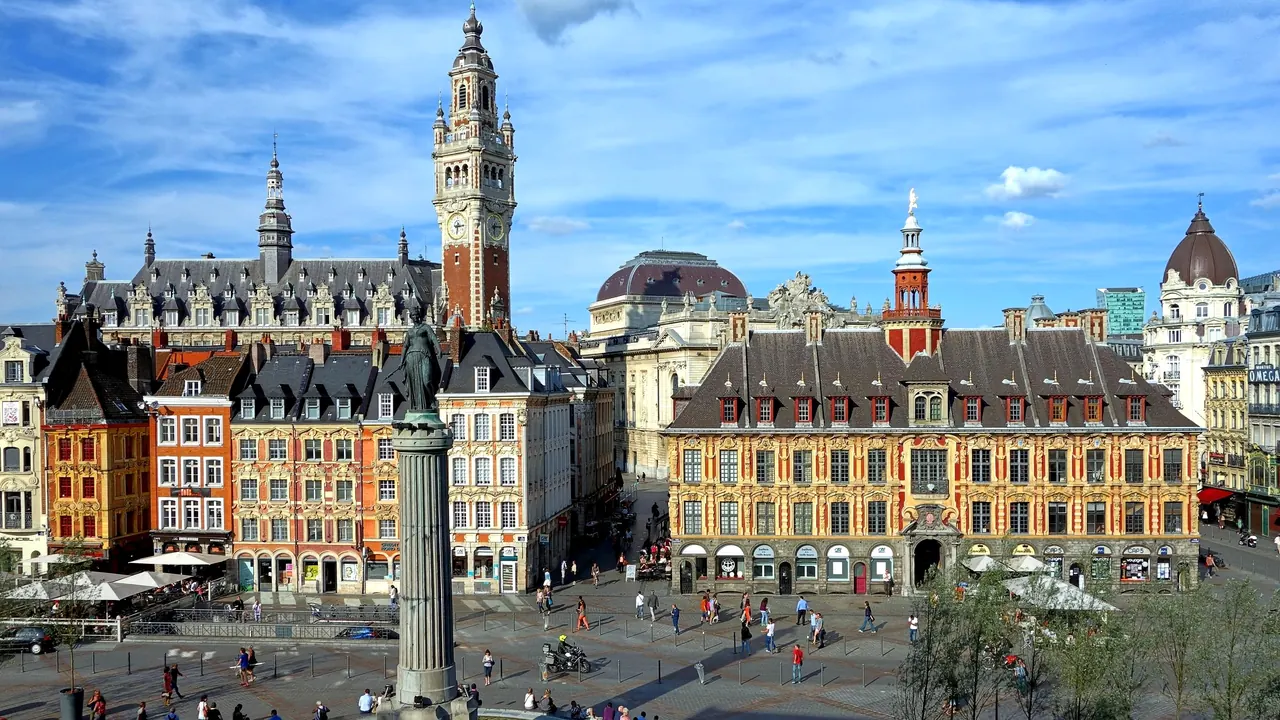
Photos: Cannes by qwesy qwesy, CC BY 3.0, cropped; Lille by Velvet, CC BY-SA 3.0, cropped.
Cannes or Lille?
Our verdict in twelve categories, each scored against the same fixed benchmark cities, and the climate month by month, so you can choose for your trip.
Choose Cannes for
- beaches
- nature and the outdoors
- wellness
Cannes is the choice for a summer trip built around the sea. Its fine sand on calm water, the Lérins islands just offshore and the red rock of the Esterel make it far stronger for swimming, boating and coastal walks. The whole Riviera is on the train line, so beach days mix easily with art villages and Monaco. It suits travellers who want sun, scenery and a little glamour, and who will pay for them.
Choose Lille for
- culture and sights
- prices
- live music and the arts
Lille rewards a city break in any season. The Palais des Beaux-Arts, the Flemish baroque streets of Vieux-Lille and a proper opera and theatre season give it far more to see and do in town. Evenings are livelier and cheaper, and fast trains to Brussels, Bruges and Paris leave from the centre. It makes most sense for museum-goers, beer and food lovers, and anyone watching costs.
Scoreboard
Twelve categories on one fixed scale from 0 to 100. The shaded stretch is the gap between the two.
Your match
Pick a travel style or drag the sliders, and both match scores follow your weighting.
Too close to call, 2 points apart
Wins on beaches and nature and the outdoors with your weighting.
Wins on culture and sights and prices with your weighting.
What matters to you?
Category by category
What the scores mean for a trip.
Beaches & swimming
Here the gap is as wide as it gets. Cannes is a real beach town: fine sand curves along the Croisette, the wide, mostly free Plage du Midi lies west of the old port, and clearer, rockier swimming waits on the Lérins islands and in the Esterel coves. The sea is warm enough from June to early October, though the central beaches are crowded in high summer.
Lille is inland, and the sea is a day out rather than part of a stay. Malo-les-Bains at Dunkirk and the dune beaches of the Opal Coast are good for a bracing walk or sand yachting, but the North Sea stays cool even in August.
Food & drink
The two eat about equally well, but they eat very differently. Cannes cooks from the Mediterranean and Provence: the Forville market, bouillabaisse and grilled fish in Le Suquet, socca, and rosé on a terrace, with a fine-dining tier in the palace hotels and towards Mougins. The catch is the overpriced, generic food along the Croisette and port.
Lille is heavier, northern and built around beer. Its wood-panelled estaminets in Vieux-Lille serve carbonnade, potjevleesch and welsh, Maroilles turns up everywhere, and the Sunday Wazemmes market brings a multi-ethnic mix. Come for beer and slow-cooked dishes in Lille, and for seafood and wine in Cannes.
Culture & sights
Lille has far more to see. The Palais des Beaux-Arts, with its Flemish masters, Goya and relief maps of fortified towns, is a major museum, and the Vieille Bourse, Grand Place and UNESCO-listed belfry make Vieux-Lille worth slow exploring. La Piscine, the LaM and Vauban's citadel easily fill two or three days.
In Cannes the sights amount to the castle museum and church on Le Suquet, the Belle Époque hotels and the Palais des Festivals steps, all done in a morning. Its serious art lies along the coast, not in town.
Nightlife
Lille gives the better night out, and it does so all year. A big student population fills the cheap bars on Rue Masséna and Rue Solférino, while beer cafés and cocktail cellars in Vieux-Lille suit a calmer crowd. Proper clubbing usually means a short hop into Belgium.
Cannes is seasonal and dressy. From June to September and during the festivals the beach clubs on the Croisette turn into party venues and the streets behind the old port fill with bars, but it is champagne and dress codes rather than casual drinking. Out of season it goes quiet early.
Nature & outdoors
Cannes has much the better outdoors. The volcanic red rock of the Esterel, with trails up Pic de l'Ours, lies twenty minutes west, the Lérins islands offer pine-shaded walks, and Cap d'Antibes has a wild coastal path. Add sailing, kayaking and diving, the gorges of the pre-Alps inland and winter skiing in the Alpes-Maritimes. Summer fire risk can close forest trails.
Around Lille the land is flat and farmed. The Citadel park, canal towpaths for cycling and the low Monts de Flandre make for gentle outings, and the chalk cliffs of Cap Blanc-Nez are a long day away.
Day trips
Both make excellent bases. The difference is that Cannes sends you along a coast and Lille sends you across borders. From Cannes, the coastal train links Antibes, Nice, Villefranche, Monaco and Menton, and buses or a car reach Saint-Paul-de-Vence, Èze, Grasse and Mougins. A short ferry from the old port takes you to the Lérins islands, with their fortress and a working monastery that has its own vineyards. Days out from Cannes are a sunny mix of art, villages and sea.
Lille's day trips are international and mostly to cities. Fast trains put Brussels, Ghent, Bruges, Paris and even London within reach for the day. Closer to home are the arcaded squares of Arras, Amiens Cathedral, the Louvre-Lens and the First World War battlefields around Ypres, Vimy and the Somme.
Good for families
Neither city is built for children, but Cannes has a slight edge thanks to its gently shelving sandy beaches, calm water and the flat Croisette with carousels. A boat picnic on the Lérins islands makes an easy outing, though summer heat means planning around the middle of the day.
Lille is more of a park-and-museum city for families. There is the small zoo and playgrounds in the Citadel park, the natural history museum and the Forum des Sciences, with Pairi Daiza and the Nausicaá aquarium as bigger outings. The cobbles of Vieux-Lille are tough with a pushchair.
Getting around
Lille is simpler to get around. Its flat, compact centre is walkable, its two main stations sit beside the old town, and the automated VAL metro and tram cover Roubaix, Tourcoing and the suburbs, so a car is never needed.
Cannes is also small and walkable, apart from the climb to Le Suquet, and the central station makes coastal trips easy. Inland is another matter. Grasse, the perched villages and the Esterel corniche really want a car, and summer traffic and scarce parking make driving a chore.
Shopping & style
Both are about as good as each other for shopping, but in different ways. Cannes is about luxury: the big Paris fashion and jewellery houses face the sea along the Croisette, Rue d'Antibes covers mid-range fashion, and Rue Meynadier sells olive oil, Provençal fabrics and soaps.
Lille has fewer luxury labels and more independents. Look in the design and fashion shops of Vieux-Lille, alongside the chains of Rue Neuve and the Euralille mall. Its unique draw is the Braderie in early September, a city-wide flea market spread over kilometres of streets.
Affordability
Lille is clearly the cheaper stay. Hotels are reasonable for most of the year, estaminet meals, beer, the metro and the main museums are all fairly priced, and costs sit at ordinary French city levels. Only the Braderie and trade fairs push rooms up.
Cannes is expensive near the water, with seafront dining, cocktails and private-beach loungers priced for the wealthy, and the film festival sends rooms far higher. Spring and autumn, picnics from Forville and staying in a neighbouring town all help.
Live music & performing arts
Lille has the fuller programme year-round. The Opéra de Lille stages opera and dance, the Orchestre National de Lille plays a symphonic season, the Théâtre du Nord is a national theatre, and the Zénith and Aéronef bring rock and pop tours.
Cannes is better known than it is busy. The film festival is mostly closed to the public apart from free beach screenings, and outside summer the Palais des Festivals and the regional orchestra offer a modest schedule. Summer brings castle-courtyard concerts on Le Suquet and the jazz festival at nearby Juan-les-Pins.
Wellness & relaxation
Cannes is the better place to unwind. Its palace hotels have polished spas using sea minerals and Provençal plants, thalassotherapy centres line the coast, and a calm seafront in spring or autumn makes slow mornings easy. Avoid August and festival weeks if rest is the aim.
Lille offers little beyond hotel and day spas, tea rooms and café terraces in Vieux-Lille. For real thermal water you need the short train ride to Saint-Amand-les-Eaux.
When should you go?
Pick your month. The climate figures are measured averages, not a forecast.
Cannes in July
Lille in July
Daytime high, °C
Rainfall in the month, mm
Temperature and rainfall are climate normals, averaged over the years shown. Cannes: 2004-2020 (sunshine 1991-2020, rainfall 1991-2020) normals, Cannes (5.8 km from centre). Lille: 1991-2020 normals, Lille (7.8 km from centre).
Cannes is at its best from June to August. Highs reach about 29°C, the sea warms to around 25°C, rain almost disappears and the days are long and very sunny. September is still warm and the sea stays swimmable into early October, but rain comes back in September, and by late autumn the weather is properly wet: November is the rainiest month at about 138mm. Winters are mild and fairly bright, good for walking the Croisette and the Esterel trails but not for the beach. Midsummer afternoons can be too hot for sightseeing.
Lille is cooler and greyer, and its rain is spread evenly through the year, so no month is properly dry. Summer highs of about 24°C make June to September the best time for walking the old town and taking day trips, and spring and early autumn work well too. In winter, highs of around 7°C and short, dull days suit a trip of museums and taverns more than time outdoors. Winter is also when the two cities differ most: Cannes stays mild and sunny while Lille is cold and dim.
Which traveller are you?
On a beach and sun trip, Cannes wins easily. It has sandy beaches along the Croisette, warm, calm summer water, island coves a short boat ride away and dry, sunny months, while Lille's nearest sand is a windy North Sea beach an hour away.
For a culture and arts trip, Lille is the stronger base. The Palais des Beaux-Arts, Vieux-Lille's carved brick facades, La Piscine in Roubaix and a full opera and theatre season outweigh Cannes's castle museum and Belle Époque seafront, which fit into one morning.
On a trip with a tight budget, Lille goes much further. Rooms are reasonable most of the year, estaminet meals and beer are fairly priced and the metro is cheap. Cannes is priced for a wealthy crowd near the waterfront, and only picnics, public beaches and backstreet lunch menus soften it.
Before you go
| Measure | Cannes | Lille |
|---|---|---|
| Official language | French | French |
| Currency | Euro (EUR) | Euro (EUR) |
| Sockets | CE230 V, 50 Hz | CE230 V, 50 Hz |
| Driving side | Right | Right |
| Time zone | UTC+1, UTC+2 in summer | UTC+1, UTC+2 in summer |
| Emergency number | 112 | 112 |
| Elevation | 0 m | 17 m |
| Main airport | Nice-Côte d'Azur Airport (NCE)20 km from centre130 non-stop destinations | Lille Airport (LIL)8 km from centre61 non-stop destinations |
| Public holidays this year | 11 days | 11 days |
By the numbers
| Measure | Cannes | Lille |
|---|---|---|
| City population | 74,350 | 238,246 |
| People per km² | 3,793 | 6,846 |
| Museums within 10 km | 16 | 23 |
| UNESCO World Heritage sites within 50 km | 2 | 6 |
| Swim season, months above 21 °C | 4 months | - |
Where else could you go?
Every comparison below shares a destination with this one, so you can follow Cannes or Lille somewhere new.