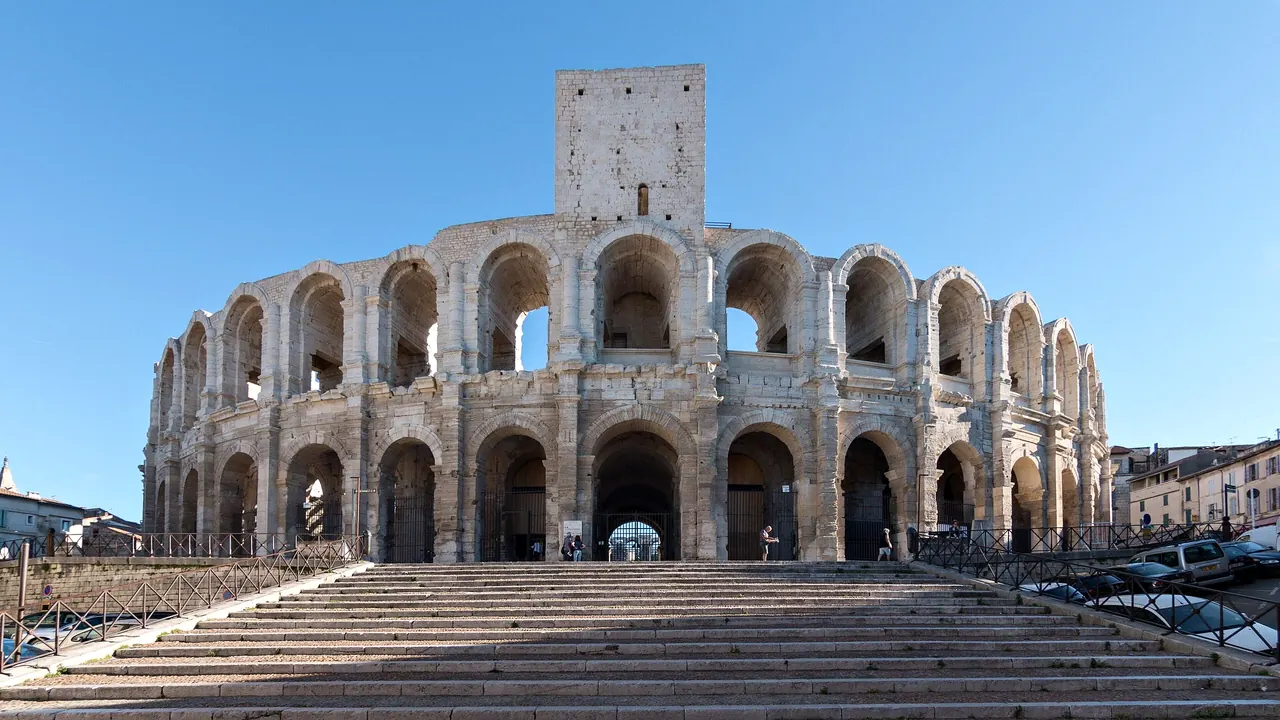
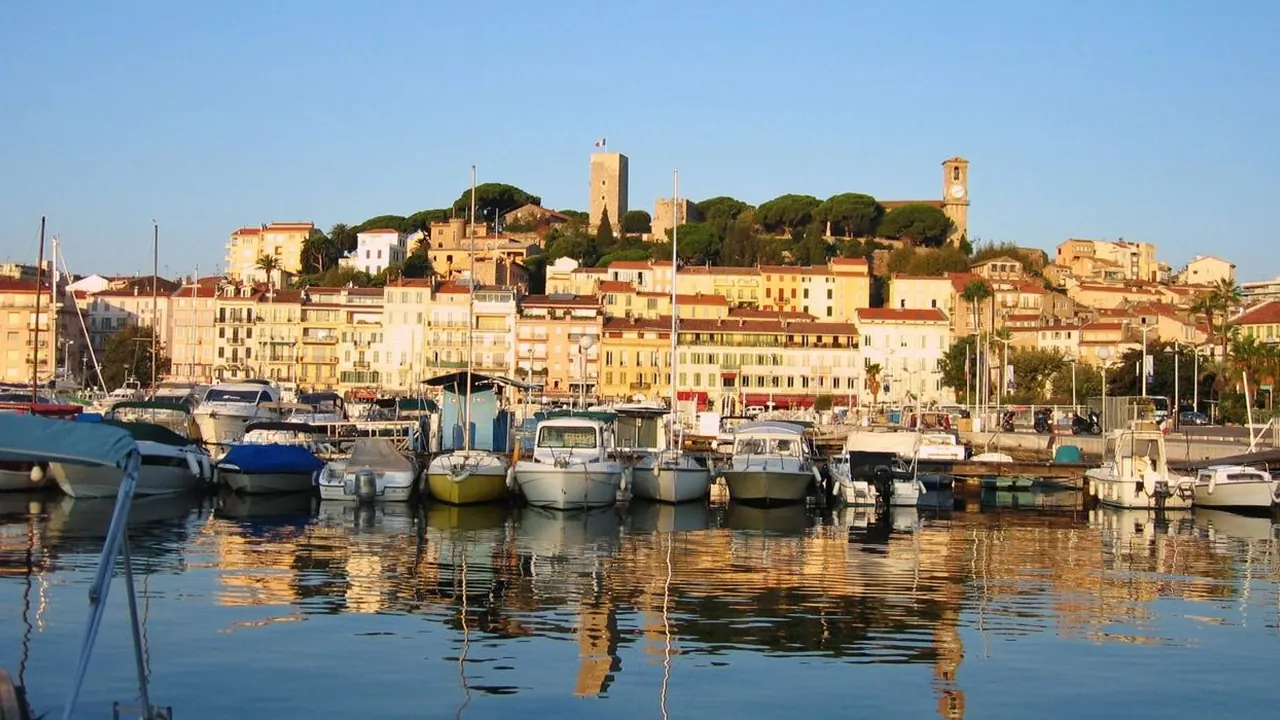
Photos: Arles by Martin Kraft, CC BY-SA 3.0, cropped; Cannes by qwesy qwesy, CC BY 3.0, cropped.
Arles or Cannes?
Our verdict in twelve categories, each scored against the same fixed benchmark cities, and the climate month by month, so you can choose for your trip.
Choose Arles for
- culture and sights
- prices
- day trips
Arles suits travellers who want history underfoot and a slower Provençal pace. The Roman arena, the antique theatre and the carved cloister of Saint-Trophime are all a short walk apart, and the flamingos and white horses of the Camargue start at the edge of town. Rooms and meals cost noticeably less than on the Riviera. In return, evenings are quiet and you will want a car for the countryside.
Choose Cannes for
- beaches
- shopping
- nightlife
For a summer by the sea, Cannes is the better pick. Sandy beaches on calm water start right at the Croisette, the coastal train reaches Antibes, Nice and Monaco without a car, and the shopping and summer nights have a polish Arles never aims for. You pay for all of it, though, and the town's own sights take no more than a morning.
Scoreboard
Twelve categories on one fixed scale from 0 to 100. The shaded stretch is the gap between the two.
Your match
Pick a travel style or drag the sliders, and both match scores follow your weighting.
Wins on culture and sights and prices with your weighting.
Wins on beaches and shopping with your weighting.
What matters to you?
Category by category
What the scores mean for a trip.
Beaches & swimming
Cannes is a proper beach town and Arles is not. In Cannes the sand runs along the Croisette in front of the hotels, with free public stretches between the private concessions and the wider Plage du Midi west of the port. For clearer water there are rocky swimming spots on the Lérins islands, and the red coves of the Esterel are a short drive away.
From Arles, the beach means a day out across the Camargue to Saintes-Maries or to the huge, wild strands of Piémanson and Beauduc. These beaches have plenty of space, but little shade, no services and some mosquitoes, and you need a car to get there.
Food & drink
The two are close on food, but they eat differently. Arles cooks from the delta: bull stew (gardiane), red Camargue rice, tiny tellines clams and saucisson d'Arles. Its great food event is the long Saturday market on the Boulevard des Lices. Its restaurant choice is narrow, though, and many places close in winter.
Cannes leans towards the sea, with bouillabaisse, grilled fish and socca around Le Suquet and the Forville market. It also has a fine-dining tier in the palace hotels and up towards Mougins that Arles cannot match. Along the Croisette, however, the food is often tired and overpriced.
Culture & sights
Here Arles is far ahead. It has an arena still in use, a Roman theatre, the underground cryptoporticus, the tomb-lined Alyscamps painted by Van Gogh and Gauguin, and some of the finest Romanesque carving in Provence. Add the Roman barge in the archaeology museum and Gehry's tower at Luma, and two full days are well spent.
Cannes offers a pleasant walk instead: the castle museum and church on Le Suquet, the Belle Époque villas and palace hotels, and the red-carpet steps of the Palais des Festivals. It all fits into a morning.
Nightlife
Cannes has the livelier nights, at least from June to September and during its festivals. Beach clubs on the Croisette turn into evening venues, a few clubs stay open until dawn, and the streets behind the old port fill with cocktail bars. The mood is champagne and dressing up, and out of season the town turns in early.
Arles is a dinner-on-the-square town that goes quiet afterwards. The exception is the ferias at Easter and in September, when bodegas spill into the streets for a few late nights.
Nature & outdoors
Both have fine landscapes close by, but very different ones. Arles opens onto the flat, watery Camargue, with lagoons, salt flats and rice fields full of flamingos, herons, black bulls and white horses. You explore it on horseback, by bike along the dykes or on foot, and the limestone Alpilles add hill walking to the north-east.
Cannes looks to rock and sea. The volcanic red Esterel has summit trails above jagged inlets, and there are pine paths on Sainte-Marguerite and the shore path around Cap d'Antibes. Sailing, kayaking and diving round the islands are easy, and in winter there is skiing in the Alpes-Maritimes.
Day trips
Both make superb bases, but each opens a different part of the south. From Arles you reach Roman and papal Provence: Avignon and Nîmes are a short train ride away, the Pont du Gard is under an hour's drive, and Les Baux, Saint-Rémy and walled Aigues-Mortes are close. For the villages you will want a car.
From Cannes the Riviera unrolls along a single railway line, through Antibes, Nice, Villefranche, Monaco and Menton. Saint-Paul-de-Vence, Èze and Grasse are short bus or car rides inland.
Good for families
Cannes is the easier town with young children. The beaches are gently sloping sand on calm water, the flat Croisette suits pushchairs and scooters and has carousels along it, and the boat to the Lérins islands makes a simple outing. The midsummer heat and crowds still need planning around.
Arles works better for older children who like animals and history. They can climb the arena towers, explore the dark cryptoporticus, ride ponies at Camargue ranches and watch the flamingos. The cobbles are hard on buggies, though, and most outings mean a drive.
Getting around
Both centres are walkable, but Cannes makes it easier to get out of town without a car. Its central station sits on the coastal line to Antibes, Nice and Monaco, and ferries to the islands leave from the old port. You only need a car for the hill villages and the Esterel, where traffic and parking are a nuisance in summer.
Arles is compact, with every sight within about fifteen minutes' walk, a free shuttle and trains to the big towns. Its buses into the countryside are infrequent, however, and the Camargue really calls for a hire car or a bike.
Shopping & style
Cannes is the place for shopping. The big Paris fashion and jewellery houses face the sea along the Croisette, Rue d'Antibes behind it has more than a kilometre of mid-range French fashion and chocolatiers, and Rue Meynadier sells olive oil and fabrics.
Arles stays small and local. It has the Saturday market, printed Provençal cottons, santons, gardian shirts and good bookshops full of photography titles, which suits a publishing town, but no fashion to speak of.
Affordability
Arles is clearly the cheaper base. It costs about what any provincial French town does, and much less than the smart villages of the Alpilles, although a hire car and the July festival weeks push the bill up.
Cannes is expensive near the waterfront, from hotel rooms to loungers and cocktails, and dearer still during the film festival and the trade fairs. Backstreet lunch menus, the free beaches, the cheap coastal trains and the quieter spring and autumn weeks bring it down towards normal levels.
Live music & performing arts
Neither town is a big stage outside summer, and they differ mainly in setting. Arles puts its shows in Roman spaces, with concerts in the antique theatre and the arena, a week of world music at Les Suds in July, and brass bands and the bloodless course camarguaise around the ferias.
Cannes has a little more spread across the year. The Palais des Festivals hosts touring shows, the regional philharmonic plays a season and there is a respected dance festival. The film festival itself is closed to the public apart from the free beach screenings.
Wellness & relaxation
Cannes has more for anyone who wants pampering. The palace hotels on the Croisette run polished spas, and there are thalassotherapy centres along the coast. Its calm seafront in spring and autumn is restful too, but August and the festival weeks are not.
Arles offers pace rather than treatments. Think shaded squares, siestas, evenings by the Rhône and a few converted mas in the Camargue run as quiet retreats with pools.
When should you go?
Pick your month. The climate figures are measured averages, not a forecast.
Arles in July
Cannes in July
Daytime high, °C
Rainfall in the month, mm
Where the figures come from
Arles's temperatures are measured 28 km from the centre, at Nimes / Courbessac.
Arles has no rain gauge within 25 km of the centre, so its rainfall comes from a gridded climate dataset read at the city rather than from a gauge further away.
Temperature and rainfall are climate normals, averaged over the years shown. Arles: 1991-2020 (sunshine 1981-2010) normals, Nimes / Courbessac (28 km from centre). Cannes: 2004-2020 (sunshine 1991-2020, rainfall 1991-2020) normals, Cannes (5.8 km from centre).
Both towns have a hot, dry summer and a wet autumn, but they feel different. Arles sits inland on the Rhône and gets hotter, reaching about 31°C in July and August, which makes walking between Roman monuments heavy going in the middle of the day. April to June and September are the best months for sightseeing and for the Camargue. Cannes is a little cooler in summer and milder in winter. Its sea stays warm enough for swimming from June to early October and peaks at about 25°C in August, a few degrees warmer than the water off the Camargue beaches.
The rain arrives in autumn in both places. In Arles it peaks in October at about 105mm. In Cannes it falls harder and for longer, through October and into November, which brings about 138mm. Both get long hours of sunshine from May to August. From late autumn to early spring, Cannes is the gentler place to walk a seafront, while Arles is cooler, with a quieter, half-closed feel.
Which traveller are you?
On a culture and arts trip, Arles is the clear choice. Its UNESCO-listed Roman monuments, the Romanesque portal of Saint-Trophime, the Museum of Ancient Arles and the summer photography festival give you two full days of real substance, while Cannes's own sights fill a morning.
For a beach and sun trip, choose Cannes. Fine sand and calm water start at the Croisette, the Lérins islands and the Esterel coves are close by, and you can swim every day without a car. From Arles, the sea is a 40km drive across the marshes.
On a trip on a tight budget, Arles stretches the money further. Hotels and lunch menus cost what they do in any provincial French town. Cannes is priced for a wealthy crowd near the seafront, especially in festival weeks, although picnics and the public beaches help a little.
Before you go
| Measure | Arles | Cannes |
|---|---|---|
| Official language | French | French |
| Currency | Euro (EUR) | Euro (EUR) |
| Sockets | CE230 V, 50 Hz | CE230 V, 50 Hz |
| Driving side | Right | Right |
| Time zone | UTC+1, UTC+2 in summer | UTC+1, UTC+2 in summer |
| Emergency number | 112 | 112 |
| Elevation | 0 m | 0 m |
| Main airport | Marseille Provence Airport (MRS)54 km from centre126 non-stop destinations | Nice-Côte d'Azur Airport (NCE)20 km from centre130 non-stop destinations |
| Public holidays this year | 11 days | 11 days |
By the numbers
| Measure | Arles | Cannes |
|---|---|---|
| City population | 51,811 | 74,350 |
| People per km² | 68 | 3,793 |
| Museums within 10 km | 3 | 16 |
| UNESCO World Heritage sites within 50 km | 5 | 2 |
| Swim season, months above 21 °C | 2 months | 4 months |
Where else could you go?
Every comparison below shares a destination with this one, so you can follow Arles or Cannes somewhere new.