
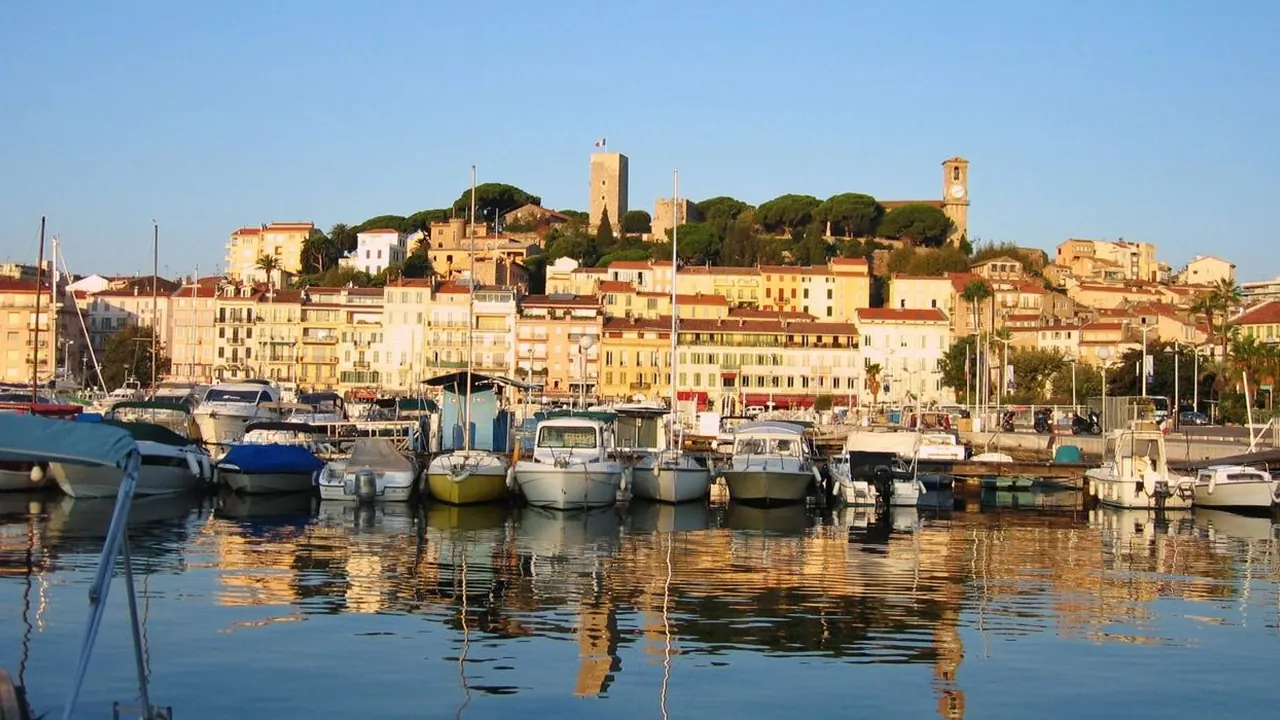
Photos: Aix-en-Provence by Hanay, CC BY-SA 4.0, cropped; Cannes by qwesy qwesy, CC BY 3.0, cropped.
Aix-en-Provence or Cannes?
Our verdict in twelve categories, each scored against the same fixed benchmark cities, and the climate month by month, so you can choose for your trip.
Choose Aix-en-Provence for
- culture and sights
- live music and the arts
- prices
Aix-en-Provence suits travellers who want a handsome, walkable town with real substance. It has Cezanne's studio and the Mazarin mansions, the July opera festival, and morning markets followed by long lunches. Sainte-Victoire, the Calanques and the Luberon villages are all within reach by car. It is the better base for culture, walking and a slower inland Provence, and it is a little easier on the budget.
Choose Cannes for
- beaches
- families
- shopping
Cannes is the choice when the sea is the point of the trip. Its sandy town beaches, calm water and the Lérins islands put swimming at the door, which also makes it easier for families with small children. The coastal train opens up Antibes, Nice and Monaco without a car. Sightseeing in town fits into a morning, so Cannes rewards those happy to split their days between the beach and the rest of the Riviera.
Scoreboard
Twelve categories on one fixed scale from 0 to 100. The shaded stretch is the gap between the two.
Your match
Pick a travel style or drag the sliders, and both match scores follow your weighting.
Too close to call, 1 point apart
Wins on culture and sights and live music and the arts with your weighting.
Wins on beaches and families with your weighting.
What matters to you?
Category by category
What the scores mean for a trip.
Beaches & swimming
The gap here is wide. Aix sits about 30km inland, so every swim is an outing to the small pebbly coves of the Cote Bleue, Cassis or the calanques, usually by car. Many visitors settle for the pool instead.
In Cannes the beach is part of the town: fine sand along the Croisette, the broad and mostly free Plage du Midi, and calmer, warmer water. Private concessions take much of the frontage, but for clearer swimming the Lérins islands and the red-rock coves of the Esterel are a short boat or car ride away.
Food & drink
Aix has the edge. Eating there is built around the daily markets on Place Richelme and long lunches of daube, vegetable tians and Coteaux d'Aix rosé, and the calisson is a sweet that is truly the town's own. The back-street bistros reward a little searching.
Cannes draws on the same Provençal produce, plus the morning catch at the Forville market, and its top tier in the palace hotels and towards Mougins is strong. The weakness is the middle range: much of the Croisette and the old port feeds passing crowds, and few dishes belong to Cannes itself.
Culture & sights
Aix is far richer to explore. The Cours Mirabeau, the 17th and 18th-century mansions of the Mazarin quarter, fountains on nearly every square and the layered Cathedrale Saint-Sauveur make the streets themselves the attraction. Cezanne's studio, the Jas de Bouffan and the Musee Granet fill two or three unhurried days.
Cannes offers the castle museum and church on Le Suquet, the Belle Époque palace hotels of the Croisette and a look at the festival steps, all done in a morning. Art lovers based there spend their time in Antibes or Saint-Paul-de-Vence.
Nightlife
Neither town is a big night out, but the evenings feel different. Aix is a student town, so nights mean casual drinks on the terraces around Place des Cardeurs. It is livelier in term time and winds down well before dawn.
Cannes is seasonal and dressy. In summer and during festival weeks, the beach clubs on the Croisette turn into party venues and a few clubs stay open until dawn, but off-season the town goes to bed early. Serious clubbers leave Aix for Marseille, and leave Cannes for Nice or Juan-les-Pins.
Nature & outdoors
Both have superb country close by, and Aix edges ahead on range. Sainte-Victoire rises at the edge of town, and the Calanques offer some of the Mediterranean's finest coastal walking. The Luberon, the Alpilles and the Gorges du Verdon add cycling, kayaking and hiking, all within about an hour and a half.
Cannes leans towards the sea: the red volcanic Esterel, the pine paths of Sainte-Marguerite, the shore path around Cap d'Antibes, and sailing and diving around the islands. It also has winter skiing in the Alpes-Maritimes. In both places, fire risk can close trails in midsummer.
Day trips
These are two of the best bases in the south of France, and they point in different directions. From Aix the trips are Roman and rural: Marseille in half an hour, Avignon by TGV, then Arles, Nimes and the Pont du Gard. The Luberon villages such as Gordes and Roussillon really need a car.
From Cannes the Riviera unrolls along one railway line, through Antibes, Nice, Villefranche, Monaco and Menton, so a car is optional for the main towns. The perched villages of Saint-Paul-de-Vence and Èze, perfume-making Grasse and the monastery on the Lérins islands round out the choice.
Good for families
Aix is safe and easy on foot. The centre is largely pedestrian, and the morning markets and ice cream make good stops along the way. It suits older children best: those who like a walk will enjoy the trails on Sainte-Victoire and the cliffs of the Calanques. The zoo at La Barben is a short drive away, but younger children find less to do.
Cannes is the easier of the two overall, because days can be planned around the shore. The centre is compact and feels safe, and the coastal train makes outings such as the aquarium in Monaco simple. In both towns the museums and festivals are aimed at adults. In midsummer the crowds in Cannes mean early starts and long lunches indoors.
Getting around
Both centres are small enough to walk; the difference lies beyond them. Aix's old town is largely pedestrian, but its TGV station is out on the plateau and the Provençal villages barely see a bus, so most visitors hire a car.
Cannes has its station in the middle of town, with coastal trains to Antibes, Nice and Monaco. Grasse, the perched villages and the Esterel still favour a car, and summer traffic on the coast is heavy.
Shopping & style
The two are similar in depth but different in character. Cannes has the glamour: the great Paris fashion and jewellery houses face the sea on the Croisette, with Rue d'Antibes behind for mid-range fashion and chocolatiers.
Aix has no luxury strip, but browsing is more of a pleasure. There are boutiques around Rue d'Italie and Rue Fabrot, and markets that run to flowers, textiles and bric-a-brac. Both do good Provençal soaps and fabrics. Aix adds calissons and santons, while Cannes sends perfume hunters to Grasse.
Affordability
Neither town is cheap, but Aix is easier on the wallet. Its hotels are few and dear in July, yet back-street lunch menus, market picnics and walking everywhere keep daily spending reasonable. The hire car is the main extra cost.
Along the Cannes waterfront, prices are set for a wealthy crowd, and rooms cost far more during the film festival and the trade fairs. The public beaches, picnics from the Forville market, cheap coastal trains and staying in a neighbouring town all soften this. Spring and autumn outside event weeks are much fairer.
Live music & performing arts
Aix is much the stronger here. Its July festival is one of the great events of the opera world, staged in the courtyard of the Archbishop's Palace. Through the rest of the year, the Grand Theatre de Provence, Ballet Preljocaj at the Pavillon Noir and the Theatre du Jeu de Paume keep a real programme going.
The famous festival in Cannes is for the film industry, and the public mostly shares it through free screenings on the beach. Beyond that there are concerts and touring shows at the Palais, a dance festival, summer concerts on Le Suquet and jazz nearby at Juan-les-Pins. Much of the year is quiet.
Wellness & relaxation
Aix has the deeper tradition. The town was founded on warm springs, some of its fountains still run warm, and the Thermes Sextius spa stands on the site of the Roman baths. Outside July, slow market mornings and long lunches do the rest.
Cannes has no springs, but the palace hotels on the Croisette have polished spas, and thalassotherapy centres along the coast use seawater. Rest there depends on timing: it is calm in spring and autumn, but crowded and noisy in August and during festival weeks.
When should you go?
Pick your month. The climate figures are measured averages, not a forecast.
Aix-en-Provence in July
Cannes in July
Daytime high, °C
Rainfall in the month, mm
Temperature and rainfall are climate normals, averaged over the years shown. Aix-en-Provence: 1991-2020 normals, Marseille / Marignane (19.2 km from centre). Cannes: 2004-2020 (sunshine 1991-2020, rainfall 1991-2020) normals, Cannes (5.8 km from centre).
Aix has the hotter, drier summer. July reaches 31°C, which makes midday walking in the old town hard going, though Aix is also the sunnier of the two in high summer. The best time for the streets and for Sainte-Victoire is May and early June, when it is warm but not yet fierce. Both towns turn wet in September, at much the same level. Through October and November, Aix gets steady, moderate rain, so autumn there is still workable for sightseeing. The sea near Marseille is only really warm in July and August, peaking at about 22°C.
Cannes is a little cooler in summer and a touch milder in winter. Its sea is clearly warmer, reaching 25°C in August, and swimming is comfortable from June into early October. After the September rain, Cannes gets much wetter than Aix, with about 138mm in November, so late autumn on the coast is the least reliable time in either town. For a beach trip, choose Cannes in July or August. For walking and sightseeing, choose Aix in May or early June.
Which traveller are you?
For a beach and sun trip, Cannes is the clear pick. Fine sand runs along the Croisette and the Plage du Midi, the water is calm, and the Lérins islands and the Esterel coves are close by. From Aix, a swim means a drive to pebbly coves near Marseille.
On a culture and arts trip, Aix gives far more. Cezanne's studio, the Musee Granet, the mansions of the Mazarin quarter and the July opera festival fill several days. In Cannes, the sights from Le Suquet to the Palais des Festivals fit into a morning.
On a family trip with young children, Cannes works better. Gently sloping sand, a flat promenade with carousels and the boat to the Lérins islands keep small children busy. Aix has pleasant squares but hot afternoons, and little aimed at children beyond a hotel pool.
Before you go
| Measure | Aix-en-Provence | Cannes |
|---|---|---|
| Official language | French | French |
| Currency | Euro (EUR) | Euro (EUR) |
| Sockets | CE230 V, 50 Hz | CE230 V, 50 Hz |
| Driving side | Right | Right |
| Time zone | UTC+1, UTC+2 in summer | UTC+1, UTC+2 in summer |
| Emergency number | 112 | 112 |
| Elevation | 73 m | 0 m |
| Main airport | Marseille Provence Airport (MRS)21 km from centre126 non-stop destinations | Nice-Côte d'Azur Airport (NCE)20 km from centre130 non-stop destinations |
| Public holidays this year | 11 days | 11 days |
By the numbers
| Measure | Aix-en-Provence | Cannes |
|---|---|---|
| City population | 149,695 | 74,350 |
| People per km² | 804 | 3,793 |
| Museums within 10 km | 8 | 16 |
| UNESCO World Heritage sites within 50 km | 1 | 2 |
| Swim season, months above 21 °C | 2 months | 4 months |
Where else could you go?
Every comparison below shares a destination with this one, so you can follow Aix-en-Provence or Cannes somewhere new.
- Antibesvs Cannes
- Nicevs Cannes
- Marseillevs Aix-en-Provence
- Monacovs Cannes
- Saint-Tropezvs Cannes
- Avignonvs Aix-en-Provence