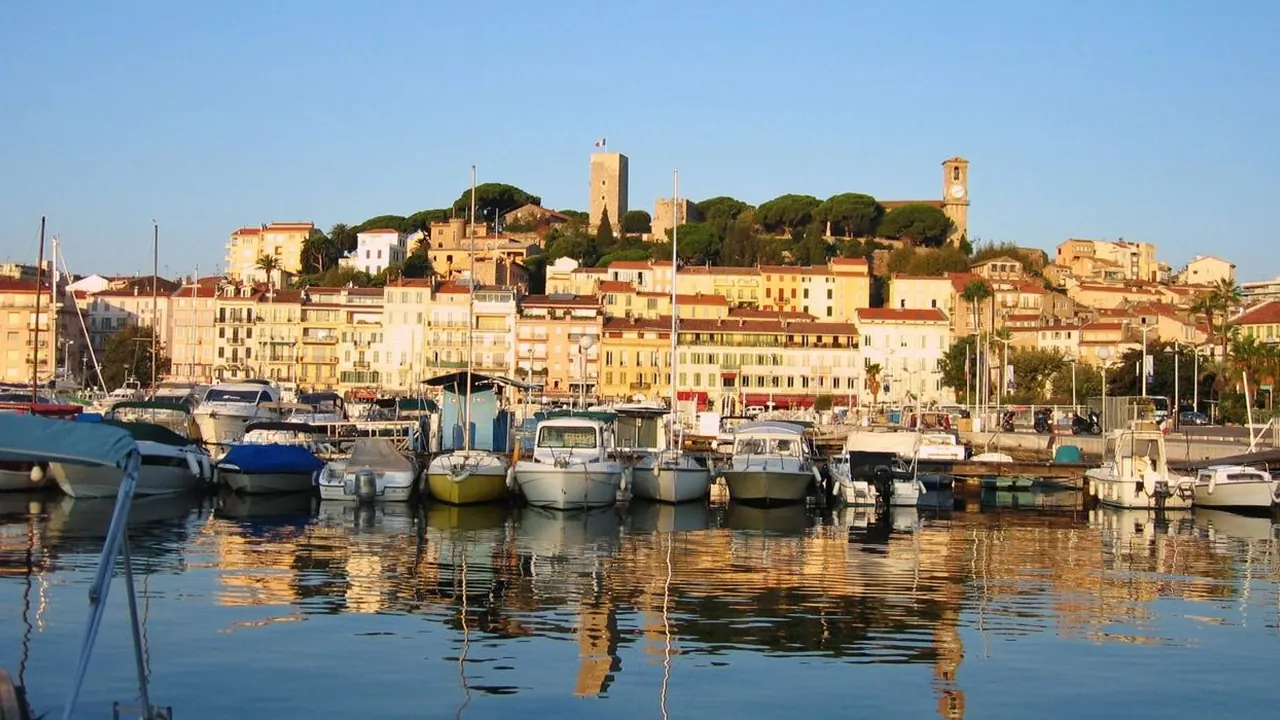
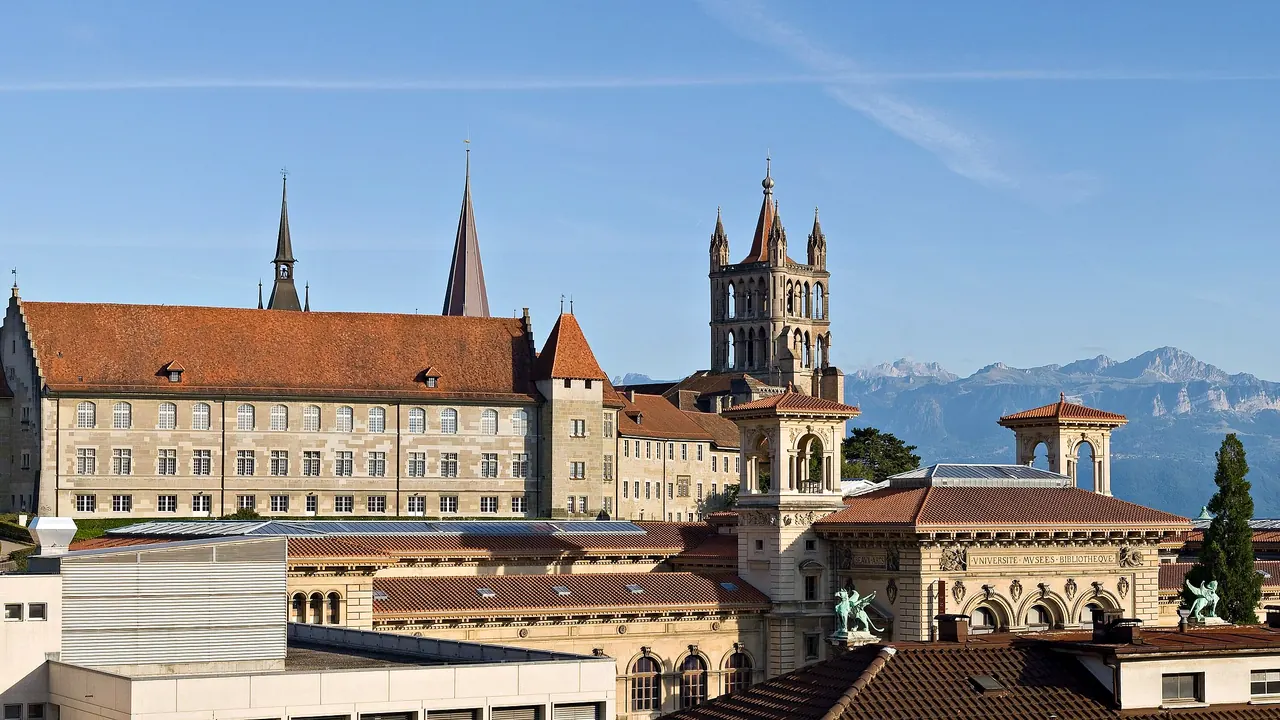
Photos: Cannes by qwesy qwesy, CC BY 3.0, cropped; Lausanne by Christian Mehlführer, CC BY-SA 3.0, cropped.
Cannes or Lausanne?
Our verdict in twelve categories, each scored against the same fixed benchmark cities, and the climate month by month, so you can choose for your trip.
Choose Cannes for
- beaches
- shopping
- prices
Cannes is the pick for a sun-and-sea vacation on the Riviera. Its sandy bay, warm Mediterranean and string of coastal towns make it easy to fill a week with beach mornings and train rides to Antibes, Nice or Monaco. It also suits travellers who like to shop along a seafront lined with the big fashion houses. Expect long summer evenings on a terrace with rosé, and don't come expecting much in the way of museums.
Choose Lausanne for
- live music and the arts
- culture and sights
- nature and the outdoors
Lausanne rewards travellers who want mountains, vineyards and a serious cultural calendar more than a tan. The Lavaux terraces, the Alps across the lake and Swiss trains that reach Bern, Gruyères and Chillon without a car make it an excellent base for active days. In the evenings there is ballet, contemporary theatre and opera. It costs even more than Cannes, but families and walkers get a lot back for it.
Scoreboard
Twelve categories on one fixed scale from 0 to 100. The shaded stretch is the gap between the two.
Your match
Pick a travel style or drag the sliders, and both match scores follow your weighting.
Too close to call, 1 point apart
Wins on beaches and shopping with your weighting.
Wins on live music and the arts and culture and sights with your weighting.
What matters to you?
Category by category
What the scores mean for a trip.
Beaches & swimming
Cannes is a genuine beach town. The Croisette follows a sandy bay on warm, calm Mediterranean water. Private concessions take much of the frontage, but the Plage du Midi stays broad and mostly free. Boats to the Lérins islands and the coves of the Esterel give you clearer water within easy reach.
Lausanne has no sea. Its swimming is lake bathing from grass, piers and pebbles at Vidy, Bellerive and Lutry, and the season lasts only about two months. Treat a swim there as a pleasant summer extra rather than the reason for the trip.
Food & drink
The two cities are about level on food, but they eat very differently. Cannes cooks from the sea and Provence: bouillabaisse, socca and grilled fish in Le Suquet, with the Forville market behind the port. The cooking on the waterfront itself is often tired.
Lausanne is lake perch, papet vaudois and winter fondue. Its real strength is wine, with Lavaux Chasselas tasted straight from the growers in village caveaux. Both cities have an impressive top tier of restaurants and a rather plain middle.
Culture & sights
Lausanne has more to see. The carved Gothic cathedral, still with its night watchman calling the hours, sits above an old town of covered stairways. Below it, the Olympic Museum and the museums grouped at Plateforme 10 and the Art Brut collection give you two or three full days.
Cannes is more about atmosphere than sights. You can cover the castle museum on Le Suquet, the Belle Époque palace hotels and the red-carpet steps of the Palais des Festivals in a single morning. For real art you have to travel along the coast.
Nightlife
Neither city is a party destination, and each goes out in its own way. In Cannes, nightlife is seasonal and glamorous: beach clubs and champagne along the Croisette in summer and during the festivals, then early nights for the rest of the year.
Lausanne's nights are driven by students and centred on the Flon. Clubs and late bars fill old warehouses at weekends all year round, and the price of a drink is the main thing holding the scene back.
Nature & outdoors
Lausanne has the bigger landscape on its doorstep. The Lavaux vineyards fall to the lake, the French Alps rise on the far shore, and the Vaud Alps and the Jura are both about an hour away for hiking, skiing and glacier trips.
Cannes is still a fine outdoor base, but its strengths lie by the water: the red volcanic Esterel, island paths through pine and eucalyptus, and diving and kayaking around the Lérins. Its high mountains are further off, and summer fire risk can close the forest trails.
Day trips
Both cities make outstanding bases, and in both the train does most of the work. From Cannes the coastal line runs to Antibes, Nice, Monaco and Menton, and a bus or car takes you up to perched villages such as Saint-Paul-de-Vence and Èze.
From Lausanne the trips are more varied. You can reach Chillon and Montreux, or go further to Geneva, Bern, Gruyères and Murten, and a boat crosses the lake to France. On the Riviera you mostly hop along one coastline, while the Swiss trips cross lakes, cities and the countryside.
Good for families
Lausanne gives children more to do. There is the hands-on Olympic Museum, an aquarium-vivarium, and the Sauvabelin woods with animals, pedal boats and a lookout tower, plus paddle steamers on the lake. The steep streets are the main hardship for anyone pushing a buggy.
Cannes is easier on the legs, with a flat Croisette, carousels and gently shelving sand. Beyond the beach and the island picnic, though, little in town is aimed at children, so families end up heading along the coast for outings.
Getting around
Lausanne is easier to get around despite its hills. The m2 metro climbs from the lakeshore to the upper town, and the Swiss rail network is fast and punctual enough that you hardly ever need a car.
Central Cannes is flat and walkable, apart from the climb to Le Suquet, and the coastal trains work well. Grasse, the hill villages and the Esterel corniche are far easier with a car, though, and summer traffic and parking make driving a chore.
Shopping & style
Cannes is the better shopping trip. The big Paris fashion and jewellery houses face the sea along the Croisette, Rue d'Antibes adds a long run of mid-range French fashion and shoe shops, and Rue Meynadier sells olive oil and Provençal fabrics. Perfume is a short trip away in Grasse.
Lausanne's Rue de Bourg is good for a Swiss watch or chocolate, but there is no real luxury district and few independents. Shopping there fits around other plans.
Affordability
Both cities are expensive, but Cannes is easier on the wallet. Away from the waterfront and outside festival weeks, costs settle back towards normal French levels. Backstreet lunch menus, the free beaches and cheap coastal trains help, and staying in a neighbouring town is a real option.
In Lausanne, Swiss prices apply everywhere, from hotels and taxis to a simple lunch. Supermarket picnics, the free lakeside walks and a glass of Chasselas in a caveau are the main ways to make your money go further.
Live music & performing arts
Lausanne has much more on stage. The Béjart Ballet and the Prix de Lausanne make it a centre for dance, the Théâtre de Vidy produces contemporary work that tours Europe, and the opera and chamber orchestra run full seasons. Montreux Jazz is a short train ride away in July.
Cannes's famous festival is mostly closed to the public, apart from the free beach screenings. Outside that, there are summer concerts in the Le Suquet castle courtyard and touring shows at the Palais, but little else.
Wellness & relaxation
Lausanne is the better place to switch off. It has thermal water within reach at Yverdon-les-Bains and at Lavey-les-Bains, the hottest springs in Switzerland, as well as grand hotel spas and quiet paths through the Lavaux vines.
Cannes has no springs. Its relaxation comes from palace-hotel spas, thalassotherapy and slow mornings on a terrace in spring or autumn, and the August crowds and festival weeks undo much of that calm.
When should you go?
Pick your month. The climate figures are measured averages, not a forecast.
Cannes in July
Lausanne in July
Daytime high, °C
Rainfall in the month, mm
Where the figures come from
Lausanne's temperatures are measured 40 km from the centre, at Payerne.
Lausanne has no rain gauge within 25 km of the centre, so its rainfall comes from a gridded climate dataset read at the city rather than from a gauge further away.
Temperature and rainfall are climate normals, averaged over the years shown. Cannes: 2004-2020 (sunshine 1991-2020, rainfall 1991-2020) normals, Cannes (5.8 km from centre). Lausanne: 1991-2020 (sunshine 1961-1990) normals, Payerne (39.7 km from centre).
Cannes has the longer and sunnier warm season. Highs reach 29°C in July and August, and the sea is warm enough to swim in from June to early October, peaking around 25°C in August. Summer is very dry. The rain arrives in autumn, and November is the wettest month at 138mm. Spring and early autumn are mild and good for walking the streets, and winters stay cool but rarely cold.
Lausanne has a proper Alpine-edge winter, with highs near 4°C in January and grey skies, so it is better suited to ski days in the mountains than to wandering the city. It is at its best from June to September, when highs reach about 26°C and the lake is warm enough for a swim. Rain is spread across the whole year, and summer is actually a little wetter than winter, so pack for showers whatever the month. Through most of the year Cannes gets clearly more sunshine.
Which traveller are you?
For a beach and sun trip, Cannes is the clear choice. Its long, dry summer and warm Mediterranean let you spend whole days on the sand and swim for about four months. In Lausanne, a lake swim is a summer pleasure but not a reason to go.
On a culture and arts trip, Lausanne gives far more. Cannes's sights fit into a morning, while Lausanne's cathedral quarter and museums fill several days. Its evenings also bring dance, theatre and opera of a standard rare in a city that size.
On a shopping trip, Cannes is the better bet. A seafront of luxury houses and a long street of everyday French fashion give you a real shopping day at either end of the market. In Lausanne, shopping fits around other plans, and it is mainly good for a watch or chocolate.
Before you go
| Measure | Cannes | Lausanne |
|---|---|---|
| Official language | French | French, German, Italian, Romansh |
| Currency | Euro (EUR) | Swiss Franc (CHF) |
| Sockets | CE230 V, 50 Hz | CJ230 V, 50 Hz |
| Driving side | Right | Right |
| Time zone | UTC+1, UTC+2 in summer | UTC+1, UTC+2 in summer |
| Emergency number | 112 | 112 |
| Elevation | 0 m | 495 m |
| Main airport | Nice-Côte d'Azur Airport (NCE)20 km from centre130 non-stop destinations | Geneva International Airport (GVA)52 km from centre150 non-stop destinations |
| Public holidays this year | 11 days | 9 days |
By the numbers
| Measure | Cannes | Lausanne |
|---|---|---|
| City population | 74,350 | 144,873 |
| People per km² | 3,793 | 3,499 |
| Museums within 10 km | 16 | 31 |
| UNESCO World Heritage sites within 50 km | 2 | 3 |
| Swim season, months above 21 °C | 4 months | - |
Where else could you go?
Every comparison below shares a destination with this one, so you can follow Cannes or Lausanne somewhere new.
- Antibesvs Cannes
- Nicevs Cannes
- Monacovs Cannes
- Saint-Tropezvs Cannes
- Genevavs Lausanne
- Chamonixvs Lausanne