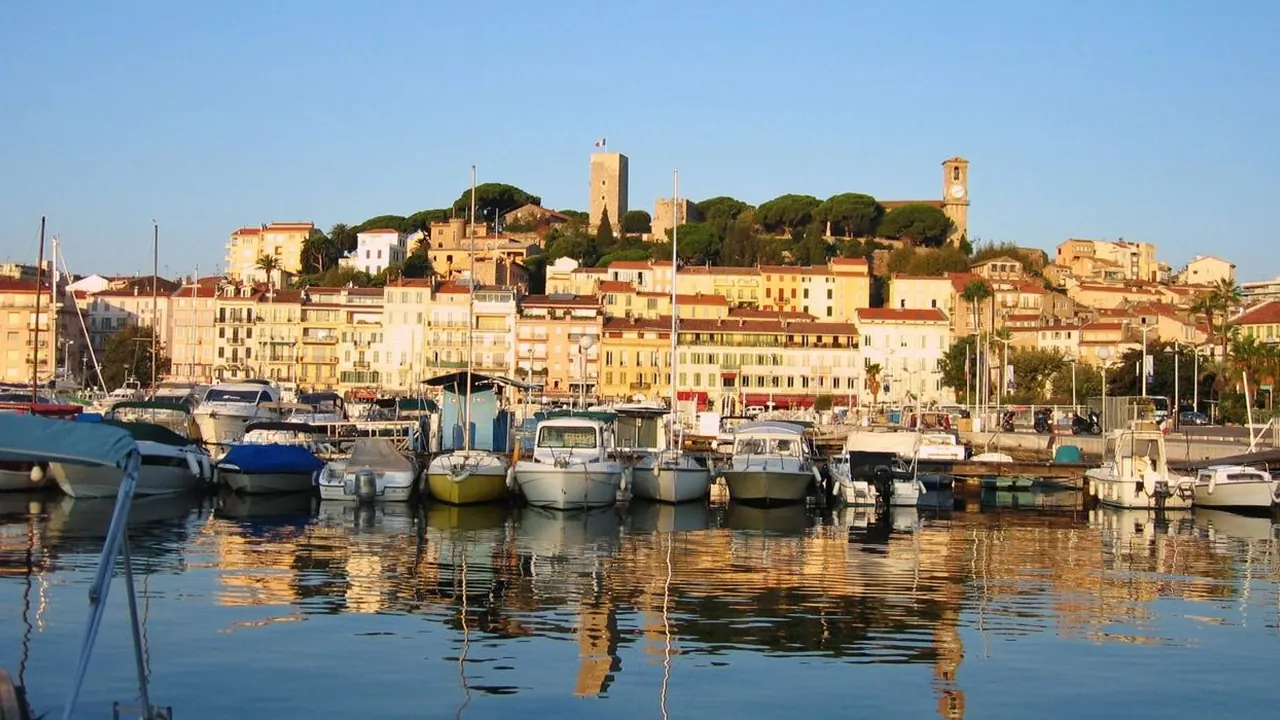
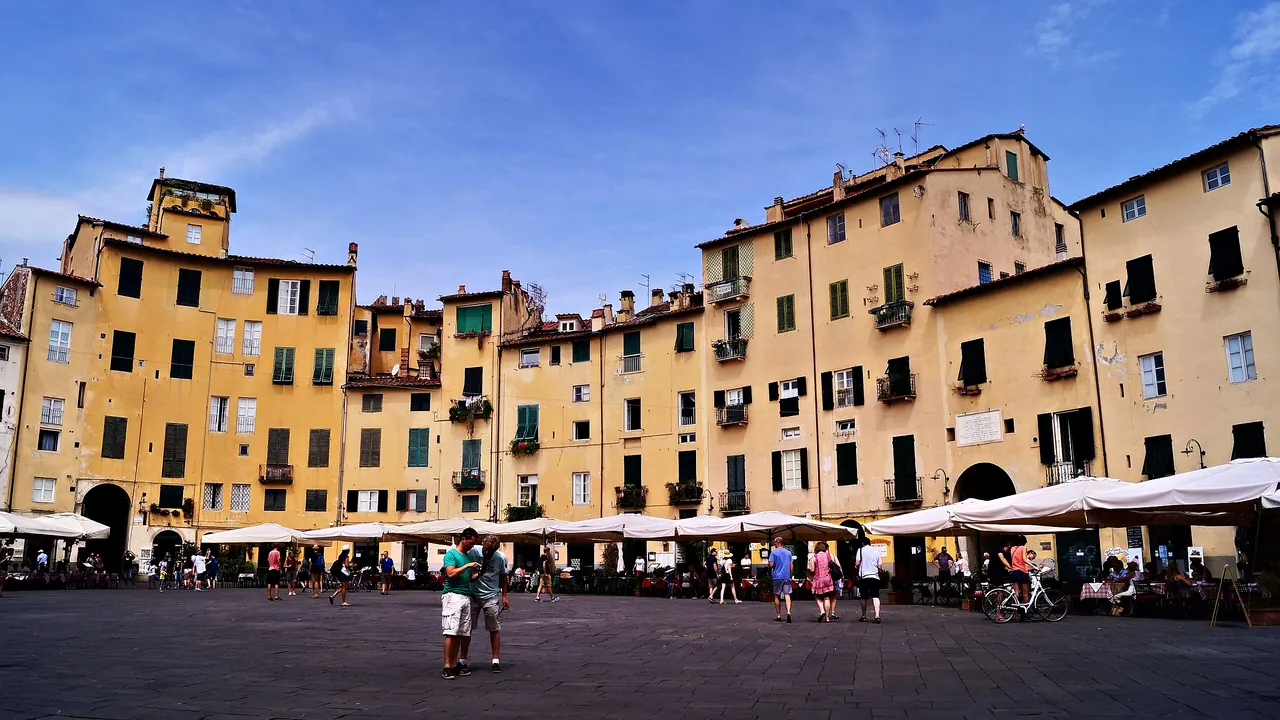
Photos: Cannes by qwesy qwesy, CC BY 3.0, cropped; Lucca by Stefano Sansavini, CC BY-SA 4.0, cropped.
Cannes or Lucca?
Our verdict in twelve categories, each scored against the same fixed benchmark cities, and the climate month by month, so you can choose for your trip.
Choose Cannes for
- beaches
- nightlife
- shopping
Cannes is the pick when the sea is the point of the trip. You walk from your room onto the sand of the Croisette, swim from June into early October, take a boat out to the Lérins islands and spend summer evenings in beach clubs and cocktail bars, with the luxury windows of the seafront close at hand. It suits a stay built around sun and style, for travellers who don't mind paying for it and are happy to find their art and history further along the coast rather than in town.
Choose Lucca for
- culture and sights
- prices
- live music and the arts
Lucca is better for those who want an old town to live in for a few days. Inside its complete walls are Romanesque churches, towers you can climb and a piazza that follows the line of a Roman amphitheatre, with Puccini in the evenings, and it costs noticeably less than the Riviera. Nights are quiet and the beach is a train ride away. As a base for Pisa, Florence and the Apuan Alps, though, it is hard to fault.
Scoreboard
Twelve categories on one fixed scale from 0 to 100. The shaded stretch is the gap between the two.
Your match
Pick a travel style or drag the sliders, and both match scores follow your weighting.
Too close to call, 2 points apart
Wins on beaches and nightlife with your weighting.
Wins on culture and sights and prices with your weighting.
What matters to you?
Category by category
What the scores mean for a trip.
Beaches & swimming
Cannes puts the beach on your doorstep: fine sand along the Croisette and calm water, plus the wide, mostly free Plage du Midi for anyone who wants to skip the private concessions. Boats to the Lérins islands and the red-rock coves of the Esterel offer clearer water and rocky swimming close by.
Lucca has no shore of its own. The Versilia sand starts at Viareggio, about 25 minutes away by train. It is long and gently shelving, mostly lined with rows of beach-club umbrellas, and the pine-backed Lecciona dunes are there if you want something wilder. It works as an afternoon after sightseeing, not as a vacation built around the sea.
Food & drink
Neither is a great food destination, and the difference is one of style. Cannes eats from the sea and the Provençal market: the Forville stalls, bouillabaisse, socca and grilled fish in Le Suquet, and rosé on a terrace. There is real fine dining in the palace hotels and around Mougins, though the waterfront serves a lot of tired, overpriced food.
Lucca is more rustic and more its own: farro soup, tordelli in ragù, chickpea cecina, chestnut dishes in the cooler months and buccellato, all eaten in family trattorias at fair prices. It lacks the top end that Cannes can offer, and the menus start to repeat after a few days.
Culture & sights
This is where Lucca pulls well ahead. The whole walled city is the sight: Romanesque churches such as San Michele in Foro and San Frediano, the cathedral with the tomb of Ilaria del Carretto, the oval Piazza dell'Anfiteatro and towers to climb. That is enough for two full days.
Cannes fills a pleasant morning: the castle museum and church on Le Suquet, the Belle Époque hotels of the Croisette and the red-carpet steps of the Palais des Festivals. For serious art, visitors staying in Cannes head along the coast to Antibes or Saint-Paul-de-Vence.
Nightlife
Cannes has the livelier nights, at least in summer and during festival weeks. Beach clubs on the Croisette turn into party venues, a few clubs stay open until dawn and the lanes behind the old port fill with cocktail bars. The crowd dresses up and drinks champagne, and out of season the town goes quiet.
An evening in Lucca means an aperitivo in Piazza San Michele, dinner and a walk on the walls, with a few wine bars and student pubs on the side. Anyone who wants to dance has to go to the discos of the Versilia coast and arrange a late ride back.
Nature & outdoors
Both have fine country within reach, but of different kinds. Around Cannes it is sea and red rock: trails and the corniche road in the volcanic Esterel, pine paths on Sainte-Marguerite and the shore path round Cap d'Antibes. On the water there is sailing, kayaking and diving around the islands.
Lucca's outdoors is mountains and countryside. The walls make a 4km ring for running and cycling, and the Apuan Alps, scarred by marble quarries, offer serious hiking within an hour. The chestnut woods of the Garfagnana and the reed beds of Massaciuccoli suit quieter walks and birdwatching. Water sports belong to Cannes, mountain hiking to Lucca.
Day trips
Both are outstanding bases, so the choice comes down to what you want to see. From Cannes, the coastal train links Antibes, Nice, Villefranche, Monaco and Menton. Perched villages such as Saint-Paul-de-Vence and Èze, the perfume town of Grasse and, further west, Saint-Tropez complete the list.
From Lucca, the pull is the great Tuscan art cities: Pisa is half an hour away and Florence a little over an hour. Pistoia, the villas and gardens of the Lucca countryside, and the marble towns of Pietrasanta and Carrara are all close, and the Cinque Terre and San Gimignano make long days out.
Good for families
Families will find both easy and neither thrilling. Cannes is about the beach: gently sloping sand, calm water, a flat promenade with carousels, and a boat trip to the Lérins islands for a picnic under the pines.
Lucca's appeal is its traffic-free centre, where children can ride the walls on a family quadricycle and climb the tree-topped Torre Guinigi. Pinocchio Park at Collodi and the Versilia beaches are nearby, and Lucca Comics & Games in autumn is a big draw for teenagers.
Getting around
Both centres are small and flat, but Lucca is the easier of the two. Inside its walls most streets are closed to ordinary traffic, so walking and cycling get you everywhere, and the station sits just outside the southern walls. Cannes is walkable too, apart from the steep climb to Le Suquet, and its central station makes trips along the Riviera simple.
Beyond town, both need a car: for Grasse and the Esterel corniche from Cannes, and for the villas and the Garfagnana from Lucca. Cannes also has heavy summer traffic and little parking.
Shopping & style
Cannes is the far stronger shopping town. The big Paris fashion and jewellery houses line the Croisette, Rue d'Antibes adds over a kilometre of mid-range French fashion and chocolatiers, and Rue Meynadier sells Provençal olive oil, fabrics and soaps.
Lucca is charming but small. Via Fillungo has Liberty-style shopfronts, and the lanes around it hold delicatessens with farro and buccellato and a few paper and craft workshops. The monthly antiques market around the cathedral is the one thing shoppers travel for.
Affordability
Lucca is much easier on the budget. Trattoria meals and trains are fairly priced and the walls and many churches are free. Rooms are the main cost, and staying just outside the walls makes money go further.
Cannes is priced for a wealthy crowd along the waterfront, and costs climb sharply during the film festival and trade fairs. Public beaches, picnics from Forville, backstreet lunches or sleeping in a neighbouring town all help, but it stays the more expensive place to stay.
Live music & performing arts
Lucca has more to hear on an ordinary visit. Puccini recitals run in a central church for most of the year, and the Teatro del Giglio has a full season of opera and concerts. Summer adds the Lucca Summer Festival in Piazza Napoleone and open-air opera by the lake at Torre del Lago.
Cannes is famous for a film festival that most visitors cannot attend, apart from the free beach screenings. Its regular programme is modest: shows at the Palais, the philharmonic, a dance festival and summer concerts on Le Suquet, with jazz along the coast at Juan-les-Pins.
Wellness & relaxation
Neither has a bathing tradition of its own, but Lucca makes it easier to unwind. Its quiet, car-free lanes and shady walls set a slow pace, and real spa towns are close by: the belle époque baths of Montecatini, the cave pools of Monsummano and the steam grottoes of Bagni di Lucca.
Cannes relies on polished palace-hotel spas and seawater thalassotherapy along the coast. The seafront is restful in spring and autumn, but festival weeks and August are too crowded for real rest.
When should you go?
Pick your month. The climate figures are measured averages, not a forecast.
Cannes in July
Lucca in July
Daytime high, °C
Rainfall in the month, mm
Temperature and rainfall are climate normals, averaged over the years shown. Cannes: 2004-2020 (sunshine 1991-2020, rainfall 1991-2020) normals, Cannes (5.8 km from centre). Lucca: 1991-2020 normals, Pisa / S. Giusto (21.4 km from centre).
The two places follow a similar year, but Cannes is the sunnier and drier of the two in summer. On the Riviera, July and August reach 29°C with almost no rain, and the sea warms to about 25°C, so swimming is comfortable from June to early October. Lucca sits inland on the plain and gets slightly hotter, around 30°C in high summer, which makes midday sightseeing hard work. The Versilia sea is just as warm, but you reach it by train.
Both turn wet in autumn, with October and November the rainiest months at around 130mm, and Cannes stays a couple of degrees milder through the winter. For walking Lucca's streets and walls, May, June and September are the best months. Cannes is pleasant for strolling from April, and its swimming weather lasts a little later into the autumn.
Which traveller are you?
On a beach and sun trip, Cannes is the clear choice. The sand starts at the end of the street, the water is calm, summers are sunny and dry, and the Lérins islands and Esterel coves add variety. In Lucca the beach means a train to Viareggio every day.
For a culture and arts trip, Lucca wins easily. Its complete walls, Romanesque façades, cathedral treasures and towers fill two rich days, Puccini recitals and the Teatro del Giglio take care of the evenings, and Florence and Pisa are close by train.
On a shopping trip, Cannes has far more to offer. The great Paris fashion and jewellery houses face the sea on the Croisette, with Rue d'Antibes behind for mid-range labels. Lucca has Via Fillungo and a monthly antiques market, but little depth.
Before you go
| Measure | Cannes | Lucca |
|---|---|---|
| Official language | French | Italian |
| Currency | Euro (EUR) | Euro (EUR) |
| Sockets | CE230 V, 50 Hz | CFL230 V, 50 Hz |
| Driving side | Right | Right |
| Time zone | UTC+1, UTC+2 in summer | UTC+1, UTC+2 in summer |
| Emergency number | 112 | 112 |
| Elevation | 0 m | 19 m |
| Main airport | Nice-Côte d'Azur Airport (NCE)20 km from centre130 non-stop destinations | Pisa International Airport (PSA)21 km from centre82 non-stop destinations |
| Public holidays this year | 11 days | 13 days |
By the numbers
| Measure | Cannes | Lucca |
|---|---|---|
| City population | 74,350 | 88,798 |
| People per km² | 3,793 | 478 |
| Museums within 10 km | 16 | 20 |
| UNESCO World Heritage sites within 50 km | 2 | 4 |
| Swim season, months above 21 °C | 4 months | 4 months |
Where else could you go?
Every comparison below shares a destination with this one, so you can follow Cannes or Lucca somewhere new.