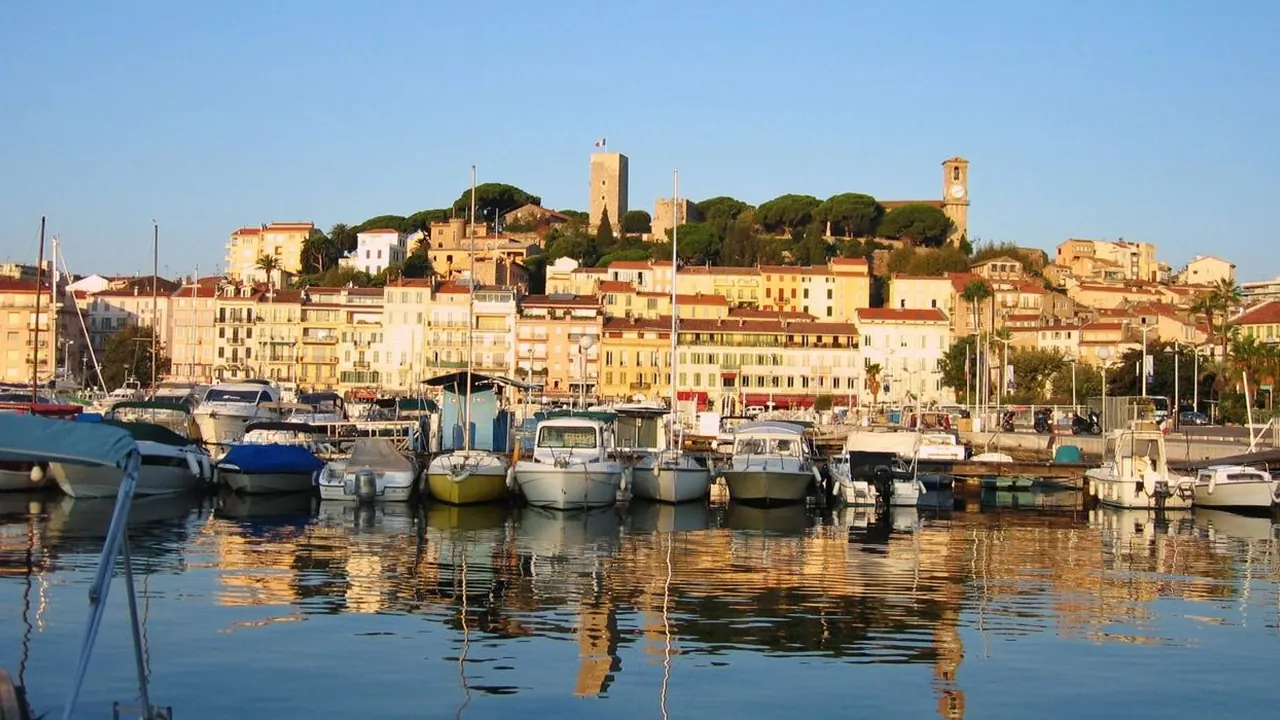
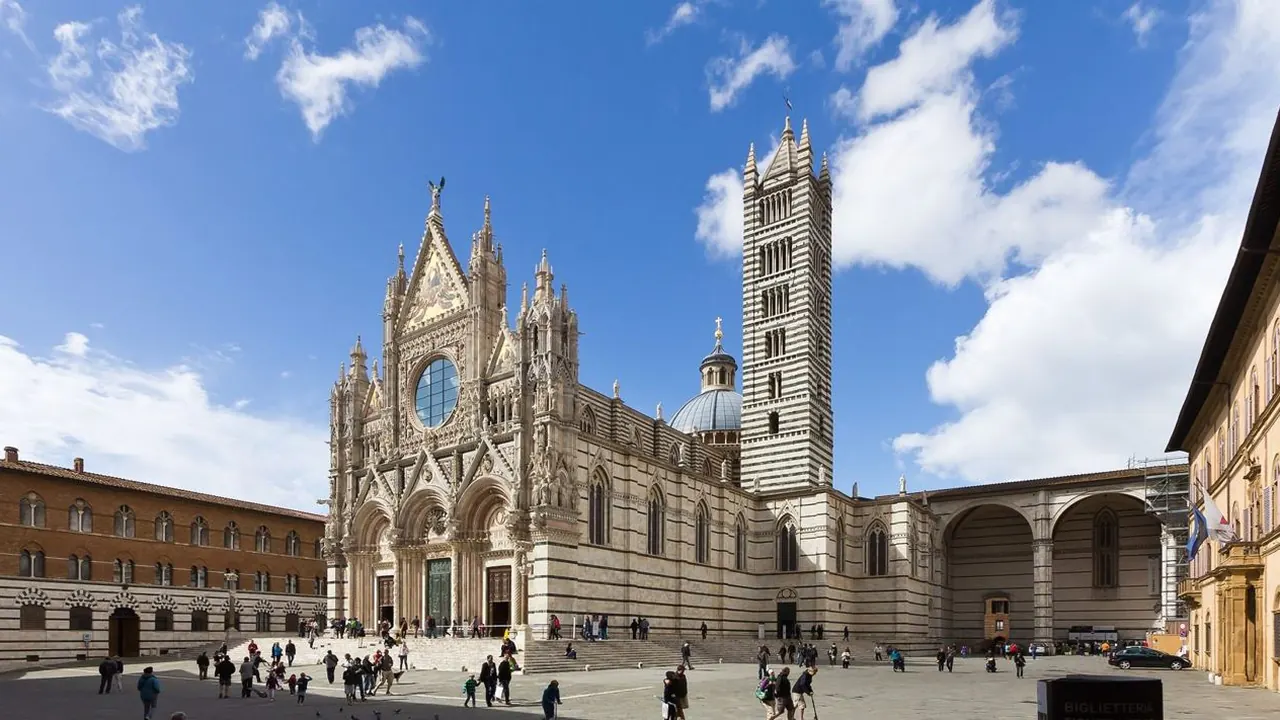
Photos: Cannes by qwesy qwesy, CC BY 3.0, cropped; Siena by Raimond Spekking, CC BY-SA 4.0, cropped.
Cannes or Siena?
Our verdict in twelve categories, each scored against the same fixed benchmark cities, and the climate month by month, so you can choose for your trip.
Choose Cannes for
- beaches
- shopping
- families
Cannes suits a summer vacation built around the sea: sand along the Croisette, swims off the Lérins islands, red rock in the Esterel, and a coastal railway that links Antibes, Nice and Monaco without a car. It is also the better pick for families with small children, for a dressed-up evening in season and for luxury shopping, as long as the budget can stretch to one of the more expensive towns on the coast.
Choose Siena for
- culture and sights
- prices
- wellness
Siena is for travellers who come for art, history and the table. Its medieval centre, the Duomo and the Sienese painters give it a depth Cannes cannot match. The cooking and wine are more firmly rooted in the place, and the hill towns, abbeys and hot springs around it make for a slower, richer stay. There is no sea, the nights are quiet and the countryside calls for a car.
Scoreboard
Twelve categories on one fixed scale from 0 to 100. The shaded stretch is the gap between the two.
Your match
Pick a travel style or drag the sliders, and both match scores follow your weighting.
Wins on beaches and shopping with your weighting.
Wins on culture and sights and prices with your weighting.
What matters to you?
Category by category
What the scores mean for a trip.
Beaches & swimming
This is the widest gap between the two. Cannes has a curve of fine sand along the Croisette on calm water, where private concessions alternate with public stretches and the plainer Plage du Midi is mostly free. Pine-shaded rocks on the Lérins islands and the red coves of the Esterel are both close.
Siena sits inland in the hills, so a swim means the pool at your hotel or farmhouse, or a full day out to the Maremma coast around Castiglione della Pescaia. Anyone who wants the sea every day should stay in Cannes or split the trip.
Food & drink
Cannes cooks from the Forville market and the sea: bouillabaisse, grilled fish, socca and pink rosé on a terrace, with real fine dining in the palace hotels and around Mougins. Away from that, much of the waterfront serves predictable food to passers-by, and few dishes are the town's own.
Siena eats better from day to day. Pici with duck ragù, ribollita, cinta senese pork and the panforte and ricciarelli of its old bakeries all belong to the city, and Chianti Classico, Brunello and Vino Nobile are grown nearby. There is little beyond Tuscan cooking, but the family osterie of the contrade are the better reason to book a table.
Culture & sights
Cannes offers the old quarter of Le Suquet with its castle museum, the Belle Époque palace hotels and the red-carpet steps of the Palais des Festivals. It is pleasant, and you can see all of it in a morning.
Siena is on another level. Its whole medieval centre is UNESCO-listed, and it holds the Campo, the Palazzo Pubblico with Lorenzetti's Good and Bad Government, the Duomo's marble floor, Duccio's Maestà and the Sienese school in the Pinacoteca. It rewards two or three full days.
Nightlife
Neither is a nightlife city, but Cannes gives you more reason to go out in summer. From June to September the beach clubs on the Croisette host evening parties, a few clubs stay open until dawn and the streets behind the old port fill with cocktail bars, all glamorous and expensive. Out of season it goes quiet.
Siena's evenings are a long dinner, wine on the Campo and a walk, with a few student pubs and almost no clubs. Only on the nights around the Palio, when the contrade dine outdoors, do the streets stay full late.
Nature & outdoors
Cannes has the more dramatic setting. The red volcanic Esterel drops into a deep blue sea, there are pine paths on Sainte-Marguerite and wild shore around Cap d'Antibes, and you can go sailing, kayaking and diving, with the pre-Alps and winter skiing further inland. In high summer, fire risk can close the forest trails.
Siena's countryside is gentler: the bare clay hills of the Crete Senesi and the rolling Val d'Orcia, best seen by bike on the strade bianche or on foot along the Via Francigena. With no coast or high mountains, it cannot match Cannes for water sports or rugged scenery.
Day trips
Both are excellent bases. From Cannes the coastal train links Antibes, Nice, Villefranche, Monaco and Menton, and Grasse, Saint-Paul-de-Vence and Saint-Tropez are within reach by road. Much of the Riviera works without a car.
Siena has even more around it: Florence, San Gimignano, Volterra, the Chianti villages, Pienza, Montalcino, Montepulciano and abbeys such as Monte Oliveto Maggiore and San Galgano. The catch is that most of the hill towns and wineries really need a car.
Good for families
Cannes is easier with young children. It has gently sloping sand, calm water, a flat promenade with carousels and play areas for pushchairs and scooters, and a boat trip to picnic under the island pines. Little in town is aimed at children, but the beach fills the days.
Siena is safe and largely free of cars, and older children enjoy climbing the Torre del Mangia and watching the contrada drummers. But its steep streets are hard with a pushchair and nothing there is made for children, so families often stay at a countryside farmhouse with a pool.
Getting around
Central Cannes is flat and compact, with the station in the middle of town and regional trains running straight along the coast. You only need a car for the perched villages and the Esterel, and the price of driving is summer traffic and scarce parking.
Siena's walled centre is mostly closed to traffic and quick to cross on foot. It spreads over three ridges, though, so expect steep, stepped lanes and a chain of escalators up from the station. Trains out are slow and few, buses are the better link, and most visitors hire a car for the countryside.
Shopping & style
Cannes is much the stronger of the two for shopping. The great Paris fashion and jewellery houses face the sea along the Croisette, Rue d'Antibes adds over a kilometre of mid-range French fashion and chocolatiers, and Rue Meynadier sells olive oil, cheese and Provençal soaps.
Siena has no luxury street. Banchi di Sopra and Via di Città offer Italian clothing, leather goods and stationery, and the best things to take home are majolica, contrada scarves, panforte, pecorino and wine.
Affordability
Cannes is an expensive place to stay. Hotel rooms climb steeply during the film festival and the trade fairs, and seafront loungers and cocktails are priced for the wealthy. Backstreet lunch menus, Forville market picnics, public beaches and cheap coastal trains are the ways to keep costs down.
Siena is easier on the budget, though not cheap. Rooms inside the walls are scarce and cost more around the Palio, and museum tickets add up. Osteria lunches are good value, you can walk everywhere for free, and an agriturismo outside town brings the bill down further.
Live music & performing arts
Neither has a large live programme, and they differ more in kind than in amount. Cannes revolves around film. The festival itself is for the industry, but there are free screenings on the beach, shows at the Palais des Festivals, the regional philharmonic, a dance festival and summer concerts in the Suquet castle courtyard, with jazz at Juan-les-Pins nearby.
Siena's strength is its music schools. The Accademia Chigiana fills palaces and churches with classical concerts in summer, Siena Jazz adds its own concerts, and two historic theatres stage drama through the winter. For opera, you go to Florence.
Wellness & relaxation
Cannes is restful because of its pace more than its facilities. It has palace hotel spas, thalassotherapy along the coast and slow terrace mornings in spring and autumn, but no public baths, and August and festival weeks are too noisy for real rest.
Siena has the thermal water Cannes lacks. The travertine pools of Rapolano Terme are about half an hour away, and further south are the medieval bath at Bagno Vignoni, the free white pools of Bagni San Filippo and Petriolo's hot river, all easy to combine with a stay at a rural spa hotel.
When should you go?
Pick your month. The climate figures are measured averages, not a forecast.
Cannes in July
Siena in July
Daytime high, °C
Rainfall in the month, mm
Where the figures come from
Siena's temperatures are measured 45 km from the centre, at Arezzo.
Siena has no rain gauge within 25 km of the centre, so its rainfall comes from a gridded climate dataset read at the city rather than from a gauge further away.
Temperature and rainfall are climate normals, averaged over the years shown. Cannes: 2004-2020 (sunshine 1991-2020, rainfall 1991-2020) normals, Cannes (5.8 km from centre). Siena: 2006-2017 (rainfall 1991-2020) normals, Arezzo (45 km from centre).
Cannes is a summer and early autumn destination. The sea is warm enough to swim from June, and July and August bring highs around 28°C, water near 25°C, long sunny days and hardly any rain. September stays warm with the sea still about 23°C, so the beach season runs into early October. After that the rain arrives. October and November are the wettest months, with up to 138mm, and the sunshine falls away. Winter is mild enough for walks along the seafront but too cool for the beach.
Siena has sharper seasons and no sea to plan around. July and August reach about 31°C, which is hard going on its steep streets, and winter days are chilly for sightseeing. Rain falls through most of the year. July and August are the driest months, March, May and September each bring wet spells, and November and December are the wettest of all. Late April, May, September and early October are best for walking the town and the countryside, with a jacket for showers. September is the month the two share best: the last full beach month in Cannes, and a mild if sometimes wet month in Siena's hills.
Which traveller are you?
On a beach and sun trip, Cannes lets the whole day revolve around the water: an early swim, lunch in the shade, a ferry out to the islands in the afternoon and an evening walk by the bay. From Siena, every swim costs a full day's drive.
For a culture and arts trip, Siena lets you stay with the subject. You can see the museums early before the day visitors arrive, spend afternoons in San Gimignano or the abbeys and finish with dinner in a contrada. Cannes works better as a base for the coast's art towns.
On a trip on a tight budget, Siena goes further. The town itself is the attraction, and wandering its lanes and sitting on the Campo cost nothing. In Cannes the main draw is the waterfront, where everything costs most, so budget travellers often sleep in a cheaper neighbouring town.
Before you go
| Measure | Cannes | Siena |
|---|---|---|
| Official language | French | Italian |
| Currency | Euro (EUR) | Euro (EUR) |
| Sockets | CE230 V, 50 Hz | CFL230 V, 50 Hz |
| Driving side | Right | Right |
| Time zone | UTC+1, UTC+2 in summer | UTC+1, UTC+2 in summer |
| Emergency number | 112 | 112 |
| Elevation | 0 m | 322 m |
| Main airport | Nice-Côte d'Azur Airport (NCE)20 km from centre130 non-stop destinations | Florence Airport, Peretola (FLR)55 km from centre46 non-stop destinations |
| Public holidays this year | 11 days | 13 days |
By the numbers
| Measure | Cannes | Siena |
|---|---|---|
| City population | 74,350 | 52,812 |
| People per km² | 3,793 | 446 |
| Museums within 10 km | 16 | 30 |
| UNESCO World Heritage sites within 50 km | 2 | 5 |
| Swim season, months above 21 °C | 4 months | - |
Where else could you go?
Every comparison below shares a destination with this one, so you can follow Cannes or Siena somewhere new.