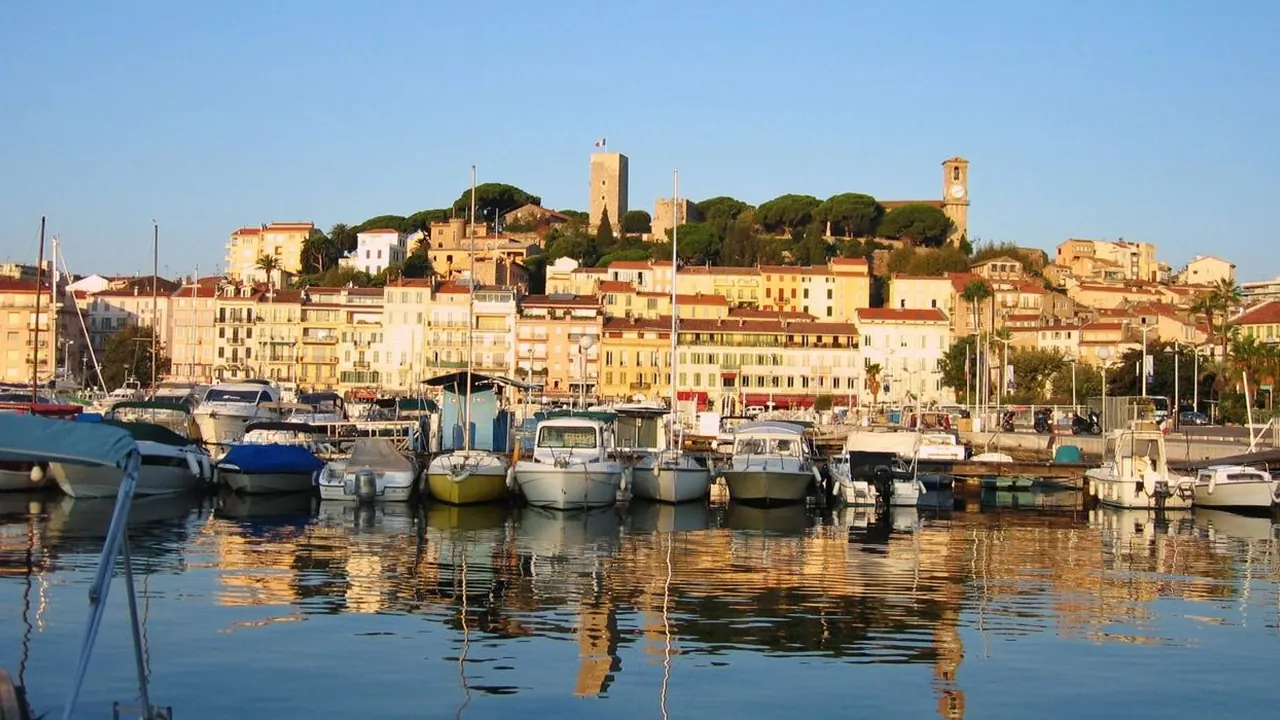
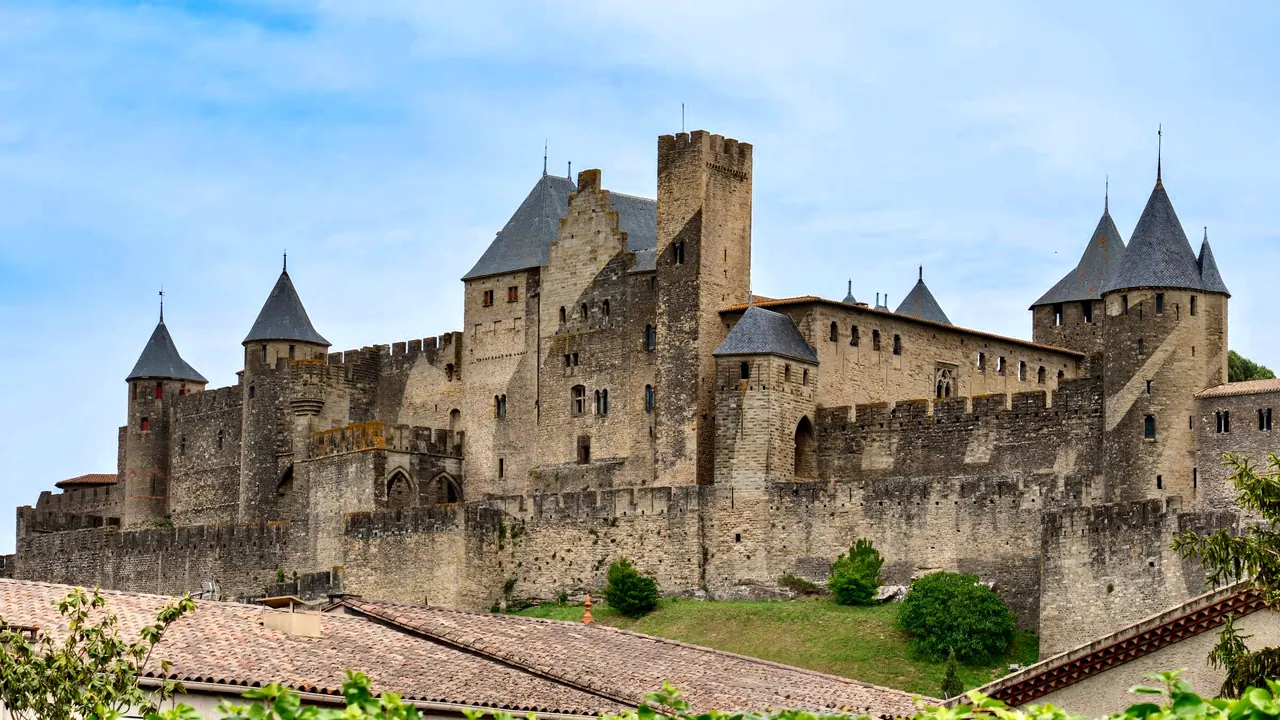
Photos: Cannes by qwesy qwesy, CC BY 3.0, cropped; Carcassonne by Susanne Jutzeler, suju-foto, Pexels License.
Cannes or Carcassonne?
Our verdict in twelve categories, each scored against the same fixed benchmark cities, and the climate month by month, so you can choose for your trip.
Choose Cannes for
- beaches
- shopping
- nightlife
Cannes suits a summer trip built around the sea. It has a sandy bay on the doorstep, the Lérins islands and the red Esterel coves close by, and a coastal railway that takes you to Antibes, Nice and Monaco with no trouble. It is also the better choice for luxury shopping and lively summer evenings, as long as your budget can handle Riviera prices.
Choose Carcassonne for
- prices
- culture and sights
Travellers who care more about history than swimming will get more from Carcassonne. The walls and towers of La Cité, the Bastide below and the Cathar castles in the hills give a trip real substance, and rooms, meals and wine cost noticeably less. Bring a car for the countryside and expect quiet evenings.
Scoreboard
Twelve categories on one fixed scale from 0 to 100. The shaded stretch is the gap between the two.
Your match
Pick a travel style or drag the sliders, and both match scores follow your weighting.
Wins on beaches and shopping with your weighting.
Wins on prices and culture and sights with your weighting.
What matters to you?
Category by category
What the scores mean for a trip.
Beaches & swimming
The gap here is wide. Cannes has a sandy bay right in town, with calm water and the long, mostly free Plage du Midi alongside the private concessions. Rocky swimming spots under the pines of the Lérins islands are a short boat ride away.
Carcassonne has no sea of its own. The lifeguarded Lac de la Cavayère works for an afternoon off from sightseeing, and the long beaches at Gruissan and Narbonne-Plage make a good day out about an hour's drive away. But a beach vacation belongs in Cannes.
Food & drink
Cannes offers more variety. The Forville market shows off Provençal vegetables, goat cheeses and the morning catch, Le Suquet has bouillabaisse and socca, and there is real fine dining in the palace hotels and around Mougins. Carcassonne is closer to a one-dish town: cassoulet dominates, and the better meals are in the Bastide rather than inside the walls.
Carcassonne does better on wine. Corbières, Minervois and Limoux blanquette are made locally and fairly priced, while along the Cannes seafront the rosé is easy to find but the food is often predictable and overpriced.
Culture & sights
Carcassonne is clearly the stronger destination for sights. Its double ring of walls with fifty-two towers is the most complete medieval fortified town in Europe. Add the Château Comtal, the Basilica of Saint-Nazaire and the arcaded Bastide below, and there is enough for two days.
Cannes offers a pleasant morning instead: the climb through Le Suquet to the castle museum and its view over the bay, the Belle Époque hotels along the Croisette, and the red-carpet steps of the Palais des Festivals.
Nightlife
Cannes has a real summer night scene. Beach clubs on the Croisette turn into party venues, a few clubs stay open until dawn and cocktail bars fill the streets behind the old port, all of it glamorous and expensive. Outside summer and festival weeks the town goes quiet.
Carcassonne's evenings are calm all year: a walk on the floodlit walls, a glass in a Cité wine bar, then the cafés around Place Carnot. For a proper night out from there, you have to go to Toulouse or Montpellier.
Nature & outdoors
Cannes has more dramatic scenery close at hand. The volcanic red rock of the Esterel drops into the sea twenty minutes to the west, the pine paths of Sainte-Marguerite and the shore of Cap d'Antibes make easy walks, and on the water you can sail, kayak and dive.
Carcassonne's countryside is more varied inland but needs a car: the beech forests of the Montagne Noire, the garrigue of the Corbières with castles on its ridges, and rafting in the Aude gorges. Its easiest option is the flat, plane-shaded towpath of the Canal du Midi, which is ideal for cycling.
Day trips
Both make excellent bases, but Cannes is the easier one. The coastal train links Antibes, Nice, Villefranche, Monaco and Menton without a car, and Grasse, Mougins and Saint-Paul-de-Vence are close behind the town.
Carcassonne's day trips are more about history and wine. The highlights are Peyrepertuse, Quéribus and Lastours, the abbey village of Lagrasse and the Corbières wine estates. Most of them need a car, though Toulouse and Narbonne are easy by train.
Good for families
For children the two are about level, but in different ways. Cannes offers gently sloping sand, calm water and a flat promenade with carousels that suits pushchairs, though little in town is made for children.
Carcassonne's draw is the castle itself, with ramparts, drawbridges and jousting in summer, plus the lake beach and water park at Cavayère. Its steep cobbles are harder with a pushchair than the Croisette.
Getting around
Cannes is easier to manage without a car. The centre is flat and walkable, the station is in the middle of town, regional trains run along the coast and ferries leave for the islands from the old port. Only the inland villages and the Esterel corniche really call for driving.
Carcassonne is easy on foot too, although the walk from the Bastide up to the Cité is a steady climb. Beyond Toulouse and Narbonne, public transport thins out quickly, so most visitors hire a car or join tours.
Shopping & style
Cannes is by far the better place to shop. The Paris fashion and jewellery houses face the sea along the Croisette, Rue d'Antibes adds over a kilometre of mid-range fashion and chocolatiers, and Rue Meynadier sells olive oil, cheeses and Provençal fabrics.
In Carcassonne, the lanes of the Cité sell mostly plastic swords and Cathar trinkets, and the Bastide has an ordinary provincial high street. The things worth taking home are edible: tinned cassoulet, Limoux blanquette and local wine.
Affordability
Carcassonne is much kinder to the budget. Rooms in the Bastide and by the canal are moderately priced outside high summer, and set lunches and local wine are good value. The expensive parts are the hotels inside the Cité walls and the car hire that most visitors need.
Cannes is priced for a wealthy crowd near the Croisette, and even more so during festival and trade fair weeks. Backstreet lunch menus, picnics from the Forville market, the public beaches and cheap coastal trains help, as does staying in a neighbouring town.
Live music & performing arts
Cannes has the fuller programme, though neither town is a major stage. The Palais des Festivals hosts concerts, touring shows and comedy, the regional philharmonic plays through the season, and in summer there are classical concerts in the castle courtyard on Le Suquet, with jazz just along the coast at Juan-les-Pins.
Carcassonne puts most of its effort into July, when the Festival de Carcassonne brings headline acts to the open-air theatre inside the Cité walls, and Bastille Day ends with fireworks over the ramparts. The rest of the year, the municipal theatre's modest programme is the main offering.
Wellness & relaxation
Cannes is the better choice for pampering. The palace hotels have polished spas using sea minerals and Provençal plants, there are thalassotherapy centres along the coast, and in spring and autumn the days settle into slow terrace mornings and evening walks by the bay.
Carcassonne has only a few hotel spas, and the thermal villages of Rennes-les-Bains and Alet-les-Bains are small, local places an hour's drive away. Its calm comes from walks along the canal and quiet evenings on the walls, and like Cannes it loses that calm to the crowds of high summer.
When should you go?
Pick your month. The climate figures are measured averages, not a forecast.
Cannes in July
Carcassonne in July
Daytime high, °C
Rainfall in the month, mm
Where the figures come from
Carcassonne has no rain gauge within 25 km of the centre, so its rainfall comes from a gridded climate dataset read at the city rather than from a gauge further away.
Carcassonne's sunshine is measured 68 km from the centre, at Perpignan.
Temperature and rainfall are climate normals, averaged over the years shown. Cannes: 2004-2020 (sunshine 1991-2020, rainfall 1991-2020) normals, Cannes (5.8 km from centre). Carcassonne: 1999-2020 (sunshine 1991-2020, rainfall 1991-2020) normals, Carcassonne (2.8 km from centre).
Cannes is at its best for the beach in summer. The sea is comfortable for swimming from June to early October and reaches about 25°C in August, while July and August are dry and very sunny. The weather turns in autumn: October and November are the wettest months, and November brings around 138mm, so a late-season trip can mean grey, rainy spells. Winters are mild by the sea, with highs near 13°C in January, which is pleasant for walking the Croisette.
Carcassonne gets just as hot in high summer, about 29°C in July and August, which makes the ramparts and cobbled lanes of the Cité hard going at midday. It is cooler in winter, closer to 10°C in January, and a little less sunny all year. Its rain is spread more evenly through the seasons, without the heavy autumn spell on the coast. May, June and September are the best months for sightseeing on foot.
Which traveller are you?
On a beach and sun trip, Cannes lets you swim daily straight off the sand, with Juan-les-Pins just east for a change. From Carcassonne, the lifeguarded Lac de la Cavayère is the nearest swim, and the sea is an hour's drive.
For a culture and arts trip, Cannes sends you along the coast, to the Picasso museum in Antibes or the art foundations of Saint-Paul-de-Vence. Carcassonne keeps its history on the doorstep, from Viollet-le-Duc's much-debated slate roofs to the UNESCO-listed Canal du Midi.
On a trip on a tight budget, Cannes is manageable only in spring or autumn outside event weeks. Carcassonne is easier on the wallet outside July and August: the town is small enough to walk, and Limoux blanquette costs little.
Before you go
| Measure | Cannes | Carcassonne |
|---|---|---|
| Official language | French | French |
| Currency | Euro (EUR) | Euro (EUR) |
| Sockets | CE230 V, 50 Hz | CE230 V, 50 Hz |
| Driving side | Right | Right |
| Time zone | UTC+1, UTC+2 in summer | UTC+1, UTC+2 in summer |
| Emergency number | 112 | 112 |
| Elevation | 0 m | 81 m |
| Main airport | Nice-Côte d'Azur Airport (NCE)20 km from centre130 non-stop destinations | Carcassonne Salvaza Airport (CCF)4 km from centre10 non-stop destinations |
| Public holidays this year | 11 days | 11 days |
By the numbers
| Measure | Cannes | Carcassonne |
|---|---|---|
| City population | 74,350 | 46,080 |
| People per km² | 3,793 | 708 |
| Museums within 10 km | 16 | 6 |
| UNESCO World Heritage sites within 50 km | 2 | 2 |
| Swim season, months above 21 °C | 4 months | - |
Where else could you go?
Every comparison below shares a destination with this one, so you can follow Cannes or Carcassonne somewhere new.
- Antibesvs Cannes
- Nicevs Cannes
- Monacovs Cannes
- Saint-Tropezvs Cannes
- Toulousevs Carcassonne
- Aix-en-Provencevs Cannes