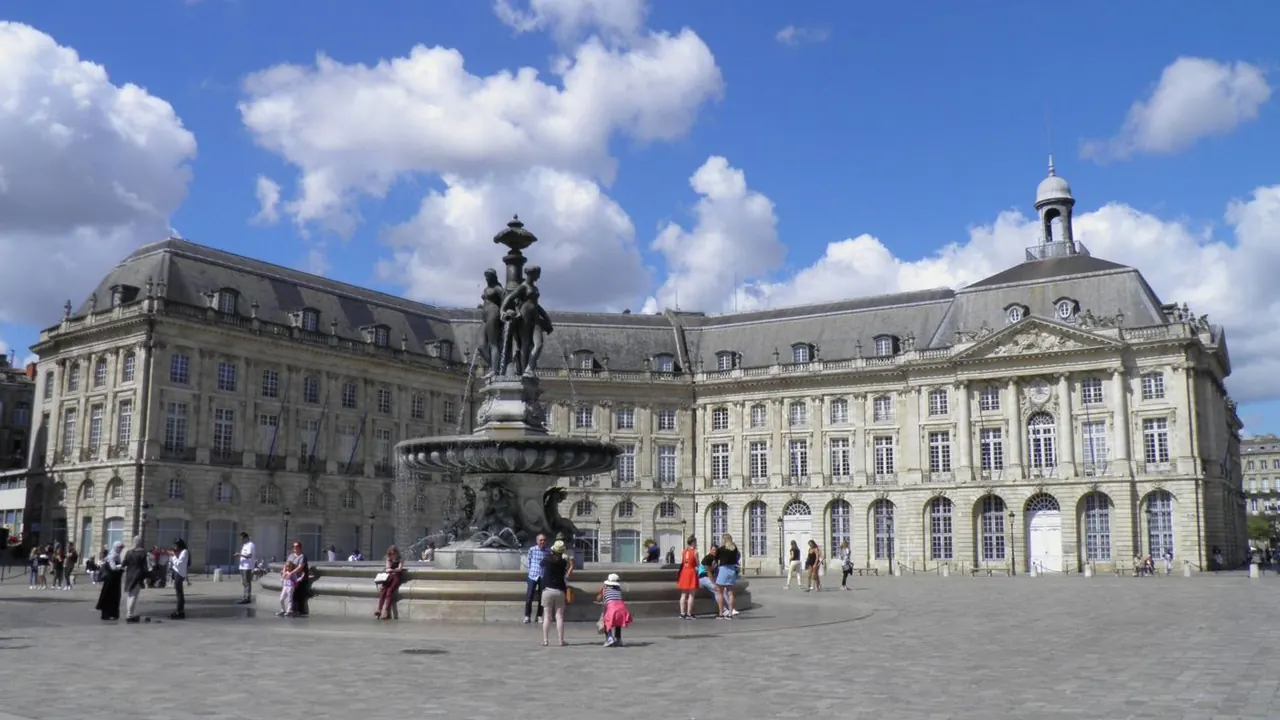
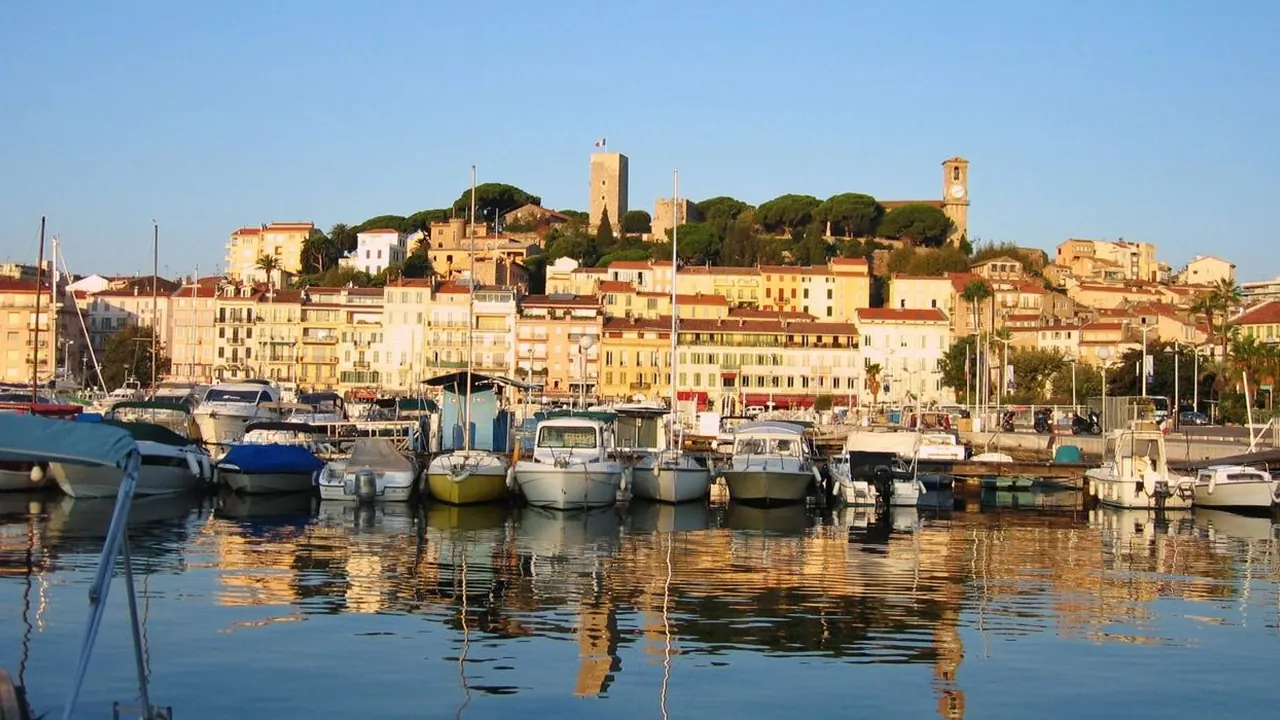
Photos: Bordeaux by Gzen92, CC BY-SA 4.0, cropped; Cannes by qwesy qwesy, CC BY 3.0, cropped.
Bordeaux or Cannes?
Our verdict in twelve categories, each scored against the same fixed benchmark cities, and the climate month by month, so you can choose for your trip.
Choose Bordeaux for
- culture and sights
- food and drink
- prices
Bordeaux suits travellers who want a city to explore rather than a shore to lie on. Its classical limestone centre, wine bars and south-western cooking fill several days on their own, and the Grand Théâtre gives evenings a proper stage. Saint-Émilion and the Médoc châteaux are close enough for tasting days. It is also the cheaper of the two, and its flat, tram-served streets make a stay without a car easy.
Choose Cannes for
- beaches
- nature and the outdoors
- day trips
Pick Cannes if the sea is the point. Its sandy bay on calm Mediterranean water, the Lérins islands offshore and the red rock of the Esterel give it a summer that Bordeaux, an hour inland from the Atlantic, cannot match. The coastal train puts Antibes, Nice and Monaco within easy reach, so it works best as a Riviera base. It suits travellers who will pay seafront prices and need little from the town's own sights.
Scoreboard
Twelve categories on one fixed scale from 0 to 100. The shaded stretch is the gap between the two.
Your match
Pick a travel style or drag the sliders, and both match scores follow your weighting.
Wins on culture and sights and food and drink with your weighting.
Wins on beaches and nature and the outdoors with your weighting.
What matters to you?
Category by category
What the scores mean for a trip.
Beaches & swimming
This is Cannes's category. Its beaches are right in town: a curve of fine sand along the Croisette and the wider, mostly free Plage du Midi, on calm water that is easy to swim in from June into October. Clearer rocky spots wait on the Lérins islands and in the Esterel coves. Private concessions take much of the frontage, and the central beaches fill up in July and August.
Bordeaux has no beach of its own. A day by the sea means an hour's journey west to the long, wild Atlantic sands of Lacanau and the Médoc, with surf and rip currents. The other option is the train to the sheltered Arcachon basin, which is gentler for children. Outside high summer that coast is for walking.
Food & drink
Bordeaux is the stronger city for eating and drinking, and wine is the reason. You can work through Médoc, Saint-Émilion, Graves and Sauternes by the glass and visit the Cité du Vin. There is entrecôte grilled over vine cuttings, duck from the Landes, Arcachon oysters at the Marché des Capucins, and serious bistros in Saint-Pierre and Chartrons.
Cannes eats well around the Forville market and in the bistros of Le Suquet, with bouillabaisse, socca and chilled rosé, plus fine dining in the palace hotels and towards Mougins. Much of the seafront cooking, though, is aimed at passing crowds, and the town has few dishes of its own.
Culture & sights
Bordeaux is well ahead. Its whole 18th-century limestone centre is a UNESCO site made for slow walking, from the Place de la Bourse and its Miroir d'eau to the Grand Théâtre, the bell tower of Saint-Michel and the Grosse Cloche. Museums such as the Musée d'Aquitaine and the CAPC round out three or four days.
Cannes offers the castle museum and church views of Le Suquet, the Belle Époque hotels on the Croisette and the red-carpet steps of the Palais des Festivals, which add up to about a morning. Art lovers staying there will travel along the coast for it.
Nightlife
Bordeaux has the more dependable night out. There are wine bars and terraces in Saint-Pierre, cheap student drinking around Place de la Victoire and late clubs along the Quai de Paludate. It is liveliest at weekends in term time and keeps going all year, not just in summer.
Cannes is seasonal and dressier. Beach clubs on the Croisette turn into party venues from June to September and during the festivals, and it is a place for champagne rather than dive bars. Off-season the town goes quiet early, and anyone after more heads to Nice.
Nature & outdoors
Cannes has the more dramatic landscape. The red volcanic Esterel massif, with its trails and corniche road above the sea, lies twenty minutes west, and the Lérins islands and Cap d'Antibes offer easy coastal walks. There is diving, sailing and paddleboarding, with the pre-Alps and winter skiing inland, though summer fire risk can close the trails.
Around Bordeaux the country is flat: vineyards, river meadows and the pine forest of the Landes. The highlights are on the coast: the Dune du Pilat, the birdlife of the Arcachon basin and the surf at Lacanau. The easiest pleasure is cycling the greenways through Entre-Deux-Mers, and proper hiking is far away.
Day trips
Both make excellent bases, and Cannes comes out ahead because so much lies on one train line: Antibes, Nice, Villefranche, Monaco and Menton. Saint-Paul-de-Vence, Èze, Grasse and Mougins are close by bus or car, and the monastery on the Lérins islands is a ferry ride away.
Bordeaux's day trips revolve around wine: Saint-Émilion by train, the Médoc châteaux of Margaux and Pauillac, and Sauternes to the south, with Arcachon and Cognac as other options. Many estates need a car or a tour, which makes them a little less effortless.
Good for families
The two are about equal for children, and in both the town is easy rather than exciting. Bordeaux's flat, tram-served centre suits pushchairs, the Miroir d'eau doubles as a paddling pool and the Jardin Public has a puppet theatre. Its best family days, at the Dune du Pilat and the Arcachon basin, need a trip out.
Cannes has a gentle sandy beach right in town and a boat to the Lérins islands for picnics, but little else aimed at children. Midsummer heat and crowds mean planning the day around the middle hours.
Getting around
Bordeaux is the easier city to get around. Its flat, largely pedestrianised centre runs along the left bank from Chartrons to Saint-Michel, trams reach the Cité du Vin and the right bank, and bike lanes make cycling natural. Only the vineyard visits call for a car.
Cannes is small enough to walk, apart from the steep climb to Le Suquet, and its central station makes the coast simple by train. The inland villages and the Esterel road are harder without a car, and summer traffic and scarce parking make driving a chore.
Shopping & style
The two are close for shopping but sell different things. Cannes has the more concentrated luxury, with the Paris fashion and jewellery houses facing the sea on the Croisette, Rue d'Antibes for mid-range fashion, and Rue Meynadier for olive oil and Provençal soaps.
Bordeaux pairs the long chain-store stretch of Rue Sainte-Catherine with the antique dealers of Rue Notre-Dame in Chartrons. Its real draw is wine: cellars sell everything from everyday bottles to old vintages and will ship them home.
Affordability
Bordeaux is the cheaper of the two, though neither is a budget destination. It costs what a prosperous French city costs, set lunches and cheap trams keep daily spending down, and the money goes on château tastings and good bottles.
Cannes is priced for a wealthy crowd near the seafront, and hotel rooms climb far higher during the film festival and the trade fairs. Backstreet lunch menus, the public beaches, the coastal trains and staying in a neighbouring town all make a real difference.
Live music & performing arts
An evening at the Grand Théâtre, the gilded, colonnaded opera house of 1780, is the best night out in either city, and it puts Bordeaux clearly ahead. The city's opera and ballet companies perform there through the season, the national orchestra plays in an auditorium nearby, and a hall on the right bank programmes jazz and world music. The seasons pause in high summer, so this suits a trip in spring, autumn or winter.
Cannes is famous for a film festival that most visitors cannot attend, because entry needs accreditation, and the public mostly gets the free screenings on the beach. In other weeks the Palais des Festivals takes touring shows and comedy, summer brings classical concerts in the castle courtyard on Le Suquet, and the Juan-les-Pins jazz festival is just along the coast. Between those events there is little on.
Wellness & relaxation
Neither has a thermal tradition, so the difference is one of style. Bordeaux's speciality is vinotherapy, grape-seed treatments at spa hotels set among the vineyards outside town, and real thermal waters are at Dax.
Cannes relies on palace-hotel spas and seawater thalassotherapy along the coast. Its calm spring and autumn seafront suits slow mornings, but festival weeks and August are too noisy for anyone trying to unwind.
When should you go?
Pick your month. The climate figures are measured averages, not a forecast.
Bordeaux in July
Cannes in July
Daytime high, °C
Rainfall in the month, mm
Temperature and rainfall are climate normals, averaged over the years shown. Bordeaux: 1991-2020 normals, Bordeaux / Merignac (9.5 km from centre). Cannes: 2004-2020 (sunshine 1991-2020, rainfall 1991-2020) normals, Cannes (5.8 km from centre).
Both are at their best in summer, but in different ways. Bordeaux reaches about 28°C in August, which is good weather for the Atlantic coast and for vineyard days. Late spring and September are the most comfortable months for walking the centre. Rain falls all through the year and gets heavier from September into winter, with November the wettest month at around 114mm. Winters are cool and grey, with far less sunshine than on the Riviera.
Cannes is the brighter and drier of the two, above all in summer. July brings only about 13mm of rain, and the sea warms to around 25°C in August, with swimming comfortable from June to early October. Its winters are a little milder and much sunnier than Bordeaux's, so the seafront is pleasant for walking even then. Autumn is the wet season, with heavy rain peaking at about 138mm in November.
Which traveller are you?
On a beach and sun trip, Cannes is the clear choice. Fine sand lines the town itself, the Mediterranean is calm and warm all summer, and the Lérins islands and the Esterel coves are close by. Bordeaux's beaches are an hour away, with Atlantic surf.
For a culture and arts trip, Bordeaux gives far more. Its UNESCO classical centre, Gothic churches and regional museums are worth several days, and opera and ballet fill the Grand Théâtre in season. Cannes's sights, from Le Suquet to the Palais, fit into a morning.
On a trip on a tight budget, Bordeaux makes money go further, with a centre you can walk, cheap trams and good-value set lunches. Cannes is costly near the Croisette, though public beaches, market picnics and cheap coastal trains help, especially outside event weeks.
Before you go
| Measure | Bordeaux | Cannes |
|---|---|---|
| Official language | French | French |
| Currency | Euro (EUR) | Euro (EUR) |
| Sockets | CE230 V, 50 Hz | CE230 V, 50 Hz |
| Driving side | Right | Right |
| Time zone | UTC+1, UTC+2 in summer | UTC+1, UTC+2 in summer |
| Emergency number | 112 | 112 |
| Elevation | 1 m | 0 m |
| Main airport | Bordeaux–Mérignac Airport (BOD)11 km from centre95 non-stop destinations | Nice-Côte d'Azur Airport (NCE)20 km from centre130 non-stop destinations |
| Public holidays this year | 11 days | 11 days |
By the numbers
| Measure | Bordeaux | Cannes |
|---|---|---|
| City population | 267,991 | 74,350 |
| People per km² | 5,425 | 3,793 |
| Museums within 10 km | 18 | 16 |
| UNESCO World Heritage sites within 50 km | 4 | 2 |
| Swim season, months above 21 °C | - | 4 months |
Where else could you go?
Every comparison below shares a destination with this one, so you can follow Bordeaux or Cannes somewhere new.