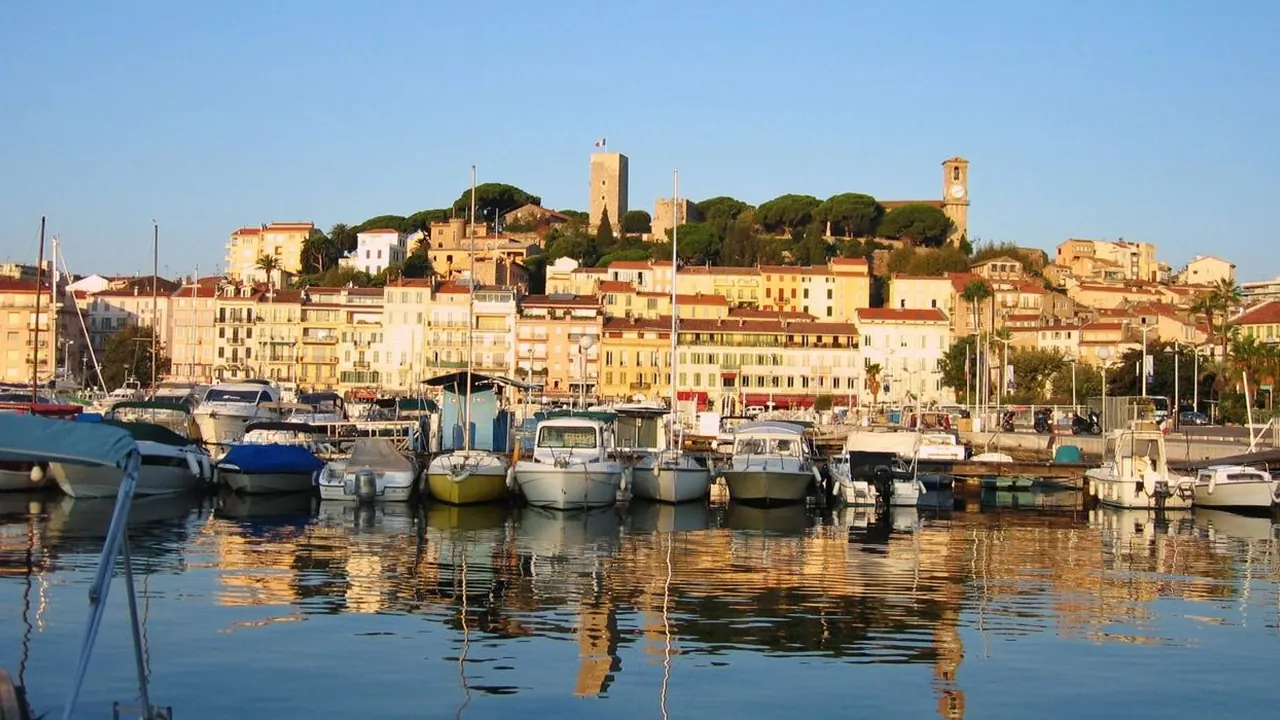
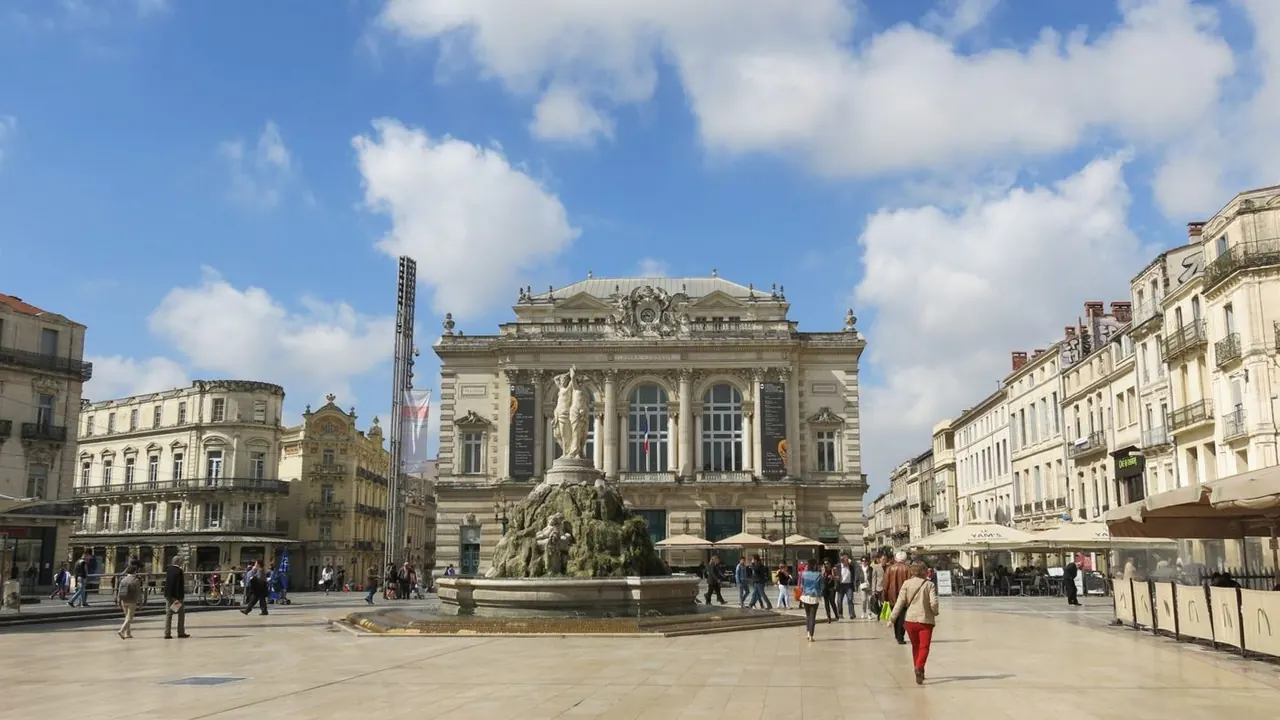
Photos: Cannes by qwesy qwesy, CC BY 3.0, cropped; Montpellier by Peter, CC BY 2.0, cropped.
Cannes or Montpellier?
Our verdict in twelve categories, each scored against the same fixed benchmark cities, and the climate month by month, so you can choose for your trip.
Choose Cannes for
- beaches
- shopping
- day trips
Cannes suits a summer trip built around the sea. It has fine sand along the Croisette, clearer water off the Lérins islands and the red rock of the Esterel, and the whole Riviera lies along the train line from Antibes to Menton. It also suits travellers who enjoy luxury shopping and a polished, dressed-up evening, as long as they accept that the town itself is thin on sights and costly to stay in.
Choose Montpellier for
- prices
- live music and the arts
- culture and sights
Montpellier is the better pick for a city break with more substance. The Écusson, the Musée Fabre and a strong opera and dance season give it far more to do in town. Students keep its bars busy and its prices moderate, and Nîmes, Arles and Avignon are close. The beach is a tram and bus ride away rather than at the door, so the city works best when the sea is one part of the trip, not the whole point of it.
Scoreboard
Twelve categories on one fixed scale from 0 to 100. The shaded stretch is the gap between the two.
Your match
Pick a travel style or drag the sliders, and both match scores follow your weighting.
Wins on beaches and shopping with your weighting.
Wins on prices and live music and the arts with your weighting.
What matters to you?
Category by category
What the scores mean for a trip.
Beaches & swimming
Cannes has its beach in the middle of town. The sand of the Croisette and the wide, mostly free Plage du Midi are a short walk from the centre, and the Lérins islands and the red-rock coves of the Esterel add clearer water and rocky swimming. Private concessions take up much of the frontage, but the choice of places to swim is real.
From Montpellier the sea is about 11km away by tram and bus. Once you are there, the long sands from Palavas past La Grande-Motte to the dunes of l'Espiguette are shallow and easy for swimmers. It is an open, flat coast with no coves or clear island water, though, so it suits a few beach days rather than a whole stay.
Food & drink
Cannes cooks from the Forville market, with bouillabaisse and socca in the bistros of Le Suquet and serious fine dining in the palace hotels and up in Mougins. Below that level, the Croisette and the old port serve a lot of expensive, predictable food, and the choice for everyday eating is narrow.
Montpellier eats better because it draws on a whole region: Pic Saint-Loup wines, oysters from the Thau lagoon, tielle from Sète, and market halls such as the Halles Laissac, where you can eat at the counters. Its students keep plenty of cheap bistros and casual places going, so a good meal is easier to find without hunting for it.
Culture & sights
Cannes takes about a morning to see: the climb through Le Suquet to the castle museum and the church, the Belle Époque palace hotels along the Croisette, and a look at the steps of the Palais des Festivals. It is pleasant, but for serious art you take the train somewhere else.
Montpellier has two or three days' worth. The car-free Écusson with its courtyard mansions, the Peyrou terrace and its aqueduct, the medieval medical faculty and France's oldest botanical garden give it real historic depth. The Musée Fabre holds a genuine collection of European painting, and Bofill's Antigone district adds twentieth-century architecture that Cannes cannot match.
Nightlife
Cannes goes out mostly in summer and during festival weeks. Then the beach clubs on the Croisette become party venues and the streets behind the old port fill with cocktail bars. The style is champagne and dressing up, often at private events, and out of season the town goes to bed early.
Montpellier is livelier for more of the year, because its large student population fills the bars, pubs and wine bars around Place Jean-Jaurès on weeknights as well as weekends. The mood is young and casual rather than polished. Later on the crowd takes taxis out to clubs towards Lattes, and the centre goes quiet outside term time.
Nature & outdoors
Both cities have fine country close by, but of very different kinds. Cannes looks to rock and sea: the volcanic red Esterel with trails to Pic de l'Ours, the pine paths of Sainte-Marguerite and the Cap d'Antibes footpath. Diving and kayaking around the islands fill the summer, and in winter there is skiing in the Alpes-Maritimes.
Around Montpellier it is wetlands and limestone: flamingos on the coastal lagoons, the Camargue about an hour away, the climb up Pic Saint-Loup and canoeing in the Hérault gorges near Saint-Guilhem-le-Désert. The windy coast suits kitesurfing, and flat paths make cycling easy.
Day trips
Both are excellent bases, and the difference lies in what you go out to see. From Cannes the coastal train runs past Antibes and its Picasso museum to Nice, Villefranche, Monaco and Menton. Add the hill villages of Saint-Paul-de-Vence and Èze and the perfume town of Grasse, and the outings are about art, glamour and sea views.
Montpellier's day trips lean towards history. Nîmes and the Pont du Gard, Roman Arles and papal Avignon are all about an hour or less away, with walled Carcassonne further west. Aigues-Mortes and Sète add salt marshes and a fishing port, though several of the smaller places need a car.
Good for families
Cannes is easy with children rather than exciting. It has gently sloping sand, the flat Croisette with its carousels and picnics on the Lérins islands, but little in the town is made for children, and the nearest aquarium means a trip to Monaco.
Montpellier has a little more of its own. There is the Zoo de Lunaret in its wooded park, an aquarium and a planetarium side by side at Odysseum, and the Jardin des Plantes for running about. The trams are easy with a pushchair, though the beach is further away and the centre gets very hot in midsummer.
Getting around
Cannes is compact and mostly flat, and everything central is within a twenty-minute walk, apart from the steep climb up Le Suquet. Its strength is the coastal train from a station in the middle of town, which makes Antibes, Nice and Monaco simple. The hill villages and the Esterel need a car, and that means heavy summer traffic.
Montpellier is easier to get around within the city. Trams link the station, the car-free Écusson, Antigone and Odysseum, bike-share helps on the flat parts, and fast trains run to Nîmes, Avignon and Carcassonne. The weak link is the beach, which is a slow tram and bus ride in summer.
Shopping & style
Cannes is the better place to shop, mainly because of its luxury strip. The big Paris fashion and jewellery houses face the sea along the Croisette. Rue d'Antibes, one street back, has a long run of mid-range French fashion and chocolatiers, and Rue Meynadier sells olive oil, soaps and Provençal fabrics.
Montpellier has no luxury street. Its pleasures are the small boutiques, bookshops and wine shops in the lanes of the Écusson, with the Polygone mall and Odysseum for the big brands. The best things to take home are edible: local wine, honey and olive oil from the market halls.
Affordability
Montpellier is the cheaper city. In Cannes the bill rises wherever there is a view of the bay: a terrace drink on the Croisette, a lounger on a private beach or a room facing the water. Rates climb again when the film festival and the big trade fairs fill the town. Spring and autumn outside event weeks are much easier on the purse, and so is a base in a cheaper town along the coast, with the train into Cannes.
Montpellier costs about what you would expect in Western Europe for most of the year. Its students keep plenty of casual counters and modest bars in business, and lunch menus stretch a day's spending further. Costs mount mainly at sit-down dinners with wine, and in July and August, when rooms in town and on the coast cost noticeably more.
Live music & performing arts
The Cannes film festival is an industry event with accredited entry, so most visitors see it only through the free screenings on the beach. Beyond that there are touring shows at the Palais des Festivals, the regional philharmonic, a dance festival and summer concerts in the castle courtyard, which adds up to a modest programme for most of the year.
Montpellier has a real season. Opera, ballet and the city's national orchestra share the horseshoe Opéra Comédie and the Opéra Berlioz. Contemporary dance is its speciality, with the Montpellier Danse festival and a national choreographic centre. In summer the Radio France festival adds many free concerts and the Domaine d'O hosts outdoor theatre.
Wellness & relaxation
Neither city has a bathing tradition of its own, and in both the pace does more for rest than the facilities do. Cannes has polished spas in its palace hotels and seawater thalassotherapy along the coast. Its seafront is calm in spring and autumn but noisy in August and during festival weeks.
Montpellier has real thermal water nearby, at Balaruc-les-Bains on the Thau lagoon about half an hour away, where day visitors are welcome. In town, rest means long lunches and shaded squares, though the student-filled centre is lively rather than quiet.
When should you go?
Pick your month. The climate figures are measured averages, not a forecast.
Cannes in July
Montpellier in July
Daytime high, °C
Rainfall in the month, mm
Temperature and rainfall are climate normals, averaged over the years shown. Cannes: 2004-2020 (sunshine 1991-2020, rainfall 1991-2020) normals, Cannes (5.8 km from centre). Montpellier: 1991-2020 normals, Montpellier (7.8 km from centre).
Both cities have the usual Mediterranean pattern of dry, sunny summers and wet autumns, and they get almost the same sunshine through the year. Cannes has the warmer sea, about 25°C in August, and swimming is comfortable there from June into early October. Off Montpellier's sandy coast the water peaks nearer 22°C, so the swimming season is a little shorter. Montpellier sits back from the sea and runs hotter, with July highs around 30°C that make the stone lanes of the Écusson tiring by mid-afternoon. Cannes stays slightly milder by the water.
May and June are the best months for walking and sightseeing in both cities. The days are warm rather than hot, long and sunny, with little rain. The rain sets in from September. In Cannes it peaks in October and November, at up to about 138mm a month. Montpellier's wettest stretch comes earlier, in September and October, at around 93mm. Winters are mild in both, with highs in the low teens. That is fine for quiet walks but too cool for the beach.
Which traveller are you?
On a beach and sun trip, Cannes is the clear choice. Its sand runs right along the Croisette and its sea is warmer. Boats to the Lérins islands and the coves of the Esterel add clear water and rocks that Montpellier's flat, open coast does not have.
For a culture and arts trip, Montpellier offers far more. The Musée Fabre, the medieval Écusson and the Peyrou terrace fill days, where Cannes's sights take a morning. Its two opera houses and the Montpellier Danse festival go well beyond Cannes's modest live programme.
On a tight budget, Montpellier makes money go much further. Student bars, market halls and fairly priced central hotels keep costs down. Cannes prices its seafront, its beach loungers and its rooms for a wealthy crowd, above all in summer and during festival weeks.
Before you go
| Measure | Cannes | Montpellier |
|---|---|---|
| Official language | French | French |
| Currency | Euro (EUR) | Euro (EUR) |
| Sockets | CE230 V, 50 Hz | CE230 V, 50 Hz |
| Driving side | Right | Right |
| Time zone | UTC+1, UTC+2 in summer | UTC+1, UTC+2 in summer |
| Emergency number | 112 | 112 |
| Elevation | 0 m | 7 m |
| Main airport | Nice-Côte d'Azur Airport (NCE)20 km from centre130 non-stop destinations | Montpellier-Méditerranée Airport (MPL)8 km from centre41 non-stop destinations |
| Public holidays this year | 11 days | 11 days |
By the numbers
| Measure | Cannes | Montpellier |
|---|---|---|
| City population | 74,350 | 310,240 |
| People per km² | 3,793 | 5,452 |
| Museums within 10 km | 16 | 14 |
| UNESCO World Heritage sites within 50 km | 2 | 2 |
| Swim season, months above 21 °C | 4 months | 2 months |
Where else could you go?
Every comparison below shares a destination with this one, so you can follow Cannes or Montpellier somewhere new.