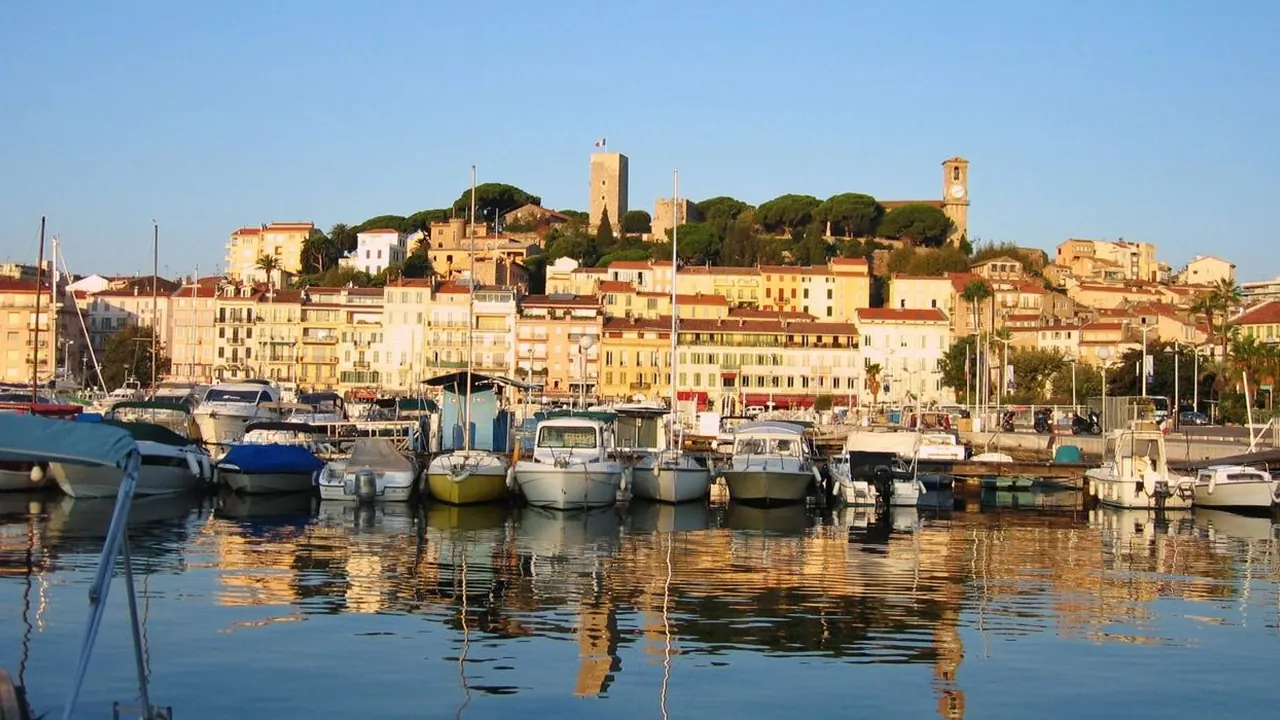
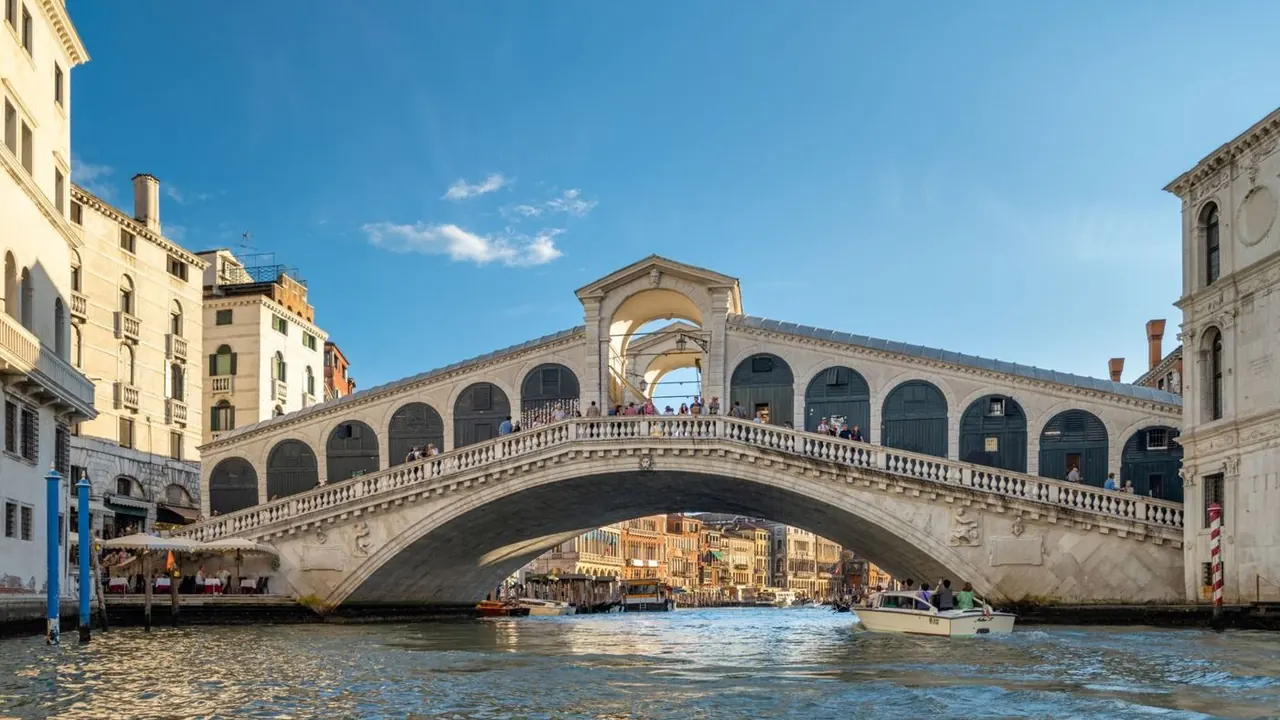
Photos: Cannes by qwesy qwesy, CC BY 3.0, cropped; Venice by David Vives, Pexels License.
Cannes or Venice?
Our verdict in twelve categories, each scored against the same fixed benchmark cities, and the climate month by month, so you can choose for your trip.
Choose Cannes for
- nature and the outdoors
- beaches
- nightlife
Cannes suits a summer trip built around the sea and the coast. It has sandy beaches on calm water, the red rock of the Esterel for walking and the whole Riviera a short train ride away. It is also the easier choice with young children, and in season it has more going on after dark. The town itself offers little to see beyond a morning in Le Suquet.
Choose Venice for
- culture and sights
- live music and the arts
- food and drink
Travellers who come to look at things should choose Venice. The city is the sight in itself. There are the Basilica and the Doge's Palace, paintings by Titian and Tintoretto in churches and galleries all over town, and La Fenice for an evening of opera. Its beach is an afternoon's diversion rather than a reason to go, and its nights end early, but nothing on the Riviera comes close to it for art and architecture.
Scoreboard
Twelve categories on one fixed scale from 0 to 100. The shaded stretch is the gap between the two.
Your match
Pick a travel style or drag the sliders, and both match scores follow your weighting.
Too close to call, level with your weighting
Wins on nature and the outdoors and beaches with your weighting.
Wins on culture and sights and live music and the arts with your weighting.
What matters to you?
Category by category
What the scores mean for a trip.
Beaches & swimming
Cannes is built around its beach. Fine sand curves along the Croisette, the wide and mostly free Plage du Midi lies west of the old port, and the water is calm from June to early October. The Lérins islands and the Esterel coves add clearer swimming off rock, so a week of beach days has plenty of variety.
Venice's beach is the Lido, a vaporetto ride across the lagoon. It has long sand and shallow, warm water, though the water is greenish rather than clear. It suits a hot afternoon with children, but it lies apart from the city and most visitors go only once.
Food & drink
Both towns eat from the sea, and both have streets of indifferent tourist restaurants, along the Croisette in Cannes and around San Marco in Venice. Beyond that they eat differently. Cannes is about sitting down to Provençal food: produce and goat cheeses from the Forville market, bouillabaisse and socca in the bistros of Le Suquet, and rosé on a terrace. There is also a proper fine-dining tier in the palace hotels and up in Mougins.
Venice has more cooking that is its own. Grazing on cicchetti at a bacaro counter with a spritz makes a meal in itself, and the Rialto market supplies typically Venetian lagoon dishes such as cuttlefish risotto black with ink, bigoli in salsa and sarde in saor. Neither town offers much beyond its own region's food, so the choice is between a long Provençal lunch and an evening moving from one bacaro to the next.
Culture & sights
This is where the two differ most. Venice offers six centuries of palaces and churches on water: San Marco, the Doge's Palace, the Accademia, Titian in the Frari, Tintoretto at San Rocco and modern art at the Peggy Guggenheim Collection. Even a week leaves things unseen.
Cannes has a pleasant old quarter with the castle museum on Le Suquet, the Belle Époque hotels and the red-carpet steps of the Palais des Festivals. Together they fill a morning, and visitors who want more art there take the train to Antibes or Nice.
Nightlife
Cannes has the livelier nights, though only in season. From June to September the beach clubs on the Croisette turn into party venues, a few clubs stay open until dawn and the streets behind the old port fill with cocktail bars. All of it is dressy and expensive.
In Venice the evening peaks at aperitivo, with spritzes at the bacari around the Rialto and along the Fondamenta della Misericordia, and students keep Campo Santa Margherita going a little later. By midnight the canals are silent. That makes a lovely walk home, but there is no real night out.
Nature & outdoors
Cannes has dramatic scenery close by. The red volcanic rock of the Esterel drops into the sea twenty minutes to the west, there are pine paths on Sainte-Marguerite and wild shore around Cap d'Antibes, and inland there are the pre-Alps and skiing in winter. Sailing and diving round the islands add a day on the water, though in high summer fire risk can close forest trails.
In Venice the outdoors means the lagoon: quiet marshes full of herons and flamingos, with kayaking, Venetian rowing and flat cycling along the Lido and Pellestrina. This kind of nature is gentler, and real mountains are more than two hours away.
Day trips
Both make excellent bases, but the trips are very different. From Cannes the coastal train runs to Antibes, Nice, Villefranche, Monaco and Menton. Perched villages such as Saint-Paul-de-Vence and Èze, and perfume-making Grasse, lie just inland, so the days out are about sea views, villages and art foundations.
From Venice the trips are to historic cities: Padua for Giotto, Palladio's Vicenza, Verona with its arena, and Bologna or Trieste further out. Murano, Burano and Torcello add a lagoon day without a train.
Good for families
Cannes is the easier town with small children. Its sandy beaches slope gently into calm water, the flat Croisette has carousels and play areas and suits pushchairs, and the boat to the Lérins islands makes a good picnic day.
Venice gives children more to wonder at and their parents less ease. A ride on the water or a glass furnace on Murano can thrill a child in a way the Croisette never will. But in Venice the beach is a boat trip away, not at the end of the street, and every outing means carrying a buggy over bridge after bridge where Cannes is flat. Venice works for a few days with children old enough to walk all day. Cannes is the better base for a longer family vacation.
Getting around
Both centres are easy to explore on foot, but in different ways. Cannes is small and mostly flat, and everything is within twenty minutes' walk. The station is in the middle of town, with coastal trains to Nice and Monaco, though the inland villages and the Esterel corniche really need a car.
Venice has no cars at all. You walk a twisting maze of stepped bridges or take the slow, crowded vaporetto, which is a pleasure in itself but hard work with suitcases. Trains and buses arrive right at its edge.
Shopping & style
The two are about level for shopping, but they sell very different things. Cannes is about fashion. The big Paris houses face the sea along the Croisette, mid-range French labels fill Rue d'Antibes, and Rue Meynadier sells Provençal soaps, fabrics and olive oil.
Venice is about things made by hand: Murano glass, Burano lace, papier-mâché masks, marbled paper and furlane slippers. They are best bought in real workshops away from the imported copies on the main routes.
Affordability
Neither is a budget destination, but the costs fall differently. In Cannes they come mostly from summer and event-week hotel rates, private beach loungers and seafront dining. The public beaches, picnics from the market and cheap coastal trains help, as does staying in a neighbouring town.
In Venice nearly everything costs more: central hotels, water transport priced for visitors, and entry to many sights and churches. Cicchetti at the counter, a room in a quieter sestiere or in Mestre, and a winter visit bring the cost down.
Live music & performing arts
Venice is much stronger for live performance. La Fenice, where Verdi and Rossini had premieres, runs a full season of opera, ballet and concerts. The Biennale adds contemporary music, theatre and dance, and churches host Vivaldi concerts most evenings.
Cannes's famous film festival is closed to most visitors apart from the screenings on the beach. Concerts at the Palais, the regional philharmonic, summer music in the castle courtyard on Le Suquet and the jazz festival at nearby Juan-les-Pins make a modest programme.
Wellness & relaxation
Neither has a bathing tradition, and in both the spas are in hotels. Cannes adds seawater thalassotherapy along the coast, and in spring and autumn it offers an easy routine of coffee on a terrace and evening walks by the bay.
Venice offers quiet instead: no traffic, and slow, residential corners in Castello, Cannaregio and Giudecca. Real thermal pools are about an hour away at Abano Terme. Both towns are poor places to rest in their busiest weeks.
When should you go?
Pick your month. The climate figures are measured averages, not a forecast.
Cannes in July
Venice in July
Daytime high, °C
Rainfall in the month, mm
Where the figures come from
Venice has no rain gauge within 25 km of the centre, so its rainfall comes from a gridded climate dataset read at the city rather than from a gauge further away.
Venice's sunshine is measured 26 km from the centre, at Treviso / S. Angelo.
Temperature and rainfall are climate normals, averaged over the years shown. Cannes: 2004-2020 (sunshine 1991-2020, rainfall 1991-2020) normals, Cannes (5.8 km from centre). Venice: 1991-2020 normals, Venezia / Tessera (6.7 km from centre).
Cannes has the gentler year. The sea is warm enough for swimming from June into early October, and July and August are almost rainless and very sunny, with highs around 29°C. Autumn turns wet: rain picks up in September and peaks in October and November, with about 138mm in the wettest month. Winter is mild, with highs near 13°C. That is pleasant for walking the seafront, though not for the beach.
Venice swings further. Summer is hotter, around 30°C, and often humid, which makes long days on foot hard work, though the Adriatic at the Lido is at its warmest in August. Rain is spread through the year rather than packed into autumn, and Venice gets less sunshine than Cannes in every month. Winter is cold, with January highs near 8°C. For walking the sestieri, late April, May and late September to October are warm without the summer heat, though they bring some of the heavier rain. Cannes is at its best from late May to September.
Which traveller are you?
For a beach and sun trip, Cannes is the clear choice. Fine sand runs along the Croisette into calm water, summers are dry and sunny, and the Lérins islands and Esterel coves add clearer swimming. In Venice the Lido makes a pleasant afternoon, not a whole vacation.
On a culture and arts trip, Venice wins by a wide margin. The Accademia, the Frari, the Scuola Grande di San Rocco and the Biennale fill days, the city itself is the architecture, and La Fenice adds opera. Cannes's sights fit into one morning.
For an outdoors trip, Cannes has far more within reach. You can walk the red-rock trails of the Esterel and the Cap d'Antibes coastal path, dive around the islands and reach the pre-Alps for the day. In Venice it is lagoon kayaking and flat cycling, and little else nearby.
Before you go
| Measure | Cannes | Venice |
|---|---|---|
| Official language | French | Italian |
| Currency | Euro (EUR) | Euro (EUR) |
| Sockets | CE230 V, 50 Hz | CFL230 V, 50 Hz |
| Driving side | Right | Right |
| Time zone | UTC+1, UTC+2 in summer | UTC+1, UTC+2 in summer |
| Emergency number | 112 | 112 |
| Elevation | 0 m | 2 m |
| Main airport | Nice-Côte d'Azur Airport (NCE)20 km from centre130 non-stop destinations | Venice Marco Polo Airport (VCE)7 km from centre103 non-stop destinations |
| Public holidays this year | 11 days | 13 days |
By the numbers
| Measure | Cannes | Venice |
|---|---|---|
| City population | 74,350 | 250,369 |
| People per km² | 3,793 | 602 |
| Museums within 10 km | 16 | 52 |
| UNESCO World Heritage sites within 50 km | 2 | 5 |
| Swim season, months above 21 °C | 4 months | 4 months |
Where else could you go?
Every comparison below shares a destination with this one, so you can follow Cannes or Venice somewhere new.