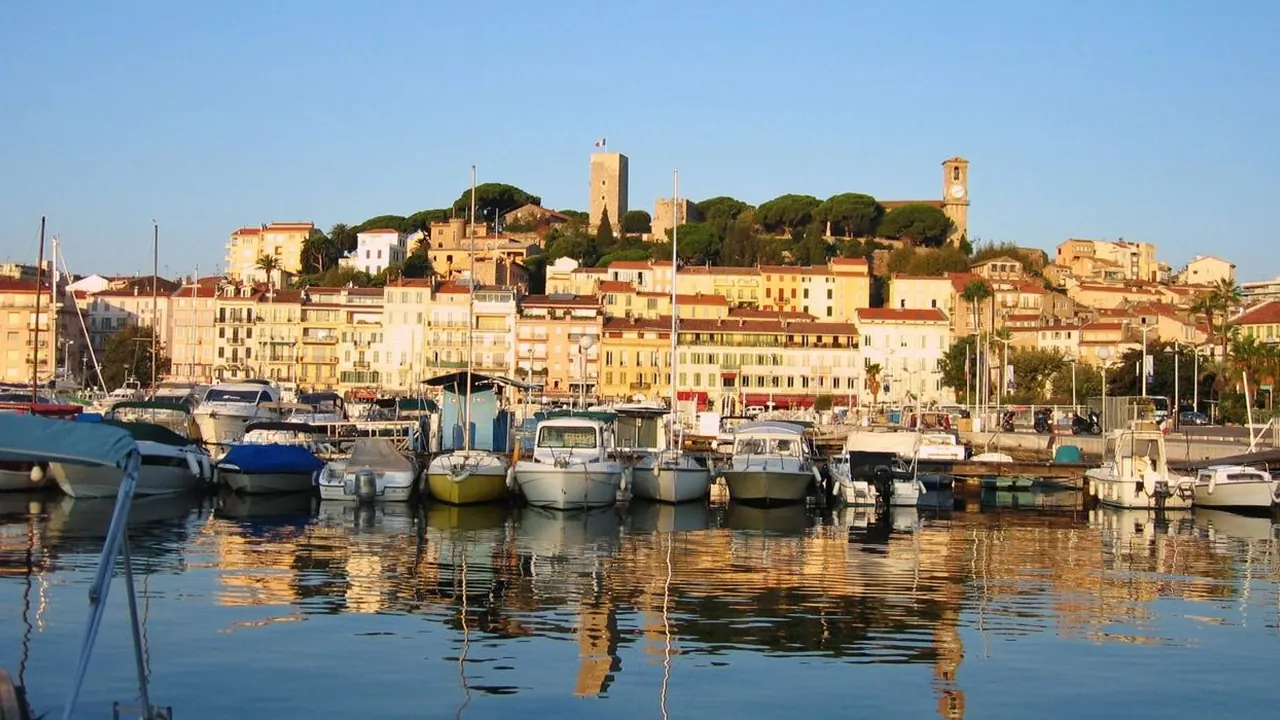
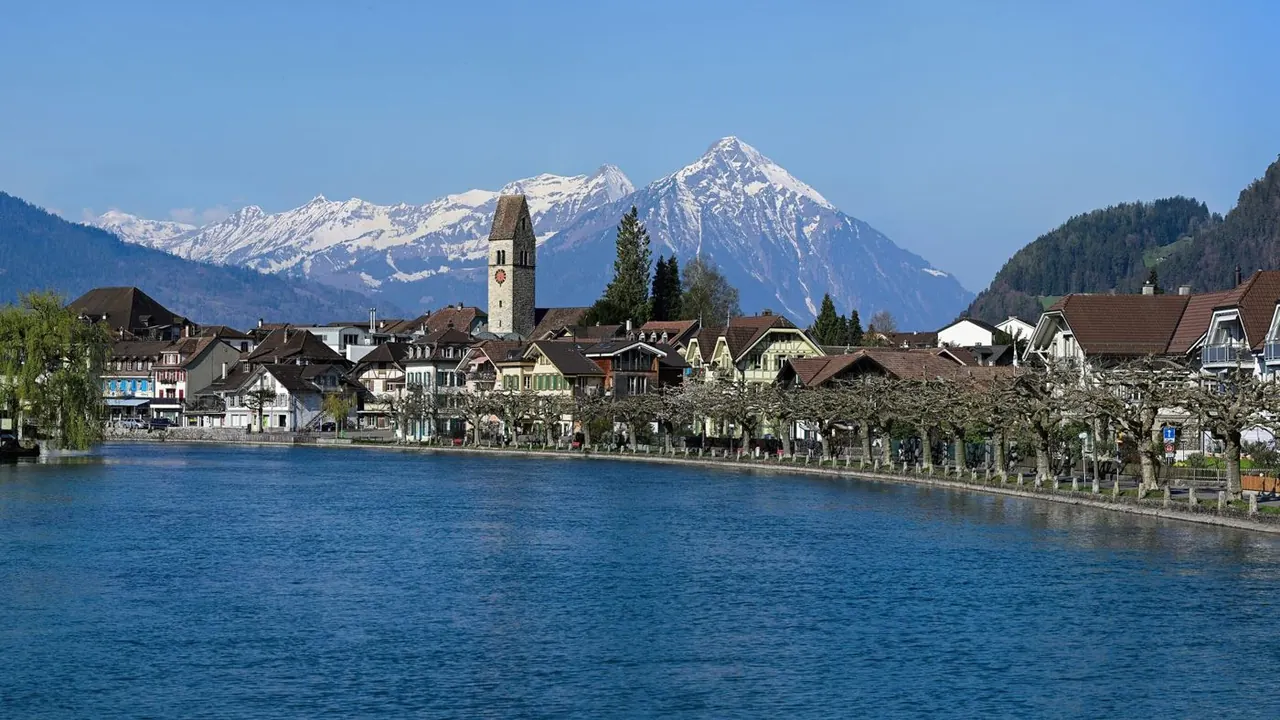
Photos: Cannes by qwesy qwesy, CC BY 3.0, cropped; Interlaken by Roy Egloff, CC BY-SA 4.0, cropped.
Cannes or Interlaken?
Our verdict in twelve categories, each scored against the same fixed benchmark cities, and the climate month by month, so you can choose for your trip.
Choose Cannes for
- beaches
- shopping
- food and drink
Cannes is the pick for a warm-weather trip by the sea. You get sandy beaches on calm water, terraces with Provençal food and rosé, and the luxury shops of the Croisette, and the coastal train brings the rest of the Riviera within easy reach. It suits travellers who want sun, swimming, good meals and some evening glamour, and who are happy for sightseeing to be a side dish.
Choose Interlaken for
- nature and the outdoors
- families
- getting around
Interlaken is a different kind of trip altogether: you go for the Alps. Mountain trains, cable cars and lake steamers take you straight up to glaciers, high trails and waterfalls, and the town is a busy base for paragliding, canyoning and winter skiing. Choose it if you want to spend your days outdoors and your evenings early, and if a good view matters more to you than a good dinner.
Scoreboard
Twelve categories on one fixed scale from 0 to 100. The shaded stretch is the gap between the two.
Your match
Pick a travel style or drag the sliders, and both match scores follow your weighting.
Wins on beaches and shopping with your weighting.
Wins on nature and the outdoors and families with your weighting.
What matters to you?
Category by category
What the scores mean for a trip.
Beaches & swimming
Here Cannes has what Interlaken lacks: a proper beach resort, with fine sand on calm, warm sea from June to early October. You can choose between the private concessions on the Croisette and the wider, mostly free Plage du Midi, or take the boat to the Lérins islands and the Esterel coves for clearer water.
Interlaken's swimming is in lakes, not the sea. There are grassy lidos and shingle beaches on Lake Thun and a chilly glacial turquoise at Bönigen on Lake Brienz. It is a lovely swim under the peaks in July and August, but it adds to a mountain trip rather than being a reason to go.
Food & drink
Cannes eats much better. The Forville market, the bistros of Le Suquet and Rue Meynadier serving bouillabaisse and socca, and the fine dining around Mougins give you real Provençal cooking, as long as you avoid the tourist menus along the waterfront.
Interlaken offers dependable fondue, rösti and international food for its visitors, without much character. The best meals come from the mountains around it: cheese from an Alpine dairy, lunch on a hut terrace above Mürren, or a glass of Lake Thun white.
Culture & sights
Neither town is a place for serious sightseeing, but Cannes has a little more to fill a morning. You can climb Le Suquet to the castle museum and Notre-Dame d'Espérance, walk past the Belle Époque palace hotels, and stand on the red-carpet steps of the Palais des Festivals.
Interlaken barely has sights at all: a row of nineteenth-century hotels facing the Höhematte and a few timber houses in Unterseen. Culture lovers on either trip will end up travelling elsewhere, to Antibes and Nice from Cannes, or to Bern and Thun from Interlaken.
Nightlife
In summer and during the festivals, Cannes has a real night out. Beach clubs on the Croisette turn into party venues, bars fill the streets behind the old port, and the mood is about champagne and dressing up. Out of season it goes quiet.
Interlaken goes to bed early because its visitors are up early for trains and paragliding. There are backpacker pubs, a couple of basement clubs and the Kursaal casino, and after that a nightcap on the Höheweg.
Nature & outdoors
Cannes has good scenery for a coastal town: the red volcanic rock of the Esterel, pine paths on Sainte-Marguerite and the wild shore path around Cap d'Antibes, plus sailing and diving around the islands.
Interlaken is in another league, as it sits in the middle of some of Europe's greatest mountain scenery. The Jungfraujoch above the Aletsch glacier, the waterfalls of Lauterbrunnen and Trümmelbach, and the ridge trails from Schynige Platte and Grindelwald First are all reached by train or cable car. Add paragliding, canyoning, rafting and winter skiing, and it is the stronger choice for any outdoor trip, provided low cloud does not hide the peaks.
Day trips
Both towns make excellent bases, and Cannes has slightly more variety close by. One coastal railway line takes you to Antibes, Nice, Villefranche, Monaco and Menton. By road you reach perched villages like Saint-Paul-de-Vence and Èze, with Grasse and Mougins just inland.
From Interlaken the trips are more about lakes and old towns: arcaded Bern within an hour, castles at Thun, Spiez and Oberhofen by paddle steamer, the woodcarvers of Brienz and the Ballenberg open-air museum. Lucerne makes a longer but scenic day out.
Good for families
Interlaken is more fun for children because the transport itself is the outing. Cog railways, gondolas and steamers lead to summit playgrounds, cliff walks and summer toboggan runs, with the St Beatus caves and Ballenberg's farm animals for variety. Wet days and high altitudes are the drawbacks.
Cannes is easy with small children but offers little beyond that. Its gently sloping beaches and flat, pushchair-friendly Croisette work well, and the boat to the Lérins islands makes a good picnic day. Otherwise the town is made for adults, and the summer heat calls for slow afternoons.
Getting around
Both centres are small and flat enough to walk. The difference is what lies beyond them. From Interlaken, connected trains, cog railways, gondolas and lake steamers cover the whole Jungfrau region, so you will never miss a car, and Wengen and Mürren ban cars anyway.
Cannes works well along the coast thanks to its central station and the regional trains to Antibes, Nice and Monaco. Inland it is harder: Grasse, the hill villages and the Esterel corniche are easier by car, and summer traffic and scarce parking make driving a chore.
Shopping & style
For shopping, Cannes is the clear choice. The great Paris fashion and jewellery houses line the Croisette, Rue d'Antibes runs a kilometre of mid-range French shops, and Rue Meynadier sells olive oil, cheese and Provençal fabrics.
Interlaken's Höheweg mostly serves tour groups, with Swiss watches, army knives, cuckoo clocks and chocolate. It is handy for outdoor gear you forgot to pack, and carved wood from Brienz is the one local craft worth buying.
Affordability
Neither is a budget destination, but Cannes gives you more ways to save. Away from the seafront, prices drop to normal French levels: backstreet lunch menus, Forville market picnics, free public beaches and cheap coastal trains all help, and outside event weeks spring and autumn are much kinder.
In Interlaken the main attraction is the costly part. Mountain railways and cable cars, the Jungfraujoch above all, sit on top of full Swiss prices for hotels and meals. Passes and supermarket picnics help, but doing the region properly is never cheap.
Live music & performing arts
Cannes has the busier programme, even though most visitors cannot get into the film festival itself. There are free screenings on the beach, a season of concerts and touring shows at the Palais des Festivals, a regional philharmonic and a respected dance festival, and summer concerts in the castle courtyard on Le Suquet.
Interlaken's highlight is local and unusual: the amateur open-air William Tell, performed in the woods every summer. Apart from that there are folklore evenings with alphorns and yodelling, and for a real theatre or orchestra you go to Bern.
Wellness & relaxation
Both towns are about level here, and neither has thermal springs or a bathing tradition, so you rely on hotel spas in both. Cannes adds seawater thalassotherapy and slow terrace mornings on a calm seafront in spring and autumn, but August and the festival weeks are too busy to relax.
In Interlaken, the rest comes from the setting more than the facilities: quiet lakeshore mornings, slow steamer crossings and the peace of Wengen or Mürren. The town centre itself, full of coach groups, is not the place to slow down.
When should you go?
Pick your month. The climate figures are measured averages, not a forecast.
Cannes in July
Interlaken in July
Daytime high, °C
Rainfall in the month, mm
Where the figures come from
Interlaken has no rain gauge within 25 km of the centre, so its rainfall comes from a gridded climate dataset read at the city rather than from a gauge further away.
Temperature and rainfall are climate normals, averaged over the years shown. Cannes: 2004-2020 (sunshine 1991-2020, rainfall 1991-2020) normals, Cannes (5.8 km from centre). Interlaken: 2005-2020 (rainfall 1991-2020) normals, Meiringen / Unterbach (19.3 km from centre).
Cannes is a summer town. From June to September days are hot, reaching about 28°C in July and August, the sky is reliably sunny and the sea warms to around 25°C, so beach days run from June into early October. Spring and early autumn are the best months for walking without the heat. The rain arrives in autumn, with October and November the wettest months at up to 138mm. Winters are mild, cool and fairly bright, but not beach weather.
Interlaken has a much shorter warm season. Highs climb to about 24°C in July and August, which is perfect for hiking and just warm enough for a swim in the lakes, and June and September are fresh but pleasant on the trails. Rain falls steadily all year, but summer is the wetter season, and midsummer is actually the wettest stretch. From November to March the valley is cold, with January highs near 3°C, which is what the ski season needs but makes town walks chilly. Cannes is milder all year round.
Which traveller are you?
For a beach and sun trip, Cannes is the clear choice. Long, dry, sunny summers and a warm sea make whole days on the sand easy, while Interlaken's cool lakes are a pleasant dip after a mountain day and little more.
On an outdoors trip, Cannes offers good coastal walking and time on the water, but Interlaken is the place to go. High Alpine trails and adventure sports start right from town, and the trains put a different mountain within reach every day.
On a family trip with children, Cannes suits the youngest, with safe sand, seafront carousels and an easy island boat trip. Interlaken has the edge once children are a little older, because getting up the mountains is an adventure in itself.
Before you go
| Measure | Cannes | Interlaken |
|---|---|---|
| Official language | French | French, German, Italian, Romansh |
| Currency | Euro (EUR) | Swiss Franc (CHF) |
| Sockets | CE230 V, 50 Hz | CJ230 V, 50 Hz |
| Driving side | Right | Right |
| Time zone | UTC+1, UTC+2 in summer | UTC+1, UTC+2 in summer |
| Emergency number | 112 | 112 |
| Elevation | 0 m | 571 m |
| Main airport | Nice-Côte d'Azur Airport (NCE)20 km from centre130 non-stop destinations | Zürich Airport (ZRH)100 km from centre226 non-stop destinations |
| Public holidays this year | 11 days | 10 days |
By the numbers
| Measure | Cannes | Interlaken |
|---|---|---|
| City population | 74,350 | 6,123 |
| People per km² | 3,793 | 1,424 |
| Museums within 10 km | 16 | 3 |
| UNESCO World Heritage sites within 50 km | 2 | 2 |
| Swim season, months above 21 °C | 4 months | - |
Where else could you go?
Every comparison below shares a destination with this one, so you can follow Cannes or Interlaken somewhere new.