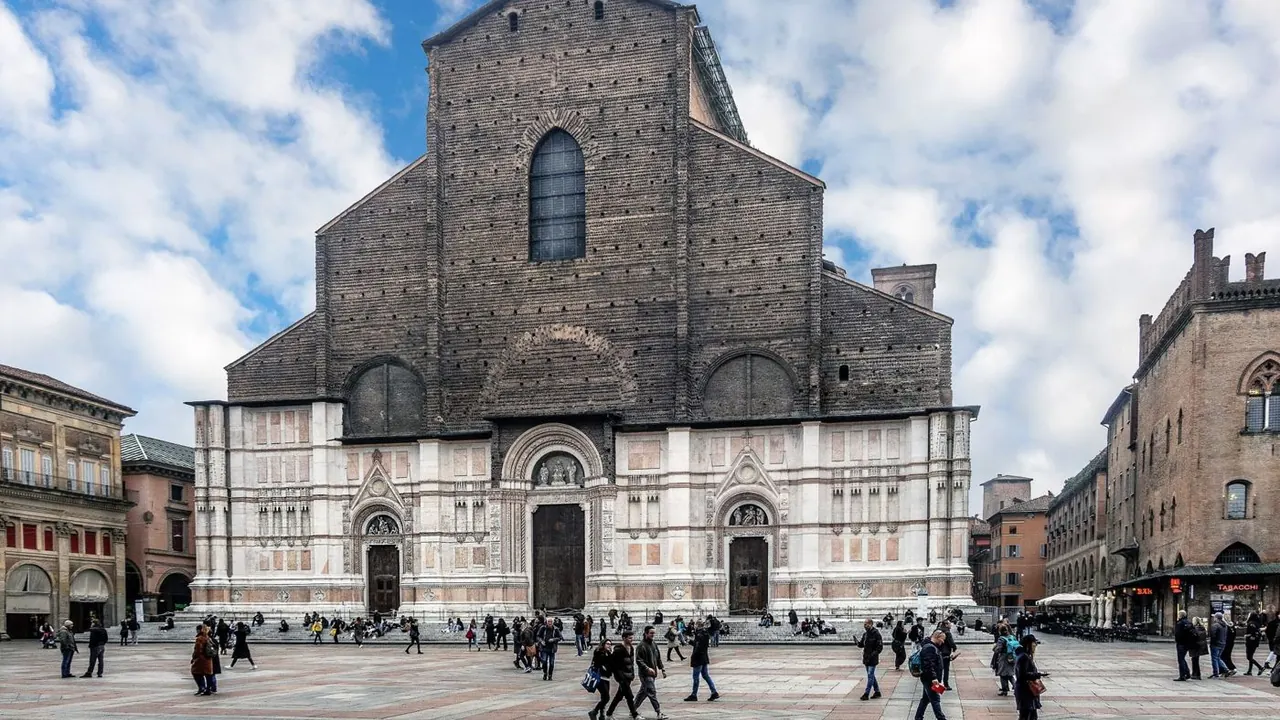
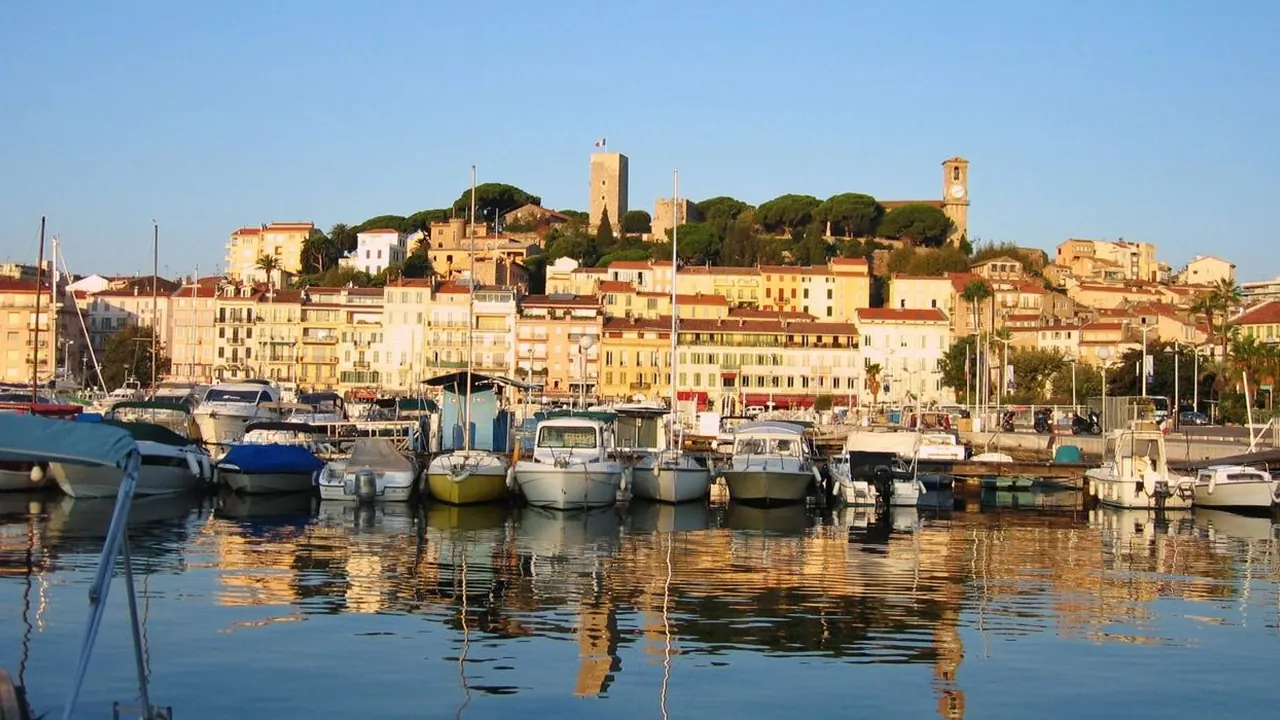
Photos: Bologna by Vanni Lazzari, CC BY-SA 4.0, cropped; Cannes by qwesy qwesy, CC BY 3.0, cropped.
Bologna or Cannes?
Our verdict in twelve categories, each scored against the same fixed benchmark cities, and the climate month by month, so you can choose for your trip.
Choose Bologna for
- culture and sights
- food and drink
- prices
Choose Bologna if the trip is about eating, looking and moving on. Its medieval brick centre and porticoes reward slow walking, the trattorias and the Quadrilatero make every meal count, and the station puts Florence, Ravenna, Modena and Venice within easy reach. It costs less than Cannes, and the student crowd keeps the evenings going for most of the year.
Choose Cannes for
- beaches
- nature and the outdoors
- families
Cannes is the better pick for sun, sea and good looks. The sandy Croisette, the Lérins islands and the red rock of the Esterel make it a proper beach and outdoors base, and the coastal train strings together Antibes, Nice and Monaco. It is expensive and has little to see in town, so it suits travellers who want to spend their days by the water rather than in museums.
Scoreboard
Twelve categories on one fixed scale from 0 to 100. The shaded stretch is the gap between the two.
Your match
Pick a travel style or drag the sliders, and both match scores follow your weighting.
Wins on culture and sights and food and drink with your weighting.
Wins on beaches and nature and the outdoors with your weighting.
What matters to you?
Category by category
What the scores mean for a trip.
Beaches & swimming
This is Cannes's strongest card against Bologna. The Croisette curves along fine sand and calm water, with free public stretches between the private concessions and the wider Plage du Midi beyond the old port. A short ferry ride reaches the clearer, pine-shaded swimming spots of the Lérins islands, and the red-rock coves of the Esterel are about twenty minutes away.
Bologna has no beach of its own. The Romagna Riviera at Rimini is about an hour by train, and it means rows of rented umbrellas on shallow, often greenish water. It works as a single escape from the July heat, but anyone who wants the sea every day belongs in Cannes.
Food & drink
Bologna is one of the places Italian cooking comes from, and eating there is a reason to travel in itself. Tagliatelle al ragù, tortellini in brodo and mortadella are made with care in old osterie, the Quadrilatero's lanes are packed with delicatessens, and Parma ham and Parmigiano come from towns nearby. Its weakness is range, and the food sits heavy in summer.
Cannes eats well around the Forville market and in the backstreets of Le Suquet, with bouillabaisse, socca and grilled fish over a glass of rosé, and there is serious fine dining towards Mougins. Much of the seafront food is made for passing crowds, though, and few dishes belong to the town itself.
Culture & sights
Bologna's centre is a sight in its own right: close to 40km of UNESCO-listed porticoes, the vast unfinished San Petronio, the Two Towers and the seven churches of Santo Stefano. Add the anatomical theatre in the Archiginnasio and the Bolognese painting in the Pinacoteca, and there is a solid two or three days of looking.
Cannes offers a pleasant morning: the castle museum and church on Le Suquet, the Belle Époque palace hotels along the Croisette and the film stars' handprints outside the Palais. For serious art, visitors take the train to Antibes or go up to Saint-Paul-de-Vence.
Nightlife
Bologna goes out more, and does it more cheaply. Students fill the pavements around Piazza Verdi, Via del Pratello's taverns stay busy late, and wine bars around the Quadrilatero follow the aperitivo hour. It is casual rather than smart, clubs mean a taxi out of town, and in August the city empties.
The calendar in Cannes is the reverse. Summer and the festival weeks are its season, with beach clubs on the Croisette turning into party venues and cocktail bars behind the old port, all champagne and dressing up. The rest of the year the town goes to bed early.
Nature & outdoors
Cannes has far more striking scenery on its doorstep. The volcanic red rock of the Esterel plunges into deep blue water, the Lérins islands and Cap d'Antibes offer easy coastal walks, and the sea adds kayaking, sailing and diving. The pre-Alps gorges and winter skiing are both within a day's reach, though forest trails can close in high summer for fire risk.
Bologna's outdoors are gentler and greener. There are walks through the Colli Bolognesi and up to San Luca, gypsum caves in the Parco dei Gessi, and the Via degli Dei, which starts in Piazza Maggiore and crosses the Apennines to Florence over several days.
Day trips
Both are excellent bases, but Bologna's rail junction gives it the edge. Florence is barely half an hour by fast train, and Ravenna's mosaics, Ferrara, Modena and Parma are all short hops, with Verona, Padua and Venice also manageable in a day. That is a run of major art cities few bases can match.
From Cannes the coastal line runs through Antibes, Nice, Villefranche, Monaco and Menton, with Grasse, Mougins and the perched villages close behind. These outings are smaller in scale and lean more on scenery, and the hill villages are easier with a car.
Good for families
Cannes is slightly easier with children, mostly thanks to the sea. Gently shelving sandy beaches, a flat Croisette with carousels and play areas, and a boat trip to picnic under the Lérins pines fill the days without much planning.
Bologna's car-free centre and shady porticoes are comfortable, and climbing the Asinelli tower makes a good adventure for older children. Beyond that, a fun day for children means Mirabilandia or the beach at Rimini, and the city's summer heat is harder on small ones.
Getting around
Bologna is the simpler city to get around. Nearly everything sits in a small, flat centre that is largely closed to cars, the porticoes keep walkers out of the sun and rain, and the station on the edge of the old town takes you straight to the rest of northern Italy. There is no metro, but you will rarely miss one.
Central Cannes is just as walkable, apart from the steep climb to Le Suquet, and the coastal trains are easy. The difficulty is inland: Grasse, the perched villages and the Esterel corniche really want a car, and coastal traffic and parking in summer can be a trial.
Shopping & style
The two are close here, but they sell different things. Bologna's best buys are edible, with mortadella, aged Parmigiano and balsamic from the Quadrilatero, plus a small luxury cluster around the Galleria Cavour, the Montagnola market and vintage and bookshops in the university quarter.
Cannes is about fashion. The great Paris houses line the Croisette, and Rue d'Antibes runs a long stretch of mid-range French labels and chocolatiers. Rue Meynadier sells olive oil, Provençal soaps and fabrics, and Grasse is close by for perfume.
Affordability
Bologna is clearly the cheaper of the two. Trattoria meals, aperitivo with food included and local wine cost less than in Italy's big tourist cities, most churches are free, and you hardly spend anything on transport. Rooms are the main expense, especially during trade fairs.
Cannes is priced for a wealthy crowd along the seafront, and hotel prices soar during the film festival. Picnics from the Forville market, the public beaches, backstreet lunch menus and staying in a neighbouring town all help, as does coming in spring or autumn.
Live music & performing arts
Bologna has the deeper musical life. The Teatro Comunale stages opera, ballet and symphonic concerts as one of Italy's historic houses, jazz plays in basement clubs most nights, and students keep small venues busy with indie and rock. Summer brings concerts and films to Piazza Maggiore.
The film festival made Cannes famous, but it is an accredited industry event, and the public mostly sees the free beach screenings. Otherwise there are touring shows at the Palais, the regional philharmonic, a dance festival and summer concerts in the castle courtyard, with the Juan-les-Pins jazz festival just along the coast.
Wellness & relaxation
Neither city has a bathing tradition of its own, but what lies close by differs. From Bologna, real thermal springs are a short trip away at Castel San Pietro Terme and in the green Apennine valley of Porretta Terme. Cannes has polished spas in the palace hotels and seawater thalassotherapy along the coast.
For simple rest, the calm seafront in spring and autumn gives Cannes the gentler mood. Bologna's version is a long lunch under the porticoes, away from the noisy university quarter.
When should you go?
Pick your month. The climate figures are measured averages, not a forecast.
Bologna in July
Cannes in July
Daytime high, °C
Rainfall in the month, mm
Where the figures come from
Bologna has no rain gauge within 25 km of the centre, so its rainfall comes from a gridded climate dataset read at the city rather than from a gauge further away.
Bologna's sunshine is measured 82 km from the centre, at Cervia.
Temperature and rainfall are climate normals, averaged over the years shown. Bologna: 1991-2020 normals, Bologna / Borgo Panigale (5.5 km from centre). Cannes: 2004-2020 (sunshine 1991-2020, rainfall 1991-2020) normals, Cannes (5.8 km from centre).
Bologna is at its best in May and in September into early October, when the days are warm enough for long walks and outdoor tables. July and August are heavy and humid, reaching 32°C, which makes sightseeing hard work in the afternoons, and winter is genuinely cold, with January highs around 7°C. The wettest stretch runs from September to November, though the porticoes take much of the sting out of rainy days.
Cannes runs milder at both ends of the year. Swimming is comfortable from June to early October, with the sea at about 25°C in August, and July is almost dry. October and November bring the heaviest rain on either list, up to 138mm a month, but winter days still reach around 13°C with far more sunshine than Bologna gets. For a spring or autumn city trip Bologna works well; for warm weather in the off-season, Cannes is the gentler choice.
Which traveller are you?
On a beach and sun trip, Cannes is the clear choice. Fine sand runs along the Croisette, the free Plage du Midi lies west of the port, and rocky coves on the Lérins islands and the Esterel sit close by, while Bologna is an hour from the sea.
For a culture and arts trip, Bologna wins easily. Its whole medieval centre, the Archiginnasio, the Pinacoteca and the Teatro Comunale fill two or three days, and Florence is half an hour away. Cannes's sights, from Le Suquet to the Palais, fit into one morning.
On a food and nightlife trip, Bologna gives more for less. Hand-rolled tortellini, ragù and Lambrusco aperitivo come at fair prices, and the student bars around Piazza Verdi and Via del Pratello carry on late. Cannes's nights are glamorous but seasonal and costly.
Before you go
| Measure | Bologna | Cannes |
|---|---|---|
| Official language | Italian | French |
| Currency | Euro (EUR) | Euro (EUR) |
| Sockets | CFL230 V, 50 Hz | CE230 V, 50 Hz |
| Driving side | Right | Right |
| Time zone | UTC+1, UTC+2 in summer | UTC+1, UTC+2 in summer |
| Emergency number | 112 | 112 |
| Elevation | 54 m | 0 m |
| Main airport | Bologna Guglielmo Marconi Airport (BLQ)6 km from centre98 non-stop destinations | Nice-Côte d'Azur Airport (NCE)20 km from centre130 non-stop destinations |
| Public holidays this year | 13 days | 11 days |
By the numbers
| Measure | Bologna | Cannes |
|---|---|---|
| City population | 387,971 | 74,350 |
| People per km² | 2,754 | 3,793 |
| Museums within 10 km | 68 | 16 |
| UNESCO World Heritage sites within 50 km | 3 | 2 |
| Swim season, months above 21 °C | - | 4 months |
Where else could you go?
Every comparison below shares a destination with this one, so you can follow Bologna or Cannes somewhere new.