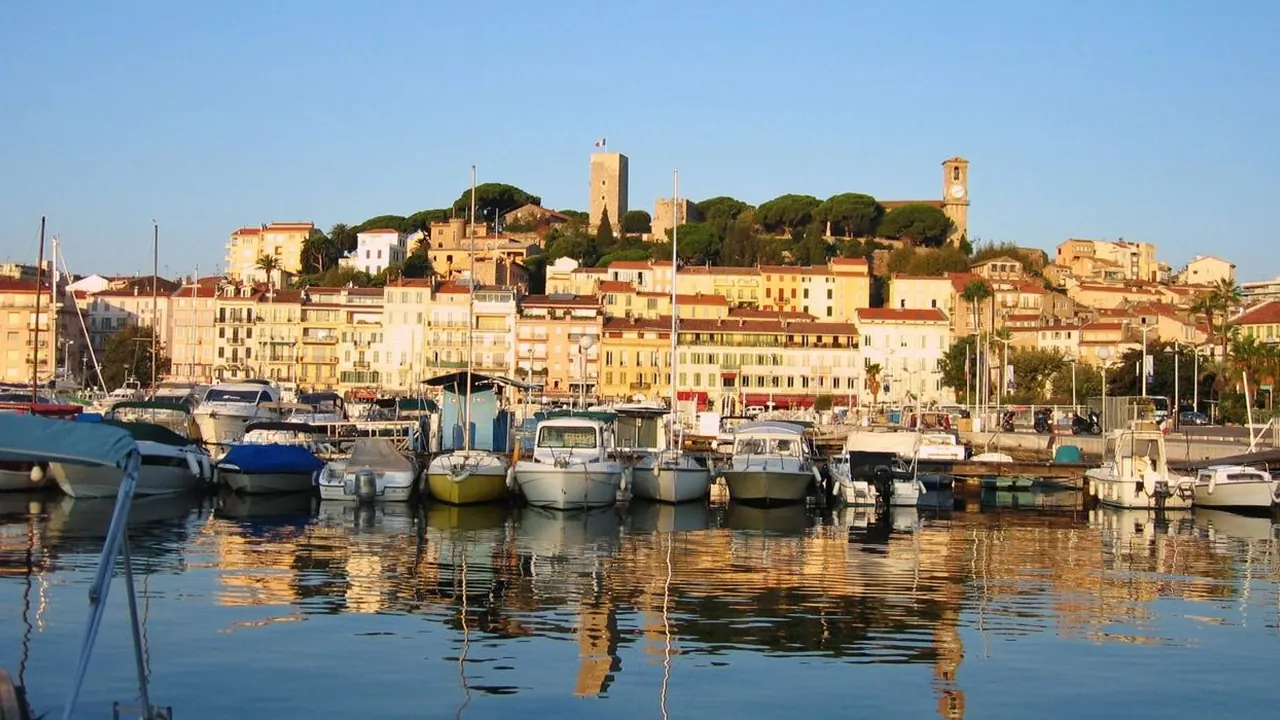
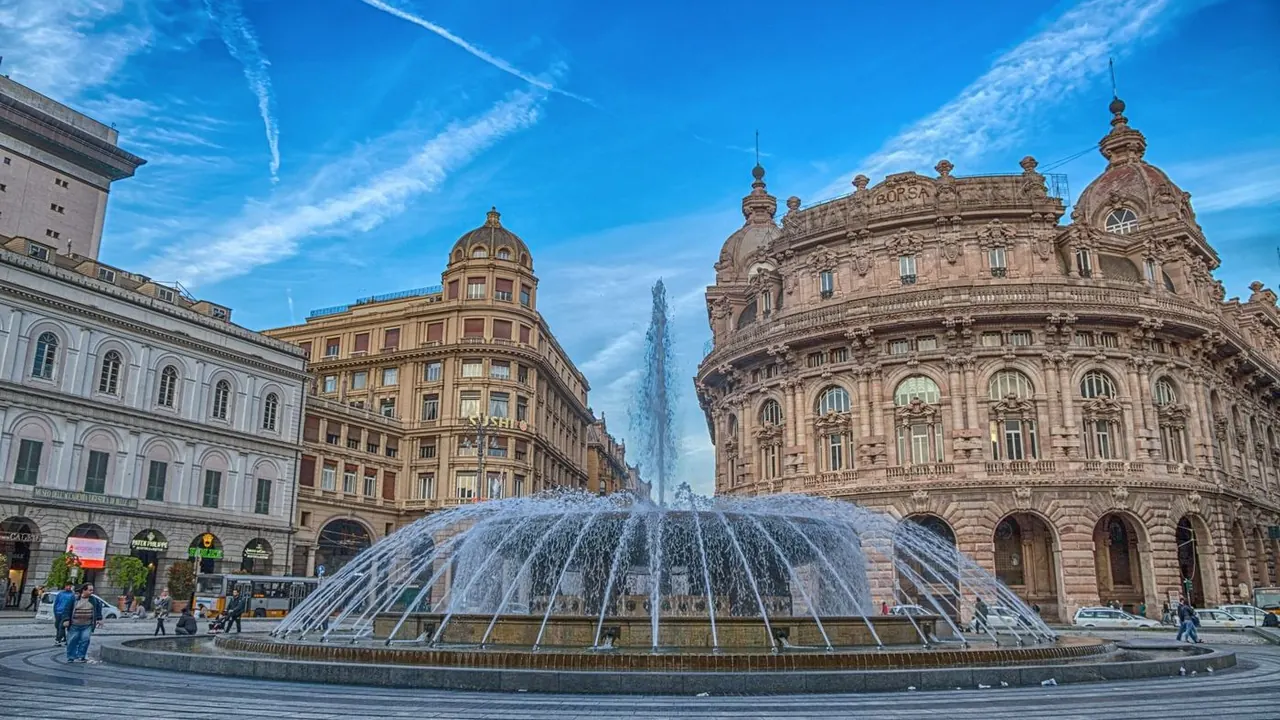
Photos: Cannes by qwesy qwesy, CC BY 3.0, cropped; Genoa by Faber1893, CC BY-SA 4.0, cropped.
Cannes or Genoa?
Our verdict in twelve categories, each scored against the same fixed benchmark cities, and the climate month by month, so you can choose for your trip.
Choose Cannes for
- beaches
- shopping
- wellness
Cannes is the choice for a sun-first Riviera stay: fine sand on calm water right in town, a seafront for strolling in good clothes, the grand fashion houses on the Croisette and polished hotel spas. It also makes an easy base for hopping along the coast to Antibes, Nice and Monaco. Come for the light and the sea rather than the sights, and expect to pay well for it, especially near the waterfront.
Choose Genoa for
- culture and sights
- prices
- food and drink
Genoa suits travellers who want a real city with the sea alongside. Its medieval lanes and palace museums keep you busy for days, the food is among Italy's most distinctive, and hill walks start at the top of a funicular. It costs noticeably less than Cannes. The price is pebbly swimming and steep streets, so it works better for curious walkers than for anyone who mostly wants a lounger.
Scoreboard
Twelve categories on one fixed scale from 0 to 100. The shaded stretch is the gap between the two.
Your match
Pick a travel style or drag the sliders, and both match scores follow your weighting.
Wins on beaches and shopping with your weighting.
Wins on culture and sights and prices with your weighting.
What matters to you?
Category by category
What the scores mean for a trip.
Beaches & swimming
Cannes is the better beach town. The Croisette curves along fine sand on calm, shallow water, and the long Plage du Midi west of the old port gives you free space between the private concessions. Clearer water is a short ferry away on the Lérins islands, and the red coves of the Esterel are close by.
Genoa swims from rocks and pebbles. There is the tiny cove at Boccadasse, bathing establishments built over the rocks on Corso Italia, and platforms under the cliffs at Nervi. The water is just as clear and warm, but for a proper beach you take the train to Camogli, Sestri Levante or sandy Varazze.
Food & drink
Genoa eats better, and more distinctively. This is where pesto comes from, and a day can run from focaccia dunked in cappuccino to trofie at lunch and fried fish from a friggitoria in the old town's lanes. The Mercato Orientale shows the region's produce.
Cannes has fine Provençal ingredients at the Forville market and a real top tier of restaurants in the palace hotels and towards Mougins, which Genoa lacks. Further down, the Croisette serves a lot of tired, overpriced food. Tellingly, its socca is the same chickpea flatbread that Genoa calls farinata, and Genoa makes far more of it.
Culture & sights
There is no contest here. Genoa's historic centre is a huge maze of shaded caruggi, and above it run the Strade Nuove with their UNESCO-listed Rolli palaces. Palazzo Rosso and Palazzo Bianco hang Van Dyck and Rubens in painted halls, and the striped cathedral, the Lanterna lighthouse and the marble sculpture of Staglieno take several more days.
Cannes offers a pleasant morning. You climb Le Suquet to the castle museum and the church, take a photo on the Palais des Festivals steps, and look at the Belle Époque villas along the Croisette. Serious art means a trip to Antibes or Saint-Paul-de-Vence.
Nightlife
Neither is a big night-out city, but the evenings feel very different. In summer and during festivals, Cannes goes in for glamour: beach clubs turn into party venues, a few clubs stay open until dawn, and the bars behind the old port serve champagne to people dressed for it. Off-season it goes to bed early.
Genoa is more low-key and more local. Students and residents fill the small bars around Piazza delle Erbe for aperitivo and stay out late in the medieval squares on weekends, all year round, though weeknights are quiet and the clubs are few.
Nature & outdoors
Both have fine coastal country, and Genoa has the edge because the walking starts in the city itself. The Righi funicular leads to a trail around the old ridge fortresses, the Portofino park's cliff paths run down to San Fruttuoso, and the Cinque Terre trails are a train ride away. Boats also head out to watch whales and dolphins in the Pelagos Sanctuary.
Cannes needs a short drive for its best scenery: the red volcanic rock of the Esterel, plus easy pine walks on Sainte-Marguerite and the shore path around Cap d'Antibes. It also offers winter skiing in the Alpes-Maritimes, though summer fire risk can close the forest trails.
Day trips
Both sit on a coastal railway lined with famous names, so the difference is in the kind of trip. From Cannes, it is a chain of Riviera towns and art: Antibes and its Picasso museum, Nice, Monaco and Menton, then perched villages like Saint-Paul-de-Vence and Èze, and perfume in Grasse.
From Genoa, the coast is fishing villages and cliffs: Camogli, Portofino and the Cinque Terre to the east, and quieter medieval Finale Ligure Borgo and Albenga to the west. Genoa can also reach Milan or Turin for a day, a big-city outing that Cannes cannot match.
Good for families
Genoa has the stronger pull for children, almost all of it at the Porto Antico. One of Europe's largest aquariums sits beside a science centre, a tropical biosphere and a submarine you can walk through, and the funiculars and public lifts are fun rides in themselves. Away from the harbour, though, the steep, dark lanes and endless stairs are hard work with a pushchair.
Cannes is the reverse: easy but not very interesting. The beaches shelve gently and the flat Croisette has carousels and play areas, but little else in town is made for children. Its nearest aquarium is a train ride away in Monaco.
Getting around
Both are manageable without a car, but one is flat and the other climbs. Central Cannes is compact, with the station in the middle and everything except Le Suquet's steep hill within a level twenty-minute walk. The inland villages are where you start to want a car.
Genoa stacks up the hillside. It has funiculars, a rack railway and public lifts, one short metro line, and slow buses in narrow streets, and the old town's maze takes some getting used to. In both cities, the coastal train is the most useful link of all.
Shopping & style
Cannes is the stronger place to shop, especially for luxury. The great Paris fashion and jewellery houses face the sea along the Croisette, Rue d'Antibes runs a long stretch of mid-range French fashion behind it, and Rue Meynadier sells olive oil, soaps and Provençal fabrics.
Genoa's arcaded Via XX Settembre and Galleria Mazzini cover the familiar Italian labels without much depth. Its real interest is craft that Cannes lacks: old town workshops making silver filigree and coral, and long-established shops selling candied fruit and pesto.
Affordability
Genoa is clearly the cheaper stay. Central hotels cost less than in Italy's busiest cities, a slice of focaccia or farinata makes a very cheap lunch, and the funiculars and lifts cost little. Costs only climb in the smart Riviera resorts and when you rent loungers.
Cannes is expensive near the water, and far more so during the film festival and trade fairs. To keep costs down, eat backstreet lunch menus, picnic from the Forville market, use the public beaches, or stay in a neighbouring town and come in by train.
Live music & performing arts
Genoa offers more for an evening out. The Teatro Carlo Felice on Piazza De Ferrari stages opera, ballet and symphony concerts, and the city honours Paganini with concerts. Small clubs keep up the tradition of its singer-songwriters. The Teatro Nazionale's drama is in Italian.
Cannes's famous festival is closed to the public apart from free screenings on the beach. Beyond it, there are touring shows at the Palais, a respected dance festival, and summer concerts in the castle courtyard on Le Suquet. Many jazz fans head along the coast to Juan-les-Pins.
Wellness & relaxation
Cannes is the more restful choice, though neither town has a bathing tradition. Its palace hotels have polished spas using sea minerals and Provençal plants, and thalassotherapy centres line the coast. In spring and autumn, the slow mornings and calm seafront help as much as the treatments.
Genoa's spas are mostly in hotels, and its nearest thermal waters are at Acqui Terme, over an hour inland. Nervi's villa gardens and seafront promenade offer some peace, but the port and the crowded lanes of the centre keep the city lively rather than calm.
When should you go?
Pick your month. The climate figures are measured averages, not a forecast.
Cannes in July
Genoa in July
Daytime high, °C
Rainfall in the month, mm
Where the figures come from
Genoa has no rain gauge within 25 km of the centre, so its rainfall comes from a gridded climate dataset read at the city rather than from a gauge further away.
Genoa's sunshine is measured 80 km from the centre, at Capo Mele.
Temperature and rainfall are climate normals, averaged over the years shown. Cannes: 2004-2020 (sunshine 1991-2020, rainfall 1991-2020) normals, Cannes (5.8 km from centre). Genoa: 1991-2020 normals, Genova / Sestri (6.7 km from centre).
The two share almost the same Mediterranean calendar. Days reach about 28°C in July and August, and the sea is warm enough for swimming from June to September, peaking around 25°C in August. Both get their heaviest rain in autumn. October and November are the wettest months, with Cannes taking slightly more, up to about 138mm in November. Cannes is sunnier all year round, which matters most in winter, when Genoa's grey days come more often.
For walking the streets, May, June and September are the sweet spot in both. High summer is hot work in Genoa in particular, where sightseeing means stairs and climbs out of the old town. Winter stays mild in both, with highs around 12°C to 14°C, which is pleasant for sightseeing. That favours Genoa, whose sights carry on in any season, while Cannes without its beaches has much less to offer.
Which traveller are you?
On a beach and sun trip, Cannes is the better pick. It has fine sand and gentle water along the Croisette, the free Plage du Midi, more sunshine, and boats to the Lérins islands. In Genoa, swimming means pebble coves, rock platforms or a train ride along the coast.
For a culture and arts trip, Genoa wins easily. It has a vast medieval quarter, the Rolli palaces on Via Garibaldi with their Van Dycks and Rubens, the Staglieno cemetery and an opera house. Cannes's sights fit into one morning on Le Suquet.
On a tight budget, Genoa goes much further. Focaccia and farinata make cheap meals, trattoria lunches are fairly priced and funiculars cost little. In Cannes, hotels, seafront meals and private beaches are priced for a wealthy crowd, and savings mean picnics and staying in another town.
Before you go
| Measure | Cannes | Genoa |
|---|---|---|
| Official language | French | Italian |
| Currency | Euro (EUR) | Euro (EUR) |
| Sockets | CE230 V, 50 Hz | CFL230 V, 50 Hz |
| Driving side | Right | Right |
| Time zone | UTC+1, UTC+2 in summer | UTC+1, UTC+2 in summer |
| Emergency number | 112 | 112 |
| Elevation | 0 m | 20 m |
| Main airport | Nice-Côte d'Azur Airport (NCE)20 km from centre130 non-stop destinations | Genoa Cristoforo Colombo Airport (GOA)7 km from centre25 non-stop destinations |
| Public holidays this year | 11 days | 13 days |
By the numbers
| Measure | Cannes | Genoa |
|---|---|---|
| City population | 74,350 | 558,745 |
| People per km² | 3,793 | 2,325 |
| Museums within 10 km | 16 | 51 |
| UNESCO World Heritage sites within 50 km | 2 | 1 |
| Swim season, months above 21 °C | 4 months | 4 months |
Where else could you go?
Every comparison below shares a destination with this one, so you can follow Cannes or Genoa somewhere new.