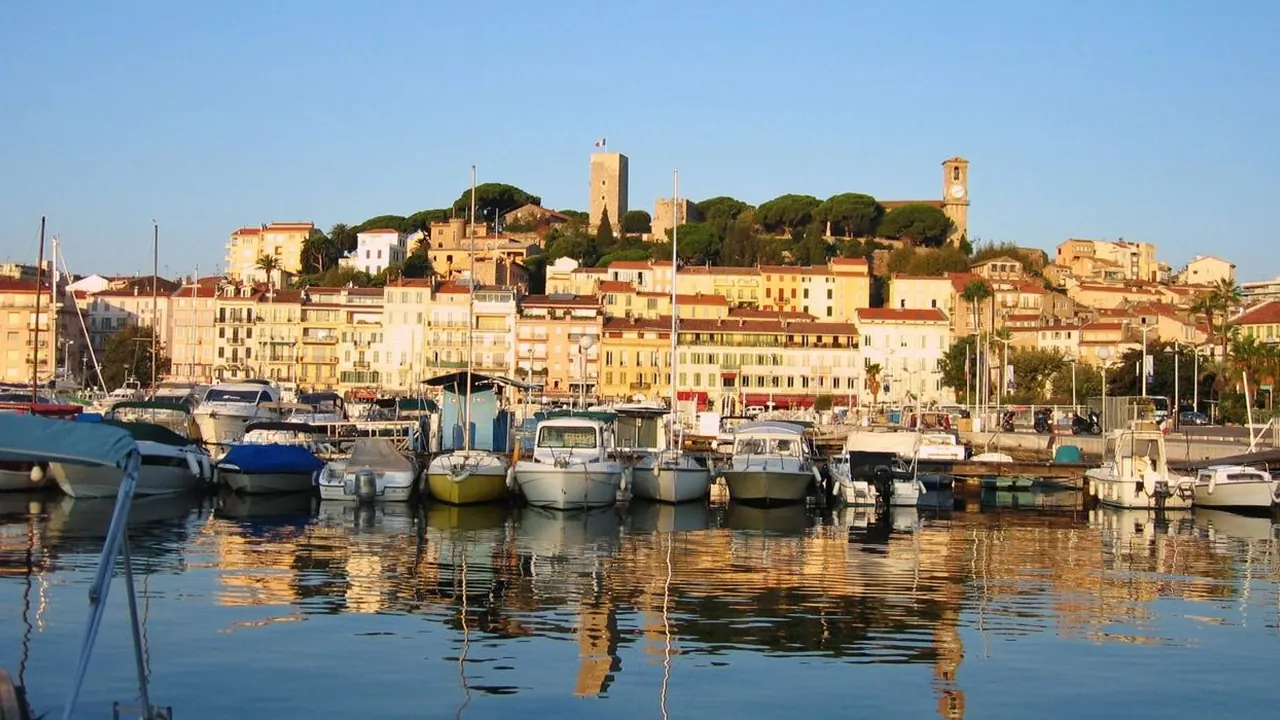
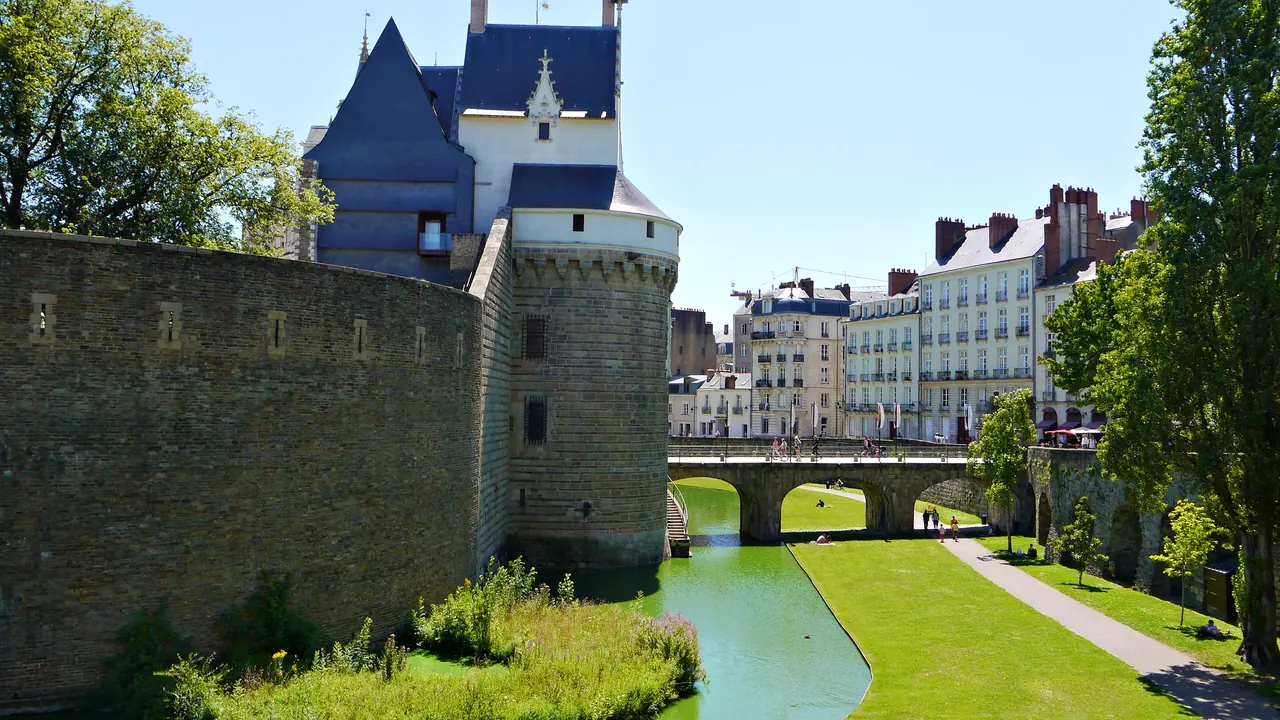
Photos: Cannes by qwesy qwesy, CC BY 3.0, cropped; Nantes by Carole44, CC BY-SA 3.0, cropped.
Cannes or Nantes?
Our verdict in twelve categories, each scored against the same fixed benchmark cities, and the climate month by month, so you can choose for your trip.
Choose Cannes for
- beaches
- nature and the outdoors
- day trips
Cannes suits a sun-led trip on the Riviera: mornings on fine sand by calm, warm water, afternoons on the coastal train to Antibes, Nice or Monaco, and evenings dressed up on the Croisette. It works best for travellers who want the sea, the scenery of the Esterel and a string of famous towns within easy reach, and who accept that the town itself has few sights and costs a good deal.
Choose Nantes for
- prices
- culture and sights
- live music and the arts
If you would rather spend your days in museums, at a concert or walking through a city with a real story, Nantes is the better pick. It has a ducal castle, a lively stage, a student crowd in its bars and a mechanical elephant for the children, all at ordinary French prices and linked by trams. The beach is an outing here rather than the point of the trip.
Scoreboard
Twelve categories on one fixed scale from 0 to 100. The shaded stretch is the gap between the two.
Your match
Pick a travel style or drag the sliders, and both match scores follow your weighting.
Too close to call, level with your weighting
Wins on beaches and nature and the outdoors with your weighting.
Wins on prices and culture and sights with your weighting.
What matters to you?
Category by category
What the scores mean for a trip.
Beaches & swimming
Here Cannes has a real advantage. Sand curves along the Croisette in the middle of town, the long Plage du Midi offers free space west of the old port, and the Mediterranean is warm and calm through summer. The rocky Lérins islands and the red coves of the Esterel give you clearer water when the central beaches fill up.
From Nantes the beach means a day out, around 50km to La Baule's sheltered bay or the coves of Pornic. The sand is clean and wide, but the Atlantic stays cool and the season is short.
Food & drink
The two eat about equally well, just from different coasts. Cannes cooks Provençal: bouillabaisse, socca and stuffed vegetables from the bistros of Le Suquet, rosé on the terrace, and a fine-dining layer in the palace hotels and up towards Mougins, though much of the waterfront food is tired and overpriced.
Nantes has more dishes of its own. Beurre blanc was born here, and you will find oysters from the nearby coast, galettes, and Muscadet from vineyards just outside the city. The Talensac market plays the part Forville does in Cannes, and bistro meals around Bouffay and Graslin are fairly priced.
Culture & sights
Nantes gives you far more to see. The moated Château des Ducs de Bretagne holds a frank history museum, the cathedral keeps the tomb of Francis II, the Musée d'Arts runs from old masters to contemporary work, and the Ile Feydeau, Passage Pommeraye and the abolition memorial add depth.
In Cannes, the climb up Le Suquet to the castle museum and church, a look at the Belle Époque hotels and a photo on the Palais steps take a single morning. Serious art means travelling along the coast.
Nightlife
Neither is a big night-out city, but the evenings feel very different. Cannes is seasonal and glamorous: from June to September the Croisette beach clubs become party venues and the bars behind the old port fill up, with champagne, smart dress and plenty of private parties. Off-season the town goes to bed early.
Nantes runs on students instead. You will find pubs and terraces in the medieval Bouffay lanes, then late bars and clubs in the old dockside warehouses on the Ile de Nantes. It is cheaper and more casual, and it keeps going through the year during term.
Nature & outdoors
Cannes has the more dramatic landscape. The red volcanic Esterel drops into deep blue sea twenty minutes west, there are pine paths on Sainte-Marguerite and wild shore around Cap d'Antibes, and you can dive and kayak among the islands, with the pre-Alps and winter skiing inland.
Nantes offers gentle, watery country instead. You can paddle or walk along the Erdre, cycle the Loire à Vélo route, or take a punt through the Brière marshes, which are good for birdwatching. The Côte Sauvage gives coastal walks, but there are no hills.
Day trips
Both make good bases, and Cannes has the denser choice. One coastal railway takes you to Antibes, Nice, Villefranche, Monaco and Menton, with Saint-Paul-de-Vence, Èze, Grasse and Saint-Tropez reachable by road. Few places offer so many famous names this close together.
Nantes looks out over western France at a gentler pace. You can reach walled Guérande and its salt marshes, Angers and its tapestry, Saumur and the Loire châteaux, Vannes on the Gulf of Morbihan, and the Italianate town of Clisson among the vineyards. Distances are longer, often an hour or more.
Good for families
Nantes is the better bet with children. The giant elephant and sea-creature carousel at the Machines de l'Ile are built for them, the Jardin des Plantes has playgrounds, and Puy du Fou and a safari park are within driving distance.
Cannes is easy rather than exciting. It has shallow sandy beaches, a flat Croisette for scooters and a boat picnic on the Lérins islands, but little else in town is aimed at children, and summer heat and crowds take some managing.
Getting around
Both centres are compact and flat, and Nantes is the simpler of the two. Trams and a busway link the castle, Bouffay, Graslin and the Ile de Nantes, river shuttles cross the Loire, and cycling is easy.
Cannes has no tram, but the walk from the market to the Croisette takes under twenty minutes, and its central station makes the coastal towns simple to reach. Inland villages and the Esterel need a car, and summer traffic and parking are a struggle.
Shopping & style
Cannes is the place to shop. The big Paris fashion and jewellery houses face the sea along the Croisette, Rue d'Antibes adds a long stretch of mid-range French labels, and Rue Meynadier sells olive oil, soaps and Provençal fabrics.
Nantes is pleasant but modest. You can browse the three-level Passage Pommeraye, the chains on Rue Crébillon and the independent and second-hand shops around Bouffay and Decré. Buy local salted-butter biscuits, berlingots and Guérande salt rather than luxury goods.
Affordability
Nantes is much easier on the wallet. Hotels are reasonable and easy to find, trams and walking keep transport costs low, and only dinners and drinks run at normal French levels.
Cannes is priced for a wealthy crowd, especially in summer and during the film festival and trade fairs. Backstreet lunches, market picnics, public beaches and cheap coastal trains help, as do spring and autumn visits outside event weeks.
Live music & performing arts
For an evening out, Nantes has much more going on. La Folle Journée packs hundreds of short classical concerts into a few winter days, opera plays at the Théâtre Graslin, the Lieu Unique stages contemporary work, and giant street puppetry is part of the city's character.
The famous Cannes festival is closed to most visitors, beyond the free screenings on the beach. Otherwise the town has the Palais programme, a dance festival and summer concerts in the Le Suquet castle courtyard. For jazz, you go to Juan-les-Pins.
Wellness & relaxation
Neither has a bathing tradition, and Cannes edges ahead on comfort. Its palace hotels run polished spas using sea minerals and Provençal plants, and the calm seafront in spring and autumn makes for slow, easy days, though August and festival weeks are noisy.
In Nantes, wellness means day spas and quiet hours by the Erdre. For the classic French seawater cure, you travel an hour to the thalassotherapy centres at La Baule or Pornic.
When should you go?
Pick your month. The climate figures are measured averages, not a forecast.
Cannes in July
Nantes in July
Daytime high, °C
Rainfall in the month, mm
Temperature and rainfall are climate normals, averaged over the years shown. Cannes: 2004-2020 (sunshine 1991-2020, rainfall 1991-2020) normals, Cannes (5.8 km from centre). Nantes: 1991-2020 normals, Nantes (6.6 km from centre).
Cannes has the long Mediterranean summer. June, July and August are hot and dry, with highs around 29°C at the peak, long sunny days and very little rain, so the middle of the day is better spent in the water than walking the streets. The sea is warm enough for easy swimming from June into early October. Late September and early October stay warm but turn showery. September is already wetter than any month from January to August, and the rain builds through autumn to about 138mm in November. For walking and day trips, May is the better choice: warm, sunny and much drier. Winter is mild but too cool for the beach.
Nantes is milder and greyer all year. Summer highs settle around 25°C, which is pleasant for exploring on foot but rarely beach weather, and the Atlantic only reaches about 19°C in August. Rain falls in every month and is heaviest from October to December, and winters are chilly with little sun. May to September is the time to go. Cannes keeps the edge for anyone chasing heat and a warm sea.
Which traveller are you?
On a beach and sun trip, Cannes wins easily. Sandy beaches lie right in town on warm, calm water, the Lérins islands and Esterel coves are close, and the summer is drier and sunnier, while Nantes needs an hour's journey to a cooler Atlantic shore.
For a culture and arts trip, Nantes is the stronger choice. The Château des Ducs, the cathedral, the Musée d'Arts and the merchant quarters fill two or three days, and the opera, orchestra and Lieu Unique keep evenings full. Cannes's sights fit into one morning.
On a trip with a tight budget, Nantes stretches the money further. Hotels are easy to find at regional prices, set lunches are good value and the trams cost little, whereas Cannes charges heavily for rooms, seafront meals and beach loungers, especially in summer.
Before you go
| Measure | Cannes | Nantes |
|---|---|---|
| Official language | French | French |
| Currency | Euro (EUR) | Euro (EUR) |
| Sockets | CE230 V, 50 Hz | CE230 V, 50 Hz |
| Driving side | Right | Right |
| Time zone | UTC+1, UTC+2 in summer | UTC+1, UTC+2 in summer |
| Emergency number | 112 | 112 |
| Elevation | 0 m | 2 m |
| Main airport | Nice-Côte d'Azur Airport (NCE)20 km from centre130 non-stop destinations | Nantes Atlantique Airport (NTE)8 km from centre97 non-stop destinations |
| Public holidays this year | 11 days | 11 days |
By the numbers
| Measure | Cannes | Nantes |
|---|---|---|
| City population | 74,350 | 327,734 |
| People per km² | 3,793 | 5,027 |
| Museums within 10 km | 16 | 11 |
| UNESCO World Heritage sites within 50 km | 2 | 0 |
| Swim season, months above 21 °C | 4 months | None |
Where else could you go?
Every comparison below shares a destination with this one, so you can follow Cannes or Nantes somewhere new.