French Riviera or Provence?
Our verdict in twelve categories, each scored against the same fixed benchmark cities, and the climate month by month, so you can choose for your trip.
Choose French Riviera for
- getting around
- nightlife
- shopping
The French Riviera suits a traveller who wants the coast and the towns along it without needing a car. The railway between Cannes and Menton strings Nice, Villefranche and Monaco together, so you can swim in the morning, see a Matisse or a Picasso in the afternoon and go out in the old town of Nice at night. It gives you more nightlife, more polished shopping and an easier base, but it costs more and the day trips often feel alike.
Choose Provence for
- day trips
- prices
- wellness
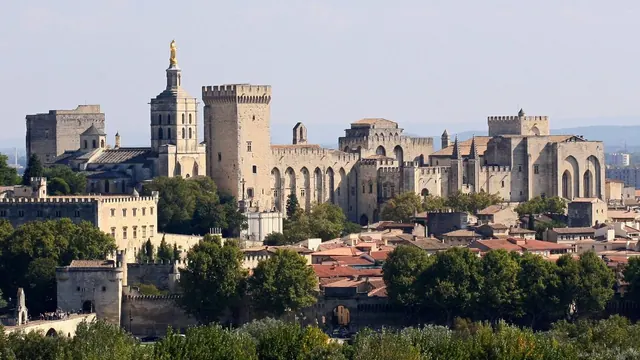
Provence is the better pick for anyone happy to drive and to treat the vacation as a tour. Roman theatres, the papal palace at Avignon, the Verdon gorges, the Camargue and a long list of market villages are spread across a wide countryside, and almost any base has good outings close by. Evenings are quieter and the trains will not take you far, but daily costs are a little gentler and the food and landscapes are broader.
Scoreboard
Twelve categories on one fixed scale from 0 to 100. The shaded stretch is the gap between the two.
Your match
Pick a travel style or drag the sliders, and both match scores follow your weighting.
Too close to call, 1 point apart
Wins on getting around and nightlife with your weighting.
Wins on day trips and prices with your weighting.
What matters to you?
Category by category
What the scores mean for a trip.
Beaches & swimming
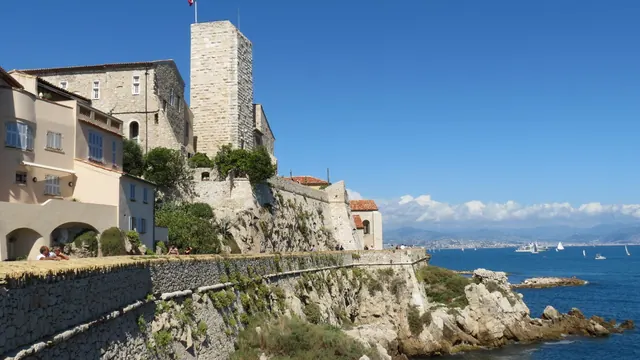
Both regions have good beaches, and both share the sand of Pampelonne near Saint-Tropez. The Riviera's swimming is the more convenient, with pebbles at Nice and Menton, easy sand at Cannes and Juan-les-Pins, and the red-rock coves of the Esterel all close to a railway line.
Provence offers more wild settings. Porquerolles and the Hyères peninsula have pale, shallow water, and the calanques near Cassis are deep inlets reached on foot or by boat. If you stay inland in the Luberon or the Alpilles, though, the sea is a long drive away.
Food & drink
The two kitchens overlap, with olive oil, daube and rosé in both. The Riviera's cooking centres on Nice, with socca, pissaladière and stuffed vegetables, and it has many top-end restaurants between Menton and Cannes. Its seafront tourist menus are the thing to avoid.
Provence covers more ground. It has bouillabaisse and North African cooking in Marseille, truffles around Carpentras, and weekly markets in dozens of towns. Its wines go further too, from Bandol to Châteauneuf-du-Pape.
Culture & sights
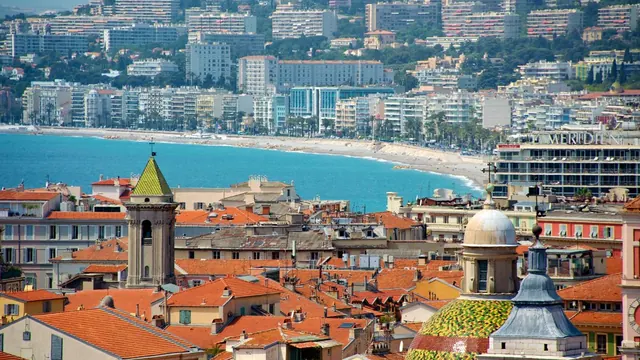
The difference here is the period. On the Riviera, the main draw is twentieth-century art made on that coast: the Matisse and Chagall museums in Nice, Picasso at Antibes, the Fondation Maeght, and the chapel at Vence. Monaco's palace and the Belle Epoque seafront of Nice add a glamorous setting.
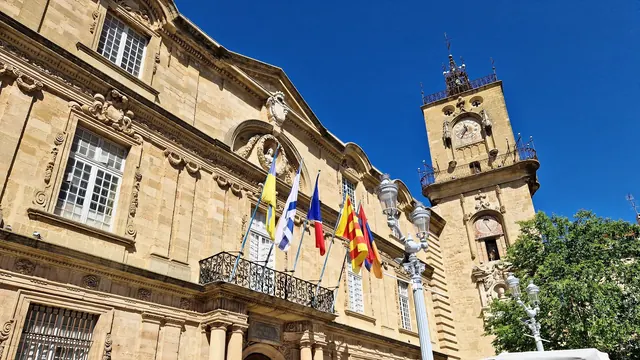
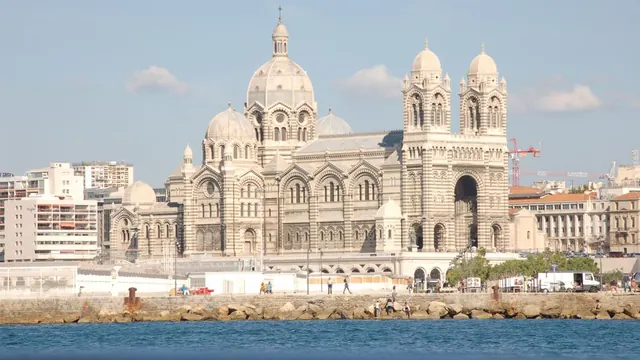
Provence goes much further back. It has Roman theatres at Orange and Arles, the papal palace and walls of Avignon, Cistercian abbeys and Van Gogh's Arles, with Cézanne at Aix and the MuCEM in Marseille. These sights are spread across several towns rather than gathered around one base.
Nightlife
The Riviera is clearly the better place to go out. Saint-Tropez and Monaco have showy beach clubs in summer, Juan-les-Pins has its strip of late bars, and Nice keeps pubs and wine bars busy all year round.
Provence's evenings are mostly long dinners on a terrace followed by a drink in a village square. Marseille's Cours Julien is the real exception, a rougher and more varied city scene than anything on the Riviera.
Nature & outdoors
Both regions are superb outdoors, but the scenery differs. The Riviera is about mountains meeting the sea: paths around Cap Ferrat and Cap d'Antibes, kayaking under the red Esterel cliffs, and the Mercantour's high trails and ski stations within reach of Nice.
Provence has a wider range of landscapes. It has the Verdon canyon, the white cliffs of the Calanques, the cyclists' climb up Mont Ventoux, the lavender of Valensole and the flamingos of the Camargue. In both regions, summer fire closures can shut some trails.
Day trips
Provence is far stronger for excursions. From Avignon or the Luberon you can reach Gordes, Roussillon's ochre cliffs, L'Isle-sur-la-Sorgue, Les Baux and Châteauneuf-du-Pape, and the Pont du Gard and Nîmes lie just across the Rhône. These are real changes of scene, but nearly all of them need a car.
The Riviera's outings are easier to reach and smaller in scale. The train takes you to Monaco, Villefranche and Menton, and you can cross into Italy to Dolceacqua and Sanremo. Many other days are spent on another pretty perched village.
Good for families
Both regions suit families in a similar way, with the sea as the main draw, and both have steep villages that are hard with a pushchair. The Riviera has a few more attractions made for children, such as the Monaco aquarium, Parc Phoenix and water parks near Antibes, and they are easy to reach by train.
Provence suits a rented house with a pool and outings for older children, such as canoeing on the Sorgue, riding in the Camargue or visiting the arenas at Arles. The trade-off is longer car journeys in the July heat.
Getting around
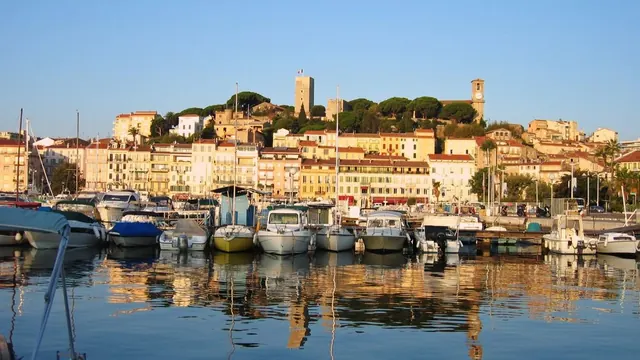
The Riviera is much easier without a car. One coastal railway links Cannes, Antibes, Nice, Villefranche, Monaco and Menton, and Nice has a tram to the airport, so a base near a station on the Nice to Monaco stretch covers most of a trip. A car pays off for exploring inland, where buses to the hill villages and Grasse are slow and full in summer. Saint-Tropez has no railway at all, and the summer ferries are the better way in.
In Provence, trains link the big towns well, from Marseille to Aix, Avignon, Arles and Toulon, and their old centres are easy on foot. But the villages, abbeys and gorges that make the region worth visiting are mostly out of reach by bus, so plan on driving, with narrow hill lanes and scarce parking in the perched villages to manage.
Shopping & style
The Riviera is the better shopping trip. It has luxury boutiques along the Croisette and around the Monte-Carlo casino, department stores on Nice's Avenue Jean-Médecin, and crafts with a clear local identity: perfume in Grasse, glass in Biot and pottery in Vallauris.
Provence has little in the way of big shopping streets. Its strengths are the markets and the antiques dealers of L'Isle-sur-la-Sorgue, along with Marseille soap, Moustiers faience and santons. Aix's old streets are the one place for a rounded afternoon of shopping.
Affordability
Neither region is cheap in summer, but the Riviera costs more. Cannes, Monaco and Saint-Tropez are among the most expensive stays in Europe, and private sunbeds add up fast. Nice is the sensible base, and the cheap regional trains are a real saving.
Provence gives you more room to save if you avoid the Luberon villas. Marseille, Arles, Avignon and the quieter Var villages are reasonably priced, though you need to budget for a hire car.
Live music & performing arts
The two regions are close here, but their seasons differ. The Riviera's strength lasts through the winter, with the small gilded Monte-Carlo opera, its ballet company and the Nice opera. Summer adds the jazz festivals at Juan-les-Pins and Nice.
Provence depends on July. The Avignon theatre festival and its fringe fill the town, the Aix opera festival is held in the Archbishop's Palace courtyard, and opera is staged in Orange's Roman theatre. Outside the festival season, Marseille's opera house and its rap and world-music scene keep things going.
Wellness & relaxation
For rest the two are about level, but they offer it in different ways. The Riviera's kind is pampering by the sea: thalassotherapy in heated seawater and the large spas of the grand hotels on the capes. It suits a traveller who wants treatments without leaving the coast, as long as they avoid high summer, when the resorts are noisy and only spring and autumn feel calm.
Provence relaxes you through the pace of the day more than through spas. A restored farmhouse in the hills sets an unhurried routine, and anyone who wants a proper cure can go to the old thermal towns of Haute-Provence or the spa at Aix. It is the better choice for a slow week away from the shore, since its own coast is just as crowded in August."}
When should you go?
Pick your month. The climate figures are measured averages, not a forecast.
French Riviera in July
Provence in July
Daytime high, °C
Rainfall in the month, mm
Where the figures come from
Provence has no rain gauge within 25 km of the centre, so its rainfall comes from a gridded climate dataset read at the destination rather than from a gauge further away.
Provence's sunshine is measured 53 km from the centre, at Nimes / Courbessac.
Temperature and rainfall are climate normals, averaged over the years shown. French Riviera: 1991-2020 normals, Nice (9.8 km from centre). Provence: 2005-2020 (sunshine 1981-2010, rainfall 1991-2020) normals, Avignon / Morières-lès-Avignon (11.9 km from centre).
On the Riviera the swimming season runs from June to early October. Highs reach about 28°C in July and August and the sea warms to around 25°C, which makes it the steadier beach choice in high summer. May and late September are pleasant for walking the towns, and winter stays mild by the sea. Rain arrives in autumn, and October and November are the wettest months, with October bringing about 124mm.
The Provence figures run hotter in summer and cooler in winter. July reaches around 32°C, which is hard going in town streets and on village climbs at midday, so May, June and September are the best months for sightseeing and walking. Winter highs fall to about 11°C, a few degrees below the coast, and autumn is wet here too, though a little less so than on the Riviera.
Which traveller are you?
On a food and nightlife trip, the French Riviera has the edge after dark. Nice's old town and port fill with wine and cocktail bars, and Juan-les-Pins, Cannes and Monaco carry on late in summer, while most Provençal villages are quiet by eleven.
On a tight budget, Provence stretches the money a little further. Marseille, Arles, Avignon and the less famous Var villages are cheaper places to stay, and market food and set lunches keep daily costs down, though a hire car eats into the savings.
For a short city break, the French Riviera works better. Nice has an airport tram, a walkable centre, museums and markets, and the coastal train reaches Monaco and Menton in under an hour. Provence's best sights are spread out and most of them need a car.
Before you go
| Measure | French Riviera | Provence |
|---|---|---|
| Official language | French | French |
| Currency | Euro (EUR) | Euro (EUR) |
| Sockets | CE230 V, 50 Hz | CE230 V, 50 Hz |
| Driving side | Right | Right |
| Time zone | UTC+1, UTC+2 in summer | UTC+1, UTC+2 in summer |
| Emergency number | 112 | 112 |
| Main airport | Nice-Côte d'Azur Airport (NCE)130 non-stop destinations | Marseille Provence Airport (MRS)126 non-stop destinations |
| Public holidays this year | 11 days | 11 days |
By the numbers
| Measure | French Riviera | Provence |
|---|---|---|
| Swim season, months above 21 °C | 4 months | - |
Where else could you go?
Every comparison below shares a destination with this one, so you can follow French Riviera or Provence somewhere new.
- Cinque Terrevs French Riviera
- Corsicavs French Riviera
- French Alpsvs French Riviera
- French Alpsvs Provence
- Costa Bravavs Provence
- Lake Comovs French Riviera