France
Antibes
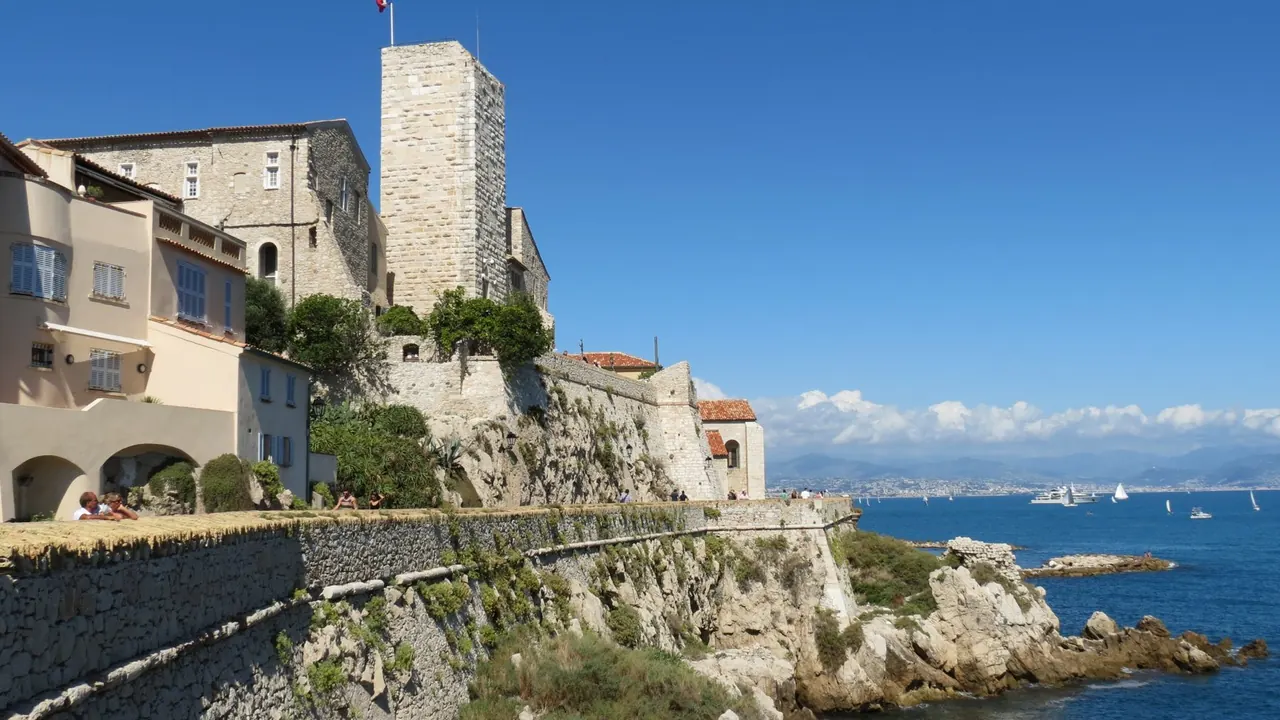
The Château Grimaldi, home of the Musée Picasso, on the sea walls
- Day trips88
- Beaches80
- Nature & outdoors70
Photo: Johan Allard, CC BY-SA 4.0, cropped
Match
52
Every category weighted equally
- Beach & sun55
- Culture & arts50
- Food & nightlife48
- Family trip56
- Outdoors60
- Relax & unwind54
- Shopping & style48
- On a budget50
Antibes in twelve categories
Our verdict on each, scored 0 to 100 against the same fixed benchmark cities, so a score means the same thing on every page.
Beaches & swimming. Scores 80 out of 100.
Food & drink. Scores 50 out of 100.
Culture & sights. Scores 42 out of 100.
Nightlife. Scores 40 out of 100.
Nature & outdoors. Scores 70 out of 100.
Day trips. Scores 88 out of 100.
Good for families. Scores 55 out of 100.
Getting around. Scores 62 out of 100.
Shopping & style. Scores 35 out of 100.
Affordability. Scores 30 out of 100.
Live music & performing arts. Scores 35 out of 100.
Wellness & relaxation. Scores 40 out of 100.
Antibes category by category
Beaches & swimming
80Antibes is one of the few places on this stretch of coast with real sand. The long, gently shelving beaches of Juan-les-Pins and the town beach at La Salis, looking across the bay to the old ramparts, are the heart of a summer stay. Around Cap d'Antibes the shore turns rocky, with small coves such as La Garoupe and swimming off flat rocks into very clear water.
The sea reaches about 24°C in August and stays swimmable from June to early October. Much of the sand at Juan-les-Pins is taken by private beach clubs with loungers, though public stretches sit between them. In July and August the free beaches fill early in the day.
Food & drink
50Eating in Antibes centres on the covered Provençal market on Cours Masséna, where stalls sell olives, cheese, tapenade, local vegetables and flowers each morning, and on the dense lanes of the old town around it. Niçoise cooking dominates: socca, pissaladière, stuffed vegetables, grilled fish and rosé taken outdoors.
There is serious dining on Cap d'Antibes and some good bistros in the old town, but the range is that of a coastal town, and the busiest streets near the port lean on tourist menus. Pick carefully and it's a pleasant place to eat. Few people come here just for the food.
Culture & sights
42The best sight is the Picasso Museum, set in the Château Grimaldi on the sea wall. Picasso worked here in 1946, and the works he made that autumn are still in the building, with views over the water from its terrace. Around it, the old town is a pleasant knot of narrow lanes, sea ramparts and the Cathedral of Notre-Dame de l'Immaculée Conception.
Across the harbour, the star-shaped Fort Carré guards Port Vauban, and Cap d'Antibes adds the Villa Eilenroc and the Garoupe lighthouse chapel. Small museums of archaeology and of the illustrator Peynet round it out. Two days covers it all.
Nightlife
40Going out here is mainly a summer thing. In July and August, Juan-les-Pins is the late part of town, with beach bars, lounges and a few clubs that keep going until the early hours. In the old town of Antibes, the lanes near Port Vauban have a cluster of English-speaking pubs and wine bars, popular with the crews of the big yachts moored there.
Out of season most places close early and many in Juan-les-Pins shut altogether. For a bigger or more varied night out, people head to Nice.
Nature & outdoors
70The coastal path around Cap d'Antibes is the local walk. It runs over wind-carved limestone and past pines and villas, with views to the snow-capped Alps in winter. The clear water around the cape is good for snorkelling and diving, and the bay is busy with sailing and paddleboarding. The Villa Thuret botanical garden and the pine woods of La Garoupe add some green close to town.
The red porphyry cliffs and trails of the Esterel massif are under an hour west. Inland, the Gorges du Loup and the limestone pre-Alps above Grasse offer proper hiking, with higher Alpine country beyond for a longer day. The land right around the town is flat and largely built up.
Day trips
88Antibes sits in the middle of the Riviera, and few bases have so many towns within easy reach. Nice is about twenty minutes away by train and Cannes less, while Villefranche, Monaco and Menton are further along the same coastal line towards the Italian border. Boats from Cannes and Juan-les-Pins cross to the Lérins Islands, with their fort and monastery.
Inland lie the hill villages: Saint-Paul-de-Vence with its art foundation, Vence, Eze above the sea, and Grasse with its perfume houses. Next door are Biot, known for blown glass, and Vallauris, where Picasso made his ceramics. Italy's Ventimiglia market and Sanremo are a longer but easy day.
Good for families
55For a family, the draw is the beach. The sandy, gently shelving shore at Juan-les-Pins and La Salis suits small children better than the pebble beaches elsewhere on the coast, and the town is small, safe and easy to manage. Ice cream along the ramparts, boats in Port Vauban and the walk round Fort Carré fill the gaps between swims.
The town has little else built for children. Older children may enjoy snorkelling off the cape or the boat to the Lérins Islands. Summer heat and full beaches in August call for early starts and long lunches indoors.
Getting around
62The old town, the market and Port Vauban sit close together and are best on foot, and Juan-les-Pins is a flat half-hour walk or a short bus ride away. Antibes and Juan-les-Pins both have stations on the coastal railway, which makes Nice, Cannes, Monaco and Menton easy without a car.
Things get harder further out. Local buses cover Cap d'Antibes and the hill villages, but slowly, and Grasse, the Gorges du Loup and the Esterel are much simpler with a car. Coast road traffic and parking are a real problem in summer.
Shopping & style
35Shopping here is small-scale and local. The covered Provençal market is the highlight, good for olive oil, herbs and soaps. The old town lanes and Rue de la République have independent boutiques selling Provençal linens, ceramics, summer clothes and deli goods, and there's a bric-a-brac market on some mornings.
There is no luxury street or department store to speak of. For fashion, people go to the Croisette in Cannes or the shopping streets of Nice. Biot glass and Vallauris pottery are best bought in those villages, just a short drive away.
Affordability
30Antibes is expensive. In July and August, rooms near the beaches of Juan-les-Pins and on Cap d'Antibes are priced like a luxury resort, and beach-club loungers and seafront terraces are costly too. The old town has some cheaper places to eat, and the regional trains along the coast are good value.
It's cheapest to visit in spring and autumn, when hotel rates drop sharply and the sea is still warm enough to swim in at either end. Self-catering from the market saves a lot.
Live music & performing arts
35Antibes has one big event, Jazz à Juan. Started in 1960, it is one of Europe's oldest jazz festivals, with concerts each July under the pines of the Pinède Gould, steps from the sea at Juan-les-Pins. Over the years its stage has hosted names from Ray Charles to Miles Davis.
The rest of the year is quieter. The Anthéa theatre puts on a regional programme of plays, dance and concerts, and summer brings open-air events in the old town. For opera or orchestral music, the nearest houses are in Nice.
Wellness & relaxation
40Antibes has no tradition of public baths. Wellness here means a seawater thalassotherapy centre near the coast and the spas of the grand hotels on Cap d'Antibes, which non-guests can often book for treatments.
The town relaxes most outside high summer. In May, June and September, long market mornings, lunches in the shade and evening walks along the ramparts set a gentle pace. In July and August, crowds and traffic make it much less restful.
When should you go?
Pick a month to see what it is like. The climate figures are measured averages, not a forecast.
Antibes in July
Daytime high, °C
Rainfall in the month, mm
The whole year
Shaded against this city’s own year: the deepest cell is its best month for that figure and the palest its weakest.
Temperature and rainfall are climate normals, averaged over the years shown. Antibes: 1991-2020 normals, Nice (9.9 km from centre).
Before you go
| Measure | Antibes |
|---|---|
| Official language | French |
| Currency | Euro (EUR) |
| Sockets | CE230 V, 50 Hz |
| Driving side | Right |
| Time zone | UTC+1, UTC+2 in summer |
| Emergency number | 112 |
| Elevation | 0 m |
| Main airport | Nice-Côte d'Azur Airport (NCE)11 km from centre130 non-stop destinations |
| Public holidays this year | 11 days |
By the numbers
| Measure | Antibes |
|---|---|
| City population | 77,637 |
| People per km² | 2,930 |
| Museums within 10 km | 14 |
| UNESCO World Heritage sites within 50 km | 2 |
| Swim season, months above 21 °C | 4 months |
Compare Antibes with
Every comparison with a written verdict behind it.