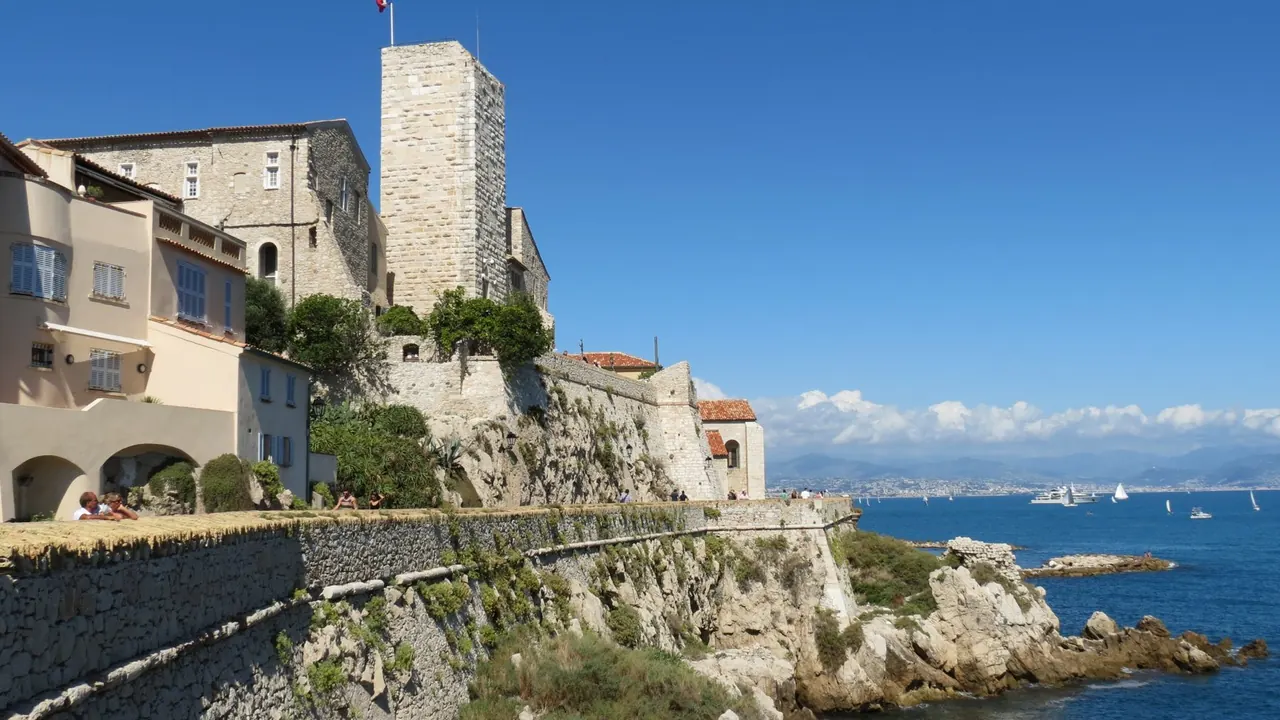
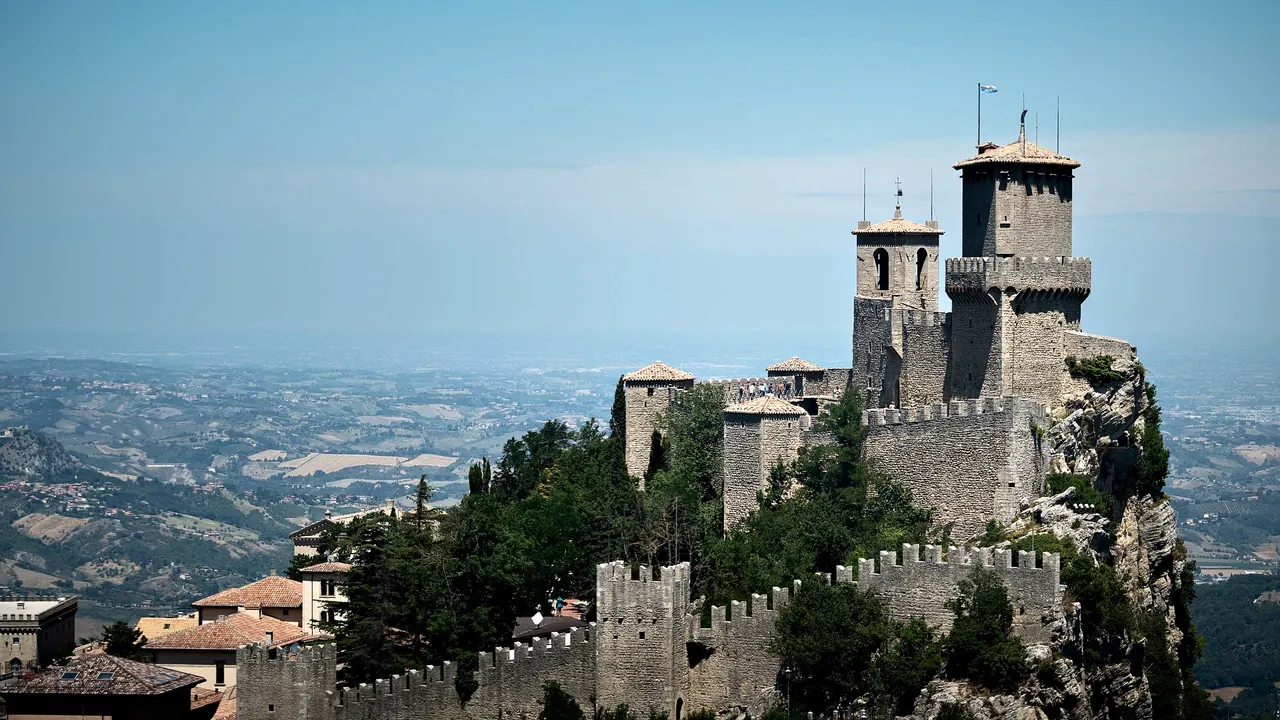
Photos: Antibes by Johan Allard, CC BY-SA 4.0, cropped; San Marino by Tibor Szabo, Pexels License.
Antibes or San Marino?
Our verdict in twelve categories, each scored against the same fixed benchmark cities, and the climate month by month, so you can choose for your trip.
Choose Antibes for
- beaches
- nightlife
- nature and the outdoors
Antibes is the stronger choice for a summer by the sea. You get sand you can walk to, clear water off Cap d'Antibes for snorkelling, and the coastal railway running to Nice, Cannes and Monaco. In July there's jazz under the pines at Juan-les-Pins, and the bars there stay open late. It suits travellers who want to swim every morning, spend evenings out and take easy trips along the Riviera, and who accept that summer here costs a lot.
Choose San Marino for
- prices
- culture and sights
San Marino suits a shorter stop built around history and views rather than the sea. A walled republic on a cliff-top ridge, with towers you can climb, makes an unusual base for driving to San Leo, Urbino and Ravenna. Prices are closer to provincial Italy, which helps on a budget. It's a quiet stay, with little to do at night and the beaches a drive away.
Scoreboard
Twelve categories on one fixed scale from 0 to 100. The shaded stretch is the gap between the two.
Your match
Pick a travel style or drag the sliders, and both match scores follow your weighting.
Wins on beaches and nightlife with your weighting.
Wins on prices and culture and sights with your weighting.
What matters to you?
Category by category
What the scores mean for a trip.
Beaches & swimming
Antibes is built around its beaches. Juan-les-Pins has long, gently shelving sand, and La Salis looks back across the bay to the ramparts. Out on the cape, coves like La Garoupe and flat rocks drop into very clear water. Private beach clubs take much of the sand, but there are free stretches between them.
San Marino has no shore of its own. You see the Adriatic from the walls and drive about half an hour down to the rows of numbered umbrellas at Rimini and Riccione. The water there is shallow and warm, but a swim is a planned outing rather than part of every day.
Food & drink
Antibes is the better place to eat, though neither town is a food destination. The covered market on Cours Masséna sets the tone each morning, and Niçoise cooking fills the old-town lanes: socca, pissaladière, grilled fish and rosé outdoors. Cap d'Antibes adds some serious tables.
San Marino serves honest Romagna and Montefeltro food: hand-rolled pasta, passatelli, piadina and the Tre Monti wafer cake. The summit terraces often trade on the view rather than the cooking, so the best meals mean heading down to Borgo Maggiore or across the border.
Culture & sights
The two are broadly level, but the interest is different. In Antibes it's art: the Picasso Museum in the Château Grimaldi holds what he painted there in 1946, and the star-shaped Fort Carré, Villa Eilenroc and the old-town cathedral fill about two days.
In San Marino the main sight is the place itself and its political history. You can climb the Guaita and Cesta towers and walk the cliff path between them, then visit the Palazzo Pubblico of one of the world's oldest surviving republics. It's more dramatic than Antibes but smaller, and half a day covers most of it.
Nightlife
Antibes has a real night out, at least in summer. In July and August Juan-les-Pins runs beach bars and clubs into the early hours, and near Port Vauban the lanes have pubs and wine bars full of yacht crews. Off-season it goes quiet.
San Marino has almost none. When the coaches leave, the summit settles into dinner and a glass of wine, with the lights of the coast below. Anything later means driving down to Rimini.
Nature & outdoors
Antibes has more outdoors on its doorstep. The path around Cap d'Antibes crosses wind-carved limestone, the water around the cape suits snorkelling and diving, and the bay is good for sailing and paddleboarding. Under an hour away are the red cliffs of the Esterel and the gorges and limestone hills above Grasse, good for proper hiking.
San Marino's landscape is the ridge of Monte Titano itself. Woodland paths link the towers and drop to Borgo Maggiore, and you get wide views across to the Apennines. The Marecchia valley adds quiet cycling roads, but there are no long trails or water sports nearby.
Day trips
Both make good bases, but Antibes is better placed and easier without a car. Nice, Cannes, Monaco and Menton are all on one coastal train line, and boats cross to the Lérins Islands. Saint-Paul-de-Vence, Eze, Grasse, Biot and Vallauris are all close by.
San Marino's list is just as rich in history: the fortress of San Leo, Renaissance Urbino, the mosaics of Ravenna and the castle at Gradara. Most of these need a car, though, and Ravenna and Bologna are reached by train only once you've taken the bus down to Rimini.
Good for families
Antibes is slightly better for families, mainly because the beach is right there. Gentle sand at Juan-les-Pins and La Salis suits small children, and boats in the port and the walk to Fort Carré fill the gaps between swims.
San Marino gives children battlements, cliff edges and a cable car ride. Steep streets and steps make pushchairs hard work, though. Italia in Miniatura, the waterparks and the shallow beaches are all down on the coast, so a car is needed to combine the two.
Getting around
Antibes is far easier to get around, both in town and beyond it. The streets are level, the old quarter and the harbour make one short stroll, and the stations at Antibes and Juan-les-Pins put you on the coastal railway with no need to drive. A car only earns its keep for Grasse, the gorges and the Esterel, and in summer the traffic and parking make it more trouble than help.
San Marino is just as compact, but much harder on the legs. Almost every street climbs or drops, often by steps, and the cable car down to Borgo Maggiore saves you only the biggest descent. The republic has no railway, so without a car you arrive on the bus up from Rimini. Once you're on the mountain, you need a car far more than you would on the Riviera.
Shopping & style
Neither is a shopping destination, but Antibes has a bit more character. The covered market sells olive oil, herbs and soaps, the old-town boutiques carry Provençal linens and ceramics, and Biot glass and Vallauris pottery are made just nearby.
San Marino's shops lean towards souvenirs, stamps and coins for collectors, and lower-tax perfume, watches and spirits. There's also an outlet centre on the valley floor. For fashion, people from Antibes go to Cannes or Nice, and people from San Marino go to Bologna.
Affordability
San Marino is the cheaper stay. Hotels and trattorias are priced like provincial Italy, the sights cost little and lower taxes make fuel and spirits cheaper. Only the summit view terraces cost more.
Antibes in July and August is priced like a luxury resort, and beach-club loungers add up quickly. Spring and autumn bring hotel rates down a long way, and self-catering from the market and the regional trains also save money.
Live music & performing arts
Antibes has one event of real standing. Jazz à Juan has run since 1960 under the pines at Juan-les-Pins, a few steps from the sea, and has hosted Ray Charles and Miles Davis. The Anthéa theatre adds plays, dance and concerts the rest of the year.
San Marino's programme is very small. Its best-known event is the summer Medieval Days festival, with costumed musicians and crossbow contests rather than concerts. For opera or orchestral music, Antibes looks to Nice, and San Marino to Bologna or Pesaro.
Wellness & relaxation
Antibes offers more for pampering. There's a seawater thalassotherapy centre, and the grand hotel spas on Cap d'Antibes often take non-guests. May, June and September bring slow market mornings and evening walks on the ramparts.
San Marino has only a few hotel spas, and its thermal baths are a separate trip into the valleys. What it does have is calm: once the day visitors leave, the walls are quiet for an evening walk above the plain.
When should you go?
Pick your month. The climate figures are measured averages, not a forecast.
Antibes in July
San Marino in July
Daytime high, °C
Rainfall in the month, mm
Where the figures come from
San Marino's temperatures are measured 52 km from the centre, at Frontone.
San Marino has no rain gauge within 25 km of the centre, so its rainfall comes from a gridded climate dataset read at the city rather than from a gauge further away.
Temperature and rainfall are climate normals, averaged over the years shown. Antibes: 1991-2020 normals, Nice (9.9 km from centre). San Marino: 1991-2020 normals, Frontone (51.5 km from centre).
Antibes has the gentler year. Winter days stay mild enough for walking the ramparts and the cape path. Summer peaks around 28°C with long sunny days, and July is almost dry at about 13mm. The sea is warm enough to swim from June into early October. Autumn is the catch: rain builds sharply from September and peaks in November at about 138mm, so late autumn is the weakest time to go.
San Marino has a sharper contrast between seasons, because the ridge feels more inland. Winter highs sit around 7°C, cold for the exposed walls and towers. July reaches about 30°C, hot for climbing steep streets in the middle of the day. Rain is spread more evenly through the year, wettest from September to November. May, June and September are the most comfortable months for the mountain, and the Adriatic below is warmest for a beach day in July and August.
Which traveller are you?
For a beach and sun trip, Antibes is the clear choice. The gently shelving sand of Juan-les-Pins and La Salis is a walk from town, and the cape has clear coves. From San Marino every swim means a drive down to Rimini or Riccione.
On a trip on a tight budget, San Marino is easier to afford. Hotels and trattorias are priced like provincial Italy and the sights cost little. Antibes in high summer is priced like a luxury resort, and even off-season it remains expensive.
On an outdoors trip, Antibes offers more. You can snorkel and paddleboard around the cape, walk the coastal path, explore the red cliffs of the Esterel and hike the pre-Alps above Grasse. Monte Titano gives lovely short walks and views, but no long trails.
Before you go
| Measure | Antibes | San Marino |
|---|---|---|
| Official language | French | Italian |
| Currency | Euro (EUR) | Euro (EUR) |
| Sockets | CE230 V, 50 Hz | CFL230 V, 50 Hz |
| Driving side | Right | Right |
| Time zone | UTC+1, UTC+2 in summer | UTC+1, UTC+2 in summer |
| Emergency number | 112 | 112 |
| Elevation | 0 m | 675 m |
| Main airport | Nice-Côte d'Azur Airport (NCE)11 km from centre130 non-stop destinations | Bologna Guglielmo Marconi Airport (BLQ)114 km from centre98 non-stop destinations |
| Public holidays this year | 11 days | 18 days |
By the numbers
| Measure | Antibes | San Marino |
|---|---|---|
| City population | 77,637 | 4,040 |
| People per km² | 2,930 | 569 |
| Museums within 10 km | 14 | 19 |
| UNESCO World Heritage sites within 50 km | 2 | 2 |
| Swim season, months above 21 °C | 4 months | 4 months |
Where else could you go?
Every comparison below shares a destination with this one, so you can follow Antibes or San Marino somewhere new.
- Cannesvs Antibes
- Nicevs Antibes
- Monacovs Antibes
- Saint-Tropezvs Antibes
- Assisivs San Marino
- Florencevs San Marino