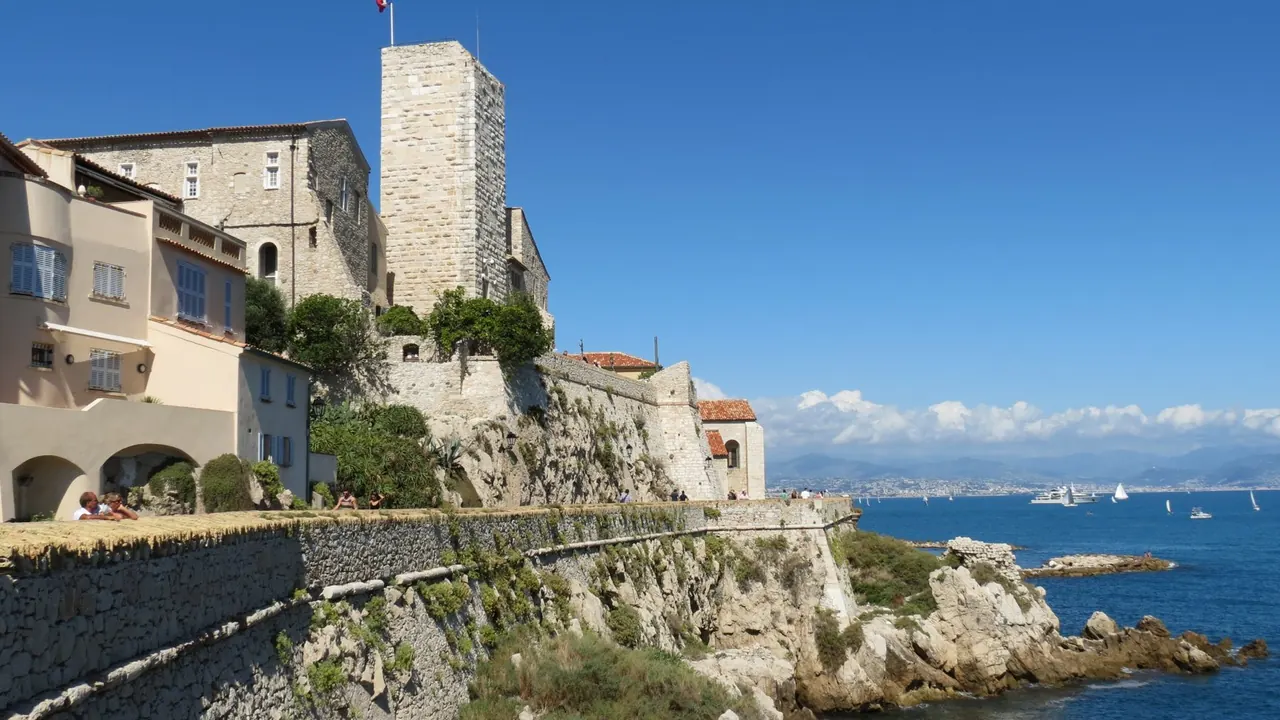
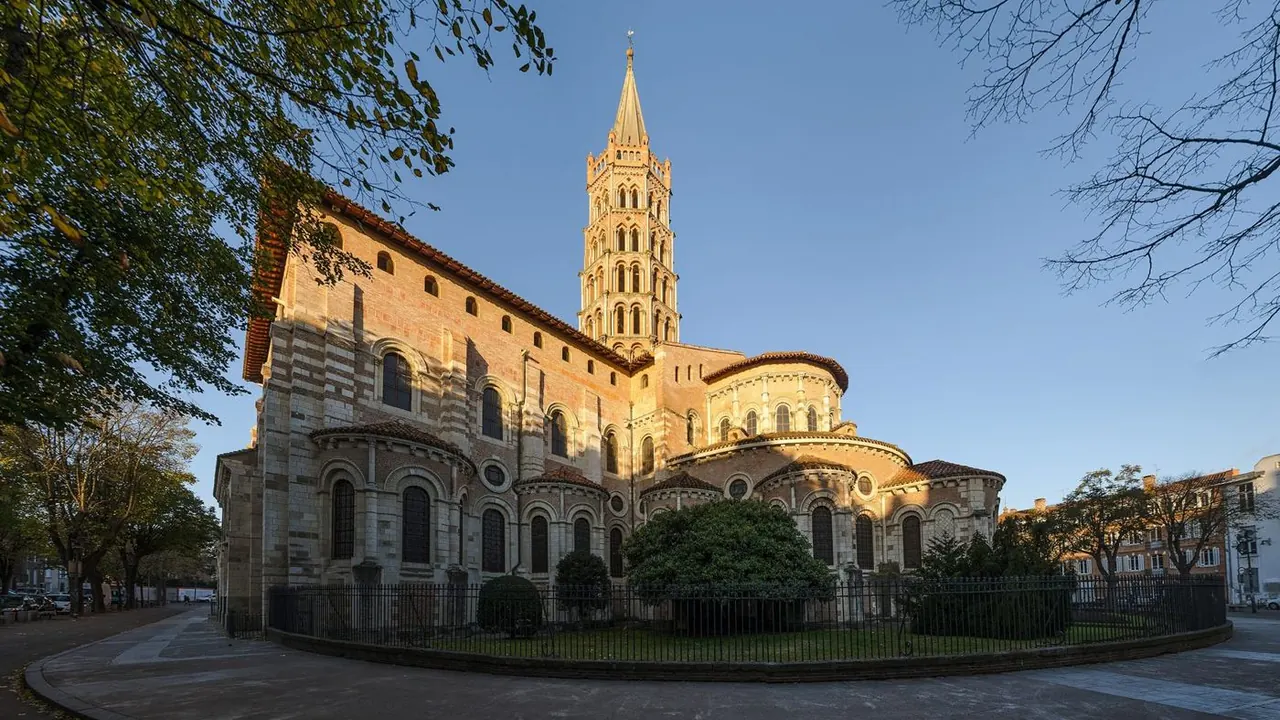
Photos: Antibes by Johan Allard, CC BY-SA 4.0, cropped; Toulouse by ZbebVial, CC BY-SA 3.0, cropped.
Antibes or Toulouse?
Our verdict in twelve categories, each scored against the same fixed benchmark cities, and the climate month by month, so you can choose for your trip.
Choose Antibes for
- beaches
- day trips
- wellness
Antibes is the one for a summer by the sea. It has gently shelving sand at Juan-les-Pins and La Salis, very clear water in the coves around the cape, and the whole Riviera along one railway line, so you can swim in the morning and spend the afternoon in Nice, Monaco or a hill village above Grasse. It suits travellers who care more about the coast and the scenery than about city life, and who will accept high summer prices and quiet evenings outside July and August.
Choose Toulouse for
- live music and the arts
- culture and sights
- food and drink
Toulouse is a real city rather than a resort, and that is its appeal. The rose-brick centre around Saint-Sernin and the Capitole, a resident opera company and a highly regarded orchestra, cassoulet at the Victor Hugo market and student terraces on Place Saint-Pierre give it far more depth for culture, food and evenings out, and it costs noticeably less. There is no sea, so it is best for travellers happy with a riverbank, a canal towpath and the Pyrenees on the horizon.
Scoreboard
Twelve categories on one fixed scale from 0 to 100. The shaded stretch is the gap between the two.
Your match
Pick a travel style or drag the sliders, and both match scores follow your weighting.
Too close to call, 1 point apart
Wins on beaches and day trips with your weighting.
Wins on live music and the arts and culture and sights with your weighting.
What matters to you?
Category by category
What the scores mean for a trip.
Beaches & swimming
Here the two cities are not really comparable. Antibes has some of the only sandy beaches on this part of the Riviera, wide and gently shelving at Juan-les-Pins and La Salis, plus rocky coves around the cape such as La Garoupe for snorkelling off flat rocks. The catch is that private beach clubs take much of the sand and the free stretches fill early in high summer.
Toulouse is a river city, and the sea at Gruissan or Narbonne makes a long day out. Swimming there means the supervised leisure lakes at Sesquières or La Ramée, or a hotel pool.
Food & drink
Toulouse is the better place to travel for food. Its cooking is rich and wintry: cassoulet, duck confit, foie gras and garbure, with Fronton and Gaillac wines and Armagnac to follow. Lunch at the counters above the Victor Hugo market is a local ritual, and the set lunch menu keeps good eating within reach.
Antibes cooks lighter, Niçoise food such as socca, pissaladière, stuffed vegetables and grilled fish with rosé, and its covered market on Cours Masséna is a pleasure each morning. Beyond a few good bistros and the serious tables on the cape, though, the range is narrow, and the streets by the port lean on tourist menus.
Culture & sights
Toulouse has much more to see. Saint-Sernin is among Europe's largest Romanesque churches, the Jacobins has its palm-tree vault, and the Capitole state rooms, the Augustins cloister and the Hôtel d'Assézat add depth. The aerospace museums give it a modern side few cities can match.
Antibes has one outstanding sight, the Picasso Museum in the Château Grimaldi on the sea wall, along with ramparts, old-town lanes and the star-shaped Fort Carré. It is a pleasant town to wander rather than a place with a full programme of sightseeing.
Nightlife
Toulouse goes out more, and for more of the year. Its students fill the terraces and cheap bars of Place Saint-Pierre along the quays, while Carmes and the Daurade have wine and cocktail bars for an older crowd. It does quieten in July and August.
That is exactly when Antibes wakes up. Juan-les-Pins runs beach bars, lounges and a few clubs into the early hours in high summer, and yacht crews keep the pubs near Port Vauban busy. Out of season much of it shuts, and a bigger night means going to Nice.
Nature & outdoors
Antibes has its best outdoors on the doorstep. The path around Cap d'Antibes crosses wind-carved limestone above clear water that is good for snorkelling and diving, and sailing and paddleboarding fill the bay. The red cliffs of the Esterel and the Gorges du Loup are within an hour or so.
Toulouse sits on a flat farming plain, so its everyday green is the Garonne banks and the long towpaths of the Canal du Midi, which are ideal for cycling. Its big asset is the Pyrenees, with high hiking and winter skiing, but they are a trip of an hour and a half or more.
Day trips
Antibes is hard to beat as a base. One coastal railway puts Cannes and Nice within minutes and Monaco, Villefranche and Menton a little further on, boats cross to the Lérins Islands, and the hill villages of Saint-Paul-de-Vence, Eze and Grasse are close, as are Biot and Vallauris. Even Sanremo in Italy makes an easy day.
Toulouse has fewer places within reach, but they are big names. Carcassonne's walled Cité and brick Albi are each about an hour by train, and Moissac's cloister is a quieter extra. Cordes-sur-Ciel, Foix and Saint-Bertrand-de-Comminges are easier with a car.
Good for families
Toulouse gives children more to do. The Cité de l'espace, with its Ariane rocket and Mir module, fills a whole day. Families can walk inside a Concorde at the aircraft museum, and the giant mechanical creatures in Montaudran, the natural history museum and a safari park add more.
Antibes has one strong card, a sandy, gently shelving beach that suits toddlers far better than the Riviera's pebbles. Beyond the beach, boats in the port and the boat to the Lérins Islands, there is little made for children.
Getting around
Both centres are easy on foot, but Toulouse has the fuller network. Two automated metro lines, trams, buses and a public bike scheme cover the city, though the space centre and the Pyrenees still need a bus ride or a car.
Antibes works on foot and by train. The old town, market and port are close together, and two stations on the coastal line make Nice, Cannes and Monaco simple. Buses to the cape and the hill villages are slow, and summer traffic and parking on the coast road are a real nuisance.
Shopping & style
Toulouse is the better place for ordinary shopping. Rue d'Alsace-Lorraine has the chains and a department store, Saint-Étienne and Rue des Filatiers have independent boutiques and antiques, and the edible souvenirs are excellent: violet sweets, duck confit, cassoulet in jars and Armagnac.
Antibes is about small local buys, such as olive oil, herbs and soaps from the covered market and Provençal linens in the old-town lanes. For fashion, people go to Cannes or Nice, and the best glass and pottery are sold in Biot and Vallauris.
Affordability
Toulouse is the gentler on the wallet. Hotels cost far less than on the Riviera, the set lunch is a cheap way to eat well, and the student quarters keep drinks and simple meals cheap. A good dinner with wine still adds up.
Antibes is expensive in July and August, when rooms near Juan-les-Pins and on the cape are priced like a luxury resort and beach loungers cost extra. Going in spring or autumn and buying food at the market brings the costs down a long way.
Live music & performing arts
Toulouse has a full year of classical music. The Théâtre du Capitole stages opera and ballet with its own company, and the Orchestre National du Capitole plays in the round Halle aux Grains. A piano festival in the Jacobins cloister and the Rio Loco world-music festival on the riverbank add to the programme.
Antibes has one great moment, Jazz à Juan, which has been held under the pines by the sea each July since 1960. Outside it there is mostly the Anthéa theatre, and opera means going to Nice.
Wellness & relaxation
Antibes makes a more restful stay. There is seawater thalassotherapy near the shore, and the grand hotels on Cap d'Antibes have spas that outside guests can often book. In May, June and September the town settles into slow market mornings and evening walks on the ramparts.
Toulouse offers hotel spas, a few hammams and summer open-air pools, but its real calm is a long lunch or a bike ride along the canal. For proper thermal bathing you have to go to Luchon or Ax-les-Thermes in the Pyrenees, which is best done with an overnight stay.
When should you go?
Pick your month. The climate figures are measured averages, not a forecast.
Antibes in July
Toulouse in July
Daytime high, °C
Rainfall in the month, mm
Temperature and rainfall are climate normals, averaged over the years shown. Antibes: 1991-2020 normals, Nice (9.9 km from centre). Toulouse: 1991-2020 normals, Toulouse / Blagnac (7 km from centre).
Antibes is a summer beach town with a mild winter. From June to September the days are warm and July is almost rainless, while the sea reaches about 25°C in August and stays pleasant for swimming into early October. For walking the old town and the cape path, May, June and September are the best months, warm and sunny without the full heat of midsummer. Late autumn is a different matter: October and November are the wettest months of the year, with up to 138mm in November, so that is a poor time for a coastal walking trip. Winter is cool rather than cold and still gets a fair amount of sun.
Toulouse has more of an inland pattern. August is slightly hotter, at about 29°C, and the brick streets can feel heavy for sightseeing in the middle of the day. Winter is cooler and much greyer than on the Riviera, with highs of around 10°C and far less sun. Rain falls fairly evenly through the year instead of arriving in one wet autumn, and late spring is the dampest stretch. June and September are the best months for walking the city, and unlike Antibes, October stays reasonably dry.
Which traveller are you?
For a beach and sun trip, Antibes is the clear choice. It has real sand at Juan-les-Pins and La Salis, rocky coves with clear water around the cape, and a long, dry, sunny summer. Toulouse's nearest sea is two hours away.
On a culture and arts trip, Toulouse gives you more. Saint-Sernin, the Jacobins, the Augustins and the Renaissance mansions fill two full days, and you can spend the evening at the Capitole opera or with the national orchestra. Antibes offers one fine Picasso museum and a summer jazz festival.
For a food and nightlife trip, choose Toulouse. Cassoulet, duck and Fronton wines make for proper south-western eating, and a large student population keeps Place Saint-Pierre and the Carmes bars busy for most of the year. Antibes eats pleasantly but simply, and goes out mainly in summer.
Before you go
| Measure | Antibes | Toulouse |
|---|---|---|
| Official language | French | French |
| Currency | Euro (EUR) | Euro (EUR) |
| Sockets | CE230 V, 50 Hz | CE230 V, 50 Hz |
| Driving side | Right | Right |
| Time zone | UTC+1, UTC+2 in summer | UTC+1, UTC+2 in summer |
| Emergency number | 112 | 112 |
| Elevation | 0 m | 115 m |
| Main airport | Nice-Côte d'Azur Airport (NCE)11 km from centre130 non-stop destinations | Toulouse-Blagnac Airport (TLS)7 km from centre84 non-stop destinations |
| Public holidays this year | 11 days | 11 days |
By the numbers
| Measure | Antibes | Toulouse |
|---|---|---|
| City population | 77,637 | 514,819 |
| People per km² | 2,930 | 4,352 |
| Museums within 10 km | 14 | 24 |
| UNESCO World Heritage sites within 50 km | 2 | 2 |
| Swim season, months above 21 °C | 4 months | - |
Where else could you go?
Every comparison below shares a destination with this one, so you can follow Antibes or Toulouse somewhere new.