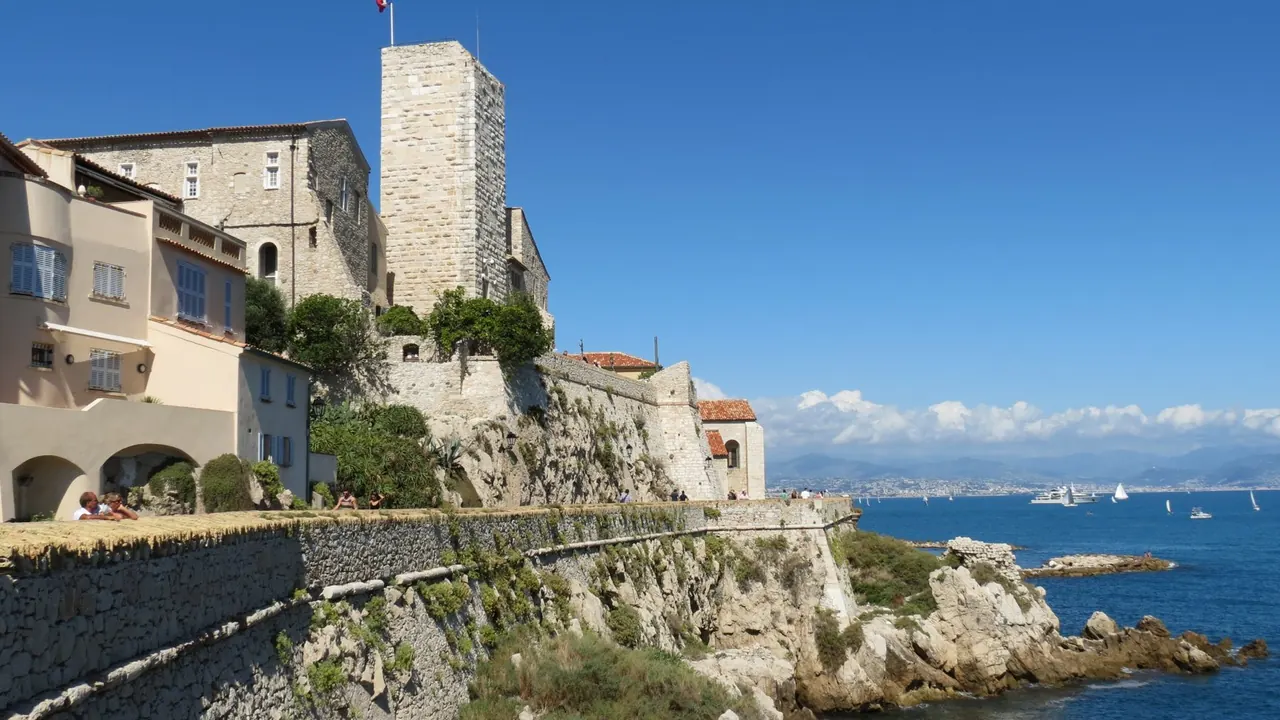
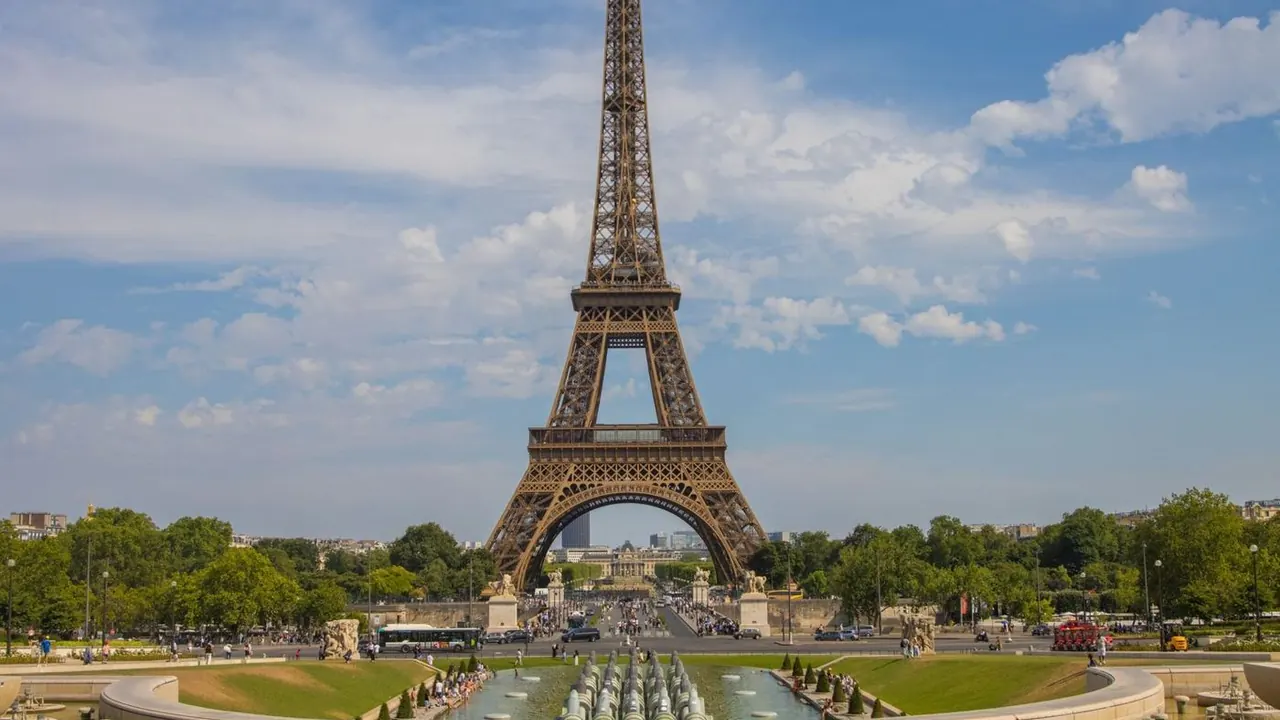
Photos: Antibes by Johan Allard, CC BY-SA 4.0, cropped; Paris by Efrem Efre, Pexels License.
Antibes or Paris?
Our verdict in twelve categories, each scored against the same fixed benchmark cities, and the climate month by month, so you can choose for your trip.
Choose Antibes for
- beaches
- nature and the outdoors
- prices
Antibes suits a summer trip built around the sea. It has real sandy beaches at Juan-les-Pins and La Salis, clear water off the cape for snorkelling, and a spot in the middle of the coastal railway with Nice, Cannes and Monaco close by. Days here settle into swimming, the morning market, a long lunch and a walk on the ramparts, so it is best for travellers who want sun and sea more than sights.
Choose Paris for
- shopping
- culture and sights
- live music and the arts
Choose Paris when the city itself is the point of the trip. In museums, food, shopping and evenings out it is on another level from a coastal town, from the Louvre and Orsay to neighbourhood bistros, the great department stores and the bars around Oberkampf and the Canal Saint-Martin. It works in any season and rewards culture lovers, food lovers and shoppers, though there is no sea to swim in.
Scoreboard
Twelve categories on one fixed scale from 0 to 100. The shaded stretch is the gap between the two.
Your match
Pick a travel style or drag the sliders, and both match scores follow your weighting.
Wins on beaches and nature and the outdoors with your weighting.
Wins on shopping and culture and sights with your weighting.
What matters to you?
Category by category
What the scores mean for a trip.
Beaches & swimming
This is where Antibes is strongest. It has real sand that shelves gently at Juan-les-Pins and La Salis, rocky coves around the cape such as La Garoupe, and a sea warm enough to swim in from June into early October.
Paris has only stand-ins: sand laid on the riverbanks in summer, swimming spots in the Bassin de la Villette and the Seine, and some handsome Art Deco pools. The nearest real coast is the cool Channel at Deauville, two hours away, so anyone who wants beach days is far better off on the Riviera.
Food & drink
Antibes eats well in the Niçoise style: socca, pissaladière, stuffed vegetables, grilled fish and a glass of rosé outdoors, with the covered market on Cours Masséna as the morning ritual. The choice is that of a seaside town, though, and the streets near the port lean on tourist menus.
Paris is one of the world's great food cities, and the gap shows at every level. There is a boulangerie and cheese shop in every neighbourhood, zinc-counter bistros, small inventive neo-bistros in the east of the city and the haute cuisine tradition at the top. Couscous in Belleville and pho in the 13th add more. Food lovers can plan a whole trip around eating in Paris, while in Antibes a good meal is a pleasant part of a beach day.
Culture & sights
Antibes has one first-rate sight, the Picasso Museum in the Château Grimaldi on the sea wall. Around it are the old town lanes, the ramparts and Fort Carré above Port Vauban, and two days is enough to see them.
Paris is in another league. The Louvre, Orsay, the Pompidou, the Orangerie and the Sainte-Chapelle could each anchor a trip, and the Haussmann boulevards and the Marais make the walks between them part of the sightseeing. Picasso admirers will find a museum in both, but only Paris can fill a week of museum days.
Nightlife
Nights out in Antibes depend on the season. In July and August there are beach bars and a few late clubs in Juan-les-Pins, and all year there are yacht-crew pubs and wine bars near Port Vauban. Much of it closes out of season, and locals go to Nice for a bigger night.
Paris has a scene all year round, from the crowded bars of Oberkampf, Belleville and the Canal Saint-Martin to the cocktail bars of South Pigalle and clubs playing house and techno until dawn. If evenings out matter to your trip, Paris offers far more.
Nature & outdoors
Antibes has the better outdoors. There is the coastal path around Cap d'Antibes, clear water for snorkelling and diving, and sailing in the bay. The red cliffs of the Esterel and the hiking country above Grasse are both within an hour.
Paris has parks and woods rather than scenery: the Buttes-Chaumont, the Bois de Boulogne and the Bois de Vincennes, and flat cycling routes along the canals. The forest of Fontainebleau, with its climbing boulders, is forty minutes out. It is country for gentle walks and bike rides, with no sea or mountains.
Day trips
Both cities make excellent bases, and the difference is in the kind of day out. From Antibes the coastal railway links Nice, Cannes, Monaco and Menton, boats cross to the Lérins Islands, and inland are hill villages such as Saint-Paul-de-Vence, Eze and Grasse. These are sea towns and hilltop villages, many of them only a short hop away.
From Paris the trips are to châteaux and cathedrals: Versailles, Fontainebleau, Chartres and Giverny, and by fast train Reims, Rouen and the Loire valley via Tours. These are fuller days of history and art, while the Riviera trips offer sea views and village lanes.
Good for families
Antibes works for young children mainly because of the sand. Its gently shelving beaches suit them better than the pebble beaches elsewhere on the coast, and the small town is easy to manage. Away from the beach, watching boats in the port and the walk to Fort Carré are about all there is.
Paris has far more to keep children busy. Disneyland and Parc Astérix are close by, and in the city there are the Cité des Sciences, the Jardin d'Acclimatation, the galleries of the Jardin des Plantes and the carousels and toy boats of the Luxembourg. The downsides are metro stairs, crowded trains with a pushchair and small hotel rooms.
Getting around
In Antibes the old town, the market and the port are easy on foot, and the town's two stations on the coastal line make the other Riviera towns simple to reach. The cape, the hill villages and the Esterel are slow by bus, and summer traffic is heavy.
Paris is easier to get around. Its centre is a walk along the Seine, a metro station is rarely more than a few minutes away, and RER lines reach the airports and Versailles. The difficulties are stairs, rush-hour crowds and pickpockets rather than distance. A car is a burden in Paris but useful for the inland trips from Antibes.
Shopping & style
Shopping in Antibes is for small things: olive oil, herbs and soaps from the covered market, Provençal linens and ceramics in the old town lanes, and glass or pottery from nearby Biot and Vallauris. For fashion, people go to Cannes or Nice.
Paris is one of the world's great shopping cities. It has the couture flagships on Avenue Montaigne, Galeries Lafayette and Le Bon Marché, independent designers in the Marais, the covered passages and the huge Saint-Ouen flea market. Of these two, only Paris is worth a trip for shopping.
Affordability
Antibes costs most in July and August, when rooms near the beaches of Juan-les-Pins and on the cape are priced like a luxury resort and beach-club loungers add more. In spring and autumn hotel rates drop sharply, so going outside high summer and self-catering from the market are the main ways to save.
Paris stays expensive through the year, with small, costly hotel rooms and full-price tickets for the major museums. It does offer more everyday ways to save: free permanent collections in the city's own museums, bakeries and lunchtime set menus, a riverside picnic, and a centre you can mostly walk.
Live music & performing arts
Antibes has one major event, Jazz à Juan, held under the pines at Juan-les-Pins each July since 1960. The rest of the year there is a regional programme at the Anthéa theatre, and for opera people go to Nice.
Paris has the full range all year: the Palais Garnier and the Opéra Bastille, the Philharmonie, church concerts in the Sainte-Chapelle, jazz cellars around the rue des Lombards and cabaret in Pigalle. A jazz fan travelling in July has a reason to choose Antibes. Everyone else will find much more in Paris.
Wellness & relaxation
Wellness in Antibes comes from the sea: a thalassotherapy centre near the coast and the spas of the grand hotels on Cap d'Antibes, which non-guests can often book. Its real restfulness is in the pace of May, June and September, with long market mornings and lunches in the shade, while the crowds and traffic of July and August make it far less calm.
Paris offers steam instead, in the tiled rooms and mint tea of the Grande Mosquée hammam and smaller neighbourhood hammams. The city is loud and fast, though, and rest comes in short breaks: an hour on a café terrace or a chair in the Luxembourg gardens.
When should you go?
Pick your month. The climate figures are measured averages, not a forecast.
Antibes in July
Paris in July
Daytime high, °C
Rainfall in the month, mm
Temperature and rainfall are climate normals, averaged over the years shown. Antibes: 1991-2020 normals, Nice (9.9 km from centre). Paris: 1991-2020 normals, Paris-Montsouris (4.6 km from centre).
Antibes is a warm-weather place. Summer highs reach 28°C, the sea peaks at about 25°C in August, and July is almost dry and very sunny. June to September is beach season, with May and early October pleasant for walking and the sea still swimmable at the start of October. Rain sets in during autumn, and October and November are the wettest months at over 120mm each. Winter stays mild enough for walks along the cape.
Paris is cooler and more even through the year. Winter highs sit around 8°C, which suits museums more than long walks, and summer tops out at about 26°C, comfortable for exploring on foot. Rain is spread fairly evenly across the months, so late spring to early autumn is the most pleasant time. In winter Antibes is clearly the milder of the two.
Which traveller are you?
For a beach and sun trip, Antibes is the clear choice. It has sandy, gently shelving beaches at Juan-les-Pins and La Salis, clear coves around the cape and a warm sea from June to early October, while Paris offers only riverbank sand and pools.
On a culture and arts trip, Paris wins easily. The Louvre, Orsay and Sainte-Chapelle, two opera houses and the Philharmonie could fill a week. Antibes has the Picasso Museum, its ramparts and Jazz à Juan in July, and two days covers it.
For a shopping trip, choose Paris. The couture houses on Avenue Montaigne, the great department stores, the Marais designers and the Saint-Ouen flea market have no match in Antibes, where shopping means market olive oil, Provençal linens and pottery from nearby Vallauris.
Before you go
| Measure | Antibes | Paris |
|---|---|---|
| Official language | French | French |
| Currency | Euro (EUR) | Euro (EUR) |
| Sockets | CE230 V, 50 Hz | CE230 V, 50 Hz |
| Driving side | Right | Right |
| Time zone | UTC+1, UTC+2 in summer | UTC+1, UTC+2 in summer |
| Emergency number | 112 | 112 |
| Elevation | 0 m | 27 m |
| Main airport | Nice-Côte d'Azur Airport (NCE)11 km from centre130 non-stop destinations | Charles de Gaulle International Airport (CDG)22 km from centre277 non-stop destinations |
| Public holidays this year | 11 days | 11 days |
By the numbers
| Measure | Antibes | Paris |
|---|---|---|
| City population | 77,637 | 2,103,778 |
| People per km² | 2,930 | 19,960 |
| Museums within 10 km | 14 | 251 |
| UNESCO World Heritage sites within 50 km | 2 | 4 |
| Swim season, months above 21 °C | 4 months | - |
Where else could you go?
Every comparison below shares a destination with this one, so you can follow Antibes or Paris somewhere new.