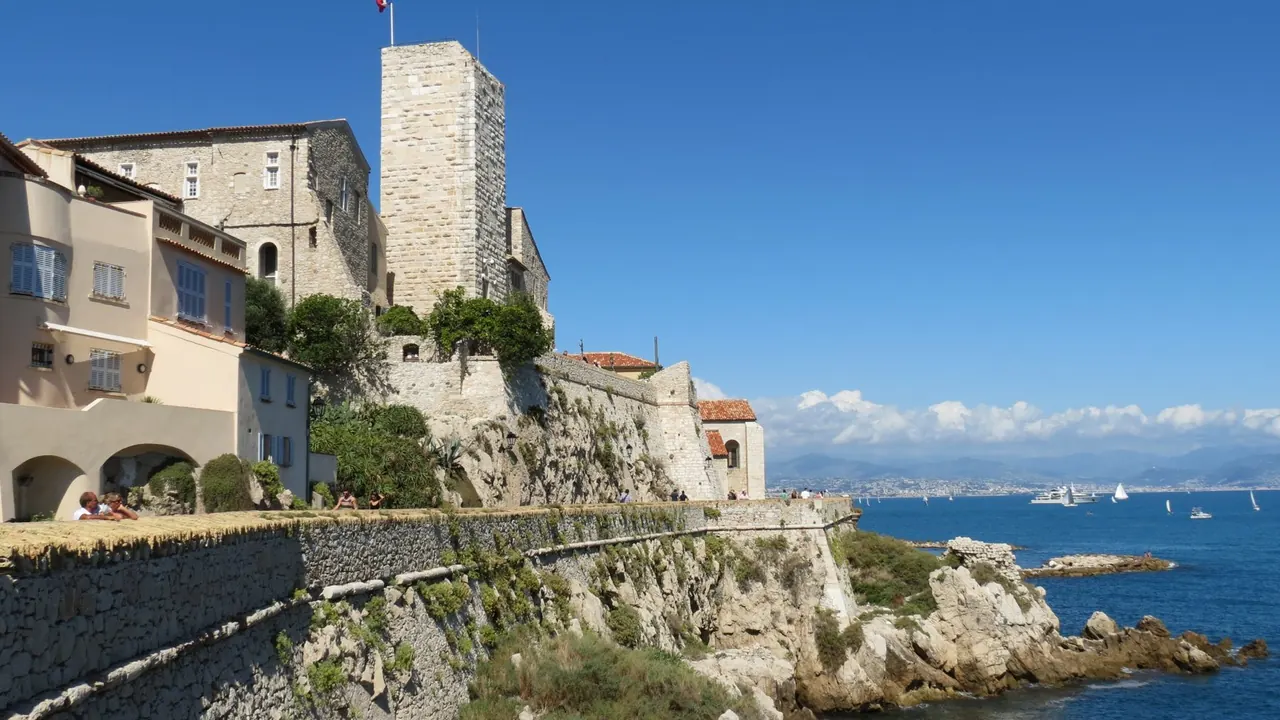
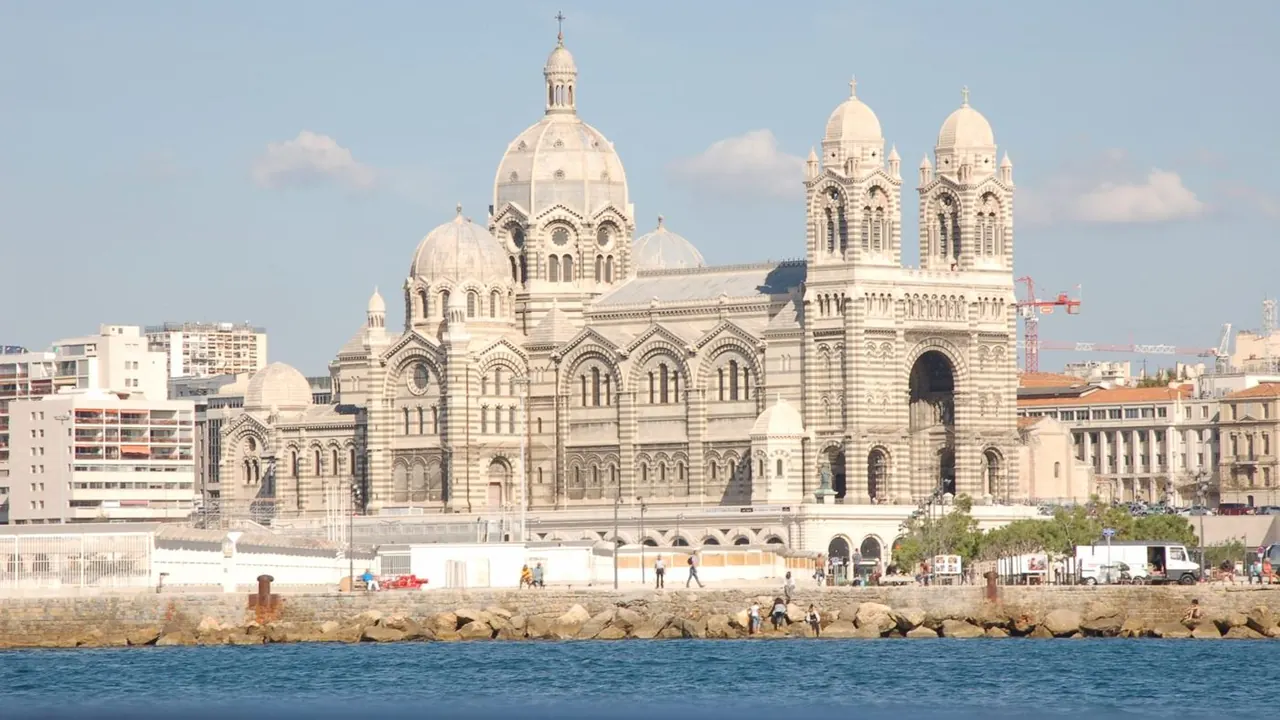
Photos: Antibes by Johan Allard, CC BY-SA 4.0, cropped; Marseille by Charlotte Noblet, CC BY-SA 3.0, cropped.
Antibes or Marseille?
Our verdict in twelve categories, each scored against the same fixed benchmark cities, and the climate month by month, so you can choose for your trip.
Choose Antibes for
- beaches
- families
- getting around
Antibes suits a summer by the sea from a compact, comfortable base. Its sandy, gently shelving beaches at Juan-les-Pins and La Salis are easier for lazy swimming days than anything inside Marseille. The old town and Port Vauban are easy on foot, and the coastal railway puts Nice, Cannes and Monaco within easy reach. Expect to pay well for this, and expect quiet evenings and a modest list of sights.
Choose Marseille for
- culture and sights
- live music and the arts
- food and drink
Travellers who want a real city as well as the sea will be happier in Marseille. It has the deeper food culture, from bouillabaisse on the Corniche to the grocers of Noailles. It also has far more to see, from the MuCEM to Le Panier, livelier bars around Cours Julien, and the Calanques national park on its doorstep for walking and climbing. It costs less too, though it is louder and harder work than Antibes.
Scoreboard
Twelve categories on one fixed scale from 0 to 100. The shaded stretch is the gap between the two.
Your match
Pick a travel style or drag the sliders, and both match scores follow your weighting.
Wins on beaches and families with your weighting.
Wins on culture and sights and live music and the arts with your weighting.
What matters to you?
Category by category
What the scores mean for a trip.
Beaches & swimming
Antibes has the better beaches for an ordinary day by the sea. Juan-les-Pins and La Salis are real sand that shelves gently, with the ramparts across the bay. Cap d'Antibes adds rocky coves such as La Garoupe, with very clear water. The catch is that private beach clubs take much of the sand, and the free stretches fill early in high summer.
Marseille's city beaches at the Prado are shingle and imported sand, fine for local families but plainer. Its best swimming is in the Calanques, more dramatic than anything around Antibes but reached on foot or by boat. The mistral can also chill the water from one day to the next.
Food & drink
Marseille is the stronger place to eat, and the more varied. It has bouillabaisse served properly in the Corniche harbours, panisses and wood-fired pizza for everyday meals, and the Noailles market with its Comorian and Armenian grocers. Fish is sold on the Vieux-Port quay every morning, so the city has the range of a large Mediterranean port.
Antibes keeps to a narrower Niçoise table: socca, pissaladière, stuffed vegetables, the morning market on Cours Masséna and a few fine tables on the cape. It is pleasant if you choose carefully, but it is not a reason to come.
Culture & sights
Marseille has much more to see, though it is spread through a working city rather than a preserved old centre. The MuCEM is linked by footbridge to Fort Saint-Jean, Notre-Dame de la Garde stands on its hill, and Le Panier holds the Vieille Charité. Further out are the crypts of Saint-Victor and Le Corbusier's Cité Radieuse, and as France's oldest city it has history going back to its Greek founders.
Antibes has one outstanding sight, the Picasso Museum in the Château Grimaldi, along with a pretty walled old town and the star-shaped Fort Carré. It fills a couple of days, where Marseille can fill a week.
Nightlife
Marseille has the livelier night out, and one that lasts longer through the year. Students and locals fill the graffitied bars and pavement tables of Cours Julien and La Plaine, the Vieux-Port terraces carry on after the pastis hour, and warehouse electronic nights add a club side. Some streets do feel edgy late at night.
Antibes is mainly a summer affair: beach bars and a few clubs in Juan-les-Pins in July and August, and yacht crews in the pubs near Port Vauban. For the rest of the year most places close early.
Nature & outdoors
Marseille wins on the outdoors because the Calanques national park begins at its southern edge. It has white limestone ridges, the coastal path to Sormiou, Morgiou and En-Vau, famous climbing cliffs, and kayaking and diving around the Riou islands. Sainte-Victoire and the Sainte-Baume forest are within an hour, though in summer the risk of fire can close the hills to walkers.
Antibes has gentler pleasures: the path around Cap d'Antibes and good snorkelling in clear water. The red cliffs of the Esterel and the pre-Alps above Grasse are a drive away, and the land right around the town is flat and built up.
Day trips
Both are superb bases, so the real choice is between two regions. From Antibes, Nice, Cannes, Monaco and Menton all lie along one coastal railway. Boats cross to the Lérins Islands, and the hill villages of Saint-Paul-de-Vence, Eze and Grasse are inland.
Marseille opens up Provence instead. Aix and Cassis are close by, Roman Arles and the papal palace at Avignon are a train ride away, and the Luberon villages and Les Baux are best reached by car. Antibes gives you Riviera towns and hill villages, Marseille Roman ruins and wine country.
Good for families
Neither city has much built for children, and the difference is in the kind of family day each offers. In Antibes it is all about the beach: gentle sand that suits toddlers, a small and safe town that is easy to manage, and boats to watch in Port Vauban.
Marseille has more outings, from the lake and lawns of Parc Borély to boat trips to the Château d'If. But steep streets, traffic and summer heat make it tiring with a buggy, and families tend to stay near the southern beaches.
Getting around
In both you can manage the heart of a stay without a car, in different ways. Antibes is small enough to walk, from the old town to the port, with Juan-les-Pins a flat stroll away and the coastal train covering the Riviera.
Marseille is a large, hilly city. It has two metro lines, trams, and small ferries across the Vieux-Port and out to the beaches. Its buses to the Calanques crawl in traffic, much as the buses from Antibes to the hill villages are slow, and driving in summer is hard work on both coasts.
Shopping & style
Marseille has more to browse, and more character. Noailles is packed with fabrics, teas and North African goods. Workshops in and around Le Panier make santons, and shops sell green cubes of Marseille soap. Rue de Rome and La Joliette cover department stores and chains, though designer fashion is thin.
Antibes stays small: the Provençal market for olive oil and soap, and a few boutiques selling linens and ceramics. Biot glass and Vallauris pottery are a short drive away, but serious fashion means a trip to Cannes or Nice.
Affordability
Marseille is the cheaper stay. Prices are middling for a large city, with cheap street food and public transport, free walking in the Calanques and low museum charges. Central hotels are reasonable outside summer.
Antibes is a Riviera resort with resort prices, especially near Juan-les-Pins and on the cape in July and August, and beach-club loungers soon add up. Coming in spring or autumn and eating from the market make it far easier on the budget.
Live music & performing arts
Antibes has one great event, Jazz à Juan. It was founded in 1960 as one of Europe's first jazz festivals and is held in July under the pines of the Pinède Gould, a few steps from the sea at Juan-les-Pins. Outside the festival there is the regional programme at the Anthéa theatre and some open-air evenings in the old town in summer. For opera or an orchestra, you take the train to Nice.
Marseille offers far more through the year. Its art deco Opéra stages a full season, La Criée puts on serious drama in the old fish market, and the Friche la Belle de Mai mixes dance, theatre and concerts in a former tobacco factory. The city also has deep roots in French hip-hop and Mediterranean music, and the Fiesta des Suds brings music from around the world each autumn.
Wellness & relaxation
Neither is a spa destination, and in both the calm comes from the pace of the day rather than from treatments. Antibes has seawater thalassotherapy and the grand hotel spas on Cap d'Antibes, and it is most restful in May, June and September.
Marseille has a handful of local hammams and some hotel spas, but the city is loud and dense. Its restful moments are long lunches in a small Corniche harbour, and many visitors who want quiet stay in Cassis instead.
When should you go?
Pick your month. The climate figures are measured averages, not a forecast.
Antibes in July
Marseille in July
Daytime high, °C
Rainfall in the month, mm
Temperature and rainfall are climate normals, averaged over the years shown. Antibes: 1991-2020 normals, Nice (9.9 km from centre). Marseille: 1991-2020 normals, Marseille / Marignane (20.6 km from centre).
Both have hot, sunny summers and mild, damp winters, but the seasons feel different in each. Antibes stays gentler in high summer, with highs around 28°C in July and August, and its sea is the warmer of the two, reaching 25°C in August. That keeps the beach season comfortable from June to the end of September. Its weak point is autumn: the rain picks up in September, and October and November are the wettest months, with about 138mm in November.
Marseille gets hotter, around 31°C in July, which makes walking its steep streets and the Calanques paths at midday hard going. Its sea stays cooler, near 22°C at best. It is drier for most of the year, and May, early June, late September and October are the best months for walking and sightseeing. In winter both are cool rather than cold, with highs in the low teens and enough sun for days spent exploring.
Which traveller are you?
For a beach and sun trip, Antibes is the easier pick. The sandy, gently shelving shores of Juan-les-Pins and La Salis are right in town and the sea is warmer. A swim never needs the walk or boat ride that Marseille's Calanques coves demand.
On a culture and arts trip, Marseille gives you far more to fill the days: the MuCEM and Fort Saint-Jean, Le Panier and the Vieille Charité, Notre-Dame de la Garde, plus an opera season and serious drama at La Criée. Antibes is covered in two days.
For a food and nightlife trip, Marseille wins clearly. You get bouillabaisse in the Corniche harbours, the spice shops and North African bakeries of Noailles, then music bars around Cours Julien until late. Antibes eats pleasantly but plainly, and it goes quiet outside July and August.
Before you go
| Measure | Antibes | Marseille |
|---|---|---|
| Official language | French | French |
| Currency | Euro (EUR) | Euro (EUR) |
| Sockets | CE230 V, 50 Hz | CE230 V, 50 Hz |
| Driving side | Right | Right |
| Time zone | UTC+1, UTC+2 in summer | UTC+1, UTC+2 in summer |
| Emergency number | 112 | 112 |
| Elevation | 0 m | 0 m |
| Main airport | Nice-Côte d'Azur Airport (NCE)11 km from centre130 non-stop destinations | Marseille Provence Airport (MRS)21 km from centre126 non-stop destinations |
| Public holidays this year | 11 days | 11 days |
By the numbers
| Measure | Antibes | Marseille |
|---|---|---|
| City population | 77,637 | 886,040 |
| People per km² | 2,930 | 3,683 |
| Museums within 10 km | 14 | 27 |
| UNESCO World Heritage sites within 50 km | 2 | 1 |
| Swim season, months above 21 °C | 4 months | 2 months |
Where else could you go?
Every comparison below shares a destination with this one, so you can follow Antibes or Marseille somewhere new.