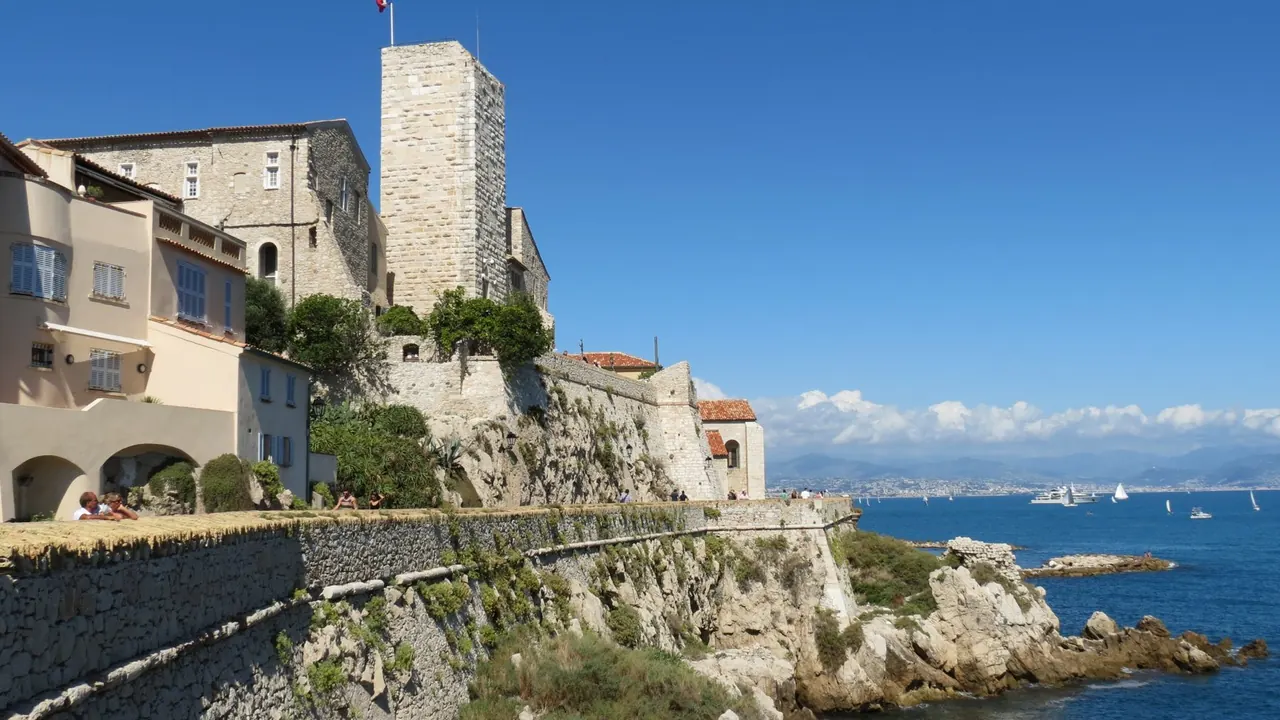
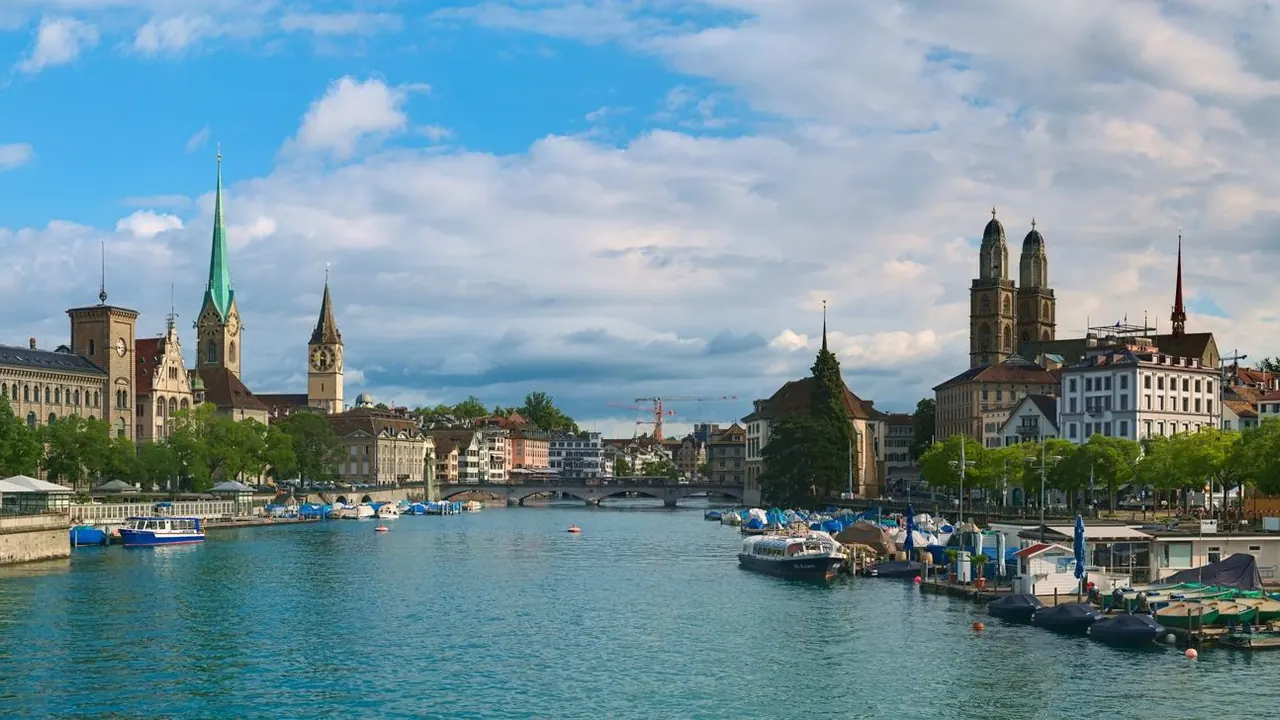
Photos: Antibes by Johan Allard, CC BY-SA 4.0, cropped; Zurich by Daniel Kraft, CC BY-SA 3.0, cropped.
Antibes or Zurich?
Our verdict in twelve categories, each scored against the same fixed benchmark cities, and the climate month by month, so you can choose for your trip.
Choose Antibes for
- beaches
- prices
- day trips
Antibes is the one for a summer by the sea. It has real sand at Juan-les-Pins and La Salis, clear coves around the cape, a warm, dry summer and the whole Riviera on its doorstep by train. It suits couples and families who want long swims, market mornings and easy hops to Nice, Cannes or Monaco. It is costly in high season, but it is still the gentler of the two on the wallet.
Choose Zurich for
- live music and the arts
- getting around
- shopping
Zurich makes the better city break, especially outside the hot months. Its galleries, opera and concert halls go deeper, its trams and trains make every outing effortless, and the lake and the Alps give it a mountain backdrop that Antibes can't match. Families, culture lovers and anyone who wants Switzerland within an hour by rail will be well served, provided they can live with some of the highest prices in Europe.
Scoreboard
Twelve categories on one fixed scale from 0 to 100. The shaded stretch is the gap between the two.
Your match
Pick a travel style or drag the sliders, and both match scores follow your weighting.
Wins on beaches and prices with your weighting.
Wins on live music and the arts and getting around with your weighting.
What matters to you?
Category by category
What the scores mean for a trip.
Beaches & swimming
Antibes has the sand that most of the Riviera lacks: long, gently shelving beaches at Juan-les-Pins and La Salis, with rocky coves such as La Garoupe around the cape for clearer water. The swimming season runs from June into early October, though private clubs take much of the sand and the free stretches fill early in high summer.
Zurich swims in a different way, from wooden bathing houses and lawned lidos along the lake, or by drifting down the Limmat from the Letten river baths. It makes a lovely dip after a day in the city, but the season is short and there is no sand, so it is no substitute for a beach vacation.
Food & drink
The two are broadly level for food, but they eat very differently. In Antibes the meal starts at the covered market on Cours Masséna and carries on outdoors: socca, pissaladière, grilled fish and rosé. You need to steer clear of the tourist menus near the port.
Zurich is richer, more alpine and more often indoors. You'll find veal in cream sauce with rösti, fondue in wood-panelled guild houses, and chocolate and Luxemburgerli on Paradeplatz, with the international places clustered in Kreis 4 and 5. It has none of Antibes's market life, and every meal costs noticeably more.
Culture & sights
Antibes's culture centres on the Picasso Museum in the Château Grimaldi, with the ramparts, Fort Carré and a couple of small museums around it. It makes a charming couple of days rather than a reason to travel.
Zurich has more depth and variety. The Kunsthaus runs from Swiss painters to Monet and Giacometti, the National Museum tells the country's story, and the Rietberg covers art from beyond Europe. Add the Grossmünster, where the Swiss Reformation began, and the Chagall windows of the Fraumünster, and Zurich easily fills an extra day or two.
Nightlife
Zurich is the stronger night out by a clear margin. Clubs in Kreis 4 and 5 and the old industrial halls of Zurich West run until morning at weekends all year, Langstrasse stays busy late, and the August Street Parade draws techno fans from across Europe. The catch is the cost of every round.
In Antibes, nightlife is mostly a July and August affair: beach bars and a few clubs in Juan-les-Pins, plus pubs near Port Vauban full of yacht crews. Out of season it goes quiet, and anyone wanting more takes the train to Nice.
Nature & outdoors
Zurich has the bigger landscapes. There are walks along the lake, forest trails on the Uetliberg a short train ride away, and Rigi, Pilatus and the Glarus valleys within about an hour, with ski slopes close enough for a winter day trip.
Antibes's outdoors is about the sea: the coastal path over the limestone of Cap d'Antibes, snorkelling in clear water, and sailing and paddleboarding in the bay. The red cliffs of the Esterel and the Gorges du Loup offer real hiking, but you need to travel to reach them, as the land around town is built up.
Day trips
Both are excellent bases, but the outings are of a different kind. From Antibes, the coastal railway strings together short hops to Nice, Cannes, Monaco and Menton, and boats cross to the Lérins Islands. The perched villages, Grasse and the glassblowers of Biot are close by, and Italy is an easy longer day.
From Zurich, trips go further and take you to a different country's worth of places. Lucerne, Bern, Basel and St Gallen are each about an hour by train, and the Rhine Falls and Stein am Rhein make a good pair. Every one of them is easy without a car.
Good for families
Zurich is the easier city with children. The zoo, with its Madagascar rainforest hall and elephant park, is a full day out, the lake lidos have shallow areas and lawns, and the Technorama in Winterthur and Lucerne's Transport Museum are short train rides away. Clean streets and buggy-friendly trams help too.
Antibes's strength is its sandy, gently shelving shore, which suits toddlers better than the pebble beaches elsewhere on the coast. Beyond the beach, boats in the harbour and the Lérins crossing, it has little made for children, and August heat means long indoor lunches.
Getting around
Zurich is about as easy as cities get. Trams, S-Bahn trains, funiculars and even lake boats share one ticket, the airport is a short train ride from the main station, and a car is more trouble than it is worth.
Antibes works well on foot between the old town, the market and Port Vauban, and its two stations put the coast within easy reach. Inland is another matter: buses to the hill villages and the cape are slow, Grasse and the Esterel really call for a car, and summer traffic and parking on the coast road are hard work.
Shopping & style
For serious shopping, Zurich wins. Bahnhofstrasse runs from the station to the lake past watchmakers, jewellers and long-established department stores, the Altstadt lanes hold antique shops, and the viaduct arches of Zurich West house design shops.
Antibes keeps things small and Provençal: olive oil, soaps and herbs from the covered market, plus linen and ceramics in old-town boutiques. Fashion means a trip to Cannes or Nice, and Biot glass and Vallauris pottery are best bought in the villages where they are made.
Affordability
Neither is cheap, but Antibes is far easier on the budget. Summer rooms near the beaches carry resort prices, but in spring and autumn rates fall sharply, regional trains are good value, and market self-catering saves a lot.
Zurich is among the most expensive cities anywhere, from simple hotel rooms to a casual lunch. Supermarket picnics by the lake, free lidos and the visitor card bundling transport with museums help a little, but the gap with Antibes remains wide.
Live music & performing arts
Antibes has one great moment, Jazz à Juan. It is one of Europe's oldest jazz festivals, with concerts under the pines of the Pinède Gould each July. For the rest of the year there is the Anthéa theatre's regional programme, and opera means going to Nice.
Zurich offers far more, and all year round. The Opernhaus stages opera and ballet on the lake shore, the Tonhalle Orchestra plays in its restored nineteenth-century hall, and the old Rote Fabrik factory and venues around Langstrasse host jazz, indie and electronic acts. Theatre at the Schauspielhaus is excellent but mostly in German.
Wellness & relaxation
Zurich has more to offer for a proper soak. The thermal pools in the stone vaults of the old Hürlimann brewery end on a rooftop pool, the lake bathing houses become saunas in winter with cold dips between sessions, and Roman-era Baden is twenty minutes away.
Antibes relaxes in a different way, more through pace than through bathing. Its options are a thalassotherapy centre and the grand hotel spas on Cap d'Antibes. Its calmest moments come in May, June and September, with slow market mornings and evening walks on the ramparts, as July and August crowds make it far less restful.
When should you go?
Pick your month. The climate figures are measured averages, not a forecast.
Antibes in July
Zurich in July
Daytime high, °C
Rainfall in the month, mm
Temperature and rainfall are climate normals, averaged over the years shown. Antibes: 1991-2020 normals, Nice (9.9 km from centre). Zurich: 1991-2020 normals, Zurich Town / Ville. (2.2 km from centre).
Antibes is a Mediterranean summer place. July and August are hot, dry and very sunny at around 28°C, and the sea warms to about 25°C in August. From June to September it is properly beach weather, and May and late September are pleasant for walking. The rain arrives in autumn, with October and November the wettest months at well over 120mm. Winters are mild enough for sightseeing in a jacket, though too cool for swimming.
Zurich has a much sharper swing between the seasons. Winters are cold and grey, with highs of about 4°C and very little sunshine, which makes them better for museums and saunas than for strolling the lake shore. Summer peaks at a comfortable 24°C, ideal for walking and lake swims, but May to August is also the wettest stretch, at around 126mm a month, often as showers. Late spring and September are the easiest months for walking the city.
Which traveller are you?
On a beach and sun trip, choose Antibes. The gently shelving sand at Juan-les-Pins, the rocky coves of Cap d'Antibes and a sea that stays warm into early autumn give it a true beach season, which Zurich's short lido summer cannot match.
For a culture and arts trip, Zurich goes much deeper. The Kunsthaus, the Swiss National Museum and the Chagall windows of the Fraumünster fill several days, and evenings at the Opernhaus or the Tonhalle offer more than Antibes, where the Picasso Museum stands largely alone.
On a family trip with children, Zurich is the safer choice, especially with younger ones. Its calm pace and quiet evenings fit small routines, and lake boats and mountain trains work in any season. Antibes suits a summer beach week.
Before you go
| Measure | Antibes | Zurich |
|---|---|---|
| Official language | French | French, German, Italian, Romansh |
| Currency | Euro (EUR) | Swiss Franc (CHF) |
| Sockets | CE230 V, 50 Hz | CJ230 V, 50 Hz |
| Driving side | Right | Right |
| Time zone | UTC+1, UTC+2 in summer | UTC+1, UTC+2 in summer |
| Emergency number | 112 | 112 |
| Elevation | 0 m | 408 m |
| Main airport | Nice-Côte d'Azur Airport (NCE)11 km from centre130 non-stop destinations | Zürich Airport (ZRH)9 km from centre226 non-stop destinations |
| Public holidays this year | 11 days | 10 days |
By the numbers
| Measure | Antibes | Zurich |
|---|---|---|
| City population | 77,637 | 440,935 |
| People per km² | 2,930 | 5,016 |
| Museums within 10 km | 14 | 63 |
| UNESCO World Heritage sites within 50 km | 2 | 1 |
| Swim season, months above 21 °C | 4 months | - |
Where else could you go?
Every comparison below shares a destination with this one, so you can follow Antibes or Zurich somewhere new.